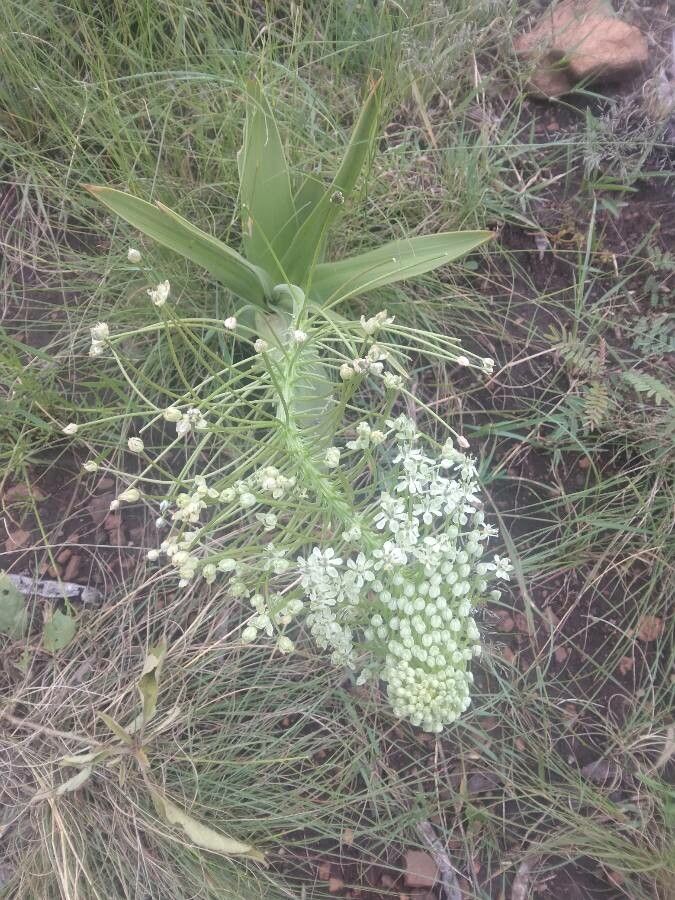
Schizocarphus is a monotypic genus of bulbous flowering plants in the family Asparagaceae, subfamily Scilloideae (also treated as the family Hyacinthaceae). The sole species Schizocarphus nervosus is found in Africa, from Tanzania south to South Africa.
White wild squill is generally disease-resistant and not often affected by illnesses. Still, it can be vulnerable to pests and diseases present in its environment. These problems are typically minor. As for care, the plant needs moderate maintenance. It should be pruned regularly to keep a neat appearance and support healthy growth. Fertilizing can also encourage flowering. White wild squill is well suited for anyone with outdoor areas like a garden or patio and does not demand extensive care experience. It may need more attention if grown indoors.
How to keep Schizocarphus Nervosus.
Light
White wild squill is native to habitats like forest understories or rocky areas, where it receives natural shade. It prefers partial sun but can tolerate full sun or full shade, demonstrating its versatile and hardy nature.
Water
The white wild squill is a hardy plant that flourishes in dry conditions, needing very little water thanks to its drought-resistant nature. To care for it, water sparingly—about once a week—in well-draining soil to avoid root rot. This resilient plant is perfect for xeriscaping, as it is well-adapted to harsh environments and can efficiently conserve moisture.
Temperature
White wild squill is native to changeable climates and performs best at temperatures from 59 to 89.6 °F (15 to 32 ℃). Cycle the temperature to imitate its natural habitat for optimal growth. Make temperature adjustments cautiously when necessary.
Fertilizer
For White wild squill, the primary time to apply fertilizer is in early spring when the flowers are developing. The appropriate fertilizer encourages improved blooms and helps White wild squill produce attractive flowers. Fertilizing in early spring ensures excellent flowering during the season and supplies energy for dormant growth phases.
Pruning
The white wild squill is characterized by its bulbous base and beautiful white flowers. To enhance its growth and blooms, prune the plant from early to late spring by removing any damaged leaves and spent flower stalks. Make sure to use sterilized tools for the best results. Additionally, consult trusted horticultural sources to learn about specific techniques suited to your region.
Botanical profile.
- Plant Type
- Herb
- Life Cycle
- Perennial
- Genus
- Schizocarphus
- Family
- Asparagaceae
- Hardiness Zone
- 8
- Mature Height
- 40 cm
- Mature Spread
- 20 cm to 40 cm
- Leaf Color
- Green
- Leaf Type
- Semi-evergreen
- Flower Color
- White
- Flower Size
- 5.08 cm to 17.78 cm
- Bloom Time
- Early spring, Mid spring
- Planting Time
- Spring, Summer, Autumn
- Harvest Time
- Late spring, Early summer
- Native Area
- Malawi, Angola, Tanzania, South Africa, Zambia, Eswatini, Rwanda, Namibia, Botswana, Zimbabwe
Other names.
Reader questions.
What are the sunlight requirements for White wild squill (Schizocarphus nervosus)?
White wild squill (Schizocarphus nervosus) thrives best with about 3-6 hours of sunlight daily. It's important to observe the movement of sunlight in your garden to find the ideal spots that offer a perfect balance between light and shade. This careful observation ensures the optimal growth and happiness of your White wild squill plants.
What is the indigenous climate for White wild squill?
White wild squill, or Schizocarphus nervosus, is indigenous to temperamental climates. It thrives best in a temperature range of 59 to 89.6 °F (15 to 32 °C). For optimal growth, it's beneficial to adjust the temperature cyclically to mirror its native habitat. It's important to handle any temperature shifts prudently when required.