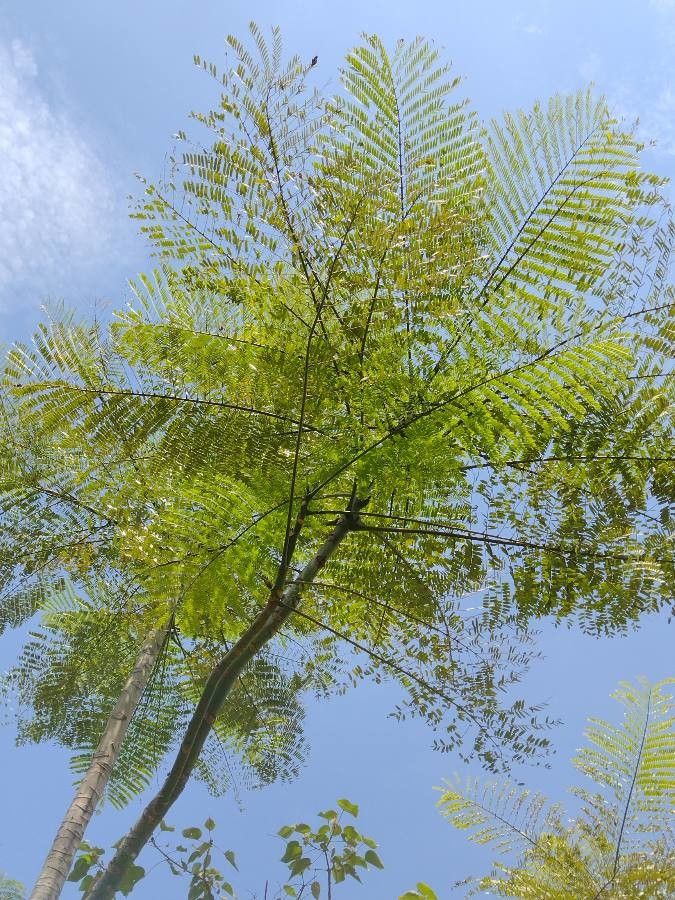
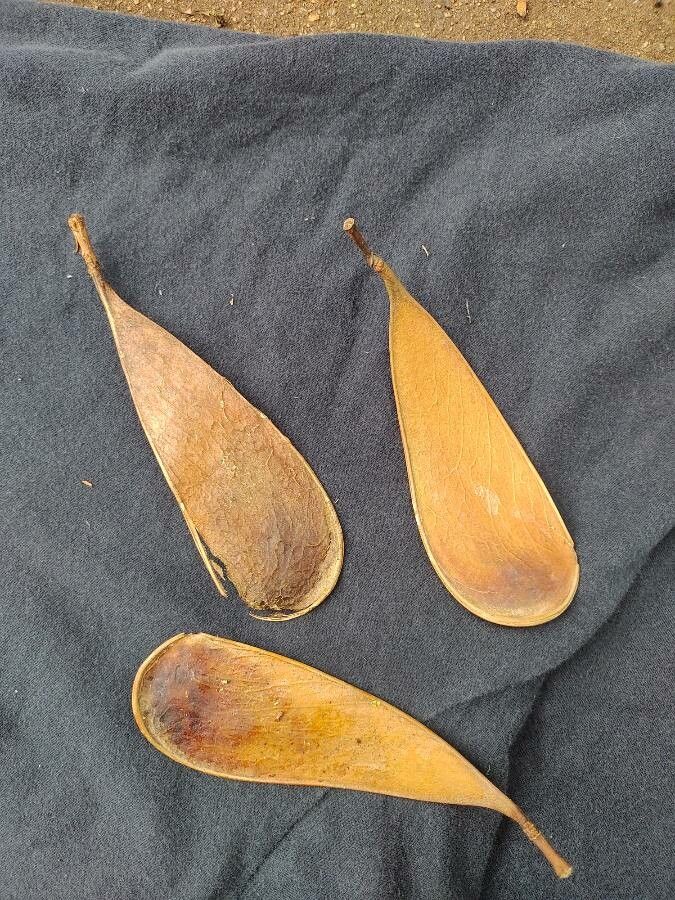
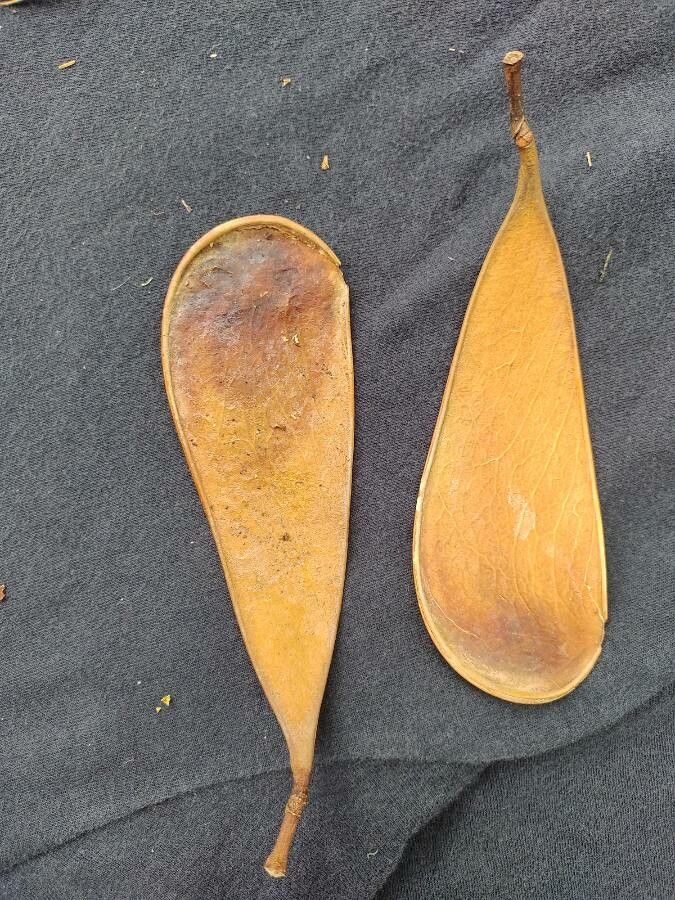
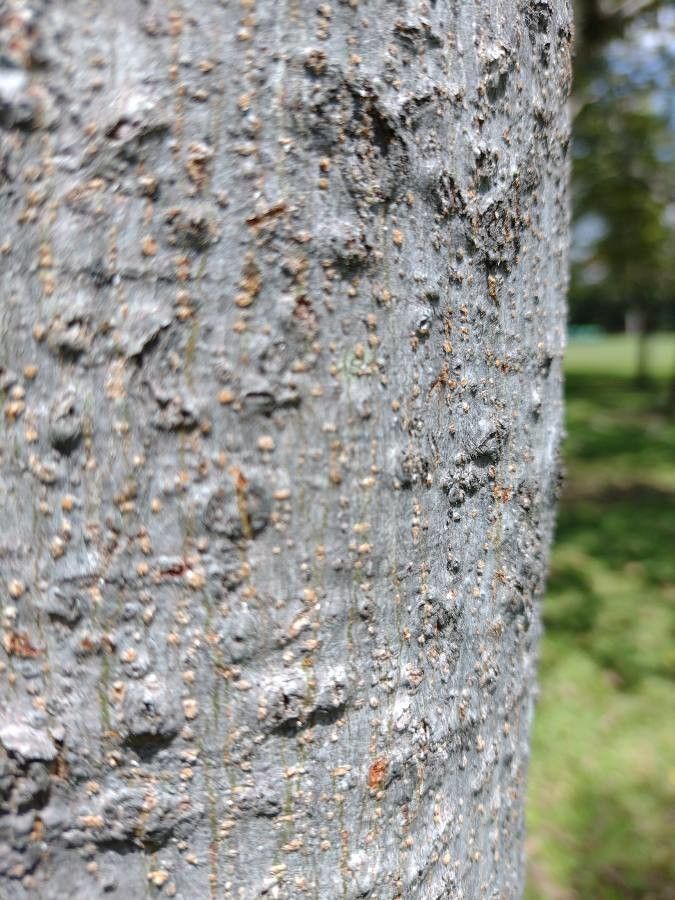
Schizolobium parahyba, commonly known as the Brazilian Firetree or Guapuruvu, is a fast-growing tree species native to South America. It belongs to the family Fabaceae and can reach heights of up to 30 meters, with trunk diameters as wide as 1.5 meters. The tree is characterized by a straight, cylindrical trunk with smooth, grayish-brown bark.
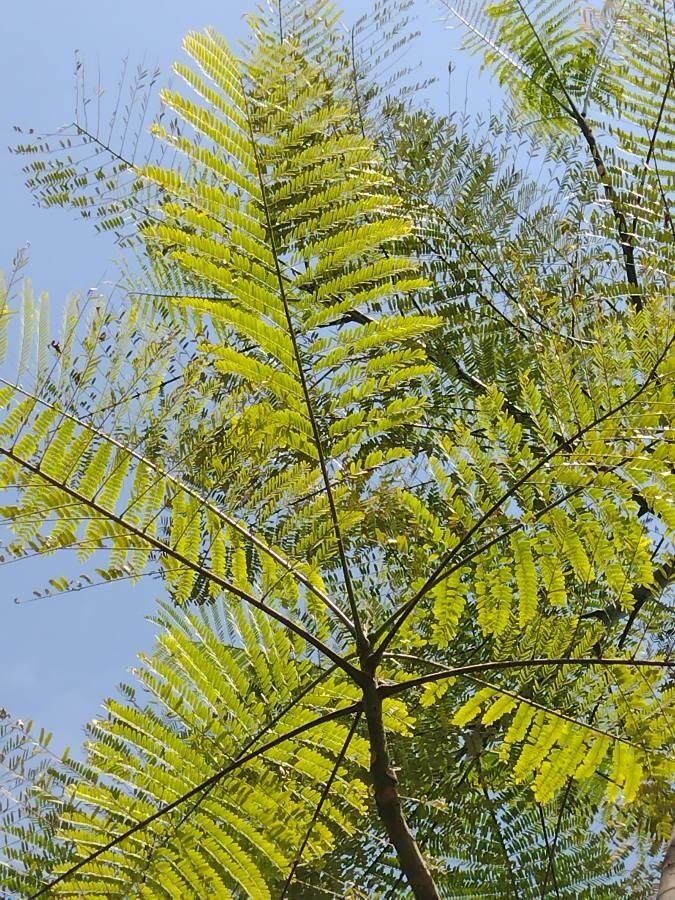
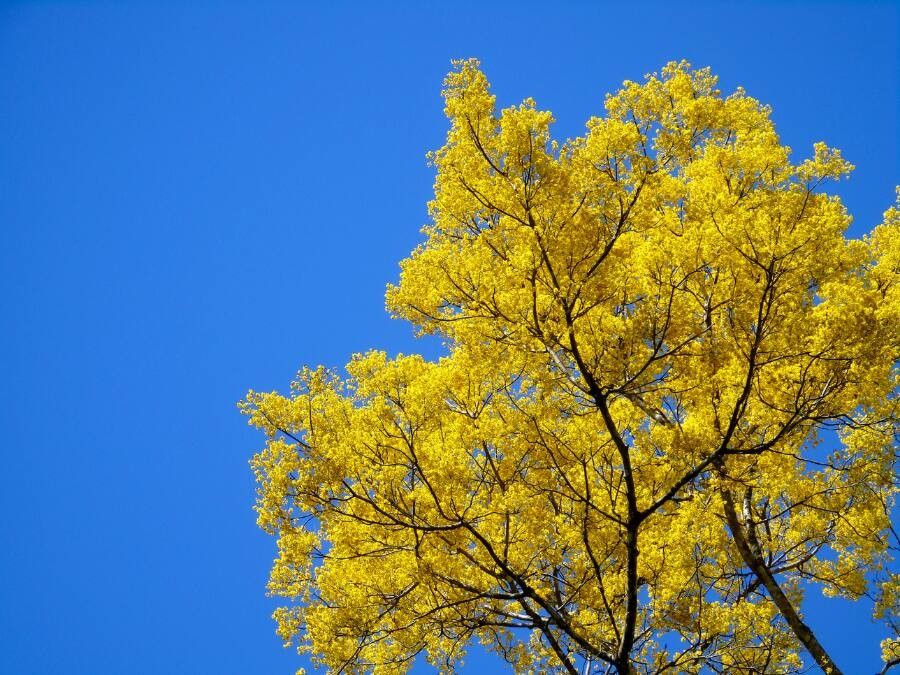
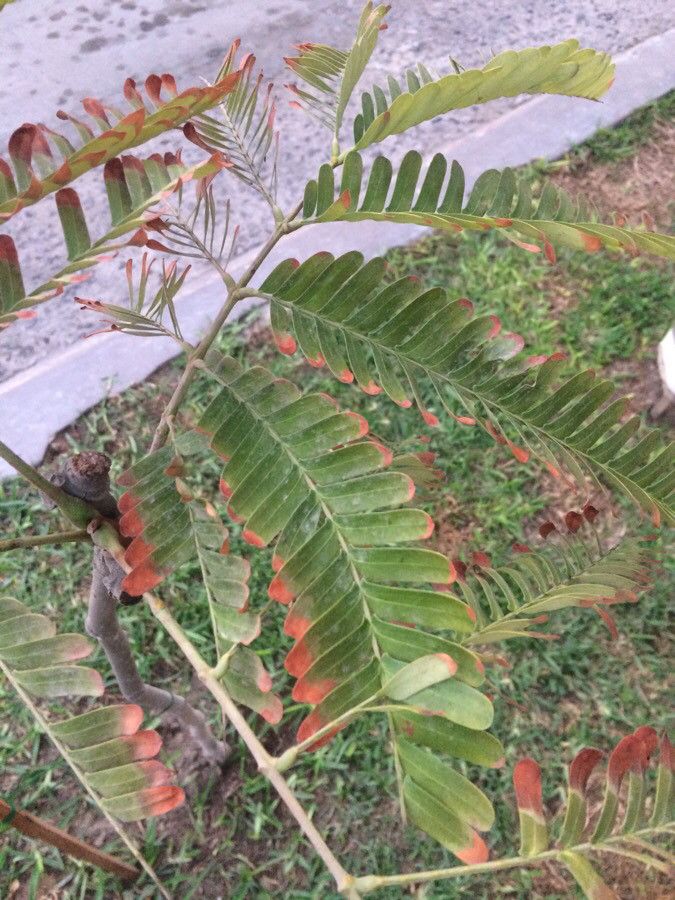
The leaves of Schizolobium parahyba are compound and can grow up to 50 cm in length. These leaves consist of numerous small leaflets arranged opposite each other along the stem. The tree produces yellowish-white flowers that form large clusters at the ends of branches during the spring.
Schizolobium parahyba is highly valued for timber, thanks to its rapid growth rate, straight trunk, and high-quality wood. The wood is used for furniture making, construction, and pulp production. Additionally, the tree’s bark extract has been traditionally used to treat various ailments, such as fever and inflammation, indicating its medicinal properties.
The Brazilian Firetree prefers well-drained soils but can tolerate some flooding. It thrives in full sun but can also grow in partial shade. Due to its rapid growth and ability to fix nitrogen in the soil through symbiotic bacteria on its root nodules, it is considered important for reforestation programs. These programs aim to restore degraded areas and provide wood resources while alleviating pressure on natural forests.
Overall, Schizolobium parahyba plays a significant ecological role as part of forest ecosystems, as well as economic and cultural roles due to its use in timber and traditional medicine. This makes it a valuable species worth conserving through sustainable management practices, both in natural forests and plantation systems.
The Brazilian fern tree has strong resistance to disease and is generally unlikely to suffer from illnesses. Regarding care, this species is fairly low-maintenance. When grown outdoors it needs only light watering, and mature plants usually do not require pruning. Young or smaller specimens, however, should be pruned after they finish blooming. The Brazilian fern tree is appropriate for anyone who has an outdoor area, such as a garden or a deck, and does not demand extensive plant-care experience.
How to keep Schizolobium Parahyba.
Light
The Brazilian fern tree has a clear preference for abundant light to remain healthy, a trait linked to its sunlit native habitat. Across its various growth stages, plenty of sunlight is always preferred. Too little light can cause stunted growth, while too much light is unlikely to be harmful.
Water
Adapted to tropical conditions, the Brazilian fern tree thrives in high humidity and moist soil, and has moderate tolerance to drought. To mimic its natural growth cycle, water the tree every two weeks. Being an outdoor species, it benefits from rainwater, which supports its growth by providing natural irrigation and essential nutrients.
Temperature
The Brazilian fern tree originates from tropical regions and grows best at temperatures of 68 to 100 °F (20 to 38 ℃). In cooler seasons, try to keep these temperatures for the plant's best growth.
Fertilizer
The best time to fertilize a Brazilian fern tree is in early spring, when it breaks dormancy. This encourages overall growth and flower formation. Fertilization improves the foliage, stems, and branches, while encouraging flowers that are large, vibrant, and long-lasting. It also helps move nutrients from the roots to the flowers and boosts the plant's health and resistance to disease.
Pruning
The Brazilian fern tree is known for its rapid growth, featuring fern-like leaves and a slender trunk. To manage its size, promote health, and remove any damaged branches, it is best to prune the tree from early to late winter. Light pruning can enhance growth and maintain the tree's beauty, but be cautious with heavy pruning, as it may stress the plant.
Botanical profile.
- Plant Type
- Tree
- Life Cycle
- Perennial
- Genus
- Schizolobium
- Family
- Fabaceae
- Hardiness Zone
- 10-12
- Mature Height
- 6.1 m to 12.19 m
- Mature Spread
- 4.88 m
- Leaf Color
- Green
- Leaf Type
- Evergreen
- Flower Color
- Yellow
- Flower Size
- 2.54 cm to 5.08 cm
- Bloom Time
- Mid spring, Late spring
- Planting Time
- Spring, Summer, Autumn
- Harvest Time
- Mid summer, Late summer, Early fall
- Native Area
- Belize, Honduras, Mexico, Guatemala, Peru, Panama, Colombia, Paraguay, Argentina, Bolivia, Venezuela, Brazil, El Salvador, Nicaragua, Ecuador, Costa Rica
Other names.
Reader questions.
What is the most effective way to give water to my Brazilian fern tree?
Watering your Brazilian fern tree is a simple task that can be done with various tools. Whether you use a watering can, hose, or even cups, any common watering tool will suffice. Make sure to apply the water directly to the soil, evenly moistening all areas to ensure every part of the root system receives the needed water. Using filtered water is advisable, as tap water may contain harmful particles. Additionally, using water at or slightly above room temperature is beneficial, as extremely hot or cold water can be somewhat shocking to the tree. However, the Brazilian fern tree is generally adaptable to different water types.
Why should I put fertilizer on my Brazilian fern tree?
Ensuring the overall health and well-being of your Brazilian fern tree is dependent on fertilization. By providing the necessary energy and nutrients, you can promote the growth of healthy foliage, sturdy stems, and branches. One particular benefit of fertilization is the enhanced production of large, vibrant, and long-lasting flowers. This is because the right fertilizer enables the efficient transfer of fuel from the roots to the stems and eventually to the flowers. Furthermore, proper fertilization helps maintain the plant's overall health, making it more resilient against diseases.
What are the sunlight requirements for a Brazilian fern tree?
The Brazilian fern tree requires full sunlight to thrive, meaning it should receive above 6 hours of sunlight daily. Watching the movement of sunlight through your garden helps identify the ideal balance of light and shade for your plants. Originating from a sunlight-rich environment, this tree has a distinct need for copious amounts of light throughout its various growth stages. Insufficient light can result in stunted growth, but fortunately, excessive light does not typically cause harm.
What are the ideal temperature conditions for Brazilian fern tree?
The Brazilian fern tree thrives in tropical climates, preferring temperatures between 68 to 100°F (20 to 38°C). It is extremely heat-loving, but susceptible to damage from cold. During cooler seasons, maintaining these temperature ranges is crucial for the plant's best growth. In autumn, it's advisable to bring the plant indoors if it was outside, placing it near a bright window but away from direct heat sources to ensure it stays above 20°C. During winter, keeping the temperature above this threshold helps the plant grow, while temperatures nearing 5°C can be harmful.
What should I do if I give too much or too little water to my Brazilian fern tree?
Outdoor plants, especially newly planted or seedling plants, are prone to lack of watering. It is important to remember to water them adequately for a few months, especially when the tree is small or newly planted. This is because once the roots are established, the Brazilian fern tree can rely on rain most of the time. When the Brazilian fern tree is planted in pots, overwatering is more likely to occur. If you accidentally overwater your plant, you should take immediate action to rectify the situation. First, stop watering the plant right away to minimize the effects of overwatering. Then, remove the tree from its pot to inspect the roots. If there is no root rot, you can return the plant to its container. However, if there are signs of root rot, trim away the affected roots and consider using a fungicide to prevent further damage. Finally, repot the Brazilian fern tree in well-draining soil. On the other hand, underwatered Brazilian fern trees can be easily fixed. If you notice droopy, dried-out leaves that are falling off, simply water the plant more frequently. The leaves will quickly regain their fullness after sufficient watering. It is crucial to correct your watering frequency as soon as you notice underwatering.
When should I fertilize my Brazilian fern tree?
To properly fertilize a Brazilian fern tree, it is best to do so in early spring when the plant is emerging from its dormant phase and preparing to open its buds. This will provide the necessary energy for growth and flower development. However, it is also beneficial to give the tree a smaller feeding towards the end of the season in the fall. Some gardeners opt to fertilize the tree during planting, but this is not always required.
How can artificial lighting be used for indoor Brazilian fern trees?
For indoor Brazilian fern trees or when natural sunlight is insufficient, artificial lighting is a crucial alternative. LED lights, providing specific wavelengths of light, are a good choice. Full sun plants require 30-50W/sq ft, partial sun plants need 20-30W/sq ft, and full shade plants need 10-20W/sq ft of artificial light. The light source should be placed 12-36 inches above the plant, mimicking natural sunlight, and the plants should receive 8-12 hours of light per day to ensure optimal growth.
How does low temperature affect the Brazilian fern tree and how can I protect it?
Brazilian fern trees prefer warm temperatures and do not tolerate low temperatures well. Optimal growth occurs when temperatures are maintained above 20°C. During winters, ensuring the environment remains above 5°C is necessary. Exposure to temperatures below 1°C can cause the leaves to lighten in color, with frost damage turning them brown or black over time. Symptoms also include wilting and drooping. To mitigate frost damage, remove frost-damaged parts and move the plant to a warmer, indoor location. Choose a spot near a south-facing window for adequate sunlight, and avoid placing the plant near heating vents to prevent air dryness.
How many times should I water my Brazilian fern tree?
For most outdoor plants, natural rainfall is sufficient for normal growth. However, if your area doesn't get much rain, you need to water your plants adequately every 2 weeks in the spring and fall. In the summer, you'll need to water more often. In winter, when growth is slower and plants need less water, you should water sparingly or not at all. If your Brazilian fern tree is young or newly planted, you should water it more frequently to help it establish and become more drought-tolerant. When it comes to potted plants like the Brazilian fern tree, there are two ways to determine how often to water. One way is to have a predetermined watering schedule, like once a week or every other week. However, this may not always work as it doesn't consider the specific conditions of your plant's growing environment. Another approach is to water based on the moisture content of the soil. It's generally best to wait until the top two to four inches of soil have dried out completely before watering again. Keep in mind that during summer, when the plant's water needs are highest, a predetermined watering schedule may not be enough.
When should I not put fertilizer on my Brazilian fern tree?
Many plants, including the Brazilian fern tree, do not require fertilizer during the winter because they are in a dormant phase and do not need much energy from the soil. Fertilizing during this time can lead to negative consequences from overfertilization. The best times to feed a Brazilian fern tree are in early spring and fall. Therefore, during most of the spring and summer, the plant does not need to be fertilized. Additionally, if the plant is experiencing excessively hot or dry conditions, it is best to avoid feeding it.
What are the symptoms of insufficient light on a Brazilian fern tree?
When a Brazilian fern tree gets insufficient light, it may show several symptoms: small and lighter-colored new leaves, leggy or sparse growth, faster leaf drop, and slower or no new growth. These symptoms indicate the plant is struggling due to a lack of adequate sunlight, impacting its ability to produce chlorophyll and essential nutrients. Conditions like chlorosis, sunscald, leaf curling, wilting, and leaf scorching can also occur, further stressing the plant.
What should I do if my Brazilian fern tree is exposed to high temperatures?
Brazilian fern trees should ideally be kept below 100°F (38°C) during summer. When temperatures exceed 109°F (43°C), the leaves may lighten, and the plant becomes prone to sunburn. To care for a plant exposed to such conditions, trim away the sunburned and dried parts. Relocate the plant to a spot shielded from the midday and afternoon sun to prevent further damage. Ensure to water the plant both in the morning and evening to keep the soil adequately moist, assisting in cooling the plant.