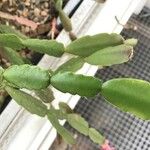
Schlumbergera bridgesii
Christmas or Easter Cactus · True Christmas Cactus · Christmas cactus · Christmas · not Easter
Description
Source: leafsnapSchlumbergera bridgesii, commonly known as the Christmas cactus or Thanksgiving cactus, is a popular houseplant in the family Cactaceae. Native to the coastal mountains of southeastern Brazil, it thrives as an epiphyte in the shady understory of trees. The plant features flattened, segmented stems with serrated edges. These green stems can grow up to 30 cm long. The Christmas cactus blooms in the winter, producing showy flowers that can be white, pink, or red. The tubular flowers have pointed petals and can last for several weeks, providing a vibrant display during the colder months. This plant prefers bright but indirect light and well-draining soil with moderate moisture levels. Its relatively low maintenance makes it a popular choice among indoor gardeners. Beyond its ornamental appeal, Schlumbergera bridgesii has been traditionally used by indigenous people of Brazil for its medicinal properties. It has been employed in treating wounds, fever, coughs, and colds. In summary, Schlumbergera bridgesii is an attractive houseplant known for its beautiful winter blooms and potential medicinal benefits. It is not only visually pleasing but also holds practical uses beyond decoration.
💡 According to legend, the immortal Christmas cactus was once bright and soft. To protect it, God encased it in an armor of hard, steel-like thorns. Any creature that tried to harm it would end up bleeding.
🌳 The Christmas cactus is mainly valued for its decorative appeal, especially during the holiday period when its bright, tubular flowers open. Its ability to bloom in winter has made it a popular festive plant, representing warmth and cheer in the cold season. Although the Christmas cactus is not commonly noted for practical uses like spices or furniture, beginner horticulturists and plant enthusiasts often propagate it as a satisfying part of indoor gardening. Because it roots easily from stem cuttings, it is an excellent educational resource for teaching propagation techniques and for observing plant growth.
🎭 Protection and bearers of peace
Care Guide
💧 Water Every 7 days
The Christmas cactus thrives in the high humidity and occasional rainfall typical of tropical rainforests. While it is somewhat drought-tolerant, it generally needs watering every two weeks. When grown indoors, the plant benefits from regular misting to maintain humidity, which helps support vibrant flowering during the growing season.
How should I water my Christmas cactus?
Knowing how to properly water a Christmas cactus is crucial. Many wonder if they should water from top to bottom or vice versa. Experts suggest starting from the bottom as the best approach. This method ensures that water reaches the plant's roots adequately. Conversely, watering from the top leads to insufficient saturation. The water tends to trickle and evaporate, resulting in only a small amount reaching the roots.
What should I do if I don't give my Christmas cactus enough water?
If you find that your flowers are drying out despite watering them regularly, the issue may be with the container they are planted in. In this case, choose a larger container with good drainage. It's important to use the right potting soil and clean sand mixture to help the plant absorb more water easily. This species is an epiphyte and cannot handle soggy roots, as it obtains water and nutrients from the air. Therefore, proper drainage is necessary to prevent fungal infections. If your cactus becomes limp, you can transfer it to fresh soil. Gently remove as much of the old soil as possible and keep the new soil evenly moist. Mist the cactus frequently if possible. After the flowers have finished blooming, reduce watering until new buds appear. Be careful not to let the soil dry out too much, as this can cause the buds to drop. Underwatering followed by overwatering is a common mistake made by many owners of these succulent cacti. The lack of water may not be noticeable until it's too late, so it's important to pay attention to signs of wilting or withering. While it is tempting to overcompensate with excessive watering, this can lead to desiccated roots that cannot take in any more water. This can result in waterlogged plants and rotting roots. If you notice signs of underwatering, you can try to revive the cactus by providing regular and frequent, yet controlled, watering. Give the cactus a chance to regenerate and recover its roots without overdoing it.
How often should I water my Christmas cactus?
To keep your Christmas cactus healthy all year round, it's important to water it properly. Use well-draining soil when potting the cactus to ensure it produces beautiful blooms. The amount of water the Christmas cactus needs may vary. The best time to water is when about 1/3 of the topsoil is dry, which usually occurs every week. To check if the soil is dry enough, use your fingers to see if it's about two inches dry. If you find that the top layer of soil is very dry, run water through the drainage holes of the pot until it flows into a tray. After 10 to 15 minutes, discard the excess water. This soaking method works well for the Christmas cactus, but avoid leaving it in a water-filled pot for too long. During the flowering stage, it's recommended to water sparingly. To determine the right time to water, look for drooping leaves as an indication. Placing pebbles in the saucer of the pot and adding water to them can add humidity, which benefits the cactus. Make sure not to let the pot sit in water, especially during winter when the soil takes longer to dry. This can lead to root rot. Remember that the Christmas cactus may respond differently to seasonal changes, so adjust your watering routine accordingly. In dry and hot climates, water the cactus around twice a week. In humid areas, watering once a week should suffice. Reduce watering frequency in the fall and winter to promote blooming. If the pots are exposed to intense sunlight, the moisture will evaporate faster, requiring more frequent watering. Conversely, if the plant is in a cool or humid location, watering should be less frequent.
What will happen if I give too much water to my Christmas cactus?
If you overwater your Christmas cactus, it may appear limp or wilted. If you have neglected it for a long time, give it a small amount of water. Only water it sparingly until the soil is slightly moist. Overwatering can lead to a fungal infection called white rot, which causes the leaves to droop and wilt. Like other species, the cactus cannot tolerate over or under watering. Dry soil will cause the flowers to drop, which is something you want to avoid.
Should I change how often I water my Christmas cactus based on the time of year?
The cold months and the hot months have different temperatures and soil conditions. During winter and fall, temperatures drop and the soil takes longer to dry. This means you don't need to water succulents as often. It is also the best time for the Christmas cactus to bloom beautifully. To keep the plant healthy, water sparingly. In October, stop watering if the soil is too wet. Resume watering in November, but keep the moisture light if temperatures are still cool. When the blooms start to appear, stop watering for a few weeks to let the plants rest. These plants are delicate, so when you see new growth, you can resume watering once a week if needed.
☀️ Light Partial sun
Christmas cactus prefers subdued light rather than intense exposure, which promotes the healthiest growth. In its native habitat it tolerates low-light conditions well. Excessive exposure can cause sunburn, while insufficient light can delay flowering. Although its light needs may change at different growth stages, they remain fairly low overall.
What are the sunlight requirements for a Christmas cactus?
The Christmas cactus thrives in conditions that provide partial sun to full shade, meaning it does well with about 3-6 hours of sunlight a day and even less than 3 hours in full shade. It's important to observe the movement of sunlight through your garden to find the ideal spot for your Christmas cactus, ensuring it receives the balanced light exposure it needs for optimal growth. In its natural habitat, this plant adapts to low-light conditions, indicating that too much direct sunlight can cause sunburn, while not enough light might delay flowering. The light requirements for the Christmas cactus might change slightly at different stages of its growth but generally remain on the lower side.
How does artificial lighting affect the growth of Christmas cactus?
When natural sunlight is insufficient, especially during winter or in less sunny locations, artificial lighting becomes an essential alternative for maintaining the health of a Christmas cactus. LED lights are frequently recommended due to their ability to provide specific wavelengths needed for plant growth. For optimal growth using artificial lights, full sun plants require 30-50 watts per square foot, partial sun plants need 20-30 watts per square foot, and full shade plants benefit from 10-20 watts per square foot. The lights should be placed 12-36 inches above the plant, mimicking natural sunlight's intensity, and left on for 8-12 hours a day to simulate the natural day length.
What are common symptoms of improper lighting in Christmas cactus?
Improper lighting can lead to several symptoms in a Christmas cactus, including slower or halted growth, reduced flowering and fruiting potential, leggy or sparse growth, chlorosis (leaf yellowing), sunscald, leaf curling, wilting, and leaf scorching. These symptoms are indicative of either too much direct sunlight or insufficient light exposure. For instance, leggy growth occurs when there's a large distance between leaves or stems, caused by poor light conditions, whereas chlorosis and sunscald result from too much direct sunlight.
What solutions can help improve a Christmas cactus's light exposure?
Improving your Christmas cactus's light exposure involves a few strategic adjustments. Indoors, gradually shifting your plant to sunnier locations each week can help it adapt to receiving 3-6 hours of direct sunlight daily, which is ideal. If moving the plant isn't feasible due to its size, supplementing with artificial lighting, such as keeping a desk or ceiling lamp on for at least 8 hours a day or investing in professional plant grow lights, can provide sufficient light. Outdoors, similarly, moving your plants to incrementally sunnier spots each week can prevent sunburn by avoiding sudden light intensity changes. If light obstruction is an issue, for ground-planted species, consider pruning to reduce tree canopy cover or transplanting smaller plants to sunnier locations during their dormant period for optimal sun exposure. It's important to note that while these solutions can encourage healthy new growth, parts of the plant that were previously affected by poor lighting conditions may not recover.
🌡️ Temperature 20–37.8°C
The Christmas cactus originates in the Brazilian mountains, where temperatures are usually cooler. It prefers 68 to 86 ℉ (20 to 30 ℃) during the growing season but can tolerate temperatures up to 100 ℉ (38 ℃). In winter it needs cooler conditions of 50 to 60 ℉ (10 to 15 ℃) to stimulate blooming.
What are the essential care tips for a Christmas cactus?
The Christmas cactus (Schlumbergera bridgesii) is native to the Brazilian mountains and thrives in cooler temperatures, preferring a range of 68 to 86°F (20 to 30°C) during the growing season. However, it can tolerate up to 100°F (38°C). To encourage blooming, winter temperatures should be cooler, between 50 to 60°F (10 to 15°C). This heat-loving plant enters a dormant state in winter. If outdoor temperatures fall below 32°F (0°C), the cactus should be moved indoors near a south-facing window for maximum sunlight, or provided with supplemental lighting if natural light is insufficient. When temperatures drop below 68°F (20°C), its growth slows, necessitating reduced watering to prevent root rot. Outdoor plants require watering to be halted entirely in low temperatures. In cold conditions, consider insulating the plant with a temporary greenhouse or wrapping it in plastic film or fabric.
How do you manage low temperature effects on a Christmas cactus?
The Christmas cactus shows a preference for high temperatures and struggles with the cold, thriving best above 68°F (20°C). In winter, keep it above 32°F (0°C) to avoid damage. Exposure to temperatures below 23°F (-5°C) can cause the plant to weaken, wilt, and become prone to root rot. Some frost damage may not show immediately but can lead to gradual wilting after a week. If frostbite occurs, trim the affected areas and check for root rot. If roots are rotted, they should be removed, and the plant propagated through cuttings. Move the plant to a warm environment indoors, placing it near a south-facing window to ensure it gets enough sunlight. Use supplemental lighting if necessary.
What should you do if your Christmas cactus experiences high temperatures?
During the summer, it's crucial to keep the Christmas cactus below 100°F (38°C). If temperatures exceed 109°F (43°C), the plant will stop growing, lose water, wilt, and become susceptible to sunburn. To manage this, remove sunburned or rotten parts of the plant. Protect the cactus from direct afternoon sunlight until it recovers and resumes growing. In cases where root rot is present due to overwatering, cease watering until new roots develop.
💨 Humidity normal (40-60%)
This plant will thrive in moderate humidity, which is probably the level in your home. However, misting it a few times a week can be very beneficial. Make sure the room has good ventilation.
🪴 Soil 5-6
🌱 Fertilizer Every 60 days
Christmas cactus only needs light fertilizer applications once or twice a year during the growing season. Do not fertilize in winter or summer while it is dormant. Use less fertilizer for repotted plants and wait a couple of months after repotting before applying fertilizer. Fertilizing helps maintain healthy growth and encourages blooms.
Why should I put fertilizer on my Christmas cactus?
Fertilizing Christmas cactus is important for its healthy growth. While it does store water and nutrients, adding plant food during the growing season provides additional support. Fertilization can also stimulate mature plants to produce blooms.
What is the ideal time to fertilize my Christmas cactus?
Christmas cactus plants require only a small amount of fertilizer during the growing season. It is recommended to fertilize them 1-2 times a year, specifically in spring and autumn, while avoiding winter and summer when they are dormant. When repotting, be cautious about the amount of fertilizer and wait a few months before applying any.
When is the best time to not add fertilizer to my Christmas cactus?
Christmas cactus, like other plants, goes through a dormancy period. During this time, it is best to avoid applying fertilizer. The plant stops growing in both summer and winter, so it is especially important to refrain from fertilizing during these seasons. Additionally, it is recommended to wait a couple of months after repotting in the spring before resuming fertilization.
What kind of fertilizer should I use for my Christmas cactus?
When fertilizing Christmas cactus, it's recommended to use a liquid plant food specifically made for succulents and cacti. Dilute the fertilizer by mixing it with water at a half-strength concentration. Avoid letting the fertilizer accumulate in the soil. Apply the diluted fertilizer to the base of the plant, making sure to give it a thorough watering. This will help drain any excess moisture from the container or allow it to seep into the ground.
How should I fertilize my Christmas cactus?
When fertilizing Christmas cactus, you have two options: liquid plant food or granules. Using liquid plant food is usually easier, but if you choose to use granules, follow the instructions on the package. When using liquid fertilizers, remember to dilute them to half-strength. Regardless of which type of plant food you use, always apply it to the soil. For granules, cover them with a thin layer of soil and water.
🪴 Pot & Repot 2-3 years
Repot a Christmas cactus in spring or summer, choosing a pot slightly larger than the current one that has good drainage. Use a sandy or gritty cactus mix that drains well. Handle the plant carefully to avoid its spikes. Let the cactus dry out before repotting to help prevent root rot. After repotting, wait a week before watering so the roots can heal.
✂️ Pruning
The Christmas cactus requires only minimal pruning. You should concentrate on removing any withered flowers and branches. This helps the plant direct its nutrients toward healthier growth.
🌿 Propagating
🐛 Diseases & pets
☠️ Toxicity
Characteristics
- Plant Type
- Succulent, Shrub
- Life Cycle
- Perennial
- Genus
- Schlumbergera
- Family
- Cactaceae
- Hardiness Zone
- 9-11
- Mature Height
- 61 cm
- Mature Spread
- 23 cm to 30 cm
- Leaf Color
- Green
- Leaf Type
- Evergreen
- Flower Color
- Pink
- Flower Size
- 5.08 cm
- Bloom Time
- Fall
- Planting Time
- Spring
- Harvest Time
- Early spring, Mid spring