Schlumbergera truncata
Christmas cactus · Thanksgiving cactus · Claw cactus · Linkleaf · Crab cactus
Description
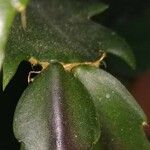
Source: leafsnapSchlumbergera truncata, commonly known as the Thanksgiving cactus, is a popular houseplant belonging to the cactus family. Native to Brazil, it grows as an epiphyte in rainforests. The plant features flat, segmented, green stems that can reach up to 60 cm in length. The Thanksgiving cactus blooms in late fall or early winter, producing vibrant flowers in shades of pink, red, white, or purple. These showy, tubular-shaped flowers with pointed petals can last for several weeks. This plant prefers bright but indirect light and well-draining soil. It needs moderate watering during its growing season but should be allowed to dry out between waterings. Schlumbergera truncata is a low-maintenance plant that thrives indoors with minimal care. Beyond its ornamental value, Schlumbergera truncata has been used for medicinal purposes by indigenous people in Brazil to treat ailments such as fever and inflammation. Overall, Schlumbergera truncata is an attractive indoor plant known for its vibrant blooms during the holiday season and is easy to care for year-round.
🌳 One lesser-known frontier for the thanksgiving cactus is its use in space horticulture. Recently it has been included in studies aimed at producing blooms in controlled settings, such as spacecraft and space stations. These studies are intended not only to investigate plant biology in microgravity but also to enhance astronauts' psychological well-being by providing interaction with plant life.
🎭 Good fortune, long life
Care Guide
💧 Water Every 7 days
The false Christmas cactus thrives in the high humidity of tropical rainforests and requires balanced watering every 2 to 3 weeks. As an evergreen plant, it retains its leaves throughout the year, which means careful monitoring of its water needs is necessary even during the colder months.
When Should I Water My False Christmas Cactus?
Watering your false Christmas cactus properly is vital for its health, vibrant flower production, and disease resistance. Always check the soil's moisture level; if the top 1 to 2 inches of soil feel dry, it's time to water. Also, observe the leaves. If they appear wilted or lackluster, it indicates a need for water. During the pre-flowering or bud formation stage, ensure the plant receives ample water to prevent bud drop. In warmer temperatures with more sunlight, the water needs increase. Be cautious of watering too early or too late, as both can pose risks to the plant's health.
How Should I Water My False Christmas Cactus?
The false Christmas cactus thrives on a balance between hydration and well-draining soil conditions. Opt for bottom-watering by placing the pot in a tray of water, allowing the roots to absorb moisture from below, or use a watering can with a narrow spout to direct water to the soil while avoiding the foliage. A moisture meter can help determine when the soil is nearing dryness. It's crucial to let the soil slightly dry between waterings and ensure the pot has adequate drainage to prevent root rot. Occasionally mist the plant without soaking the foliage to provide additional humidity.
How Much Water Does False Christmas Cactus Really Need?
The false Christmas cactus requires moderate watering, allowing the soil to partially dry between sessions. The amount depends on the pot size and root depth, with thorough watering advised until excess drains out. Proper hydration is signified by plump, healthy foliage and vibrant blooms. Conversely, overwatering or underwatering can cause various health issues, including root rot or dehydration. Emulating the plant's natural conditions by using well-draining potting mix and moderating water levels promotes its well-being.
What Kind of Water is Best for False Christmas Cactus?
Preferably, use distilled water for your false Christmas cactus due to its purity and neutral pH. Rainwater is a viable alternative if it's clean and collected safely. Filtered water that removes harmful elements can also be used. Tap water is least recommended due to its potential content of chlorine, fluoride, and minerals harmful to the plant. Let tap water sit for 24 hours to evaporate chlorine or use filtration methods to remove undesired chemicals. The plant prefers room temperature water to avoid shock.
How Do False Christmas Cactus's Watering Needs Change with the Seasons?
Seasonal changes influence the watering needs of a false Christmas cactus. In spring, as the plant resumes growth, increase watering slightly, ensuring the soil doesn't dry out completely. Summer demands consistent moisture due to higher temperatures, while in autumn, reduce watering as the plant prepares for dormancy. Winter requires minimal watering, only proceeding when the top layer of soil has dried out to prevent issues like root rot. Monitoring soil moisture is key to adapting to the plant's seasonal needs.
☀️ Light Partial sun
The Thanksgiving cactus prefers moderate sunlight but can tolerate lower-light conditions because of its native habitat. Too much sun may cause leaf burn, while insufficient light can stunt its growth. Different stages of growth, however, do not require different sunlight conditions.
What are the sunlight requirements for a False Christmas Cactus?
The False Christmas Cactus (Schlumbergera truncata) thrives in environments with moderate sunlight exposure but can also survive in less sunlit conditions due to its natural growing habitat. Ideally, it requires about 3-6 hours of sunlight daily (partial sun) but can also manage in full shade, which is defined as less than 3 hours of sunlight. Excessive sun exposure can cause leaf burn, while insufficient light can stunt the plant's growth. Observing how sunlight moves through your garden and choosing locations that offer a balance of light and shade are crucial for the plant's health.
What artificial lighting requirements does a False Christmas Cactus have?
When natural sunlight is not enough, especially during winter or for indoor plants in less sunny spaces, artificial lighting becomes essential for the False Christmas Cactus. Adequate lighting is crucial for optimal growth, with LED lights being a popular choice due to their ability to provide specific wavelengths needed by plants. Full sun plants require 30-50W/sq ft of artificial light, partial sun plants need 20-30W/sq ft, and full shade plants require 10-20W/sq ft. The light source should be placed 12-36 inches above the plant, simulating natural sunlight conditions as closely as possible, and most plants benefit from 8-12 hours of light per day.
What are the common symptoms of insufficient or excessive sunlight in False Christmas Cactus?
Insufficient sunlight can lead the False Christmas Cactus to enter a survival mode, resulting in slower or no new growth. It may not show immediate abnormalities, but lack of sunlight can negatively impact future flowering and fruiting. Symptoms of light deficiency include leggy or sparse growth, where the spaces between leaves or stems lengthen, chlorosis (where leaves lose their green color and turn yellow due to chlorophyll breakdown), sunscald from intense light exposure, leaf curling as a defense mechanism to minimize water loss, wilting due to increased water loss through transpiration, and leaf scorching characterized by brown, dry edges on leaves from excessive sunlight.
How can you manage and provide sufficient sunlight for a False Christmas Cactus?
To ensure your False Christmas Cactus receives sufficient sunlight, gradually transition it to sunnier spots, aiming for 3-6 hours of direct sunlight daily. This gradual adaptation helps the plant adjust without shock. For indoor plants that are large or hard to move, supplemental artificial light can be beneficial. Keep a desk or ceiling lamp on for at least 8 hours a day or consider professional plant grow lights. For outdoor plants, similarly, move them gradually to sunnier locations to prevent sunburn. If your plants suffer from sunlight obstruction due to environmental features, consider reducing these obstructions. For smaller plants, transplantation during the dormant period to a sunny location with good drainage can be a solution. Note that while parts of the plant affected by poor light might not recover, new growth will be healthy with improved lighting.
🌡️ Temperature 20–37.8°C
Thanksgiving cactus, a type of cacti, prefers temperatures of 68 to 100 ℉ (20 to 38 ℃). In its native habitat it needs warm days and cooler nights to encourage blooming. In summer, moderate the temperature by moving it to a shadier spot or watering less often to prevent heat stress. In winter, keep it away from cold drafts to avoid frost damage.
What are the ideal temperature conditions for a False Christmas Cactus?
The False Christmas Cactus (Schlumbergera truncata) thrives in temperatures ranging from 68°F to 100°F (20°C to 38°C). It prefers warm days with cooler nights to encourage blooming. To manage heat stress during the summer, it is recommended to place the plant in a shadier area or reduce the watering frequency. In winter, the plant should be protected from cold drafts to prevent frost damage. As the temperature drops below 32°F (0°C), it is advisable to move the plant indoors, placing it near a south-facing window for optimal sunlight. Supplemental lighting can be used if natural light is insufficient. When temperatures fall below 68°F (20°C), the plant's growth slows, and watering should be reduced or stopped to prevent root rot.
How should I care for my False Christmas Cactus in varying temperatures?
For the False Christmas Cactus to thrive, it's crucial to adjust its care with changing temperatures. During hot weather, ensure the temperature stays below 100°F (38°C) and protect the plant from temperatures above 109°F (43°C) to prevent growth halt and sunburn. In such high temperatures, remove any damaged parts and shield the plant from direct afternoon sunlight. In contrast, during winter, keep the plant above 32°F (0°C) and move it indoors if temperatures are expected to drop below 0°C. If exposed to temperatures below -5°C, the plant might suffer from wilt, weakness, and root rot. Trim frostbitten areas and, if necessary, cut off rotted roots for propagation. Position the plant in a warm area near a south-facing window to ensure it receives enough sunlight or consider supplemental lighting.
What are the signs of temperature stress in False Christmas Cactus and how can I address them?
Signs of temperature stress in a False Christmas Cactus include wilting, weak growth, and susceptibility to root rot in low temperatures, particularly when the temperature falls below 20°C. In winter, keep the plant above 0°C, and if temperatures drop below -5°C, the plant can wilt and show delayed symptoms of mild frost damage, such as gradual withering. To remedy this, cut off frostbitten and rotted parts, and move the plant to a warmer, sunlit area. During high temperatures over 38°C, the plant can halt growth, experience water loss, wilt, and get sunburned. Remove any damaged parts and protect the plant from direct sunlight to help it recover and resume growth.
💨 Humidity normal (40-60%)
This plant will thrive in moderate humidity, which is probably the level in your home. However, misting it a few times a week can be very beneficial. Make sure the room has good ventilation.
🪴 Soil 5-6
🌱 Fertilizer
For Thanksgiving cactus, apply small amounts of fertilizer once or twice a year during the growing season. Avoid fertilizing in winter and in summer when the plant is dormant. Use less fertilizer for repotted plants and wait a couple of months after repotting before resuming feeding. Fertilizing helps maintain healthy growth and promotes blooming.
Why should I put fertilizer on my False christmas cactus?
Fertilizing helps provide nutrients to the growing medium of False Christmas cactus. While it already stores water and nutrients, applying plant food during the growing season promotes healthy growth. Additionally, fertilizing can stimulate mature specimens to produce blooms in the growing season.
When should I put fertilizer on my False christmas cactus?
False Christmas cactus, like other plants, benefits from extra nutrients but only requires a small amount of fertilizer during the growing season. It is recommended to fertilize the plant 1-2 times per year, specifically in the spring and autumn, while avoiding fertilization in the dormant seasons of winter and summer. If you have repotted your False Christmas cactus, be cautious with the amount of fertilizer used and it is advisable to wait a few months after repotting before applying any fertilizer.
When is it not a good time to fertilize my False Christmas cactus?
The False Christmas cactus, like other plants, has a dormancy period where fertilizer application should be stopped. This happens during the summer and winter when the plant stops growing. It is also recommended to avoid fertilizing for a few months after repotting in the spring.
What kind of plant food should I use for my False christmas cactus?
To effectively fertilize False Christmas cactus, it is recommended to use a liquid plant food specially designed for succulents and cacti. Dilute the fertilizer with water, making it half-strength, to avoid accumulating too much fertilizer in the soil. Apply the fertilizer at the base of the plant and thoroughly water it, ensuring any extra moisture drains away from the container or seeps into the ground.
How can I make my False Christmas Cactus grow better?
When fertilizing the False Christmas cactus, it is recommended to use liquid plant food, although granules are also possible. If using liquid fertilizer, make sure to dilute it to half-strength as indicated on the packaging. Whether you choose granules or liquid, remember to apply the fertilizer directly to the soil. For granules, cover them with a thin layer of soil and water. The same goes for liquid plant food, apply it to the soil and water accordingly.
🪴 Pot & Repot 2-3 years
Repot a Thanksgiving cactus in spring or summer, choosing a pot slightly larger than the current one that has good drainage. Use a well-draining, sandy or gritty cactus mix. Handle it carefully to avoid the spines. Allow the cactus to dry out before repotting to prevent root rot. After repotting, wait for a week before watering so the roots can heal.
✂️ Pruning
In the spring, prune your false Christmas cactus to encourage fuller growth and blooms where you've made the cuts. Be sure to use clean, sharp pruning shears to avoid damaging the stems.
🌿 Propagating
🐛 Diseases & pets
☠️ Toxicity
Characteristics
- Plant Type
- Succulent, Shrub
- Life Cycle
- Perennial
- Genus
- Schlumbergera
- Family
- Cactaceae
- Hardiness Zone
- 9-11
- Mature Height
- 20 cm to 61 cm
- Mature Spread
- 30 cm to 61 cm
- Leaf Color
- Green
- Leaf Type
- Evergreen
- Flower Color
- Pink, Red, White, Orange, Purple, Yellow, Gold
- Flower Size
- 4.06 cm to 6.35 cm
- Bloom Time
- Early spring, Fall, Winter
- Planting Time
- Spring, Summer, Autumn, Winter
- Harvest Time
- Early spring, Mid spring
- Native Area
- Brazil