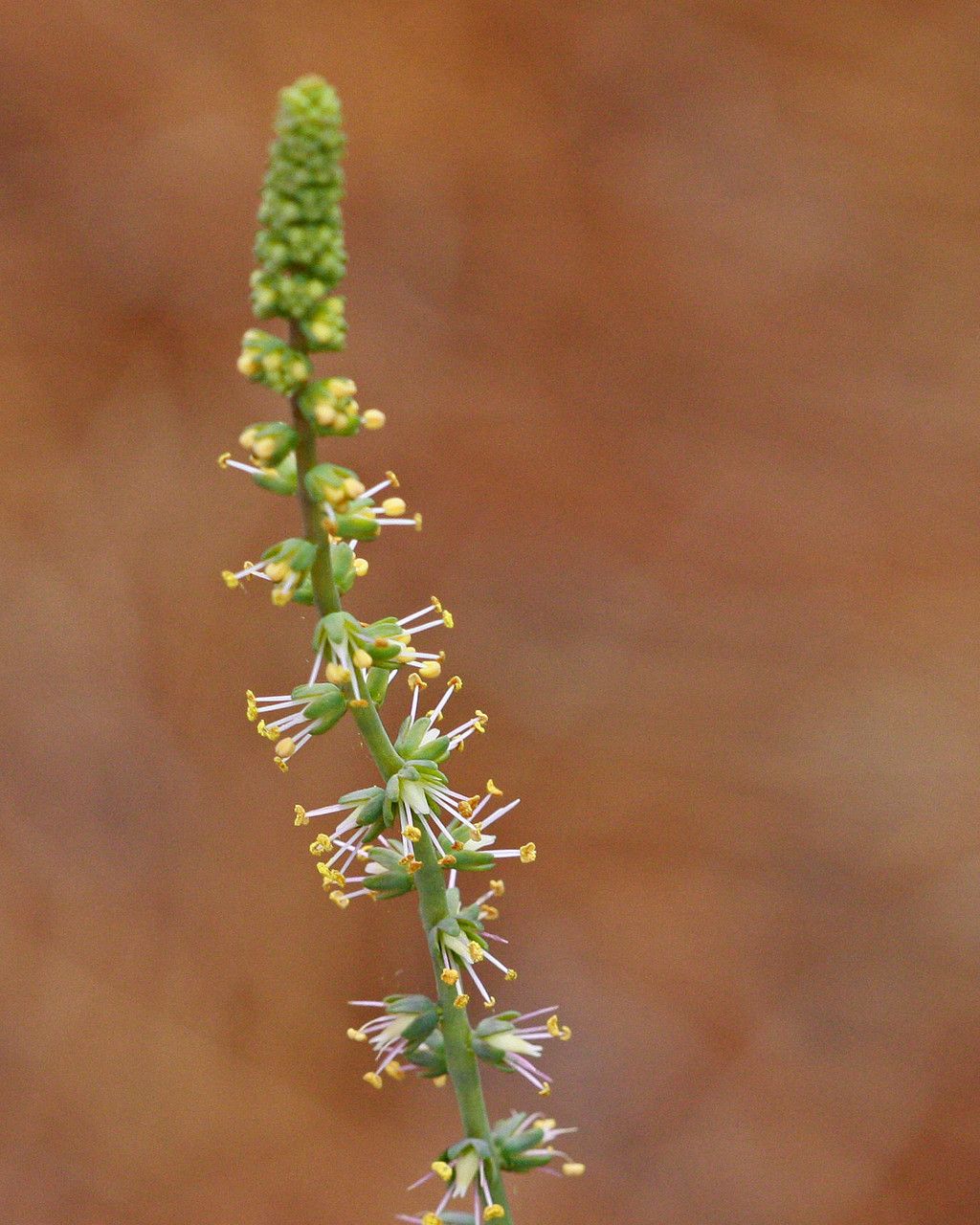
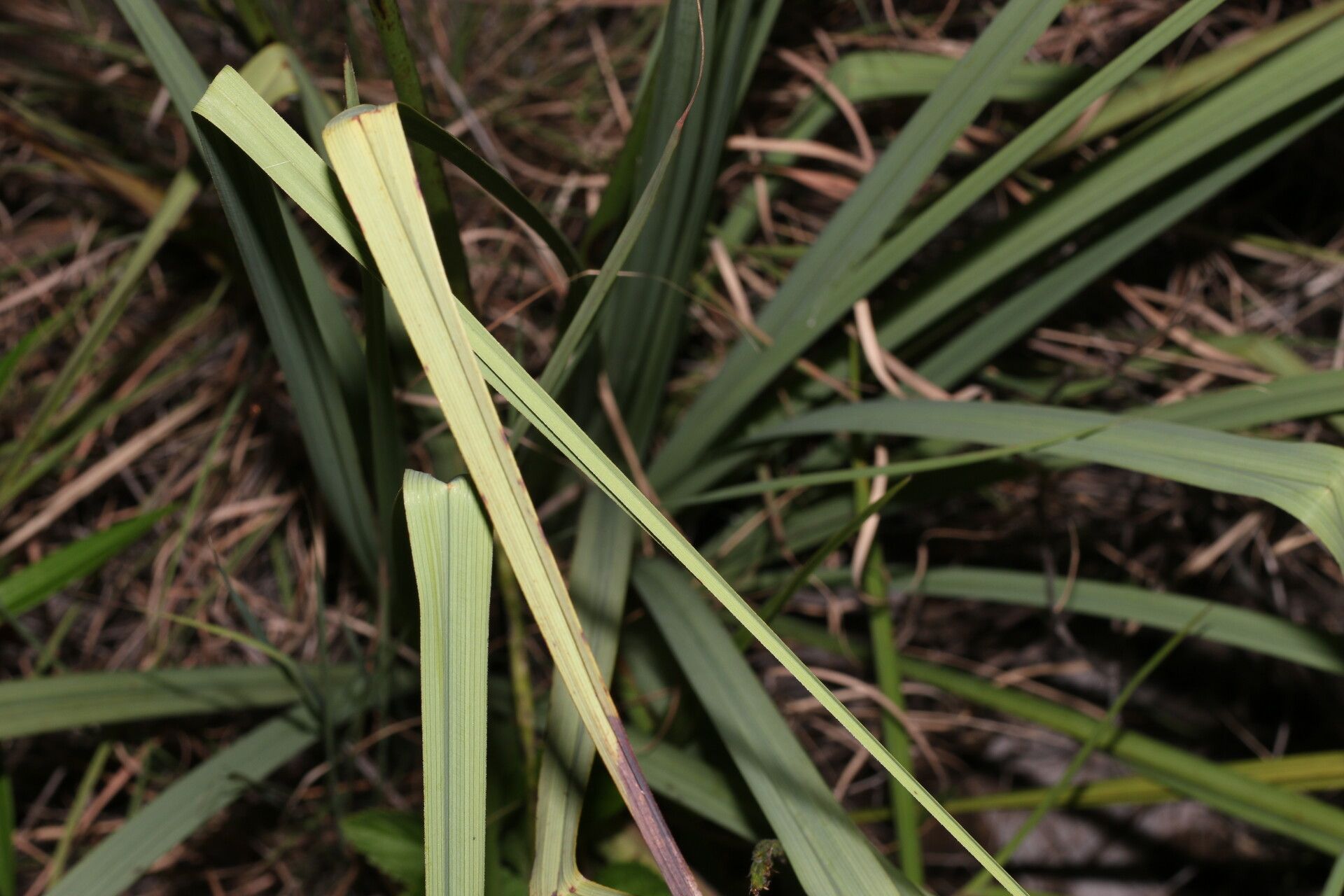
Schoenocaulon texanum, commonly called Texas feathershank, is a species of flowering plant in the bunchflower family (Melanthiaceae). It is native to North America, where it is found in the states of Chihuahua, Coahuila, Durango, and San Luis Potosí in Mexico; and in New Mexico and Texas in the United States.Its natural habitat is in dry, calcareous, rocky grasslands and open scrubby woodlands.Schoenocaulon texanum is an herbaceous bulbous perennial. Its leaves are basal and grass-like. Its inflorescence is a long, compact spike. It typically flowers in late spring and early summer, although later season flowering can be induced by rainfall.
Texas feather-shank is fairly disease-resistant and generally not prone to illnesses. Nevertheless, it can be affected by pests and diseases present in its environment, though such problems are usually mild. Regarding care, this plant requires moderate maintenance. Regular pruning is necessary to maintain a good appearance and healthy growth. Fertilizing can also help encourage flowering. Texas feather-shank is appropriate for anyone with outdoor space, like a garden or patio, and does not demand extensive gardening experience. It may need more attention if grown indoors.
How to keep Schoenocaulon Texanum.
Light
Texas feather-shank is a sun-loving perennial herbaceous plant native to open habitats, where it often thrives in meadows and grasslands. It favors full sun but can also tolerate partial sun.
Water
The Texas feather-shank thrives with moderate watering, similar to its native habitat, and requires weekly irrigation to maintain consistent moisture. While it can tolerate short dry spells, it is well-suited for outdoor cultivation. Providing adequate water is essential for its vibrant flowering, particularly during the growing season.
Temperature
Texas feather-shank comes from tropical areas, where the climate is usually warm and humid. Therefore, it is well suited to high temperatures and humidity. It does not tolerate sudden temperature changes and prefers a steady temperature environment, so indoor temperature fluctuations should be avoided. It generally cannot withstand cold and needs warmer conditions to grow. If the temperature falls too low, the plant may stop growing or even die.
Fertilizer
Texas feather-shank will need the most fertilizer during its active growth period, which falls mainly in spring, summer, and early fall. Fertilization supplies essential nutrients that the soil may lack, encouraging healthy root and stem development and supporting attractive foliage, a key feature of this particular plant.
Pruning
To ensure the Texas feather-shank thrives, it is important to prune it in early spring. Remove any dead stems and excess growth to promote its health and maintain its shape. This practice not only enhances blooming but also reduces the risk of disease. For best results, use clean, sharp tools to make precise cuts, which will improve airflow and enhance the plant's overall aesthetic appeal.
Botanical profile.
- Plant Type
- Herb
- Life Cycle
- Perennial
- Genus
- Schoenocaulon
- Family
- Melanthiaceae
- Hardiness Zone
- 7-10
- Mature Height
- 0.61 m to 1.22 m
- Mature Spread
- 30 cm to 61 cm
- Leaf Color
- Green, Dark Green
- Leaf Type
- Deciduous
- Flower Color
- White
- Flower Size
- 0.25 cm to 0.51 cm
- Bloom Time
- Mid spring, Late spring, Early summer
- Planting Time
- Spring, Summer
- Harvest Time
- Summer
- Native Area
- Mexico