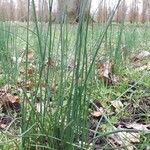
Schoenoplectus pungens
Chairmaker's-rush · Sharp club-rush · Common threesquare · Common threesquare bulrush · Three-Square
Description
Source: leafsnapSchoenoplectus pungens, commonly known as the common threesquare or tule, is a perennial aquatic plant that belongs to the Cyperaceae family. Native to North America, it thrives in wetlands, marshes, and along the edges of ponds and lakes. The plant features a triangular stem that can grow up to 3 feet tall, complemented by long and narrow leaves. Blooming in late spring or early summer, Schoenoplectus pungens produces small brown flower spikes. It disperses its small seeds through wind or water. Schoenoplectus pungens is crucial to wetland ecosystems, providing habitat for various aquatic animals, including fish, birds, insects, and amphibians. Additionally, its extensive root system helps stabilize shorelines and prevent soil erosion. Historically, indigenous peoples have utilized this plant for various purposes, such as basket weaving and medicinal uses. Today, it continues to be valued for erosion control along waterways and is also appreciated for its ornamental appeal in gardens. Overall, Schoenoplectus pungens is an ecologically and culturally significant species, valued for its versatility and historical importance.
Care Guide
💧 Water Every 7 days
The common three-square thrives in wetland habitats and prefers consistently moist soils. It can tolerate brief flooding, but to keep the soil damp, it needs to be watered weekly. Usually grown outdoors, this plant benefits from natural rainfall, but supplemental irrigation may be necessary to support its growth cycle.
What should I do if I give too much or too little water to my Common three-square plant?
Proper watering is essential for the performance of this beautiful ornamental grass. If it is planted in the ground, any watering issues can be easily resolved. However, if it is in a container, too much or too little water can quickly kill the Common three-square. When the Common three-square does not receive the right amount of water, its growth may be stunted. Overwatering can result in yellow leaves with brown tips, while underwatering can cause drooping leaves, weak seed head production, and browned leaves. If you suspect that your Common three-square has been improperly watered, the first step is to determine whether it is receiving too much or too little water. If it is receiving too much water, immediately stop watering it. Keep in mind that it can take several weeks for heavy soils to dry out, so be patient. Once you notice new growth, test the soil for moisture and decide whether it requires more water or not. On the other hand, if the grass is not getting enough water, a deep drink should help revive it. Remember that it is always better to water the grass deeply rather than frequently in shallow amounts. Deep watering encourages the growth of deep roots, making the grass more resistant to drought and less susceptible to watering problems.
How often do I need to water my Common three-square plant?
The watering needs of Common three-square grass vary depending on its location. Generally, it is recommended to water this grass once a week. However, in hot climates, watering once or twice a week in the summer may be necessary. In moderate climates, watering once every seven days or more may be sufficient. Keep in mind that grass in containers usually requires more frequent watering compared to grass in the ground. Additionally, the amount of shade the grass receives also affects its watering needs. Shaded grasses need less frequent watering than grasses grown in the ground. It is important to water Common three-square only when the soil is dry. You can check the soil by pressing your finger a couple of inches into it. For potted grass, you can also weigh the grass or feel the pot to determine if it is light due to lack of water. If the roots lack sufficient water, the grass blades may appear folded and thinner than usual. Despite being drought tolerant, regular, deep waterings will result in a beautiful color. Although Common three-square can handle harsh and dry conditions, it still requires care and attention. When newly planted, it needs more frequent watering until it establishes deep roots. In pots, the soil may dry out quickly, especially if exposed to hot and direct sun. For potted grass, test the soil every 3 to 4 days and water only when it feels dry. When grown in the ground, Common three-square generally needs less watering, but this also depends on the type of soil. Heavy clay soil may appear dry at the surface while retaining moisture below the ground, so it may require less frequent watering. On the other hand, sandy soils that drain quickly will need to be watered more often.
What do I need to be cautious about when watering my Common three-square in various seasons, climates, or during different stages of growth?
Determining whether you are watering your grass enough can often be indicated by the rate of growth. Common three-square, for example, tends to double in size during the hottest months of the year. So, if it's hot outside but your grass isn't growing vigorously, you may need to adjust your watering schedule. In winter, you might be able to get by with watering just once a month, but it's still important to check the soil's moisture level. During a growth cycle (in the warmest months), the grass will require more water than usual. However, during winter and the cooler months, the need for water will decrease significantly. The key is to always let the soil dry out completely before adding water when dealing with Common three-square.
☀️ Light Full sun
Common three-square is native to sunny habitats, such as the shallow shores of ponds and lakes. It prefers full sun but can also tolerate partial sun.
🌡️ Temperature 0–35°C
Common three-square can tolerate a wide range of temperatures, but its distribution may still be restricted by different combinations of moisture and heat. It performs best in warm summer climates with sufficient rainfall or irrigation. Extended stretches of cloudy, rainy weather or prolonged high temperatures can raise the chance of Common three-square dying. In winter, adequate protection from cold can increase the plant's survival rate.
💨 Humidity
🪴 Soil
🌱 Fertilizer
To promote the optimal health of common three-square plants, apply a balanced layer of mulch or compost each spring, timed with their growth phase. Be careful not to over-fertilize, as this can cause root burn. Remember to wear gloves during application, and ensure the plants receive consistent moisture for effective nutrient absorption.
🪴 Pot & Repot
✂️ Pruning
Common three-square is a resilient perennial known for its stiff, triangular stems. To care for it properly, focus on pruning in the spring. This helps remove dead stalks and reduce overcrowding, which in turn promotes healthier growth and boosts disease resistance. Always use sharp, clean tools for maintenance to ensure strong regrowth.
🌿 Propagating
🐛 Diseases & pets
☠️ Toxicity
Characteristics
- Plant Type
- Grass
- Life Cycle
- Perennial
- Genus
- Schoenoplectus
- Family
- Cyperaceae
- Hardiness Zone
- 3-9
- Mature Height
- 0.3 m to 1.83 m
- Mature Spread
- 30 cm to 61 cm
- Leaf Color
- Dark Green
- Leaf Type
- Evergreen
- Flower Color
- White, Yellow, Brown
- Flower Size
- 0.20 cm to 0.25 cm
- Bloom Time
- Early summer, Mid summer
- Planting Time
- Spring, Summer, Autumn
- Harvest Time
- Late summer, Early fall
- Native Area
- Austria, Mexico, Czech Republic, Peru, Poland, New Zealand, Germany, Portugal, Italy, Spain, Switzerland, Bolivia, France, Hungary, Belgium, Netherlands