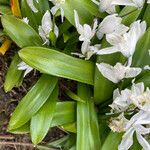
Scilla mischtschenkoana
Early squill · Mishchenko squill · White squill · Misczenko squill
Description
Source: leafsnapScilla mischtschenkoana is a small, bulbous perennial plant in the Asparagaceae family, native to the Caucasus region. It thrives in rocky areas, meadows, and forests. The plant features narrow leaves measuring 10-15 cm in length and about 1 cm in width. Its bell-shaped flowers have six petals and generally appear in blue or purple, although white or pink varieties also exist. These flowers bloom in early spring and last for several weeks. Scilla mischtschenkoana is popular as an ornamental plant due to its attractive flowers and ease of cultivation. It prefers well-drained soil with moderate moisture but can tolerate drought conditions once established. For optimal spring blooms, bulbs should be planted in the fall. Traditionally, the plant has been used medicinally to treat respiratory ailments, fever, and inflammation, thanks to its anti-inflammatory properties. Overall, Scilla mischtschenkoana makes a beautiful addition to any garden or landscape, boasting vibrant blooms and requiring minimal maintenance.
Care Guide
💧 Water Every 7 days
White squill is native to temperate regions and grows best in moderately moist soil. Although it is drought-resistant, it thrives with balanced humidity. For healthy growth, water it weekly, letting the soil dry out a bit between waterings. Consistent watering is especially crucial during the active growing season to ensure the best flowering results.
How should I water my White squill plant?
To properly water the White squill, use filtered water at room temperature. Tap water can be harmful due to potential particles. It is important to use room temperature or slightly warmer water as the plant prefers warmer conditions and cold water can be a shock. Avoid overhead watering as it may lead to foliage issues. Instead, soak the soil with filtered room temperature water until it is fully saturated. This helps the plant by keeping the roots moist and aiding in nutrient absorption.
What should I do if I give my White squill plant too much or too little water?
Overwatering is a common issue for White squill plants and can cause wilting, yellowing of stems and leaves, and even diseases like root rot, mold, and mildew that can be fatal. Underwatering, on the other hand, is less common but can still occur and result in brittle, brown leaves. It's important to recognize the signs of overwatering early and adjust your watering schedule promptly. If the soil drains poorly, replace it with a well-draining potting mix. Alternatively, if you notice signs of underwatering, simply water more regularly until the signs improve.
How frequently should I water my White squill?
If your White squill plant is in a pot, the best way to determine if it needs water is by checking the soil moisture. Simply insert your finger into the soil, and if the first two to three inches are dry, it's time to water. The same method can be used for White squill plants grown outdoors in the ground. When the top few inches of soil have dried out, it's a sign that watering is needed. Usually, during spring and early fall, watering once a week is sufficient. However, in extremely hot weather, you may need to water the plant twice or more per week. It's worth noting that mature, well-established White squill plants have a remarkable ability to tolerate drought.
How much water does my White squill plant need?
To water your White squill effectively, be generous with the amount of water you give. Make sure the first two to three inches of soil are dry before watering. It's important to thoroughly soak the soil, allowing excess water to flow out of the pot's drainage holes. If you don't see any excess water draining, you may have underwatered the plant. However, avoid letting water accumulate inside the soil, as this can harm the plant. If there is no water draining through the pot, it may indicate poor soil drainage, which is not good for the plant's health. If the plant is outdoors, 1 inch of rain per week should be enough.
How do I water my White squill at various growth stages?
The water needs of the White squill can vary depending on its growth stages. In the first few years of its life or after being transplanted, it requires more water. During this time, the plant focuses on developing new roots for future growth, and these roots need extra moisture. As the White squill matures, it will need less water. Additionally, during the bloom period, when the plant is developing flowers, it may require more water due to the increased moisture usage.
☀️ Light Full sun
White squill performs best in full sun, though it tolerates moderately lit locations. Coming from sunny habitats, it grows more favorably under those conditions. Excessive shade can negatively affect its health and result in poorer development. Its light requirements remain largely unchanged across different growth stages.
What are the sunlight requirements for White squill?
White squill requires full sun exposure of above 6 hours of sunlight to thrive optimally, but it can also cope with partial sun exposure of about 3-6 hours of sunlight. It's crucial to observe the movement of sunlight through the garden to ensure the plants receive the ideal balance of light and shade. This balance ensures the plant's health, promoting stronger and healthier growth. Insufficient sunlight can lead to several growth issues, so it's recommended that the plant's position is adjusted according to its sunlight needs.
What are the essentials for growing a healthy White squill?
The White squill thrives best under maximum sun exposure, benefiting from its origin in sunny habitats. While it can tolerate moderately lit environments, too much shade may weaken its development. There's no significant change in light requirements during different growth stages. If natural sunlight is inadequate, especially in winter or less sunny areas, artificial lighting can be a crucial solution. It's advisable to use artificial lights, like LED lights, to provide 30-50W/sq ft for full sun plants, 20-30W/sq ft for partial sun plants, and 10-20W/sq ft for full shade plants. The artificial light should mimic natural sunlight both in placement and duration, aiding in the plant's optimal growth.
What symptoms indicate insufficient light in White squill?
Symptoms of insufficient light in White squill include the growth of smaller new leaves, leggy or sparse growth, premature leaf drop to conserve resources, delayed growth or a total halt in growth, and the development of pale or irregularly colored new leaves. Chlorosis, or the loss of green color in leaves, sunscald, which damages plant tissue, leaf curling as a defense against excessive sunlight, wilting due to increased water loss, and leaf scorching are also common problems. These symptoms highlight the importance of providing adequate light to White squill, either naturally or through artificial sources.
How can I address insufficient sunlight for my White squill?
To address insufficient sunlight for White squill, gradually increase its exposure to natural light by moving it closer to a sunnier spot each week until it gets at least 6 hours of direct sunlight daily. If it's indoors and not easily movable, consider using artificial light sources like desk or ceiling lamps for at least 8 hours a day or investing in professional plant grow lights. For outdoor plants, finding the optimal spot for sunlight without sudden changes in light intensity is crucial. Pruning obstructing trees or transplanting smaller plants to sunnier locations can enhance sunlight access. It's important to note that while parts of the plant that suffered from insufficient sunlight may not recover, new growth should be healthier with improved light conditions.
🌡️ Temperature 5–32.2°C
White squill comes from areas with varied climates and therefore can tolerate a broad temperature range. It prefers temperatures of 41 to 90 °F (5 to 32 ℃). Seasonal temperature adjustments may be required for optimal growth.
What is the native climate of White squill and how does it adapt to temperature changes?
White squill, botanically known as Scilla mischtschenkoana, originates from regions with diverse climates, allowing it to adapt to a broad spectrum of temperatures, ranging from 41 to 90 °F (5 to 32 °C). The plant exhibits strong cold resistance, making special frost protection measures generally unnecessary. Despite its resilience, in environments where winter temperatures may plummet below -30°C, it is crucial to implement cold protection strategies, such as covering the plant with insulating materials like soil or straw. Additionally, to combat the potential for drought and water scarcity through winter and early spring, it is advised to water the plant thoroughly before the onset of the first freeze in autumn, ensuring the soil is moist as it freezes.
How does White squill react to low temperature conditions and what are the suggested solutions?
White squill thrives in temperatures above 5°C and can withstand cold down to -25°C without significant problems. However, when temperatures fall beyond -30°C, the plant may exhibit reduced or even absent sprouting in the subsequent spring, though there might not be noticeable changes during the winter itself. To mitigate the effects of such low-temperature exposure, it's recommended to remove parts of the plant that fail to sprout in the spring.
What should be done if White squill is exposed to high temperatures?
During the summer months, it's crucial to ensure that White squill’s exposure to temperatures remains below 32°C, as exceeding 35°C can cause the plant’s leaves to lighten in color, curl, become vulnerable to sunburn, or in severe cases, lead to wilting and drying out of the entire plant. To help protect and revive the plant from such conditions, it's advisable to trim any sunburned or dried parts, relocate the plant to a shadier spot, or use a shade cloth to shield it from the midday and afternoon sun. Moreover, watering the plant in the morning and evening can help maintain soil moisture, offering additional support during hot weather.
💨 Humidity
🪴 Soil 6-7
🌱 Fertilizer
For White squill, the primary time to apply fertilizer is early spring when the flowers are forming. The appropriate fertilizer promotes better blooms and helps White squill produce attractive flowers. Fertilizing in early spring ensures excellent flowering during the season and supplies energy for dormant growth phases.
Why is it important to apply fertilizer to my White squill?
Fertilization is important for the White squill for a few main reasons. Firstly, it provides essential nutrients that contribute to the plant's overall growth, both above and below the ground. Despite this, the White squill actually has relatively low fertilization requirements and can sometimes survive without it. However, consistent annual fertilization can greatly benefit the White squill by promoting its survival and potentially improving the longevity and appearance of its flowers. Therefore, those who want their White squill to thrive and look its best should prioritize annual fertilization.
When should I fertilize my White squill?
Fertilizing a White squill is best done in late winter to early spring when the plant is transitioning from dormancy to active growth. This timing promotes healthy growth and sets the plant up for a successful season. While early spring is the most beneficial time to fertilize, it is also acceptable to fertilize the White squill in the fall. However, it is not recommended to feed the plant during summer or winter.
When is it best not to put fertilizer on my White squill plants?
To properly care for your White squill, it is best to only fertilize during late winter and early spring. This plant has low fertilizer needs, so a single annual feeding will suffice. Fertilizing during spring, summer, and fall can easily lead to overfertilization and its complications. The only exception is if you missed fertilizing in the spring, then it is okay to feed it in the fall. Additionally, there is no need to fertilize during the winter because the White squill is in a dormant growth phase and does not produce new growth. Therefore, it is not advisable to fertilize it during most of the winter.
What kind of fertilizer does my White squill plant need?
To ensure the healthy growth of White squill, any general-purpose fertilizer with a balanced ratio of the three main plant nutrients will suffice. However, some nutrient blends are particularly beneficial. For instance, many gardeners believe that a higher amount of phosphorus promotes stronger roots and better flowers. Considering White squill is a flowering plant, it may be best to use a phosphorus-rich fertilizer. You can use either granular or liquid fertilizer, as long as it contains sufficient nutrients. Alternatively, organic methods such as compost or manure can also greatly improve the soil for your White squill.
How should I give nutrients to my White squill plant?
To fertilize a White squill, the most common method is to use a granular or pellet fertilizer around the plant. It is important to time the fertilization as the plant transitions from winter dormancy to active growth. In early spring, wait for the shoots to emerge from the soil before applying the fertilizer. If you prefer liquid fertilizer, dilute it with water before applying. Regardless of the type of fertilizer used, it is recommended to moisten the soil before, during, and after application.
🪴 Pot & Repot
✂️ Pruning
The white squill is a bulbous plant featuring flowers that range from white to pale blue. In early to late spring, after the blooming period, it requires minimal pruning. Focus on deadheading the spent flowers and removing any damaged foliage to encourage healthy growth. Make sure to use clean, sharp tools to ensure precise cuts and to avoid spreading disease.
🌿 Propagating
🐛 Diseases & pets
☠️ Toxicity
Characteristics
- Plant Type
- Herb
- Life Cycle
- Perennial
- Genus
- Scilla
- Family
- Asparagaceae
- Hardiness Zone
- 4-8
- Mature Height
- 15 cm
- Mature Spread
- 20 cm
- Leaf Color
- Green
- Leaf Type
- Deciduous
- Flower Color
- Blue, White
- Flower Size
- 2.54 cm
- Bloom Time
- Late winter, Early spring
- Planting Time
- Summer, Autumn
- Harvest Time
- Mid spring, Late spring
- Native Area
- Iran, Armenia, Azerbaijan