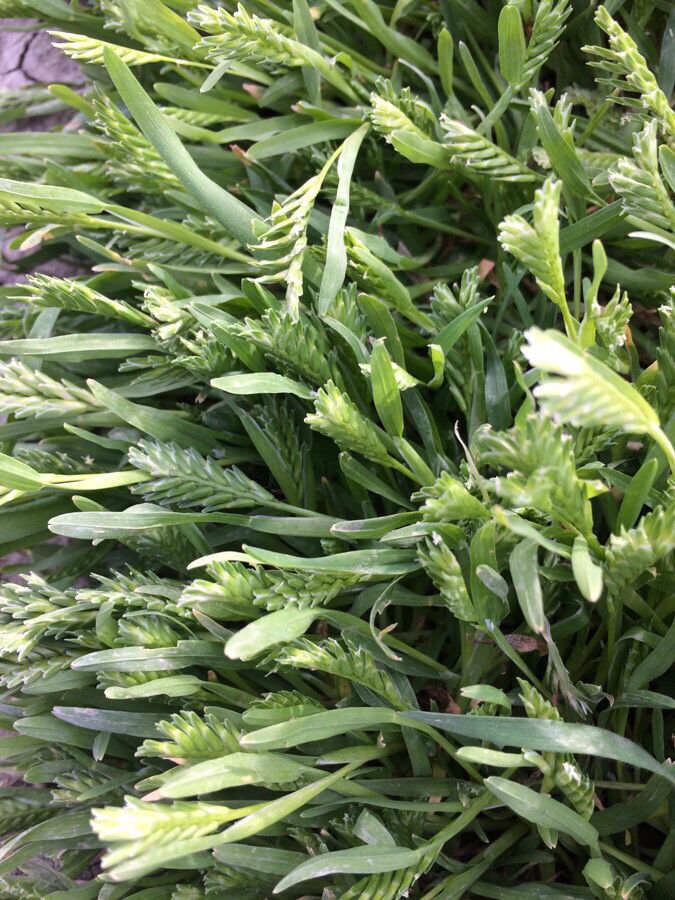
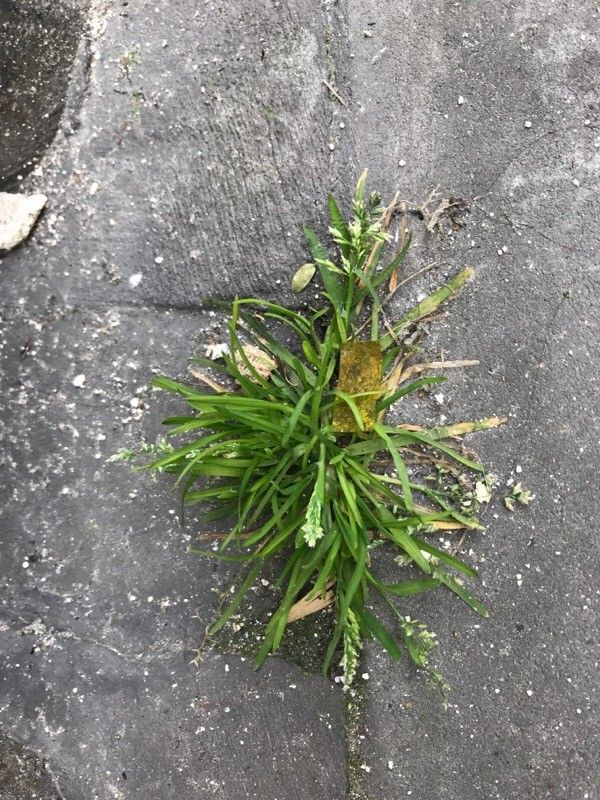
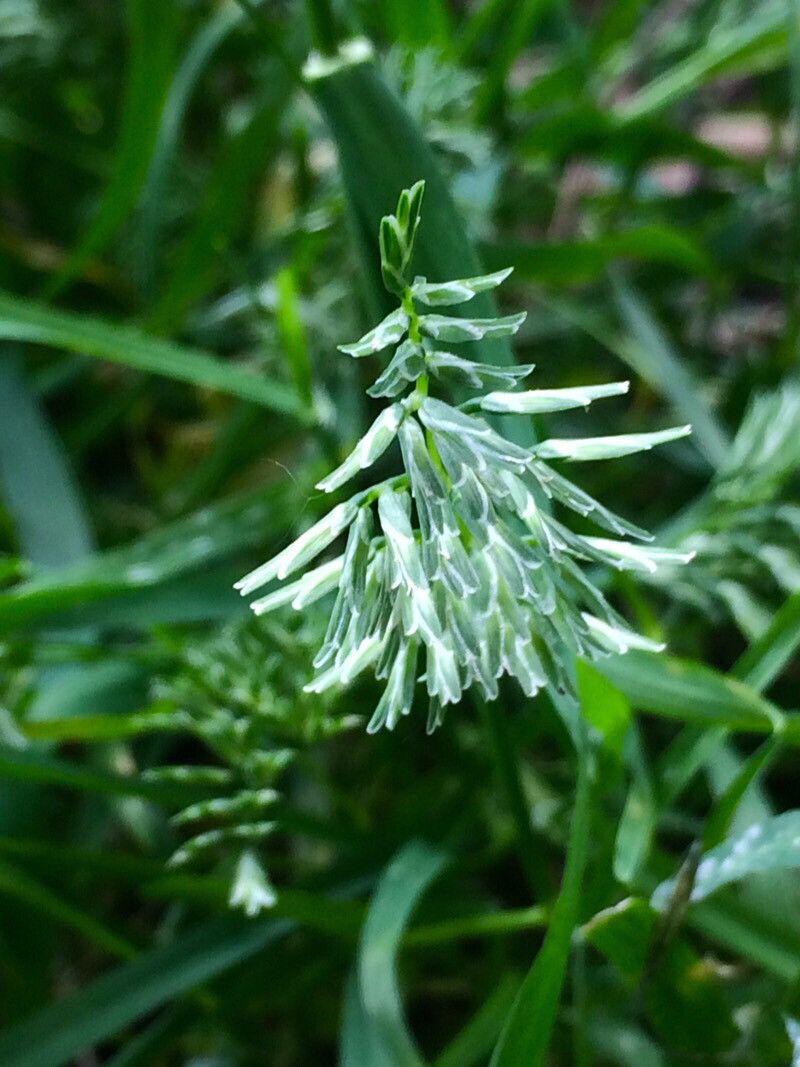
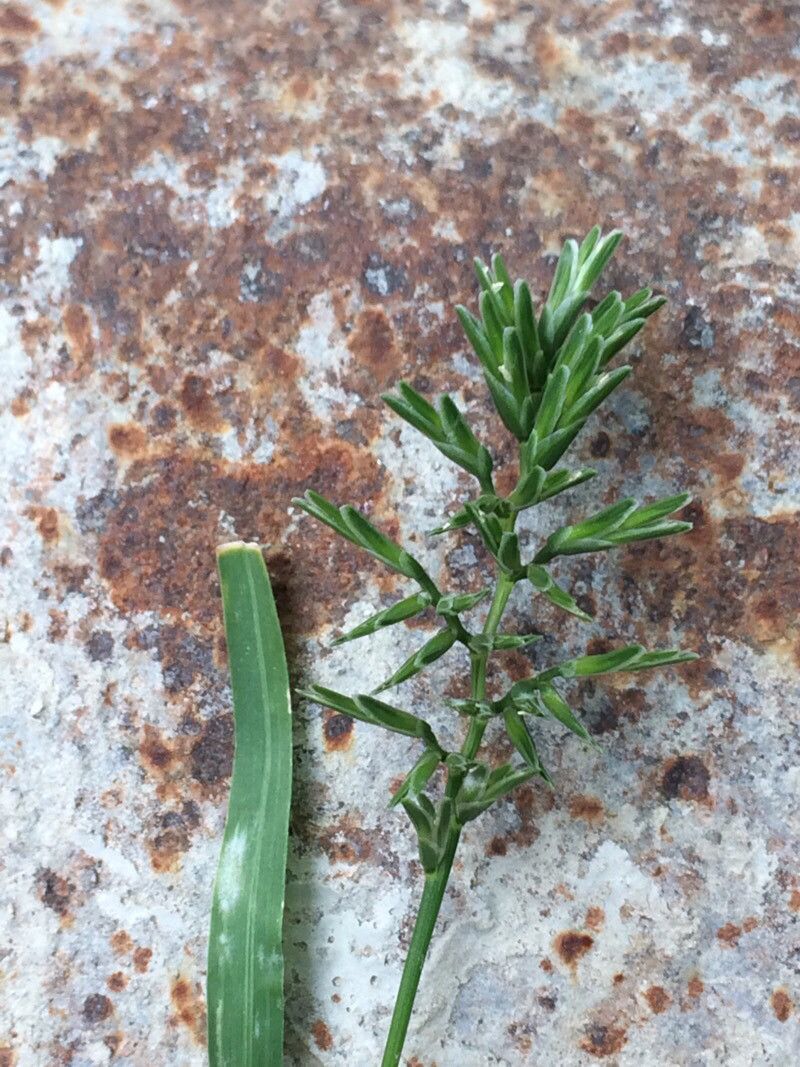
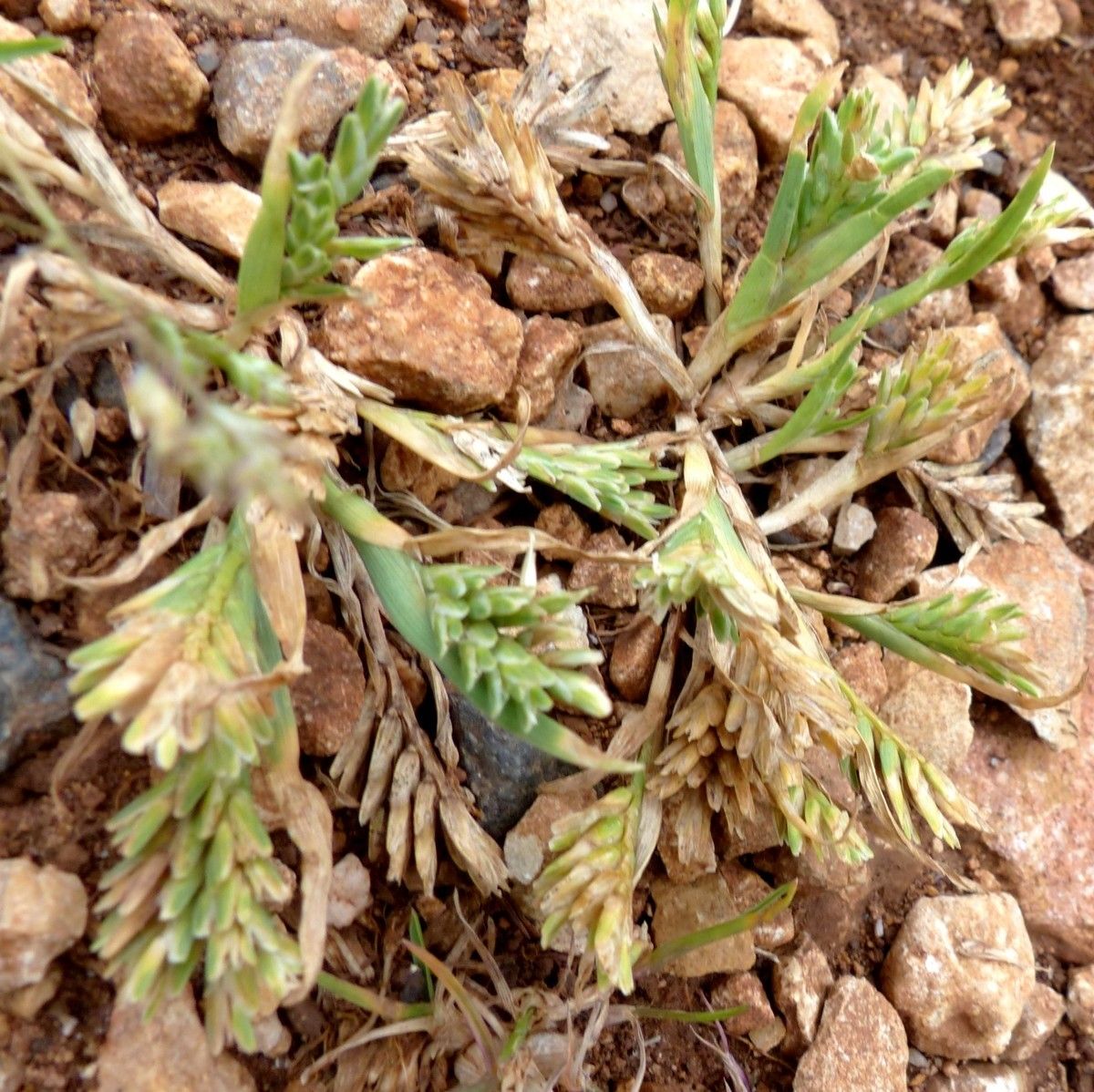
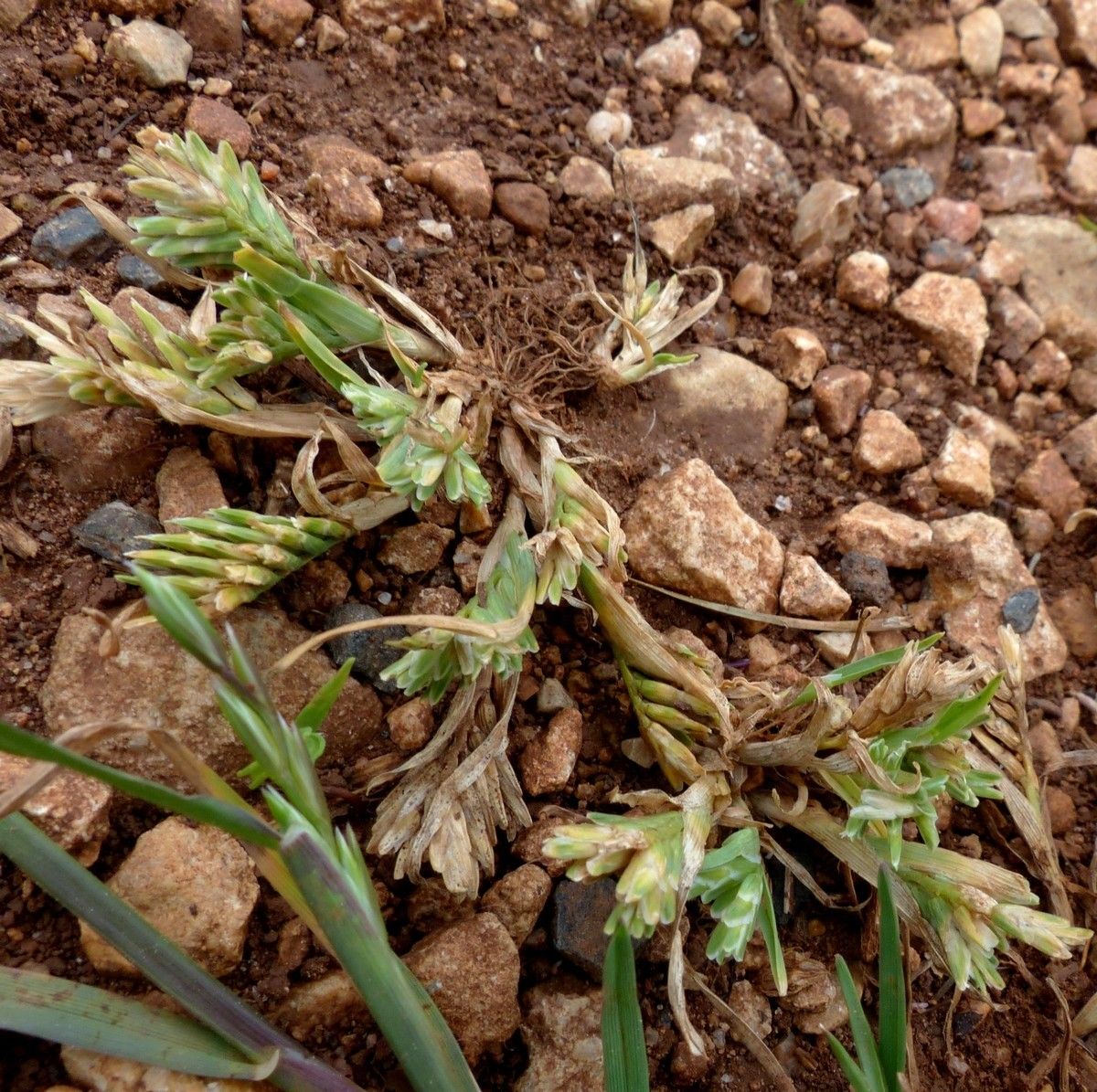
Sclerochloa dura, commonly known as hard grass or tough hardgrass, is a species of grass belonging to the Poaceae family. Native to Europe, Asia, and North Africa, this plant typically thrives in dry, rocky habitats such as cliffs, rocky slopes, and stony fields.
This grass features distinctive tough stems that can grow up to 50 cm in height. Its narrow, pointed leaves exhibit a bluish-green color. The inflorescence consists of small spikelets arranged in dense clusters at the top of the stem.
Sclerochloa dura has adapted well to harsh environments due to its ability to tolerate drought conditions and poor soil quality. It also serves as an important food source for grazing animals like sheep and goats.
In traditional medicine, Sclerochloa dura is valued for its anti-inflammatory properties, which can help alleviate pain caused by arthritis and other inflammatory conditions.
Overall, Sclerochloa dura is an intriguing plant species with unique adaptations that allow it to thrive in challenging environments while providing significant ecological benefits for grazing animals.
Fairground grass shows strong resistance to disease and is generally not susceptible to illnesses. Regarding care, this plant is relatively low-maintenance. Planted outdoors, it needs only minimal watering, and larger specimens typically do not require pruning. Smaller plants, however, should be pruned after they have finished blooming. Fairground grass is suitable for anyone with an outdoor area, such as a garden or deck, and does not demand extensive care experience.
How to keep Sclerochloa Dura.
Light
Fairground grass comes from bright, open habitats and performs best in full sun. It can tolerate some partial shade but favors direct sunlight for optimal growth. This plant, which can be annual or biennial, is noted for its sun-loving habit.
Water
Fairground grass, native to temperate regions, thrives best in conditions with moderate moisture but can tolerate short periods of dryness. To keep it healthy, it should be watered once a week. During the growing season, it also benefits from natural rainfall when grown outdoors.
Temperature
Fairground grass is a plant native to temperate regions and prefers climates between 68 and 95°F (20 and 35℃). This temperature range should be carefully monitored throughout the seasons to ensure the plant's optimal health.
Pruning
Fairground grass grows best in compact, well-drained soils. To encourage new growth, it is important to prune any dead foliage from early to late spring. Make sure to sterilize your tools to prevent the spread of disease. After pruning, a light application of fertilizer can help the grass recover and improve its overall health.
Botanical profile.
- Plant Type
- Grass
- Life Cycle
- Annual
- Genus
- Sclerochloa
- Family
- Poaceae
- Hardiness Zone
- 8-10
- Mature Height
- 5 cm to 15 cm
- Mature Spread
- 18 cm
- Leaf Color
- Light Green
- Leaf Type
- Deciduous
- Flower Size
- 1.02 cm
- Bloom Time
- Mid spring, Late spring, Early summer
- Planting Time
- Spring, Summer, Autumn
- Harvest Time
- Summer
- Native Area
- India, Turkey, Austria, Slovakia, Montenegro, Pakistan, Croatia, Slovenia, Morocco, Uzbekistan, Russia, Iraq, Germany, Romania, France, Tajikistan, Tunisia, Czech Republic, Cyprus, Bulgaria, Poland, Armenia, Greece, Ukraine, Lebanon, Serbia, China, Afghanistan, Syria, Kyrgyzstan, Kazakhstan, Italy, Spain, Switzerland, Israel, Iran, Azerbaijan, Algeria, Hungary, Turkmenistan
Other names.
Reader questions.
What are the sunlight requirements for Fairground Grass?
Fairground Grass (Sclerochloa dura) flourishes in environments that offer full sun, which means it needs above 6 hours of sunlight daily, though it can tolerate partial sun, ranging from about 3-6 hours of sunlight. This adaptation stems from its origins in bright, open environments. It's crucial to observe the movement of sunlight through your garden to find the ideal locations for your plants, ensuring they receive the right balance of light and shade to thrive.
What essential care does Fairground Grass need?
Originally from environments rich in sunlight, Fairground Grass thrives best in full sun conditions for optimal growth, though it can also grow in partial sun. If you're growing this plant indoors and natural sunlight is insufficient, especially during winter or in areas that receive less sunlight, artificial lighting becomes essential. Adequate artificial lighting, like LED lights that can mimic natural sunlight by providing specific wavelengths needed by the plant, assists in promoting healthier and faster growth. For plants that love full sun, 30-50W/sq ft of artificial light is recommended, whereas partial sun plants need 20-30W/sq ft, and full shade plants require 10-20W/sq ft.
What are the symptoms of insufficient light in Fairground Grass?
When Fairground Grass does not receive adequate light, particularly when grown indoors, it may exhibit several symptoms indicating light deficiency: smaller new leaves, leggy or sparse growth, accelerated leaf drop, delayed or ceased growth, paler or irregularly colored new leaves, chlorosis (where leaves lose their green color and turn yellow), sunscald characterized by damaged areas on leaves or stems due to intense sunlight, leaf curling as a response to minimize water loss, wilting from rapid water loss leading to droopiness, and leaf scorching where leaf edges become brown, dry, and crispy. These signs help identify if the plant needs more light or is suffering from too much direct sunlight.
How can I address light deficiency in Fairground Grass?
To counteract light deficiency in Fairground Grass, consider the following solutions: For indoor plants, gradually move them to a sunnier spot, ideally near a south-facing window, to ensure at least 6 hours of direct sunlight daily. If moving the plant isn't feasible or for additional lighting, use artificial lights such as desk, ceiling lamps, or professional grow lights for at least 8 hours a day. For outdoor plants, adapt them to sunnier conditions by moving them weekly to avoid shock. Note that parts affected by insufficient light might not recover, but new growth should be healthy post-adjustment. Additionally, reduce obstructions like overhanging branches and consider transplanting smaller plants to sunnier locations with good drainage during their dormant period.