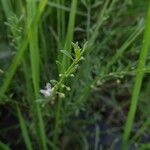
Scoparia dulcis
Sweet Broom · Scoparia-weed · Licorice Weed · Sweet broom weed · Scoparia
Description
Source: leafsnapScoparia dulcis, commonly known as sweet broomweed or licorice weed, is a small perennial herb belonging to the family Scrophulariaceae. Native to tropical and subtropical regions, this plant can be found in many countries, including India, Brazil, Mexico, and the Philippines. The plant typically grows up to 60 cm in height, featuring a woody stem that branches into many slender shoots. Its leaves are small, oval-shaped, and have serrated edges. The flowers are tiny, white or pale pink, and consist of four petals. For centuries, Scoparia dulcis has been used in traditional medicine to treat various ailments, including fever, coughs, colds, headaches, and stomach problems. The plant contains several bioactive compounds, such as flavonoids, which have antioxidant properties that help protect cells from damage caused by free radicals. Beyond its medicinal uses, Scoparia dulcis is also employed in culinary practices in some cultures. It is added to soups or stews for its sweet, licorice-like flavor. Overall, Scoparia dulcis is a fascinating plant with diverse applications both medicinally and culinarily, making it a significant part of traditional medicine practices worldwide.
🎭 Affection, Desire, Faithfulness
Care Guide
💧 Water Every 7 days
Licorice weed originates from tropical regions, where it thrives in consistently warm and moist environments. It prefers soils with balanced moisture levels and typically requires watering once a week. Rainwater is especially beneficial for its growth, as it provides natural irrigation and nutrients, making licorice weed ideal for outdoor cultivation.
How should I water my Licorice weed?
To water Licorice weed, you have a few options. You can use a garden hose with a spray nozzle, a watering can, or any other common watering tool. Licorice weed is not too picky when it comes to water, it can survive with rainwater, tap water, or filtered water. However, it's best not to water this plant from overhead because it can damage the leaves and flowers and may cause disease. For a more effective method, consider setting up a drip irrigation system. This system applies water evenly and directly to the soil, which is ideal for Licorice weed. If you have a container-grown Licorice weed, you can use a cup, watering can, or tap to water it. Just make sure to apply the water directly to the soil.
What do I need to do if I give my Licorice weed too much or too little water?
The solution for underwatering Licorice weed is simple: when you notice it lacks moisture, start watering it regularly. However, overwatering can be a more serious problem. If you don't notice it early, diseases can strike and cause the plant to decline and die. To prevent this, choose a suitable location with plenty of sunlight to dry the soil and good drainage to avoid waterlogging. If you have overwatered Licorice weed in a pot, consider changing it to a new pot with better drainage and loose soil.
How often should I give water to my Licorice weed?
Licorice weed requires regular watering throughout the growing season. In spring, water it once a week. As the season progresses and the weather gets warmer, increase watering to two to three times a week. But be careful not to overwater, as it can harm the Licorice weed. Regardless of watering frequency, make sure the soil remains moist but not wet. Watering Licorice weed in a pot is different. Potted plants need more frequent watering as the soil dries out faster. Generally, water a container-grown Licorice weed a few times per week compared to just once per week for an in-ground plant.
How much water does my Licorice weed require?
There are a few ways to determine the right amount of water for your Licorice weed. Some gardeners prefer to gauge the soil moisture by touching it. They suggest watering until the top six inches of soil feel damp. Alternatively, you can use a specific measurement. Usually, giving your Licorice weed around two gallons of water per week should suffice, depending on the temperature and how quickly the soil dries. However, following strict guidelines may cause overwatering if your plant needs less. When growing Licorice weed in a container, there's a different method. You should water enough to moisten all dry soil layers. To check, simply stick your finger in the soil for moisture. Alternatively, you can water until excess water trickles from the drainage holes.
How can I know if I'm giving enough water to my Licorice weed plant?
Avoiding overwatering can be challenging for Licorice weed. On one hand, these plants have deep roots that need weekly soil moistening. However, Licorice weed is highly prone to root rot, which can cause browning. Underwatering is less common since these plants can survive for a while without additional watering. However, if neglected for too long, the plant may wilt and develop dry leaves.
☀️ Light Full sun
Licorice weed prospers in locations with abundant sunlight. Its capacity for strong, optimal growth depends largely on receiving ample sun. Differences in light exposure do not influence its growth at different stages. The plant originates from habitats that receive high levels of solar radiation. Too much or too little light can cause a decline in its vigor or restrict its growth.
What are the sunlight requirements for Licorice Weed?
Licorice weed requires full sun, which amounts to more than 6 hours of sunlight daily. It's crucial to observe how sunlight moves through your garden to find spots that offer a balance of light and shade, ensuring optimal growth for your plants. Licorice weed thrives in environments with abundant sunlight exposure, which is essential for its optimal and robust growth. Its origin habitat is rich in solar radiation, suggesting that both excessive and insufficient light could negatively affect the plant's health and growth.
How does artificial lighting support indoor Licorice Weed plants?
For indoor Licorice Weed plants where natural sunlight is insufficient, especially in winter or less sunny spaces, artificial lighting becomes essential for promoting healthy growth. Choosing the right type of artificial light, like LED lights, enables customization to provide specific wavelengths needed for plant growth. Full sun plants require 30-50W/sq ft, partial sun 20-30W/sq ft, and full shade plants 10-20W/sq ft of artificial light. The light source should be placed 12-36 inches above the plant, and the duration should mimic natural daylight hours, usually 8-12 hours per day, to facilitate optimal growth.
What are common symptoms of inadequate light in Licorice Weed?
Licorice weed exhibits several symptoms when subjected to inadequate light, including small and irregularly colored new leaves indicating a lack of chlorophyll and essential nutrients. The plant may also experience leggy or sparse growth, where the spaces between leaves or stems elongate, making the plant appear sparse and weak. Other symptoms include faster leaf drop, slower or halted growth, chlorosis (leaves turning yellow), sunscald (damage from intense light exposure), leaf curling as a defense against excessive sunlight, wilting due to increased water loss, and leaf scorching characterized by brown, dry, and crispy leaf edges.
How can I address light-related issues for Licorice Weed?
To tackle light-related issues for Licorice Weed, ensure the plant receives at least 6 hours of direct sunlight daily by gradually moving it to sunnier locations each week. For indoor plants, utilizing a south-facing window or artificial lights for at least 8 hours daily can provide additional light. Outdoor plants should also be moved gradually to avoid sunburn. Remove obstructions that block sunlight or consider transplanting smaller plants to sunnier locations, ensuring they are moved during their dormant period for minimal stress. Note that parts of the plant already affected by sunlight insufficiency may not recover fully, but new growth should be healthy following these adjustments.
🌡️ Temperature 15–37.8°C
Licorice weed is usually found in its native habitat where temperatures range from 68 to 100.4 °F (20 to 38 ℃). This plant favors warmer climates. In cooler regions, consider bringing the plant indoors during the winter months.
What is the ideal temperature range for growing Licorice weed?
Licorice weed thrives in its native environment where the temperatures range from 68 to 100.4 °F (20 to 38 °C), preferring warmer climates. It is extremely heat-loving, and exposure to cold temperatures can damage the plant. If you are in a cooler climate, it is advisable to move the plant indoors during the winter months to protect it from the cold. Keeping the plant at temperatures above 20°C throughout the winter is beneficial for its growth, while temperatures approaching 0°C can be detrimental.
How does low temperature affect Licorice weed and what are the solutions?
Licorice weed is not tolerant of low temperatures and thrives best when the temperature is above 20°C. Exposure to temperatures below -10°C can cause the leaves to lighten in color, and after frost damage, the leaves may turn brown or black, displaying symptoms such as wilting and drooping. To mitigate frost damage, trim off the frost-damaged parts and move the plant immediately indoors to a warm environment for cold protection. Placing the plant near a south-facing window ensures ample sunlight, but avoid placing it near heaters or air conditioning vents to prevent the air from becoming excessively dry.
How does high temperature affect Licorice weed and what are the solutions?
During summer, it's important to ensure that Licorice weed's surrounding temperature does not exceed 38°C. When temperatures surpass 43°C, the leaves of Licorice weed may lighten in color and the plant becomes more susceptible to sunburn. To help the plant recover from sunburn, trim away the sunburned and dried-up parts. Then, relocate the plant to an area that provides shade during the peak sun hours of midday and afternoon. Watering the plant in the morning and evening helps to keep the soil adequately moist and supports the plant's recovery and health.
💨 Humidity
🪴 Soil 5-7
🌱 Fertilizer
Licorice weed does well with regular, dilute fertilizer applications to encourage healthy leaf development. Fertilize Licorice weed about once a month during the summer. Nitrogen is important for foliage, and providing nitrogen-rich sources helps Licorice weed flourish.
🪴 Pot & Repot
✂️ Pruning
To ensure licorice weed thrives, prune it from early to late spring. Begin by removing any dead stems and trimming overgrown branches to maintain a compact shape. Thinning the interior branches will improve air circulation and reduce the risk of disease. Regular pruning promotes healthy growth and helps control invasiveness. Remember to always sanitize your tools to prevent the spread of pathogens.
🌿 Propagating
🐛 Diseases & pets
☠️ Toxicity
Characteristics
- Plant Type
- Herb
- Life Cycle
- Annual, Perennial
- Genus
- Scoparia
- Family
- Plantaginaceae
- Hardiness Zone
- 8-12
- Mature Height
- 91 cm
- Mature Spread
- 30 cm
- Leaf Color
- Green, Dark Green
- Leaf Type
- Evergreen
- Flower Color
- White
- Flower Size
- 0.05 cm to 0.10 cm
- Bloom Time
- Early summer, Mid summer
- Planting Time
- Spring, Summer, Autumn
- Harvest Time
- Mid summer, Late summer
- Native Area
- Sri Lanka, Burkina Faso, Belize, India, Malaysia, Angola, Mexico, Guatemala, Madagascar, Yemen, Guinea-Bissau, Fiji, Jamaica, Benin, Mali, Cuba, Indonesia, Cambodia, Cameroon, Mozambique, Venezuela, Ethiopia, Congo, Nepal, Saudi Arabia, Central African Republic, Honduras, Peru, South Africa, Zambia, Sudan, Philippines, Mauritania, Laos, Bangladesh, Guinea, Panama, Chad, China, Colombia, Bahamas, Bolivia, Vietnam, Myanmar, Japan, Togo, El Salvador, Senegal, Singapore, Nicaragua, Guyana, Ecuador, Côte d'Ivoire, Bhutan, Costa Rica, Thailand, Gabon