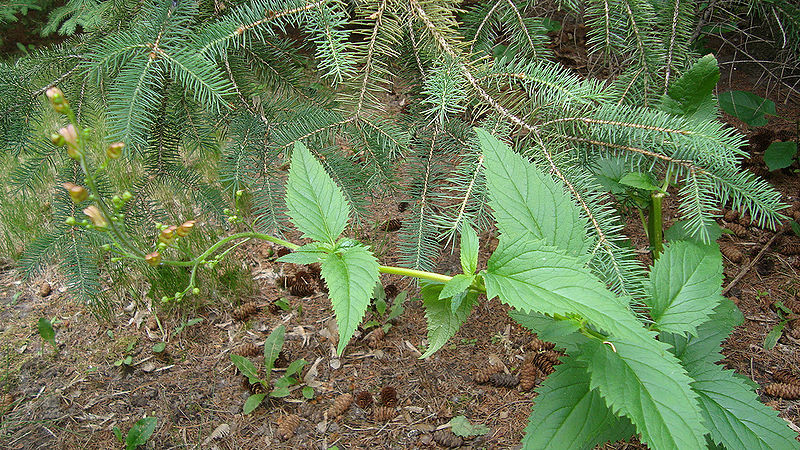
Scrophularia lanceolata
American figwort · Lance-Leaf Figwort · Lanceleaf figwort · Western figwort · Lance-leaved figwort
Description
Source: leafsnapScrophularia lanceolata, commonly known as the lance-leaved figwort, is a perennial herbaceous plant that belongs to the family Scrophulariaceae. Native to Europe and Asia, this plant thrives in damp meadows, woodland edges, and along riverbanks. The lance-leaved figwort can reach a height of up to 1.5 meters and has a woody stem that often branches at the top. Its leaves are long, narrow, and have serrated edges, growing in opposite pairs along the stem. From June to September, the plant produces small greenish-brown flowers arranged in clusters at the tops of the stems. These flowers feature a distinctive tubular shape with five petals that flare outward. Historically, the lance-leaved figwort has been valued for its medicinal properties, particularly its anti-inflammatory effects, which are useful in treating skin conditions such as eczema and psoriasis. Additionally, it has been used as an expectorant for relieving coughs and respiratory infections. Overall, Scrophularia lanceolata is an attractive herbaceous perennial with medicinal benefits. It is valuable both for its aesthetic appeal in gardens or natural landscapes and for its therapeutic uses when properly utilized by herbalists or medical professionals specializing in natural remedies.
Care Guide
💧 Water Every 7 days
The lanceleaf figwort, a plant native to temperate regions, thrives best in moderately moist soil. For optimal health, it should be watered once a week. This plant prefers to be grown outdoors, where it can benefit from natural rainfall. During its active growing season, maintaining adequate soil moisture is essential for robust growth and resilience.
☀️ Light Partial sun
Lanceleaf figwort favors locations with moderate sunlight. This preference comes from its native environment, where nearby vegetation provides some protective shade. Still, it can tolerate periods without sunlight. Although the plant can grow under a range of light conditions, too little or too much sun can stress it and affect overall growth.
What are the sunlight requirements for lanceleaf figwort?
Lanceleaf figwort, or Scrophularia lanceolata, thrives in moderate sunlight, aligning with its native habitat's conditions of partial sun, requiring about 3-6 hours of sunlight daily. Despite its preference, it's adaptable to varying light levels, from full sunlight to partial shade. It's crucial, however, to observe how sunlight moves through your garden to find spots offering a balance of light and shade, ensuring the plant's well-being. Both excessive and insufficient sunlight can stress the plant, affecting its growth.
How does artificial lighting affect lanceleaf figwort indoor growth?
For lanceleaf figwort growing indoors, when natural sunlight is limited, especially during winter or in less sunny spaces, artificial lighting can play a critical role in maintaining optimal growth. Good practice includes choosing the right artificial light, like LED, which can be customized to meet your plant's needs. Full sun plants generally require 30-50W/sq ft, partial sun plants 20-30W/sq ft, and shade plants 10-20W/sq ft of light. The light source should be placed 12-36 inches above the plant, aiming for 8-12 hours of light per day to mimic natural daylight.
What are common signs of incorrect light exposure for lanceleaf figwort?
Signs of incorrect light exposure in lanceleaf figwort can vary. Inadequate light may result in smaller new leaves, leggy or sparse growth, faster leaf drop, and slower or halted new growth, indicating light deficiency. On the other hand, excessive sunlight can cause issues like chlorosis, sunscald, leaf curling, wilting, and leaf scorching, damaging the plant's health. These symptoms reflect the plant's struggle with either insufficient or excessive light, highlighting the need for balanced sunlight exposure.
How can I address sunlight-related issues in lanceleaf figwort?
To address sunlight-related issues in lanceleaf figwort, both indoor and outdoor approaches can be beneficial. Indoors, progressively move the plant to sunnier spots each week or use artificial lighting, such as desk or professional grow lights, for at least 8 hours a day. For outdoor plants, gradually transition them to areas with more sunlight to avoid sunburn. Reducing obstructions, like pruning trees that block light, or transplanting smaller plants during their dormant period to brighter locations with good drainage, can improve light access. It's important to ensure affected parts may not recover, but new growth, post-adjustment, should be healthy.
🌡️ Temperature 5–35°C
Lanceleaf figwort is native to habitats with average temperatures ranging from 41 to 95 °F (5 to 35 ℃). This plant favors a moderate climate and may need seasonal adjustments to thrive.
What is Lanceleaf figwort and where is it native to?
Lanceleaf figwort, with its botanical name Scrophularia lanceolata, is native to environments that have average temperatures ranging from 41 to 95 °F (5 to 35 °C). This plant is well-adapted to moderate climates and demonstrates strong cold resistance, making it a versatile species for various seasonal settings.
Does Lanceleaf figwort require special frost protection?
Lanceleaf figwort is noted for its strong cold resistance, which means special frost protection measures are usually not necessary. However, in extreme cases where winter temperatures are expected to drop below -30°C, it is important to provide protection to the plant by covering it with soil or straw. Additionally, watering the plant abundantly before the first freeze helps keep the soil moist and prevents drought and water scarcity during winter and early spring.
How does Lanceleaf figwort react to low temperatures, and what are the solutions if it's affected?
Lanceleaf figwort thrives when the temperature is above 5°C and shows significant cold tolerance by surviving winter temperatures above -25°C. However, if temperatures fall below -30°C, the plant may not show immediate signs of distress but could experience reduced or even absent sprouting in the spring. Should this happen, it is recommended to remove any parts of the plant that have failed to sprout as a solution to encourage regrowth in the spring.
What should be done if Lanceleaf figwort is exposed to high temperatures?
During the summer, it is important to ensure that Lanceleaf figwort remains in temperatures below 35°C. Exposure to temperatures exceeding 38°C can cause the leaves to lighten in color, become prone to curling, and in severe cases, result in the wilting and drying of the entire plant. To mitigate these risks, affected parts should be trimmed away. Moving the plant to a shaded area or using a shade cloth can protect it from midday and afternoon sun. Additionally, watering the plant in the morning and evening helps maintain soil moisture and keep the plant healthy.
💨 Humidity
🪴 Soil 6-7
🌱 Fertilizer
Typically one fertilizer application in spring is enough for Lanceleaf figwort, though multiple feedings can enhance growth. Fertilize about every month to six weeks. Feeding improves the leaves' appearance and function, helping them retain uniform color and a healthy texture. It also promotes root development and nutrient uptake for the plant's long-term health.
🪴 Pot & Repot
✂️ Pruning
The lanceleaf figwort flourishes in well-drained soil and is distinguished by its lance-shaped leaves. To promote optimal growth and flowering, it is best to prune this plant from early to late spring. During pruning, focus on removing dead or crowded stems, but be cautious not to cut too much. Regular pruning helps improve air circulation, reduces the risk of disease, and enhances the plant's aesthetic appeal.
🌿 Propagating
🐛 Diseases & pets
☠️ Toxicity
Echeverias is not toxic to humans or pets, so it's safe to have it around since no harm toxic substance have been detected that can cause sickness or allergies
Characteristics
- Plant Type
- Herb
- Life Cycle
- Perennial
- Genus
- Scrophularia
- Family
- Scrophulariaceae
- Hardiness Zone
- 4-9
- Mature Height
- 0.52 m to 1.07 m
- Mature Spread
- 1.52 m
- Leaf Color
- Green, Dark Green
- Leaf Type
- Deciduous
- Flower Color
- Brown, Green
- Flower Size
- 2.54 cm
- Bloom Time
- Mid spring, Late spring, Early summer
- Planting Time
- Spring, Summer, Autumn
- Harvest Time
- Summer
- Native Area
- Africa