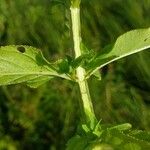
Scrophularia umbrosa
Green figwort · Water figwort · Scarce Water Figwort · Western Figwort · Water betony
Description
Source: leafsnapScrophularia umbrosa, commonly known as the shade figwort, is a perennial herbaceous plant in the Scrophulariaceae family. Native to Europe and Asia, it thrives in shady environments such as woodlands, hedgerows, and damp meadows. This plant can reach heights of up to 1.5 meters and can spread up to 1 meter wide. Its dark green leaves are ovate or lanceolate with serrated edges. The small tubular flowers have a greenish-brown coloration. For centuries, shade figwort has been valued for its anti-inflammatory properties, making it useful in traditional medicine for treating skin conditions like eczema and psoriasis, as well as respiratory issues like asthma. Beyond its medicinal uses, Scrophularia umbrosa is also an attractive ornamental plant suitable for shaded areas in gardens or landscapes. Its dark foliage provides excellent contrast against other plants, while its small flowers add visual interest during the summer months. Overall, Scrophularia umbrosa is a versatile plant that offers both medicinal benefits and ornamental value, making it an excellent addition to any garden or landscape design.
Care Guide
💧 Water Every 7 days
Green figwort is native to moist, shaded areas and prefers soil that remains consistently moist, although it can tolerate moderate drought. To maintain the right moisture level, it is best to water it weekly. This plant is generally grown outdoors and flourishes in well-draining soil, which is essential for its growth.
☀️ Light Partial sun
Green figwort naturally occurs in habitats like forest understories and rocky sites, where it grows in natural shade. It prefers partial sun but can tolerate full sun or full shade, reflecting its adaptable and hardy nature.
What are the sunlight requirements for Green figwort?
Green figwort thrives in environments that mimic its native understory and rocky areas, requiring partial sun, about 3-6 hours of sunlight, but can also grow well in full shade, under less than 3 hours of sunlight. It's important to observe the movement of sunlight through your garden to choose spots that provide an optimal balance of light and shade, ensuring the plant's health and happiness.
How can artificial lighting be used for Green figwort indoors?
Indoor Green figwort plants require adequate lighting, especially when natural sunlight is insufficient. Artificial lights, such as LED lights, can be customized to provide the specific wavelengths needed by the plant. For optimal growth, full sun plants need 30-50W/sq ft of artificial light, partial sun plants 20-30W/sq ft, and full shade plants 10-20W/sq ft. The light source should be placed 12-36 inches above the plant to mimic natural sunlight, with most plants requiring 8-12 hours of light per day.
What are some common symptoms of light deficiency in Green figwort?
When Green figwort is grown indoors with insufficient light, it may exhibit symptoms such as smaller new leaves, leggy or sparse growth, faster leaf drop, halted growth, lighter-colored or yellow new leaves (chlorosis), sunscald, leaf curling, wilting, and leaf scorching. These symptoms are indicative of the plant struggling with poor light conditions, affecting its health and growth.
How can light exposure be optimized for indoor and outdoor Green figwort plants?
To optimize light exposure for indoor Green figwort, gradually move the plant to sunnier spots or use artificial lighting, such as desk lamps or professional grow lights, for at least 8 hours a day. For outdoor plants, move them gradually to sunnier locations to prevent sunburn. Removing obstructions and transplanting to areas with better sunlight exposure and drainage can also improve conditions for Green figwort. It's crucial to allow plants to adapt to the new light conditions slowly to ensure healthy growth.
🌡️ Temperature 5–32.2°C
Green figwort can tolerate a broad spectrum of temperatures, although its range may still be restricted by particular combinations of moisture and heat. It does best in warm summer conditions with sufficient rainfall or regular watering. Extended stretches of cloudy, rainy weather or prolonged high temperatures can raise the chances of Green figwort dying. In winter, giving the plant adequate protection from the cold can increase its likelihood of surviving.
💨 Humidity
🪴 Soil 6-7
🌱 Fertilizer
Usually one fertilizer application in spring is enough for Green figwort, but several feedings can optimize growth. Apply fertilizer once every month to a month and a half. Fertilizing improves the leaves’ appearance and function, helping maintain even color and a healthy texture. It also encourages root development and nutrient uptake, supporting the plant’s long-term health.
🪴 Pot & Repot
✂️ Pruning
Green figwort features tall stems and tubular flowers, and it benefits from selective pruning between early and late spring. To encourage healthy growth, remove any dead stems and shape the plant to improve air circulation. Regular pruning not only prevents disease but also promotes blooming and maintains a neat appearance.
🌿 Propagating
🐛 Diseases & pets
☠️ Toxicity
Characteristics
- Plant Type
- Herb
- Life Cycle
- Perennial
- Genus
- Scrophularia
- Family
- Scrophulariaceae
- Hardiness Zone
- 4-8
- Mature Height
- 0.49 m to 1.22 m
- Mature Spread
- 30 cm to 61 cm
- Leaf Color
- Dark Green
- Leaf Type
- Deciduous
- Flower Color
- Yellow, Red, Purple, Green
- Flower Size
- 0.51 cm to 0.76 cm
- Bloom Time
- Summer
- Planting Time
- Spring, Autumn
- Harvest Time
- Late summer, Early fall, Mid fall