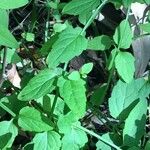
Scutellaria barbata
Barbed skullcap
Description
Source: leafsnapScutellaria barbata, the barbed skullcap, is a species of flowering plant in the mint family, Lamiaceae. It is native to Asia.
Care Guide
💧 Water
Barbed skullcap flourishes in humid environments and requires moderate watering once a week. It is ideally suited for outdoor growth, thriving particularly well during the rainy season when its growth cycle aligns with abundant rainfall.
☀️ Light Partial sun
Barbed skullcap occurs naturally in habitats like forest understories and rocky areas, where it grows in natural shade. It prefers partial sun but can tolerate full sun or full shade, showing its versatility and hardiness.
What are the sunlight requirements for Barbed Skullcap (Scutellaria barbata)?
Barbed Skullcap (Scutellaria barbata) thrives in conditions with specific sunlight requirements. For a plant to be considered in 'full sun,' it needs above 6 hours of sunlight daily. Conversely, 'partial sun' is defined as about 3-6 hours of sunlight each day. It's important to observe how sunlight moves through your garden, allowing you to pick the ideal spots that offer a harmonious balance of light and shade. This careful selection ensures the well-being of your Barbed Skullcap, catering to its natural preference for sunlight exposure.
🌡️ Temperature 15–35°C
Barbed skullcap can adjust to a wide spectrum of temperatures, though its distribution may still be restricted by different combinations of moisture and heat. It performs best in warm summer climates with sufficient rainfall or watering. Extended periods of cloudy, rainy weather, as well as prolonged high temperatures, can raise the chance of Barbed skullcap dying. In winter, adequate protection from cold can enhance the plant's survival rate.
💨 Humidity
🪴 Soil 6-7
🌱 Fertilizer
The best time to fertilize Barbed skullcap is in early spring, as it comes out of dormancy and begins active growth. Fertilizing supplies essential nutrients for healthy development. Although Barbed skullcap requires relatively little fertilizer, applying it annually can improve survival and encourage better, longer-lasting flowers.
🪴 Pot & Repot
✂️ Pruning
To encourage healthy growth and flowering, it's important to carefully prune barbed skullcap. You should prune in early to late spring, removing any dead stems above the leaf nodes. Additionally, thinning out crowded areas will improve air circulation, which helps reduce the risk of disease. This practice also maintains a compact shape, leading to robust blooms each season.
🌿 Propagating
🐛 Diseases & pets
☠️ Toxicity
Characteristics
- Plant Type
- Herb
- Life Cycle
- Perennial
- Genus
- Scutellaria
- Family
- Lamiaceae
- Hardiness Zone
- 7-10
- Mature Height
- 34 cm
- Mature Spread
- 15 cm to 30 cm
- Leaf Color
- Green
- Leaf Type
- Deciduous
- Flower Color
- Blue, Violet
- Flower Size
- 1.02 cm to 1.52 cm
- Bloom Time
- Late spring, Summer
- Planting Time
- Spring, Summer, Autumn
- Harvest Time
- Mid summer, Late summer, Early fall, Mid fall
- Native Area
- Nepal, India, Vietnam, Myanmar, Bangladesh, Laos, Thailand, China