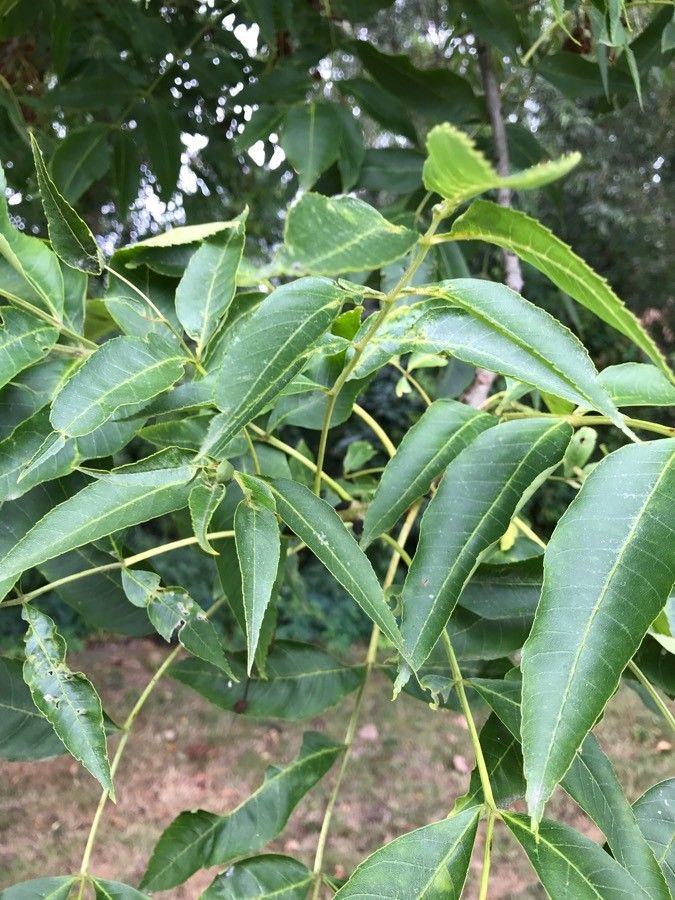
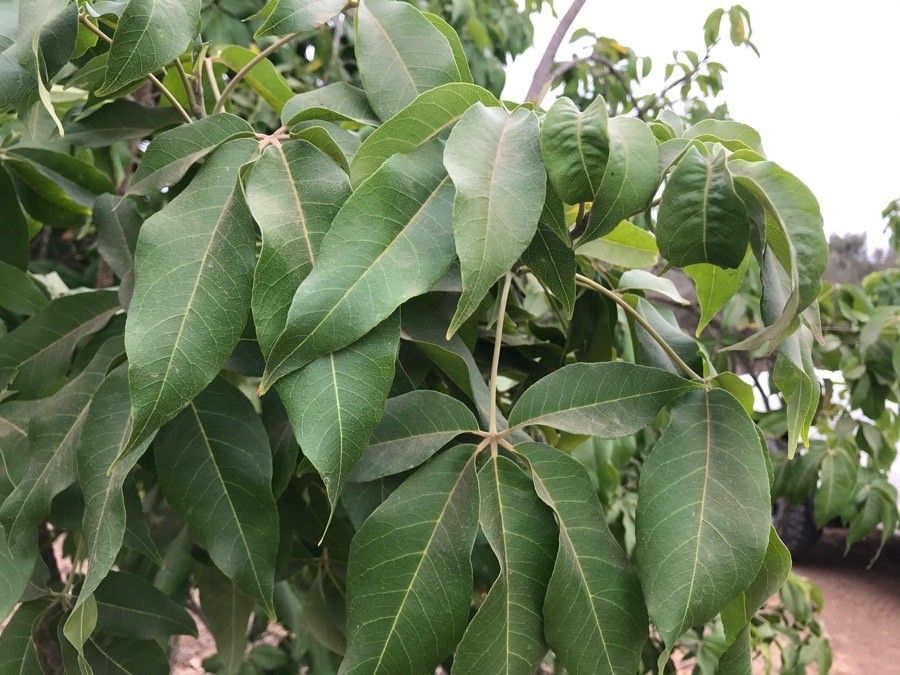
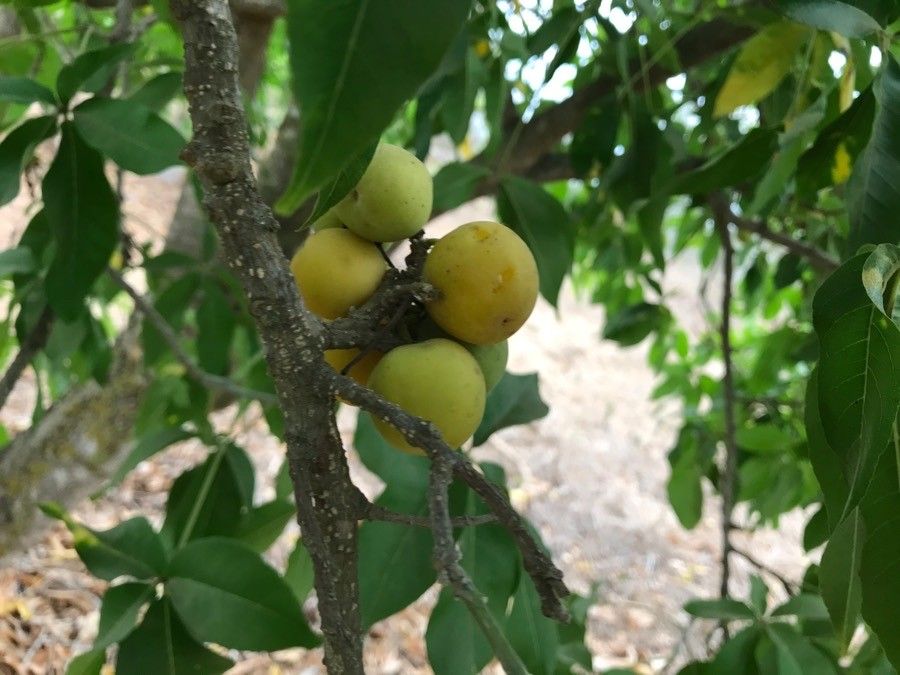
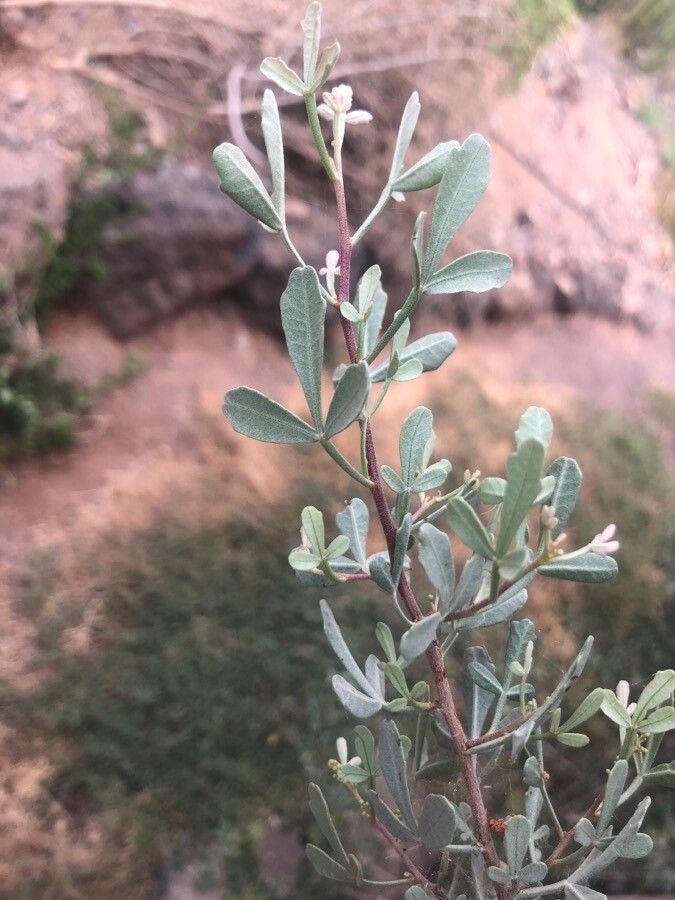
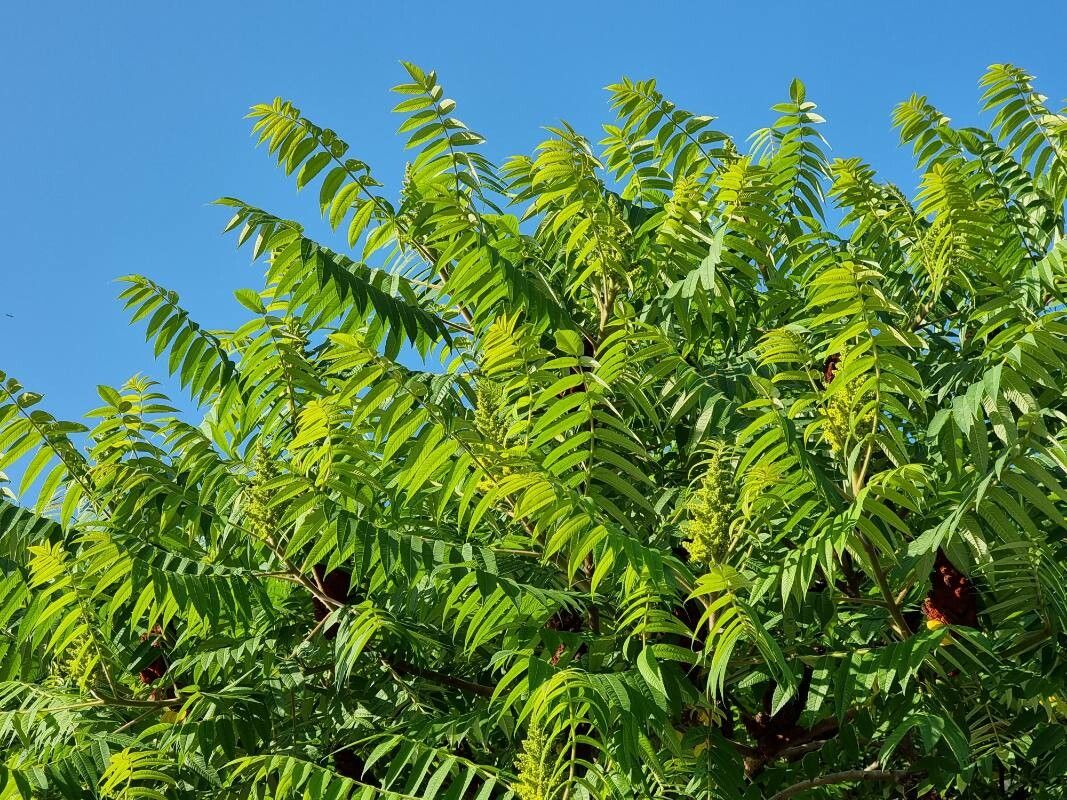
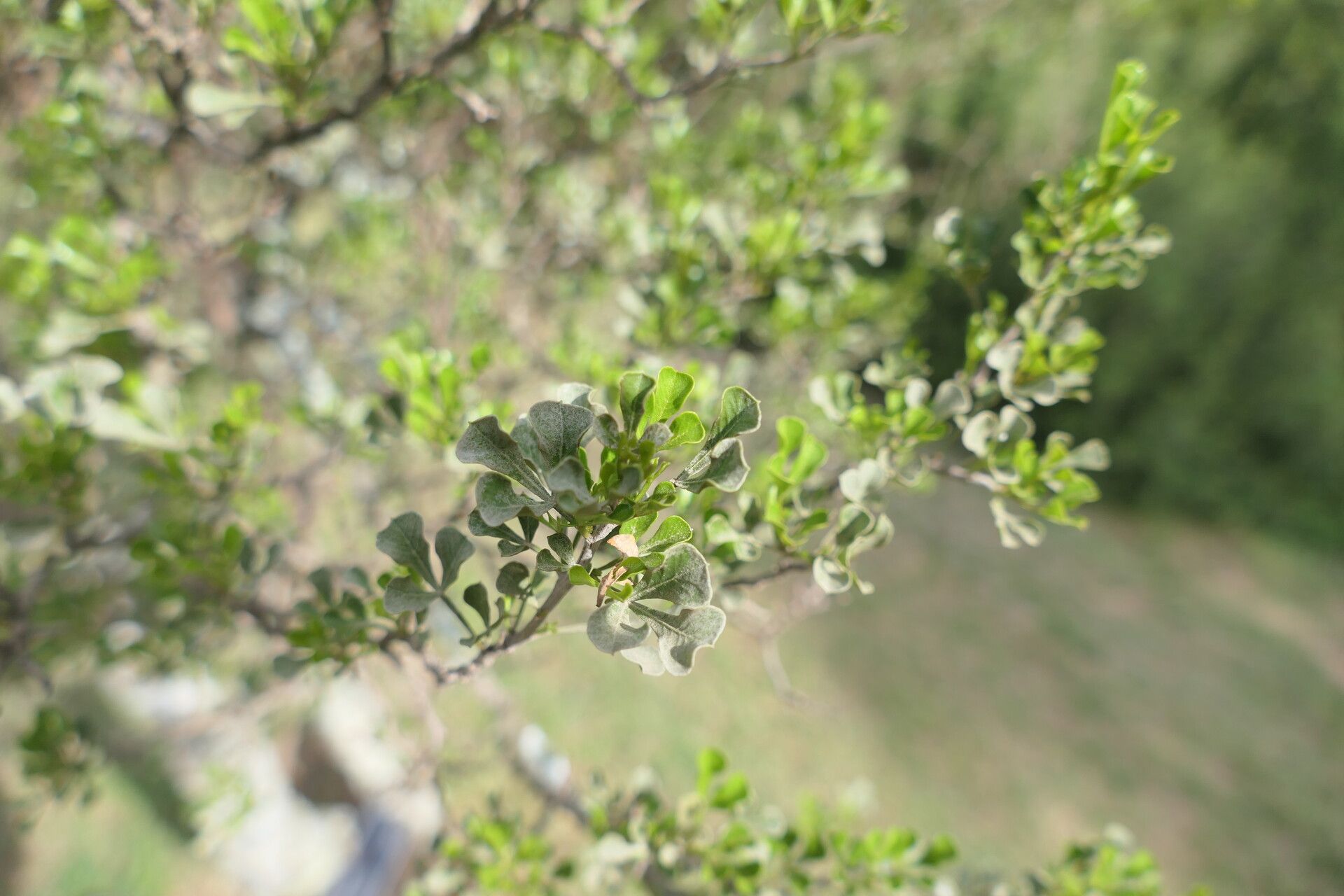
Searsia chirindensis is a medium-sized, semi-deciduous, trifoliate Southern African dioecious tree of up to 10 m tall, rarely 20 m, often multi-stemmed, occurring along the coastal belt from the Cape, through KwaZulu/Natal, Swaziland, Zimbabwe and Mozambique as far north as Tanzania, and growing in a wide variety of habitats such as open woodlands, in forests, along forest margins, in the open, among rocks and on mountain slopes. It was named by Swynnerton from a specimen collected by him near the Chirinda Forest in the Chipinge District of Southern Rhodesia. This is one of more than a hundred southern African species in the genus. It is commonly known as red currant because of a fancied resemblance of the fruit to that of the European redcurrant.
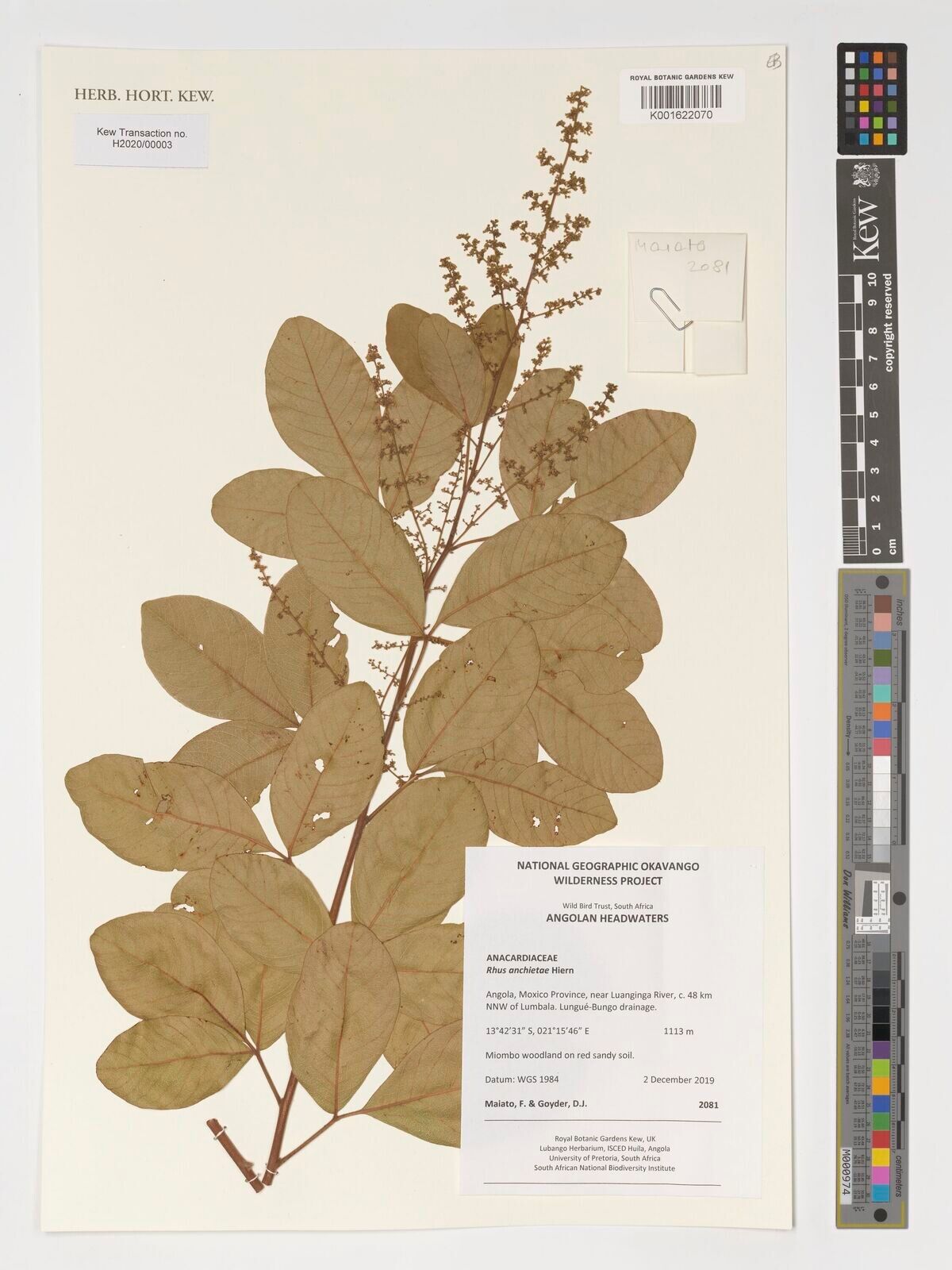
Branches dull brown or blackish (when dried), cylindric, pubescent or glabrous. Petiole 1·5–6·5 cm. long, almost cylindric, narrowly canaliculate and marginate above, pubescent or glabrous. Leaflets ± dull red-brown, ovate or ovate-lanceolate, acuminate (acumen flat or sometimes falcate, very acute, apiculate), entire and ± undulate at the margin, membranous to ± rigid or subcoriaceous, glabrous or ± pubescent on the margin, midrib and nerves; median leaflet (3)6–13(16) × (1·2)2·5–4(7) cm., cuneate and frequently petiolulate at the base, the lateral ones (2)2·5–7(12) × (0·8)1·3–3·5(5·5) cm., asymmetric and slightly cuneate or somewhat rounded at the base, very shortly petiolulate to sessile; midrib slightly raised in the upper surface, very prominent below; lateral nerves arcuate, slender, raised on both sides, reticulation lax, almost invisible or sometimes conspicuous. Panicles terminal and axillary, ample, pyramidal, much branched, multiflorous, the terminal ones longer than the leaves, the axillary ones as long as the latter or somewhat longer; pedicels 1–2·5 mm. long. Male flowers: calyx-segments 0·5 mm. long, ovate, obtuse, glabrous; petals c. 1·5 mm. long, elliptic, obtuse; filaments c. 1 mm. long. Female flowers: ovary ovoid; styles reflexed; disk cupuliform, 5-lobulate; staminodes present. Drupe pinkish-yellow to reddish-brown, shining, (4)5(6) mm. in diam., globose, glabrous.
Red crowberry is resistant to disease and is generally not prone to illnesses. Regarding care, this plant is fairly low-maintenance. When grown outdoors it needs little watering, and larger specimens typically do not require pruning. Smaller plants, however, should be trimmed after they finish blooming. Red crowberry is suitable for anyone with an outdoor area, such as a garden or deck, and does not demand extensive gardening experience.
How to keep Searsia Chirindensis.
Light
Red crowberry is native to open habitats, such as sunny meadows and forest edges, which offer abundant light. It flourishes in full sun but can also tolerate partial sun, adapting well to a range of sunlight conditions.
Temperature
Red crowberry demonstrates good adaptability to temperature, able to withstand higher heat and wider temperature fluctuations. In hot weather, attention should be paid to watering and providing some shade to prevent sunburn. Conversely, red crowberry is relatively sensitive to low temperatures; it tolerates a limited amount of cold, but very cold conditions can cause frost damage.
Fertilizer
Proper timing is important when fertilizing Red crowberry. Apply fertilizer in early spring and then every month up to early summer. Fertilizer encourages attractive blooms and supplies energy during both dormant and active growth periods.
Pruning
To encourage healthy growth, red crowberry should be pruned in early spring. Start by removing any dead branches and thinning out overcrowded areas to improve airflow. Be sure to shape the plant, but avoid over-pruning. Always use clean, sharp tools to prevent disease and enhance the plant's appearance.
Botanical profile.
- Plant Type
- Shrub
- Life Cycle
- Perennial
- Genus
- Searsia
- Family
- Anacardiaceae
- Hardiness Zone
- 9-11
- Mature Height
- 4.88 m to 10.06 m
- Mature Spread
- 3.96 m to 6.1 m
- Leaf Color
- Dark Green, Forest Green
- Leaf Type
- Evergreen
- Flower Color
- Yellow, White
- Flower Size
- 0.25 cm to 0.51 cm
- Bloom Time
- Mid fall, Late fall
- Planting Time
- Spring, Summer, Autumn
- Harvest Time
- Winter
- Native Area
- South Africa, Eswatini, Mozambique, Zimbabwe
Other names.