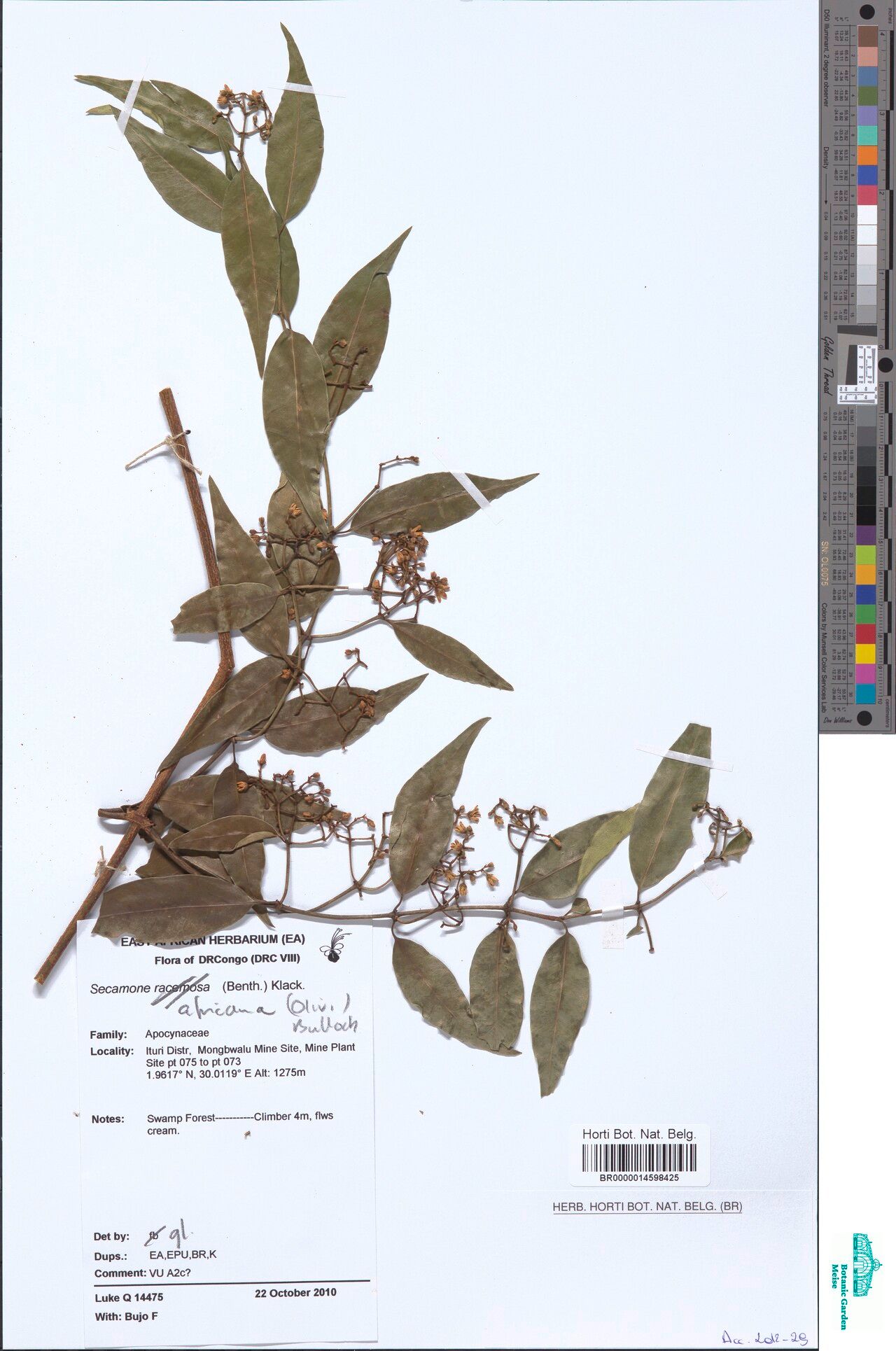
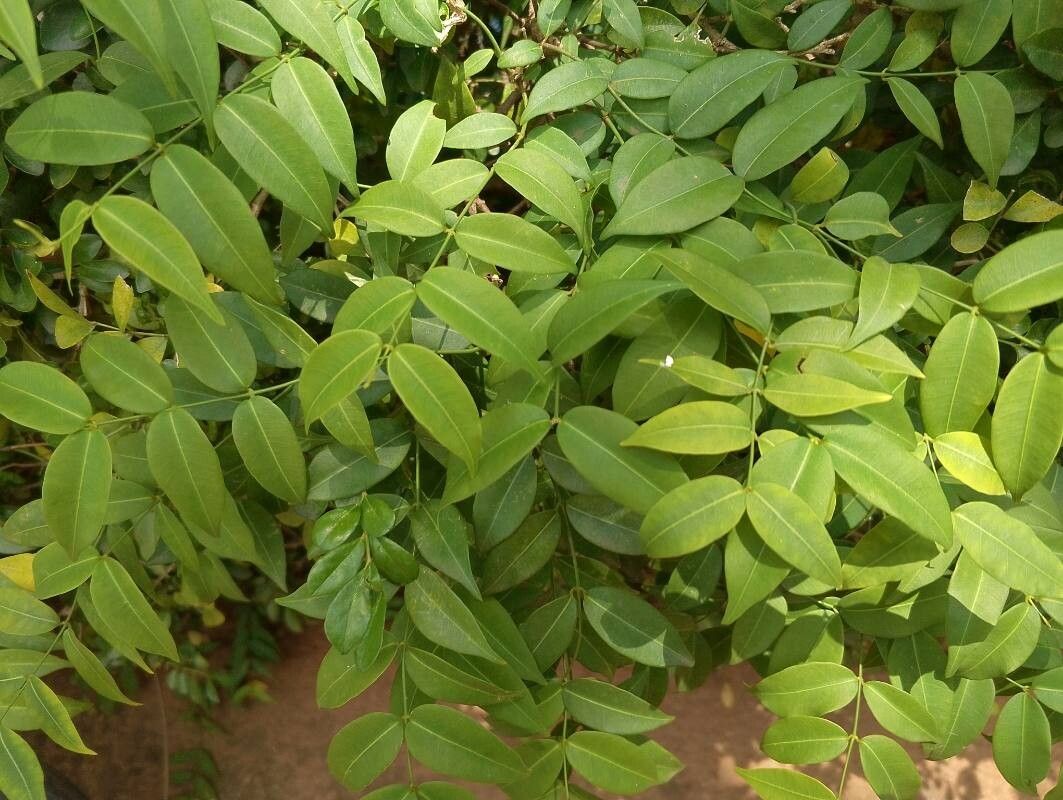
Secamone elliptica, also known as corky milk vine, cork vine and secamone, is a species of vines or lianas, of the plant family Apocynaceae. The range extends from southern China through much of Southeast Asia to Northern Australia, from The Kimberley, across The Top End and the East coast from Cape York to northern New South Wales. The natural habitat is monsoon forest, littoral rainforest and occasionally in more open forest types.The species is characterised by opposite leaves and milky sap that exudes from broken stems and leaves. Small cream or yellow flowers are produced in spring and summer.
Corky milk vine has strong resistance to disease and is usually not susceptible to illnesses. Regarding care, this plant is fairly low-maintenance. When grown outdoors it needs only minimal watering, and larger plants typically do not require pruning; smaller plants, however, should be pruned after they have bloomed. Corky milk vine is appropriate for anyone with outdoor space, such as a garden or deck, and does not require much care experience.
How to keep Secamone Elliptica.
Light
Corky milk vine is native to habitats like forest understories and rocky areas, where it grows in natural shade. It prefers partial sun but can tolerate full sun or full shade, illustrating its versatility and hardiness.
Water
The corky milk vine is a resilient plant that thrives in areas with low rainfall due to its high drought tolerance. It prefers moderate humidity and typically needs watering only once every three weeks. Although commonly grown outdoors, the corky milk vine adapts well to various climates. As an evergreen, it requires minimal water, making it an excellent choice for different environments.
Temperature
Corky milk vine comes from tropical areas where the climate is generally warm and humid. Consequently, it is adapted to high temperatures and humidity. It does not tolerate sudden temperature changes and prefers a steady temperature, so avoiding indoor temperature swings is important. It usually cannot withstand cold and needs warmer conditions to grow. If the surrounding temperature falls too low, the plant may stop growing or even die.
Fertilizer
Fertilization is essential for caring for Corky milk vine. Regular feeding during the growing season helps maintain the energy needed for its showy leaves and supports overall growth. Neglecting fertilization can lead to unhealthy leaves, reduced ornamental appeal, and stunted or weak growth that is more prone to breaking.
Pruning
To ensure healthy growth and an attractive shape, corky milk vine should be pruned in early spring to remove any dead or damaged stems. Light trimming can improve air circulation and light penetration, enhancing the plant's appearance. Always use sharp, sterilized tools to minimize the risk of disease.
Botanical profile.
- Plant Type
- Vine, Shrub
- Life Cycle
- Perennial
- Genus
- Secamone
- Family
- Apocynaceae
- Hardiness Zone
- 10-12
- Mature Height
- 3.05 m to 6.1 m
- Mature Spread
- 2.13 m to 3.96 m
- Leaf Color
- Dark Green
- Leaf Type
- Evergreen
- Flower Color
- White
- Flower Size
- 0.25 cm to 0.51 cm
- Bloom Time
- Summer, Early fall, Mid fall
- Planting Time
- Spring, Summer, Autumn
- Harvest Time
- Fall, Early winter, Mid winter