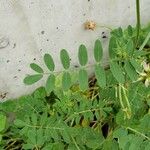
Securigera varia
Crownvetch · Trailing crown-vetch · Axseed · Purple crown vetch · Purple Crownvetch
Description
Source: leafsnapSecurigera varia, commonly known as crown vetch, is a perennial herbaceous plant in the pea family. Originating from Europe and Asia, it has been introduced and naturalized in many regions worldwide, including North America. The plant can grow up to 1 meter tall and features a sprawling habit, with stems extending up to 3 meters in length. The leaves of Securigera varia are pinnately compound, consisting of small leaflets arranged along the stem. Its flowers, which are pink or white, grow in dense clusters at the end of long stalks and bloom from May through September. Crown vetch is often utilized for erosion control due to its extensive root system that helps stabilize soil on steep slopes and along highways. Additionally, it serves as a forage crop for livestock, thanks to its high protein content. However, if not properly managed, Securigera varia can become invasive. It spreads rapidly through underground rhizomes, potentially outcompeting native vegetation. Therefore, it should be planted with caution in areas where it may pose a problem. In summary, Securigera varia is a significant plant species with both beneficial uses and potential negative impacts on ecosystems if not properly managed.
🌳 Under its purple flowers and clover-like leaves, crown vetch is especially useful in agriculture. Its strong roots make it effective at holding soil together and preventing erosion. The plant’s long vines form a protective mat that guards against soil loss and provides a base for other plants. Additionally, crown vetch supplies nectar to bees, supporting honey production.
Care Guide
💧 Water Every 7 days
Common crownvetch, which originates from temperate regions, thrives best in conditions of moderate moisture and can withstand short periods of drought. For optimal growth, it is recommended to water crownvetch weekly. This should be done in accordance with the natural rainfall patterns during its growing season to ensure the plant receives adequate hydration.
How should I water my Common crownvetch?
To properly water the Common crownvetch, follow these steps: 1. Use filtered water at room temperature for this plant, as tap water may contain harmful particles. 2. The Common crownvetch prefers warmer water because it is accustomed to a warm environment. Cold water may shock the plant. 3. Avoid watering from above as it can cause issues with the foliage. Instead, directly water the soil. 4. Apply the filtered room temperature water to the soil until it is completely soaked. 5. Soaking the soil is beneficial for the Common crownvetch as it nourishes the roots and helps them spread and gather nutrients.
What should I do if I give my Common crownvetch too much or too little water?
Overwatering is a more common issue than underwatering for the health of your Common crownvetch. When this plant receives too much water, its stems and leaves may wilt and turn yellow. Prolonged overwatering can also cause diseases like root rot, mold, and mildew, which can be fatal. On the other hand, Common crownvetch has good drought tolerance, so underwatering is less common. However, if it does happen, the leaves will become brittle and brown. It is important to identify and address overwatering signs early, as some diseases like root rot may not be fixable if left untreated for too long. If you notice overwatering signs, reduce watering immediately and assess the soil's drainage. Replace poorly draining soil with loose, well-draining potting mix if necessary. Conversely, if your Common crownvetch shows signs of not getting enough water, simply water it more regularly until the signs disappear.
How often should I give water to my Common crownvetch?
If your Common crownvetch plant is in a pot, the most precise way to determine if it needs water is by checking the soil. Simply plunge your finger into the soil and if you find that the first two to three inches are dry, it's time to water it. If you grow your Common crownvetch outdoors in the ground, you can use a similar method to check the soil. Once again, if the top few inches have dried out, it's time for watering. Typically, in the spring and early fall, you'll need to water this plant about once a week using this method. However, during extremely hot weather, it may require watering twice or more per week. It's important to note that mature, well-established Common crownvetch plants are quite resilient and can withstand drought conditions admirably.
How much water does my Common crownvetch plant need?
When watering your Common crownvetch, don't be afraid to give it plenty of water. Make sure the top few inches of soil are dry and then give the plant a thorough watering that saturates the entire soil. You want to add enough water that it drains out of the pot's drainage holes. If you don't see any excess water draining, you may not have given enough water. However, be careful not to let water accumulate in the soil, as this can harm the plant. If water doesn't drain properly, it could mean you have poorly draining soil, which is bad for the plant's health. If the plant is outside, about 1 inch of rain per week should be enough.
How do I water my Common crownvetch at different times when it's growing?
The water requirements of the Common crownvetch can vary depending on its growth stages. When the plant is in its early years or has been recently transplanted, it will need more water than usual. This is because during these stages, the Common crownvetch focuses its energy on developing new roots, which require additional moisture to support future growth. As the plant matures, it will require less water. Additionally, during the bloom period, when the plant is developing flowers, it may need extra water due to the significant amount of moisture utilized in this process.
☀️ Light Full sun
Crown vetch strongly prefers plentiful sunlight like that of its native habitat. Adequate light is essential for its health and development. While it can tolerate lower light levels, steady exposure to ample light supports its vigorous growth. However, both insufficient and excessive light can lead to poor growth and health problems.
What are the sunlight requirements for Common Crownvetch?
Common Crownvetch thrives in full sun conditions, requiring more than 6 hours of sunlight daily to maintain optimal health and development. It can also adapt to partial sun, with about 3-6 hours of sunlight. However, it's essential to watch how sunlight moves through your garden and to choose spots that provide a perfect balance of light and shade, as both deficiency and excess sunlight can lead to suboptimal growth.
Can artificial lighting be used for indoor Common Crownvetch plants?
Yes, artificial lighting can be a vital solution for indoor Common Crownvetch plants when natural sunlight is insufficient, especially in winter or in less sunny spaces. LED lights are a popular choice as they can be customized to provide specific wavelengths needed by the plants. Full sun plants need 30-50W/sq ft of light, partial sun plants require 20-30W/sq ft, and full shade plants need 10-20W/sq ft. The light source should be placed 12-36 inches above the plant to mimic natural sunlight, and plants typically require 8-12 hours of light per day.
What are some common symptoms of inadequate lighting in Common Crownvetch?
Common symptoms of light deficiency in Common Crownvetch include smaller new leaves, leggy or sparse growth, faster leaf drop, slower or no new growth, lighter-colored new leaves, and symptoms of excessive sunlight exposure like chlorosis, sunscald, leaf curling, wilting, and leaf scorching. These symptoms indicate the plant needs a better balance of light exposure.
How can I address lighting issues for Common Crownvetch?
To ensure optimal growth, gradually move plants to locations with at least 6 hours of direct sunlight daily for indoor and outdoor environments. Use south-facing windows, keep curtains open during the day, or employ artificial lighting such as desk or ceiling lamps and professional plant grow lights. Outdoor plants should be moved to sunnier locations gradually to prevent sunburn. If sunlight is obstructed, consider pruning obstructing branches or transplanting smaller plants to sunnier spots, ensuring the chosen location provides ample sunlight and good drainage.
🌡️ Temperature 5–35°C
Crown vetch grows best in temperatures between 41 and 95 ℉ (5 and 35 ℃). The plant is native to temperate areas and adapts to seasonal temperature shifts. In colder periods, it is advisable to protect the plant, for example by covering it, to avoid frost damage. During hotter periods, occasional misting can help prevent dehydration.
What is the preferred temperature range for Common Crownvetch?
Common Crownvetch prefers temperature ranges between 41 to 95°F (5 to 35°C). It is a plant native to temperate regions, hence it adjusts well to seasonal temperature changes. To keep the plant healthy, it is important to provide frost protection in the colder months by covering it and to mist the plant occasionally during hotter months to prevent dehydration. Despite its strong cold resistance, additional protection is advised if temperatures are expected to drop below -30°C, typically by covering the plant with soil or straw.
How should I care for Common Crownvetch during winter?
During winter, Common Crownvetch shows strong cold resistance but still requires certain care to thrive. If temperatures are expected to plummet below -30°C, it's important to protect the plant from frost. This can be done by covering it with materials such as soil or straw. Additionally, watering the plant abundantly before the first freeze of autumn to ensure the soil is moist can help prevent drought and water scarcity during the colder months. Generally, the plant should be kept above -25°C, and if the winter temperatures are not excessively severe, special frost protection measures may not be necessary.
What should I do if Common Crownvetch experiences low temperatures?
Common Crownvetch is cold-tolerant, thriving best above 5°C and should be kept above -25°C during winter months. In case temperatures fall below -30°C, the plant might not show noticeable changes immediately but could experience decreased sprouting or no sprouting come spring. To mitigate this, in spring, it's suggested to remove any parts of the plant that have failed to sprout as part of its care.
How does high temperature affect Common Crownvetch and what are the solutions?
High temperatures can adversely affect Common Crownvetch, especially when temps rise above 35°C. Symptoms of heat stress in the plant include leaves becoming lighter in color, prone to curling, susceptibility to sunburn, and in severe cases, wilting and drying out. To manage these symptoms, it's recommended to trim away sunburned and dried parts, relocate the plant to provide shade from the midday and afternoon sun or use a shade cloth, and water the plant in the morning and evening to maintain soil moisture.
💨 Humidity
🪴 Soil 6-7
🌱 Fertilizer
A single spring application of fertilizer is generally adequate for Crown vetch, though repeated feedings can optimize growth. Apply fertilizer every month to a month and a half. Fertilization improves the look and function of the leaves, helping maintain even color and a healthy texture. It also promotes root development and nutrient uptake, supporting long-term plant health.
Why do I have to add fertilizer to my Common crownvetch?
The leaves of the Common crownvetch are crucial for its structure, and fertilization is key to keeping them healthy and functioning properly. By fertilizing correctly, you can maintain consistent color and a healthy texture in the leaves. Fertilization also benefits the plant below the soil's surface, promoting the growth of new roots and maintaining the existing root system. This ensures not only the current health of the plant but also enhances its ability to absorb soil nutrients in the future.
When should I fertilize my Common crownvetch?
To promote growth in your Common crownvetch, it's important to fertilize it when new leaves start appearing in early spring. Typically, a single application of fertilizer at this time is sufficient. However, if you want to maximize growth, you can fertilize multiple times throughout the spring and early summer. In this case, it's recommended to feed your Common crownvetch about once every month to a month and a half.
When is it not a good idea to fertilize my Common crownvetch?
During late fall and winter, your Common crownvetch goes into a dormant phase without new growth. So, avoid fertilizing it during this time. In spring and summer, if you fertilize, start reducing the amount as summer comes and the growth rate slows down. Avoid fertilizing when it's very hot or the soil is extremely dry as it can stress the plant and cause it to die prematurely.
Which fertilizer should I use for my Common crownvetch plant?
Choosing the right fertilizer for a Common crownvetch is actually quite simple. These plants do well with a general-purpose garden fertilizer that has equal amounts of nitrogen, phosphorus, and potassium. Look for a fertilizer with a ratio of 10-10-10 or something similar, as this will be effective. Avoid fertilizers with high nitrogen content if you're uncertain. Granular fertilizers are often the best choice for Common crownvetch and should be slow-release for easy application to the soil. Additionally, using organic soil amendments like compost can be beneficial when feeding your Common crownvetch.
How do I add plant food to my Common crownvetch?
To ensure the proper growth of your Common crownvetch, wait until its first leaves emerge in early spring. Once you see the leaves, apply a slow-release fertilizer to the soil around the base of the plant. If needed, you can repeat this process later in the season. Remember to apply the fertilizer to the soil, not the plant itself, which may involve moving some leaves to access the soil near the roots. Additionally, it is recommended to water the Common crownvetch before and after feeding it.
🪴 Pot & Repot
✂️ Pruning
Common crownvetch, with its vining growth and vibrant flowers, is a popular choice for ground cover. To maintain its shape and encourage growth, it's best to prune the plant from early to late spring. To ensure future blooms and a healthy, easy-to-manage plant, avoid heavy pruning after spring.
🌿 Propagating
🐛 Diseases & pets
☠️ Toxicity
Characteristics
- Plant Type
- Herb
- Life Cycle
- Perennial
- Genus
- Securigera
- Family
- Leguminosae
- Hardiness Zone
- 4-10
- Mature Height
- 49 cm to 91 cm
- Mature Spread
- 91 cm
- Leaf Color
- Green
- Leaf Type
- Deciduous
- Flower Color
- Pink, White, Lavender
- Flower Size
- 2.54 cm to 5.08 cm
- Bloom Time
- Late spring, Early summer, Mid summer
- Planting Time
- Spring
- Harvest Time
- Mid summer
- Native Area
- Turkey, Austria, Slovakia, Montenegro, Slovenia, Croatia, Belarus, Mali, Iraq, Germany, Estonia, Romania, Latvia, Belgium, Moldova, Netherlands, Czech Republic, Bulgaria, Armenia, Poland, Greece, Lebanon, Lithuania, Norway, Syria, Italy, Spain, Switzerland, Iran, Albania, Ireland, United Kingdom, Hungary, Azerbaijan, Turkmenistan