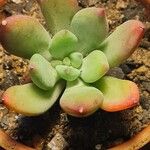
Sedum adolphii
Sedum "Firestorm" · Golden sedum · Green sedum · Golden Glow · Trade names of cultivars are not (usually) accepted as Common Names
Description
Source: leafsnapSedum adolphii is a succulent plant from the Crassulaceae family, native to Mexico, and commonly known as Golden Sedum or Golden Glow. This plant features a trailing growth habit and can reach up to 8 inches in height, with its leaves organized in rosettes along the stem. The leaves of Sedum adolphii are fleshy, elongated, and pointed at the tips. They are bright green with yellow or orange margins that turn red when exposed to sunlight. During the summer, the plant produces small yellow flowers. One of the appealing aspects of Sedum adolphii is its ease of care. It prefers well-draining soil and bright indirect sunlight but can also tolerate partial shade. Watering should be done sparingly, as the plant can store water in its leaves for long periods. Sedum adolphii is versatile and can be used in various settings such as ground covers, container plantings, rock gardens, or hanging baskets. Its trailing growth habit makes it particularly suitable for cascading over the edges of pots or walls. In summary, Sedum adolphii is a beautiful succulent with eye-catching foliage that adds color and texture to any garden. It requires minimal care, making it an excellent choice for both novice gardeners and experienced ones seeking low-maintenance plants.
💡 Golden sedum is a beautiful succulent with spoon-shaped leaves and a lotus-like form. Each leaf has a small tip at its end. The plant appears golden or yellow-green, making it instantly charming and delightful at first sight.
🌳 Golden sedum’s capacity to take up heavy metals from the soil makes it a potential bioindicator for tracking environmental pollution. Its tissues can concentrate these metals, suggesting it could be used in phytoremediation to clean contaminated sites while also providing aesthetic value.
🎭 Calm and serenity
Care Guide
💧 Water Every 7 days
Golden sedum, known for its origins in arid regions, thrives in well-drained soil and exhibits remarkable drought tolerance by storing water in its leaves. It should be watered once every three weeks. Often grown outdoors, this evergreen plant enhances xeriscaped gardens with its hardy foliage.
When Should I Water My Golden Sedum?
Identifying the correct time to water your golden sedum is crucial to its health, ensuring the vibrant color and strong structure of the plant. Watering should be considered when the top 1-2 inches of soil feel dry, and the leaves show signs of wrinkling or color fading from their vibrant golden hue, indicating thirst. Overwatering can cause leaves to turn yellow and lead to root rot, while underwatering can cause a dull color and stunted growth. Adjust your watering schedule by closely observing the soil condition, leaf condition, plant growth, and being mindful of both overwatering and underwatering risks.
How Should I Water My Golden Sedum?
Watering golden sedum optimally involves several key practices due to its succulent nature and drought tolerance. Employ deep watering to ensure moisture reaches the roots, where it's most beneficial, using a watering can with a long, slender spout to avoid wetting the foliage. Additionally, bottom-watering can help achieve even moisture distribution without over-saturating the soil surface. It's critical to use tools like moisture meters to avoid guesswork and ensure precise watering. Remember to keep the foliage dry and ensure good drainage in the pot to prevent root rot.
How Much Water Does Golden Sedum Really Need?
Golden sedum requires a 'soak and dry' watering approach, taking into account its drought-resistant nature. Thorough watering should be followed by a period of drying out completely. The exact amount of water depends on various factors but aim for a deep soak that allows excess water to drain away fully. Monitor the plant for signs of adequate hydration, such as bright and firm leaves, adjusting the amount during active growth periods and dormancy. Using a moisture meter can help manage the watering amount to prevent both overwatering and underwatering.
What Kind of Water is Best for Golden Sedum?
Golden sedum has specific water preferences, being sensitive to chlorine and fluoride. It's advisable to use rainwater or distilled water, though if necessary, filtered tap water allowed to stand for 24 hours to dissipate chlorine can also be suitable. Avoid using excessively hard water. Water temperature does not have a marked effect on the plant, but room temperature water is ideal to avoid shocking the plant's roots, promoting healthy growth without the risk of introducing harmful elements.
How Do Golden Sedum's Watering Needs Change with the Seasons?
Golden sedum’s watering needs vary throughout the year. Spring marks the start of its active growth phase, necessitating regular watering after the top layer of soil dries out. Summer may call for slightly increased watering due to higher evaporation rates. In autumn, as temperatures decrease and the plant enters dormancy, reduce watering frequency, ensuring the soil dries out fully between sessions. Winter requires minimal watering, only to prevent the soil from being bone-dry. Always adjust watering based on soil dryness and environmental conditions.
☀️ Light Full sun
Golden sedum thrives when given unobstructed sunlight but can tolerate some light in semi-shaded spots. Originally developed in open landscapes exposed to constant sun, these plants depend on plentiful light for healthy growth. Too much or too little light can cause reduced vitality or faded foliage color, respectively.
What are the sunlight requirements for golden sedum?
Golden sedum, or Sedum adolphii, thrives best under full sun conditions, requiring more than 6 hours of sunlight daily, but it can also adapt to partial sun, with about 3-6 hours of sunlight. When choosing a location for your golden sedum, it's essential to observe how sunlight moves through your garden, selecting spots that offer a good balance of light and shade. This careful placement ensures the plants receive the sunlight they need for healthy growth.
How should golden sedum be cared for regarding sunlight exposure?
For optimal growth, golden sedum requires uninhibited solar exposure, indicating its natural preference for open, sunny terrains. However, it can tolerate semi-shaded conditions as well. An imbalance in light exposure, either excess or shortage, can affect the plant’s health, leading to compromised vitality or diminished foliage coloration. When natural light is insufficient, artificial lighting can serve as an effective alternative, especially for indoor plants. It's important to select the appropriate type of artificial light, such as LED lights, and ensure it provides the correct intensity and duration of light mimicking natural sunlight conditions.
What are common symptoms of improper light exposure in golden sedum?
Golden sedum may exhibit several symptoms when exposed to suboptimal lighting conditions, including lighter-colored new leaves, leggy or sparse growth, early leaf drop, and signs of stress such as chlorosis, sunscald, leaf curling, wilting, and leaf scorching. These symptoms indicate either a deficiency or excess of sunlight, affecting the plant's ability to photosynthesize and maintain healthy growth. It's crucial to adjust the plant's exposure to light to prevent or mitigate these issues.
What solutions can be applied to address light exposure problems in golden sedum?
To address light exposure issues in golden sedum, consider gradually moving the plants to locations with suitable sunlight, ensuring they receive at least 6 hours of direct light daily. For indoor plants, using south-facing windows or supplementing with artificial light such as desk lamps or professional grow lights can help achieve the ideal light conditions. Outdoors, gradually adapting plants to sunnier spots can prevent sudden exposure problems. Additionally, reducing obstructions like tree branches can improve sunlight access, and transplanting smaller plants during their dormant period to well-lit locations can promote healthier growth. It's important to note that while parts of the plant affected by insufficient light may not recover, new growth should be healthy with proper light adjustment.
🌡️ Temperature 15–37.8°C
The golden sedum prefers temperatures of 59 to 100 ℉ (15 to 38 ℃). Native to Mexico, this plant does well in warm settings and needs well-draining soil. In winter it can tolerate temperatures as low as 50 ℉ (10 ℃) if it is kept dry.
What are the ideal temperature conditions for Golden Sedum?
Golden Sedum, known botanically as Sedum adolphii, thrives in temperatures between 59°F (15°C) and 100°F (38°C), reflecting its native warm environment in Mexico. It needs well-draining soils to grow healthily. During winter, it can tolerate lower temperatures down to 50°F (10°C) provided it is kept dry. The winter season is actually its growing period, so maintaining temperatures above 59°F (15°C) is critical for its growth. In situations where outdoor temperatures fall below 23°F (-5°C), it's advisable to move the plant indoors to a well-lit area. Watering should be adjusted according to temperature changes, increased during higher temperatures, and reduced as temperatures approach 23°F (-5°C). If overwintering outdoors, ensure the plant is in a sheltered location with ample sunlight. In consistently cold conditions, consider a temporary greenhouse setup to protect the plant while keeping it adequately moist.
How does Golden Sedum react to low temperatures, and what should I do?
Golden Sedum is sensitive to extremely cold temperatures and shows the best growth between 59°F (15°C) and 100°F (38°C). In winter, keep temperatures above -5°C to avoid damage. Exposure to temperatures below -10°C can cause the leaves to exhibit signs of water-soaked necrosis and wilting. While mild frost may not immediately show symptoms, within a week, significant wilting and leaf fall can occur. To combat this, trim off any frostbitten areas and move the plant to a warmer indoor setting, preferably near a south-facing window for enough sunlight. If using a makeshift greenhouse for protection, remember to ensure good airflow to prevent plant decay.
What should I do if the Golden Sedum is exposed to high temperatures?
During the summer, it's crucial to keep Golden Sedum below 100°F (38°C) to prevent the plant from entering a dormant state. High temperatures above 109°F (43°C) coupled with high humidity can make the plant more susceptible to rot. In such conditions, remove any dry and rotten parts of the plant and relocate it to an area with partial shade, especially to protect it from direct midday and afternoon sun. It's also advisable to halt watering until the weather cools down, as Golden Sedum can be prone to rot in damp conditions during dormancy induced by extreme heat.
💨 Humidity
🪴 Soil 6-7
🌱 Fertilizer
Golden sedum only needs small amounts of fertilizer once or twice a year during the growing season. Do not fertilize in winter or summer, when the plant is dormant. Cut back on feeding for repotted plants and wait a couple of months after repotting before applying fertilizer. Fertilizing helps sustain healthy growth and encourages flowering.
🪴 Pot & Repot Every 2 years
When repotting Golden sedum, choose a container slightly larger than the current one that has good drainage. Use a gritty, well-draining cactus or succulent mix. Gently remove the plant from its old pot, brush off excess soil, and plant it at the same depth. Wait several days before watering to allow any root injury to heal. Repot in spring or fall and place it in a brightly lit spot.
✂️ Pruning
To help golden sedum maintain its shape, prune any extra or dense branches in the spring and fall using tools such as knives or scissors. For propagation, cut a thick stem with 5-6 leaves, dust the cut with sulfur powder, and plant it in slightly moist soil once the wound has healed.
🌿 Propagating
🐛 Diseases & pets
☠️ Toxicity
Like other succulents in the Sedum genus, Sedum Adolphii is not poisonous to people or animals. It is also non-toxic and suitable for children with skin allergies since it lacks allergens often present in other houseplants.
Characteristics
- Plant Type
- Succulent, Herb
- Life Cycle
- Perennial
- Genus
- Sedum
- Family
- Crassulaceae
- Hardiness Zone
- 8-11
- Mature Height
- 20 cm
- Mature Spread
- 61 cm to 91 cm
- Leaf Color
- Green, Yellow, Red, Orange
- Leaf Type
- Evergreen
- Flower Color
- Yellow
- Flower Size
- 1.02 cm to 1.52 cm
- Bloom Time
- Mid spring, Late spring, Early summer
- Planting Time
- Spring, Autumn
- Harvest Time
- Mid summer
- Native Area
- Veracruz, Mexico