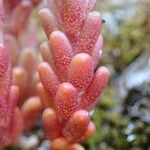
Sedum atratum
Dunkler Mauerpfeffer · Mörk fetknopp · Dark stonecrop
Description
Source: leafsnapSedum atratum, commonly known as black stonecrop, is a low-growing succulent plant that belongs to the Crassulaceae family. This plant is native to the mountainous regions of Europe and Asia and typically thrives in rocky areas, cliffsides, and alpine meadows. The plant features small rosettes of fleshy leaves that are dark green with a reddish tinge. The leaves, arranged in opposite pairs along the stem, have a slightly pointed shape. From late summer to early fall, Sedum atratum produces clusters of small, star-shaped flowers that range in color from pinkish-white to pale yellow. Black stonecrop is an easy-to-grow plant that thrives in well-draining soil with full sun exposure. While it can tolerate drought conditions, it prefers regular watering during its growing season, which spans from spring through fall. Sedum atratum is a versatile plant with several uses. It is an excellent choice for ornamental purposes, whether in rock gardens or container gardens, due to its attractive foliage and flowers. Additionally, it has medicinal properties and has been used to treat wounds or skin irritations because of its antibacterial qualities. Overall, Sedum atratum is an interesting succulent with unique characteristics that make it a great addition for any garden enthusiast looking for something different yet easy to grow.
💡 Golden sedum is a beautiful succulent with spoon-shaped leaves and a lotus-like form. Each leaf has a small tip at its end. The plant appears golden or yellow-green, making it instantly charming and delightful at first sight.
Care Guide
💧 Water Every 7 days
Dark stonecrop is a drought-tolerant, evergreen plant that originates from arid regions. Once established, it requires minimal water and can thrive with very little moisture. It typically needs watering only about once every three weeks, demonstrating its ability to conserve water in dry conditions.
What do I do if I give my Dark stonecrop too much or too little water?
Dark stonecrop and other succulents are able to survive without water for long periods, so it is uncommon to find one suffering from underwatering. However, if you forget to water your Dark stonecrop for a month or more, it may appear thirsty or have some damage. Signs of underwatering include a lackluster and wrinkled appearance, dried up leaves that have turned brown and crispy or fallen off, and completely dried out soil. To revive an underwatered Dark stonecrop, immerse the pot in water for 5-10 minutes until the soil is moist. Overwatering is dangerous for Dark stonecrop and can lead to root rot, which prevents the roots from absorbing nutrients and water. Symptoms of overwatering include yellow, swollen, and translucent leaves that may burst open if filled with too much water. To fix overwatering, improve air ventilation and adjust watering frequency. It is important to catch overwatering early to prevent further damage. If the roots have already rotted, it may not be possible to save the plant. In this case, remove any healthy stems for propagation. If only a portion of the roots are affected, remove unhealthy roots with a sterilized cutting tool and dip the remaining roots in a fungicide. Repot the Dark stonecrop in fresh, well-draining soil. With proper care, the plant can recover and grow new leaves in the next growing season.
How often do I need to water my Dark stonecrop?
To determine how often to water Dark stonecrop, it is best to check the soil and water only when it is completely dry. You can do this by sticking your finger or a moisture meter into the soil. If the soil feels even slightly moist, wait a few days and check again. In general, most people will need to water Dark stonecrop every two weeks in the summer and once a month in the winter. However, there are various factors that can affect the frequency of watering. The following section provides some considerations to help you determine how often to water.
What do I need to think about when watering my Dark stonecrop?
There are various environmental factors that affect the watering needs of Dark stonecrop. These include the size of the container, the type of soil, the temperature, and the humidity. To determine how often and how much to water, consider the container and soil used. Ensure that the container has drainage holes so that excess water can escape. A smaller container holds less moisture and requires more frequent watering, while a larger pot holds more water and needs less frequent watering. Avoid using an oversized pot, as this can lead to overwatering. When repotting, choose a container that is just one size larger than the current one. A shallow container is preferable since Dark stonecrop has shallow roots. In terms of the season, Dark stonecrop requires less frequent watering in winter when growth slows down and less energy and water are needed. The cooler winter air reduces evaporation, causing the soil to stay wet for longer periods compared to summer. Additionally, the climate of your location plays a role. If you live in a humid area with abundant rainfall, you will need to water less frequently compared to a dry and arid climate. Remember that the conditions can vary within the same geographic area due to seasonal changes and indoor heating or air conditioning. For outdoor planting, once Dark stonecrop has established a root system, it typically does not require additional watering beyond what it receives from precipitation and dew. However, during long dry periods, occasional watering may be necessary. In areas where Dark stonecrop can only be grown in a container, it can be moved outside during suitable temperatures in spring and summer and brought indoors as temperatures drop. Keep in mind that a potted Dark stonecrop kept outside generally needs more water due to increased exposure to sunlight, even if it is placed on a shaded porch.
How should I water Dark stonecrop?
To water Dark stonecrop effectively, it is best to thoroughly soak the plant and then allow it to dry out before watering again. This plant can tolerate some drought, so it is okay to let it become quite dry before watering. It is better to underwater rather than overwater this type of plant. When watering, make sure the soil is soaked throughout the entire pot by watering around the rim of the planter. The amount of water needed depends on the container size and how much the soil absorbs. It is important to allow the water to drain out of the drainage holes and let it sit in the saucer for about 20-30 minutes to absorb into dry soil pockets. Then, remove any excess water in the saucer to avoid overwatering the soil. Bottom-watering is another effective method for Dark stonecrop, as it ensures thorough moisture absorption. This involves placing the pot in a saucer of water and allowing the soil to absorb moisture through the drainage holes. You can tell when the soil has absorbed enough water when the top layer is moist. While this method takes longer than top-watering, it ensures even distribution of water throughout the pot. In the original habitat of Dark stonecrop, there is little rain but when it does rain, the soil becomes thoroughly moistened. You can mimic this natural situation by bottom-watering the plant when the soil is completely dry. Deep soil bathing is better than frequent light watering for Dark stonecrop.
☀️ Light Full sun
The golden sedum prefers strong sunlight but can tolerate moderate shade. Its natural habitat is places with abundant sun. It requires substantial light for healthy growth. Excessive exposure can scorch the leaves, while insufficient light may stunt growth or cause leggy growth.
How much sunlight does Dark stonecrop require?
Dark stonecrop is native to arid regions and thrives in full sun, needing more than 6 hours of sunlight a day to flourish. It can also grow in partial sun, receiving about 3-6 hours of sunlight daily. This succulent's original environment is characterized by strong sunlight and minimal shade, indicating its preference for bright conditions. When considering plant placement, observing the movement of sunlight through your garden and selecting locations that offer a balance of light and shade can be crucial for ensuring plant health.
What artificial lighting requirements do Dark stonecrop plants have?
Indoor Dark stonecrop plants require sufficient lighting to grow optimally, especially when natural sunlight is limited, such as during winter or in less sunny spaces. Artificial lighting becomes essential in these scenarios. LED lights are recommended due to their ability to be customized for the specific wavelengths of light plants need. Full sun plants should have 30-50W/sq ft of artificial light, partial sun plants 20-30W/sq ft, and full shade plants 10-20W/sq ft. The light source should be placed 12-36 inches above the plant to mimic natural sunlight conditions, and most plants will need 8-12 hours of light per day.
What are the symptoms of inadequate light in Dark stonecrop?
When Dark stonecrop is placed in suboptimal lighting conditions, it may show several symptoms indicating light deficiency. These include smaller new leaves, leggy or sparse growth, faster leaf drop, slower or halted growth, lighter-colored new leaves, and various signs of damage from excessive sunlight like chlorosis, sunscald, leaf curling, wilting, and leaf scorching. These symptoms highlight the necessity of providing adequate light to maintain the health and vitality of the plant.
How can I improve light conditions for indoor and outdoor Dark stonecrop plants?
To optimize growth conditions for Dark stonecrop, gradually introduce plants to sunnier locations to achieve at least 6 hours of direct sunlight daily for indoor settings. This can involve using a south-facing window or supplemental artificial lighting, such as keeping a lamp on for 8 hours a day or investing in professional plant grow lights. For outdoor plants, similar gradual adaptation to brighter spots is recommended to avoid sunburn. Improvements such as reducing obstructions by pruning and transplanting smaller plants during their dormant period can enhance sunlight exposure. It's important to note that parts of the plant damaged by insufficient sunlight may not recover, but new growth should be healthy with increased light exposure.
🌡️ Temperature 5–35°C
Although Golden sedum can tolerate some heat, it mainly grows and does best in cooler seasons and becomes dormant in summer. In very hot weather, provide shade to prevent scorching from strong sunlight. Watering should be reduced or stopped during the hottest period to avoid root rot. Winter and spring are when Golden sedum grows vigorously, and as long as temperatures do not fall too low, it will continue to grow steadily.
What are the essential care tips for Dark Stonecrop?
Dark Stonecrop, scientifically known as Sedum atratum, flourishes in warm environments. It requires high temperatures during its growing season to stimulate growth and metabolism. This plant enjoys ample sunlight, proper moisture levels, and good ventilation. It should be protected from extremely low temperatures and overwatering. In winter, as it enters dormancy, it's crucial to move it indoors if outdoor temperatures fall below 5°C, positioning it near a south-facing window for maximum sunlight. Insufficient natural light can be supplemented with artificial lighting. Below 20°C, you should reduce or stop watering to prevent root rot and halt outdoor watering in low temperatures. If possible, insulate outdoor plants with a temporary greenhouse or protective materials.
How does low temperature affect Dark Stonecrop and what are the solutions?
Dark Stonecrop thrives in higher temperatures and struggles with low temperatures, growing best when above 20°C. It should be kept above 5°C during winter, and exposure to temperatures below 1°C may cause the plant to weaken, wilt, and become prone to root rot. Mild frost damage might not show immediate symptoms, but after a week, the plant could wither gradually. To address frost damage, trim off frostbitten areas and check for root rot. Cut off rotted roots and propagate through cuttings if needed. Move the plant to a warmer indoor location, ensuring it receives plenty of sunlight by placing it near a south-facing window or using supplemental lighting.
How does high temperature affect Dark Stonecrop and what are the solutions?
During the summer, it's important to maintain Dark Stonecrop temperatures below 41°C. Temperatures exceeding 45°C can halt its growth, causing water loss, wilting, and increasing susceptibility to sunburn. If your plant suffers from these conditions, remove sunburned and rotten parts and protect it from the harsh afternoon sun until it recovers. For plants experiencing root rot, cease watering until new roots develop.
💨 Humidity
🪴 Soil 6-7
🌱 Fertilizer
Golden sedum only needs small amounts of fertilizer once or twice a year during the growing season. Do not fertilize in winter or summer, when the plant is dormant. Cut back on feeding for repotted plants and wait a couple of months after repotting before applying fertilizer. Fertilizing helps sustain healthy growth and encourages flowering.
🪴 Pot & Repot
Dark stonecrop thrives best in pots with excellent drainage, which allows excess water to escape and prevents root rot. Good drainage is crucial for the plant's healthy growth and overall vitality.
✂️ Pruning
To keep large succulent plants like dark stonecrop looking their best, it's important to prune them in the spring and fall. This involves removing any unnecessary or overly dense branches. If you want to propagate these plants, start by cutting a sturdy stem with 5-6 leaves. Then, apply sulfur powder to the cut wound and allow it to heal. Once healed, plant the stem in slightly damp soil.
🌿 Propagating
🐛 Diseases & pets
☠️ Toxicity
Characteristics
- Plant Type
- Succulent
- Life Cycle
- Perennial
- Genus
- Sedum
- Family
- Crassulaceae
- Hardiness Zone
- 4-9
- Mature Height
- 5 cm to 15 cm
- Mature Spread
- 5 cm to 10 cm
- Leaf Color
- Green, Light Green
- Leaf Type
- Semi-evergreen
- Flower Color
- Yellow
- Flower Size
- 0.51 cm to 0.76 cm
- Bloom Time
- Late spring, Early summer, Mid summer
- Planting Time
- Spring, Autumn
- Harvest Time
- Mid summer, Late summer, Early fall
- Native Area
- Turkey, Sweden, Austria, Slovakia, Montenegro, Bulgaria, Greece, Croatia, Slovenia, Ukraine, Serbia, Russia, Norway, Germany, Italy, Spain, Switzerland, Denmark, Iceland, Finland, Iran, Albania, Azerbaijan, Romania, France