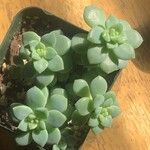
Sedum clavatum
Tiscalatengo Gorge sedum
Description
Source: leafsnapSedum clavatum, commonly known as clubmoss stonecrop, is a low-growing succulent plant in the Crassulaceae family. Native to North America, it typically thrives in rocky areas and on cliffs. The plant features small, fleshy leaves arranged in a rosette pattern, often displaying a green color with a reddish tint. These leaves are also covered with tiny hairs, giving them a velvety texture. In the summer, Sedum clavatum produces small clusters of star-shaped flowers. These blooms, which can be pink or white, attract pollinators such as bees and butterflies. This plant is easy to care for, as it requires minimal watering and can tolerate drought conditions. It prefers well-draining soil with full sun exposure but can also grow in partial shade. Sedum clavatum has several medicinal uses, such as treating wounds, burns, skin irritations, coughs, colds, and reducing fever, thanks to its anti-inflammatory properties. Overall, Sedum clavatum is an attractive succulent that adds beauty to any garden or landscape while providing medicinal benefits as well.
💡 Golden sedum is a beautiful succulent with spoon-shaped leaves and a lotus-like form. Each leaf has a small tip at its end. The plant appears golden or yellow-green, making it instantly charming and delightful at first sight.
🌳 The small Tiscalatengo Gorge sedum succulents are known for their thick leaves that display a striking blend of green and blue. The leaf tips often have a touch of dark red, while leaves under stress can turn pink. In the spring and summer, these succulents produce small white flowers. They thrive in rock gardens, making them excellent choices for vibrant, decorative flowering plants.
🎭 Calm, serenity
Care Guide
💧 Water Every 7 days
The Tiscalatengo gorge sedum flourishes in high-altitude environments, where it survives drought conditions by storing water in its thick, fleshy leaves. It requires minimal watering, about once every two to three weeks, and benefits from occasional misting to help maintain humidity. This plant is well-suited for indoor growth and is prized for its attractive foliage and low-maintenance care requirements.
☀️ Light Full sun
Tiscalatengo gorge sedum requires a generous amount of sunlight for best growth, but it can also persist in more sheltered locations with reduced solar exposure. Its native habitats are generally bright areas. Too little light may restrict growth, while too much can lead to drying out or scorching.
What are the sunlight requirements for Tiscalatengo gorge sedum?
Tiscalatengo gorge sedum requires a considerable amount of sunlight to thrive optimally, preferably in well-lit native habitats. It can survive in conditions with less sunlight, but it prefers ample sunlight for optimal growth. The plant should be exposed to full sun, which means above 6 hours of sunlight daily, or partial sun, about 3-6 hours of sunlight. It's vital to observe the movement of sunlight in your garden to ensure you provide the best balance of light and shade for your plants.
How do I use artificial lighting for indoor Tiscalatengo gorge sedum plants?
For indoor Tiscalatengo gorge sedum plants, artificial lighting can compensate for insufficient natural sunlight, particularly during winter or in less sunny spaces. LED lights are recommended due to their ability to provide specific light wavelengths needed by plants. The required artificial light intensity varies by plant type: full sun plants need 30-50W/sq ft, partial sun plants 20-30W/sq ft, and full shade plants 10-20W/sq ft. Position the light source 12-36 inches above the plant and ensure it receives 8-12 hours of light per day to mimic natural sunlight conditions.
What are the signs of inadequate lighting for Tiscalatengo gorge sedum?
Signs of inadequate lighting in Tiscalatengo gorge sedum include lighter-colored new leaves, indicating a lack of chlorophyll and essential nutrients; leggy or sparse growth, which presents a stretched-out appearance due to longer spaces between leaves or stems; faster leaf drop as a result of conserving resources in low light conditions; chlorosis, where leaves lose their green color and turn yellow; sunscald, showing as damaged areas from intense sun exposure; leaf curling as a defense mechanism to reduce sun exposure; wilting due to excessive water loss; and leaf scorching characterized by brown, dry edges from too much sunlight.
How can I manage and improve the sunlight exposure for my Tiscalatengo gorge sedum?
To improve sunlight exposure for your Tiscalatengo gorge sedum, consider gradual relocation to sunnier spots for both indoor and outdoor plants, ensuring they receive at least 6 hours of direct sunlight daily. For indoor plants, use south-facing windows or invest in grow lights if relocation is not feasible, keeping these lights on for at least 8 hours a day. Outdoors, avoid sudden changes in light to prevent sunburn. Remove obstructions like overgrown branches to enhance sunlight access, and for ground-level care, consider transplanting to sunnier areas with ample sunlight and good drainage, ideally during the plant's dormant period.
🌡️ Temperature 20–37.8°C
Tiscalatengo gorge sedum's native growing conditions are generally warm and dry, with a preferred temperature range of 68℉ to 100℉ (20℃ to 38℃). In cooler months, it is recommended to keep the plant in a brightly lit location where temperatures stay above 50℉ (10℃).
What is the preferred temperature range for Tiscalatengo gorge sedum?
Tiscalatengo gorge sedum thrives in warm and dry environments, with a preferred temperature range between 68°F to 100°F (20°C to 38°C). During the cooler months, it's important to keep the plant in a brightly-lit area, ensuring the temperature remains above 50°F (10°C). The winter season is the growing period for this sedum, so maintaining temperatures above 20°C is crucial for its optimal growth. When temperatures drop below 0°C, the plant should be moved indoors to a well-lit area, and watering practices should be adjusted according to temperature changes.
What should I do if the temperature falls below the ideal range for Tiscalatengo gorge sedum?
If the temperature drops below the ideal range for Tiscalatengo gorge sedum, particularly under 0°C, it's advisable to bring the plant indoors to a place with sufficient light. During extremely cold temperatures, below -5°C, the leaves may show signs of water-soaked necrosis and wilting. For minor frost damage, symptoms like leaf wilting and drop might appear after a week. In these cases, trim off the frost-damaged areas and move the plant to a warmer environment indoors, preferably near a south-facing window for enough sunlight, or set up a makeshift greenhouse with proper ventilation to prevent plant decay.
How should I care for Tiscalatengo gorge sedum during high temperatures?
In high temperatures, especially above 43°C, Tiscalatengo gorge sedum may enter a dormant state and become prone to rot in high humidity. To care for your plant during these periods, remove any dry or rotten parts and relocate the plant to a partially shaded area to protect it from the intense midday and afternoon sun. Additionally, it is recommended to cease watering until the temperature cools down, to help the plant better manage the stress from high heat.
💨 Humidity dry (<40%)
This plant prefers dry conditions, so don't mist it. However, watering it less often can also thrive in higher humidity.
🪴 Soil 6-7
🌱 Fertilizer
For Tiscalatengo gorge sedum, small amounts of fertilizer once or twice a year during the growing season are enough. Do not fertilize in winter or in summer when the plant is dormant. Cut back on fertilizer for plants that have been repotted, and wait a couple of months after repotting before you fertilize. Fertilizing helps maintain healthy growth and promotes blooming.
🪴 Pot & Repot Every 2 years
When repotting Tiscalatengo gorge sedum, choose a pot just a bit larger than the existing one with good drainage. Use a gritty, well-draining succulent or cactus mix. Gently remove the plant from its old pot, brush off excess soil, and replant it at the same depth. Wait a few days before watering to allow any root damage to heal. Repot in spring or fall and place it in a brightly lit area.
✂️ Pruning
To maintain the shape of Tiscalatengo Gorge Sedum, prune any excessive or dense branches in the spring and fall using knives or scissors. Apply sulfur powder to the wounds to protect them. For propagation, cut stems with 5-6 leaves, treat the cuts with sulfur, and plant them in slightly moist soil once the wounds have healed.
🌿 Propagating
🐛 Diseases & pets
☠️ Toxicity
However, it's crucial to keep them away from youngsters and pets as they might irritate the skin if consumed or come into contact with it heavily. With soap and warm water, thoroughly rinse the skin. Because of this, it is usually advised to wear gloves when handling Sedum clavatum to prevent contact with the plant's oil-rich leaves.
Characteristics
- Plant Type
- Succulent, Herb
- Life Cycle
- Perennial
- Genus
- Sedum
- Family
- Crassulaceae
- Hardiness Zone
- 9-11
- Mature Height
- 10 cm to 15 cm
- Mature Spread
- 20 cm
- Leaf Color
- Green, Blue
- Leaf Type
- Evergreen
- Flower Color
- White
- Flower Size
- 2.54 cm
- Bloom Time
- Late spring, Early summer, Mid summer
- Planting Time
- Spring, Autumn
- Harvest Time
- Mid summer
- Native Area
- Mexico