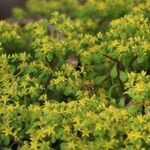
Sedum formosanum
Formosa stonecrop
Care Guide
💧 Water
☀️ Light Full sun
Taiwanese stonecrop does best with abundant sunlight, as in its native habitat. This preference for plentiful sun persists through its various growth stages. It can tolerate periods of reduced light, but without optimal sun its growth may be impeded. Both too little and too much light can affect its vigor.
What are the light requirements for Taiwanese stonecrop?
Taiwanese stonecrop thrives best in full sun, requiring above 6 hours of sunlight daily to reach its full growth potential and maintain its health. It can also grow in partial sun conditions, with about 3-6 hours of sunlight. It is essential to watch how sunlight moves through your garden to ensure that you place your plants in spots that offer a good balance of light and shade, as both too little and too much light can affect the plant's robustness. In its natural habitat, the Taiwanese stonecrop is accustomed to abundant sun exposure, which is vital across its different growth stages. However, it can survive periods of lesser light, although growth may be hindered under such conditions.
How can artificial lighting benefit indoor Taiwanese stonecrop?
Indoor Taiwanese stonecrop plants require adequate lighting to grow optimally, particularly when natural sunlight is insufficient, such as during winter or in less sunny indoor spaces. Artificial lights, especially LED lights tailored to provide specific wavelengths, can be an essential solution. For full sun plants, 30-50W/sq ft of artificial light is necessary, while partial sun plants need 20-30W/sq ft, and full shade plants require 10-20W/sq ft. The light source should be placed 12-36 inches above the plant to mimic natural sunlight effectively, and most plants will need 8-12 hours of light per day to mimic natural daylight hours. This approach can significantly promote faster and healthier growth for the Taiwanese stonecrop indoors.
What are the symptoms of inadequate lighting on Taiwanese stonecrop?
Taiwanese stonecrop may exhibit several symptoms when exposed to inadequate lighting, including the development of smaller new leaves, leggy or sparse growth, faster leaf drop, slower or halted new growth, lighter-colored new leaves, and conditions like chlorosis, sunscald, leaf curling, wilting, and leaf scorching. These symptoms indicate either insufficient sunlight, which leads to reduced chlorophyll and essential nutrients, or excessive sunlight, causing damage to the plant's leaves or stems. Properly managing light exposure is key to avoiding these symptoms and maintaining a healthy plant.
How can I address light-related issues with my Taiwanese stonecrop?
To optimize growth and address light-related issues in Taiwanese stonecrop, gradually increase sunlight exposure to achieve at least 6 hours of direct sunlight daily for indoor plants. Use south-facing windows and keep curtains open during the day for natural sunlight, or supplement with artificial light for large plants or those in less sunny locations. For outdoor plants, adapt them gradually to sunnier spots to prevent sunburn. If trees block sunlight, consider pruning them. For smaller plants, transplanting during their dormant period to a location with ample sunlight and good drainage can help. It's important to note that while parts of the plant affected by insufficient sunlight may not recover, new growth will be healthy once optimal light conditions are established.
🌡️ Temperature 20–41.1°C
Taiwanese stonecrop originates from warmer regions and grows best at temperatures of 68 to 106 °F (20 to 41 ℃). For optimal development, imitate its natural temperate environment, particularly during distinct seasonal shifts.
What are the ideal growing conditions for Taiwanese stonecrop?
Taiwanese stonecrop, also known as Sedum formosanum, thrives in warmer climates, with an ideal temperature range of 68 to 106 °F (20 to 41 °C). To ensure optimum growth, it's best to mimic its natural, temperate conditions, particularly during the significant seasonal changes. This heat-loving plant gradually enters a dormant state in winter and should be cultivated indoors when the temperature drops below 41°F (5°C). It's recommended to position the plant near a south-facing window to maximize sunlight exposure. If natural light is inadequate, supplemental lighting can be utilized. During cooler periods when temperatures fall below 68°F (20°C), the plant's growth slows, and watering should be reduced or halted to prevent root rot. For outdoor plants, cease watering entirely in low temperatures. To protect the plant in cold conditions, consider setting up a temporary greenhouse or wrapping it in materials like plastic film or fabric for insulation.
How does low temperature affect Taiwanese stonecrop and what are the solutions?
Taiwanese stonecrop is highly susceptible to damage from low temperatures, thriving best above 68°F (20°C) and requiring temperatures to be kept above 41°F (5°C) during winter. Exposure to temperatures below 34°F (1°C) may result in the plant becoming weak, wilting, and prone to root rot. Initial symptoms of mild frost damage might not be apparent, but affected plants will gradually wither over a week. In such cases, it's advisable to trim off frostbitten areas and inspect for root rot. If root rot is present, affected roots should be removed, and the plant can be propagated through cuttings. To recover, the plant should be moved to a warm environment indoors and positioned near a south-facing window to ensure it receives sufficient sunlight. Supplemental lighting can be used if the natural light is insufficient.
What happens when Taiwanese stonecrop is exposed to high temperatures, and how can it be treated?
During the summer, it's essential to ensure that the temperature around Taiwanese stonecrop doesn't exceed 104°F (41°C). Exposure to temperatures over 113°F (45°C) halts the plant's growth and leads to water loss, wilting, and an increased risk of sunburn. To treat a plant affected by high temperatures, remove any sunburned or rotten parts. Protect the plant from the harsh afternoon sunlight until it has fully recovered and resumes growing. If the plant suffers from root rot in these conditions, halt watering until new roots develop, indicating recovery.
💨 Humidity
🪴 Soil 6-7
🌱 Fertilizer
Apply light amounts of fertilizer to Taiwanese stonecrop once or twice a year during the growing season. Do not fertilize in winter or summer while it is dormant. Cut back on fertilizer for repotted plants and wait a couple of months after repotting before applying fertilizer. Fertilizing helps maintain healthy growth and encourages blooms.
🪴 Pot & Repot
To promote healthy growth, make sure that Taiwanese stonecrop is planted in pots with excellent drainage.
✂️ Pruning
To keep a beautiful shape, prune Taiwanese stonecrop in both spring and fall by removing any dense or redundant branches. For propagation, cut a thick stem with 5-6 leaves. Apply sulfur powder to the cut wound and allow it to heal before planting. Ensure the soil is slightly moist when you plant it.
🌿 Propagating
🐛 Diseases & pets
☠️ Toxicity
Characteristics
- Plant Type
- Succulent
- Life Cycle
- Perennial
- Genus
- Sedum
- Family
- Crassulaceae
- Hardiness Zone
- 10-13
- Mature Height
- 10 cm to 15 cm
- Mature Spread
- 20 cm to 30 cm
- Leaf Color
- Light Green, Pale Green
- Leaf Type
- Evergreen
- Flower Color
- Yellow, White
- Flower Size
- 5.08 cm to 7.62 cm
- Bloom Time
- Early summer, Mid summer
- Planting Time
- Spring, Summer, Autumn
- Harvest Time
- Late summer, Early fall