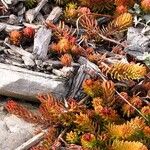
Sedum lanceolatum
Spearleaf stonecrop · Lance-leaf stonecrop · Lanceleaf stonecrop · Lance-leaved stonecrop · Spear-leaved stonecrop
Description
Source: leafsnapSedum lanceolatum is a species of flowering plant in the family Crassulaceae known by the common names spearleaf stonecrop and lanceleaf stonecrop. It is native to western North America and occurs in western Canada and the United States. It is distributed from Alaska to Arizona and New Mexico and as far east as South Dakota and Nebraska. It grows in exposed, rocky mountainous habitat at moderate and high elevations, up to 4048 meters in the Rocky Mountains. The plant persisted and evolved on sky islands and nunataks in these ranges during glaciation events during the Pleistocene epoch.This is a succulent plant forming basal rosettes of knobby or pointed leaves up to 3 centimeters long. Smaller leaves occur farther up the stem and often fall away by the time the plant blooms. The stems are about 10–15 cm (4–6 in) tall. The inflorescence is made up of one or more erect arrays of several flowers. The flowers have yellow petals sometimes tinged with red, each lance-shaped petal just under a centimeter long. The stamens are tipped with yellow anthers. The plant reproduces sexually by its tiny, lightweight seeds, or vegetatively when sections of its stem break off and root.
💡 Golden sedum is a beautiful succulent with spoon-shaped leaves and a lotus-like form. Each leaf has a small tip at its end. The plant appears golden or yellow-green, making it instantly charming and delightful at first sight.
🌳 Despite its humble appearance, spearleaf stonecrop is a vital food source for butterflies and other pollinators. Its flowers, rich in nectar and pollen, draw these animals in and supply crucial nourishment during their blooming season. This not only helps pollinators survive but also encourages broader biodiversity by supporting a variety of species within the ecosystem.
🎭 Calmness
Care Guide
💧 Water Every 7 days
The spearleaf stonecrop, native to rocky habitats, is well-suited to low-moisture environments and is highly drought-tolerant. It should be watered sparingly, approximately once a week, as it prefers drier conditions. As an outdoor succulent, it thrives in well-draining containers, which help prevent overwatering.
How should I water my Spearleaf stonecrop to keep it healthy?
To properly water the Spearleaf stonecrop, it's best to use filtered water at room temperature. This is because tap water may contain harmful particles for the plant's health. Since the Spearleaf stonecrop originates from warm environments, it's important to avoid using cold water as it can shock the plant. Additionally, you should refrain from overhead watering to prevent foliage issues. Instead, gently soak the soil with your filtered room temperature water until it's completely saturated. This helps moisten the roots and allows them to spread and gather essential nutrients in the soil.
What should I do if I give my Spearleaf stonecrop too much or too little water?
Overwatering is a common issue for the health of your Spearleaf stonecrop. It can cause wilting, yellowing, and diseases like root rot, mold, and mildew. Underwatering is less common but can still occur, resulting in brittle, brown leaves. It's important to spot signs of overwatering early and reduce watering immediately. Additionally, check the soil's drainage and replace it if necessary. If you notice signs of underwatering, water more regularly until the signs disappear.
How frequently should I water my Spearleaf stonecrop?
If your Spearleaf stonecrop plant is in a pot, you can determine if it needs water by sticking your finger into the soil. If the top two to three inches of soil are dry, it's time to water. The same method can be used if you grow the plant outdoors in the ground. When the top few inches of soil are dry, it's time to water. Typically, watering once a week during spring and early fall is sufficient, but during extremely hot weather, you may need to water twice or more per week. However, mature and well-established Spearleaf stonecrop plants can tolerate drought well.
How much water does my Spearleaf stonecrop require?
To properly water your Spearleaf stonecrop, you need to be generous with the amount of water you give. Make sure the top two to three inches of soil are dry before watering. When watering, thoroughly soak the soil until water flows out of the drainage holes at the bottom of the pot. If no excess water is draining, you may have not watered enough. Avoid letting water accumulate in the soil, as it can harm the plant. Additionally, poorly draining soil is harmful to the plant's health, so make sure the pot has good drainage. If the plant is outdoors, one inch of rainfall per week is enough.
How should I water my Spearleaf stonecrop as it grows?
The water needs of the Spearleaf stonecrop can vary depending on its growth stages. In the early years or when it has just been transplanted, it requires more water to support root development. As the plant matures, it will require less water. Additionally, during the bloom period, the plant may need more water to support flower development.
☀️ Light Full sun
Spearleaf stonecrop does best in locations with plentiful sunlight. It can tolerate lower light levels, but maximum sun encourages its strongest growth. Too much or too little sunlight can cause unhealthy foliage. Its native habitat exemplifies these sun-related conditions.
What are the sunlight requirements for Spearleaf stonecrop?
Spearleaf stonecrop requires full sun, which means it should receive above 6 hours of sunlight daily, but it can also thrive in partial sun, with about 3-6 hours of sunlight. It's crucial to observe how sunlight moves through your garden to ensure the plants receive the optimal balance of light and shade for their growth. Too little or too much sunlight can lead to unhealthy foliage, highlighting the importance of finding the perfect spot for these plants.
How does artificial lighting benefit indoor plants?
Artificial lighting is essential for the growth of indoor plants, especially when natural sunlight is insufficient, like in winter or less sunny spaces. It promotes faster, healthier growth by supplementing or mimicking natural sunlight. LED lights are recommended because they can be customized to provide specific wavelengths needed by the plants. The amount of artificial light required varies depending on the plant's sunlight needs: 30-50W/sq ft for full sun plants, 20-30W/sq ft for partial sun plants, and 10-20W/sq ft for full shade plants. The appropriate distance for the light source is 12-36 inches above the plant, and most plants benefit from 8-12 hours of light per day to mimic natural daylight hours.
What are the symptoms of inadequate lighting for Spearleaf stonecrop?
Spearleaf stonecrop shows several symptoms when it doesn't receive enough light, including new leaves growing smaller than the older ones, leggy or sparse growth due to longer spaces between leaves or stems, faster leaf drop as the plant tries to conserve resources, slower or halted growth as it enters survival mode, and leaves developing lighter colors or patterns indicating insufficient chlorophyll and nutrients. Excessive sunlight can also harm, leading to chlorosis (leaves turning yellow), sunscald (damaged tissues), leaf curling (to minimize water loss and damage), wilting (due to loss of turgor pressure), and leaf scorching (brown dry edges on leaves).
How can you adjust light conditions for Spearleaf stonecrop?
To optimize growth, gradually move indoor plants to sunnier locations each week until they get at least 6 hours of direct sunlight daily, utilizing south-facing windows for maximum exposure. For plants that are large or not easily movable, consider using artificial light, keeping a lamp on for at least 8 hours daily or investing in professional grow lights. For outdoor plants, also move them gradually to avoid sunburn. If sunlight is obstructed, identify and reduce barriers by pruning or moving the plant to a sunnier location. Bear in mind that parts of the plant that suffered from insufficient light might not recover, but new growth should be healthy post-adjustment.
🌡️ Temperature 5–35°C
Spearleaf stonecrop is native to temperate regions where temperatures usually range from 41 to 95 °F (5 to 35 ℃). It generally prefers cooler conditions, although it can tolerate some heat. In hotter areas, provide occasional shade to reduce temperature extremes.
What is the native climate for Spearleaf stonecrop?
Spearleaf stonecrop, botanical name Sedum lanceolatum, is native to temperate climates where temperatures typically range from 41 to 95 °F (5 to 35 °C). It prefers cooler environments but is capable of tolerating some heat. In regions experiencing hotter climates, providing occasional shade can help mitigate temperature extremes, ensuring the plant thrives.
How does Spearleaf stonecrop handle cold temperatures?
Spearleaf stonecrop exhibits strong resistance to cold and usually does not require special frost protection measures during winter. However, in conditions where winter temperatures are anticipated to drop below -25°C, it's important to provide cold protection to the plant. This can involve covering the plant with insulating materials like soil or straw. To further prepare it for winter, water the plant abundantly before the first freeze in autumn to keep the soil moist, helping prevent drought and water scarcity during the colder months and into early spring.
What should I do if my Spearleaf stonecrop is exposed to low temperatures?
Spearleaf stonecrop thrives best at temperatures above 5°C and should not be exposed to conditions colder than -20°C. If temperatures fall below -25°C, the plant may not show immediate signs of damage during winter but could experience reduced or absent sprouting in spring. If this occurs, you should remove any parts of the plant that failed to sprout as they enter the growing season.
How should I care for Spearleaf stonecrop in high temperatures?
During the summer, it's crucial to ensure that temperatures around the Spearleaf stonecrop remain below 35°C. Exposure to temperatures above 38°C can cause the leaves to lighten in color, curl, become susceptible to sunburn, and in severe cases, lead to the wilting and drying of the entire plant. To mitigate these effects, trim away any sunburned and dried-up parts of the plant, move it to a shaded area during the midday and afternoon sun, or use a shade cloth. It's also beneficial to water the plant in the morning and evening to maintain soil moisture.
💨 Humidity
🪴 Soil 6-7
🌱 Fertilizer
Light applications of fertilizer once or twice a year during the growing season are enough for Spearleaf stonecrop. Do not fertilize in winter or in summer when the plant is dormant. Use less fertilizer for repotted plants and wait a couple of months after repotting before you start feeding. Fertilizing helps maintain healthy growth and encourages flowering.
🪴 Pot & Repot
For spearleaf stonecrop to thrive, it requires pots with excellent drainage. This helps maintain the right moisture levels and prevents root rot. Using the appropriate potting materials and techniques is crucial for promoting optimal growth and health.
✂️ Pruning
Spearleaf stonecrop is a plant with succulent, lance-shaped leaves that requires very little care. To encourage compact growth and improve air circulation, it is best to prune it between early and late spring. This practice helps reduce the risk of disease, promotes abundant flowering, and results in a healthier, more attractive plant.
🌿 Propagating
🐛 Diseases & pets
☠️ Toxicity
Characteristics
- Plant Type
- Herb
- Life Cycle
- Perennial
- Genus
- Sedum
- Family
- Crassulaceae
- Hardiness Zone
- 5-9
- Mature Height
- 3 cm to 20 cm
- Mature Spread
- 46 cm
- Leaf Color
- Light Green, Yellow Green
- Leaf Type
- Semi-evergreen
- Flower Color
- Yellow
- Flower Size
- 0.76 cm to 5.08 cm
- Bloom Time
- Late spring, Early summer, Mid summer
- Planting Time
- Spring, Autumn
- Harvest Time
- Mid summer