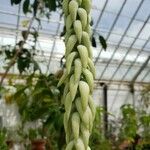
Sedum morganianum
Donkey's-tail · Burro's-tail · Donkey tail · Cola de Burro · Sheep's-tail
Description
Source: leafsnapSedum morganianum, commonly known as Burro's Tail or Donkey's Tail, is a succulent plant native to Mexico and Honduras. It is a trailing plant that can grow up to 60 cm long, with fleshy, blue-green leaves densely packed on hanging stems. The leaves are cylindrical and can reach up to 3 cm in length. During the summer months, the plant produces small pink or red flowers. Sedum morganianum is an easy-to-care-for houseplant that thrives in bright, indirect light and well-draining soil. It prefers moderate watering during its growing season but should be allowed to dry out between waterings to prevent root rot. Propagation is straightforward and can be achieved through stem cuttings. These cuttings should be allowed to callus over before being planted in well-draining soil. This plant is popular due to its unique appearance and low maintenance needs. It adds an interesting texture when grown in hanging baskets or trailing over the edges of shelves and containers. During the summer months, it can also be kept outdoors in temperate climates with mild winters, such as USDA zones 9-11, where it can grow year-round if protected from frosty temperatures below -6°C (20°F).
🌳 Burro's tail, known for its thick, hanging clusters of succulent leaves, is more than just an attractive plant. Aside from its looks, it has the notable ability to produce new plants from fallen leaves that root in soil — a method often used by plant enthusiasts. It may also help clean indoor air by absorbing pollutants, improving the environment where it grows.
🎭 Numerous sons and numerous blessings
Care Guide
💧 Water Every 7 days
Burro's tail flourishes in dry conditions with minimal water, needing to be watered only once every three weeks. This drought-tolerant evergreen is often cultivated indoors, where consistent temperatures and careful monitoring of soil moisture help prevent root rot, ensuring its health and appeal throughout the year.
How should I water my Burro's tail plant?
To properly water Burro's tail, follow these steps for the best results: 1. Wait until spring, when new leaves begin to sprout, before watering the plant. 2. Only add water when the soil inside the pot is completely dry. 3. Use either tap water or distilled water for watering. 4. Avoid watering the plant from overhead; instead, water at the base of the plant. 5. Apply water slowly and evenly across the entire surface of the soil. 6. This method ensures that all parts of the soil are moistened without wetting the above-ground portions of the plant. 7. You can continue watering until you notice excess water draining from the pot's hole.
What should I do if I give my Burro's tail plant too much or too little water?
Overwatering is a more common problem than underwatering for Burro's tail plants. Overwatering can quickly lead to the death of a Burro's tail. To avoid overwatering, it's important to let the soil completely dry before watering. Many people mistakenly water the plant incorrectly, especially when it goes into dormancy. In this case, we will focus on how to fix the issue of overwatering. If your Burro's tail shows signs of overwatering, it's best to remove it from its pot. Once removed, examine the roots and remove any that are rotten or affected by moisture-related diseases. Some roots may recover after cleaning. Repot the plant in soil that has excellent drainage to prevent future overwatering. Although it's less likely, underwatering can also occur. If this happens, water the plant slightly more frequently, being careful not to overcorrect and overwater.
How frequently should I water my Burro's tail plant?
Burro's tail is a type of succulent plant that has low water needs due to its natural habitat in a hot and dry region. To care for this plant properly, it is important to let the soil dry out completely between waterings. This typically takes about two weeks to a month. The frequency of watering depends on the season. During the spring and summer, when the plant is actively growing, you can water it every 2-3 weeks. In the summer, the soil may dry out faster. However, when the temperature drops below 60 degrees or exceeds 85 degrees Fahrenheit, the plant will go into a dormant state and does not require watering. In this case, it is best to keep the soil dry until the temperature becomes suitable for growth again, and then resume watering.
How much water does my Burro's tail plant need?
Burro's tail does not require large amounts of water overall. This is because the plant can go without water for extended periods. However, when it is time to water the plant, be prepared to give it a substantial amount. While there is no specific quantity, make sure you continue watering until the soil is completely moist. To ensure this, if the plant is in a pot, water it until you see water coming out of the drainage holes at the bottom. You can also check if you have watered enough by inserting a pencil or similar object deep into the soil. If the pencil comes out moist, you have provided adequate water.
How can I know if I am watering my Burro's tail plant enough?
Overwatering is a bigger problem than underwatering. If you overwater, you'll see the leaves become mushy and change colors, unlike the healthy leaves which are sturdy. Underwatering is rare for Burro's tail, as it can survive without water. But if it does happen, you'll notice discolored and dry leaves.
☀️ Light Full sun
Burro's tail grows best in full sun, though it can tolerate partly sunny conditions. Its native environment has prepared it to withstand intense sunlight. Nevertheless, too much exposure can burn the leaves, while too little light keeps it from developing vigorous growth and lush foliage.
What are the sunlight requirements for Burro's tail?
Burro's tail thrives in full sun exposure, which means it needs more than 6 hours of sunlight daily. However, it can also tolerate partial sun conditions, requiring about 3-6 hours of sunlight. It's crucial to monitor the sunlight patterns in your garden to ensure your plants receive the right balance of light and shade for optimal growth. Overexposure to sunlight can lead to leaf scorching, while insufficient light can cause the plant to lack vigorous growth and lush foliage.
What are the essentials for growing Burro's tail?
Burro's tail flourishes under full exposure to the sun but can endure partly sunny conditions. Originating from habitat conditions that are accustomed to the sun's intensity, this plant can handle a certain amount of sunlight without issues. Excessive sunlight exposure can cause leaf scorching, whereas insufficient light will lead to weaker growth and less lush foliage. Artificial lighting can be a beneficial supplement for indoor plants, offering solutions for growth in less sunny conditions, especially during winter or in less sunny spaces.
How do I use artificial lighting for my indoor Burro's tail plant?
For indoor plants like Burro's tail, adequate lighting is crucial, and artificial lights can supplement natural sunlight, particularly in winter or less sunny spaces. LED lights are ideal because they can be customized to provide the necessary wavelengths of light. Full sun plants need 30-50W/sq ft of artificial light, partial sun plants need 20-30W/sq ft, and full shade plants need 10-20W/sq ft. Place the light source 12-36 inches above the plant to mimic natural sunlight, and ensure it receives 8-12 hours of light per day.
What are the symptoms of inadequate light exposure in Burro's tail?
Burro's tail exhibits several symptoms when it doesn't receive enough light, including lighter-colored or pale new leaves, leggy or sparse growth, faster leaf drop, slower or no new growth, chlorosis (leaves losing green color), sunscald (damaged areas from intense sunlight), leaf curling (a defense mechanism against sunlight), wilting (loss of turgor pressure), and leaf scorching (brown, dry edges on leaves). These symptoms highlight the plant's need for adequate light for healthy growth.
What solutions are available for improving light exposure to Burro's tail?
To improve light exposure for Burro's tail, gradually move the plant to a sunnier location, aiming for at least 6 hours of direct sunlight daily. For indoor plants, use south-facing windows and consider artificial lighting, such as desk lamps or grow lights, for at least 8 hours daily. Outdoors, cautiously transition plants to sunnier spots to prevent sunburn. Removing obstructions or transplanting to sunlit areas can enhance light access. New growth should resume healthily after adjusting light exposure, although parts of the plant that suffered from inadequate light may not recover.
🌡️ Temperature 20–37.8°C
In its natural habitat, burro's tail prospers in warm climates with temperatures from 20 to 38 ℃ (68 to 100 ℉). It favors warm conditions and can tolerate higher temperatures than most succulents. In summer, keep the plant in a spot with good air circulation and protect it from intense direct sunlight.
What are the ideal growing conditions for Burro's tail?
Burro's tail, or Sedum morganianum, thrives in hot climates with temperatures ranging from 20°C to 38°C (68°F to 100°F). It prefers warm temperatures and can tolerate higher temperatures well compared to most succulents. To ensure optimal growth, especially during its growing season in the winter, maintain temperatures above 20°C. When temperatures soar, it’s crucial to keep the plant in a spot with good airflow while shielding it from strong direct sunlight. Conversely, during cold weather, especially when temperatures dip below 0°C, it’s advisable to bring the plant indoors to a well-lit area to protect it. The watering regimen should be adjusted accordingly, increasing with higher temperatures and reducing as temperatures approach freezing. For those overwintering the plant outdoors, a sheltered location that receives ample sunlight is recommended. If facing consistently low temperatures outdoors, consider erecting a temporary greenhouse to protect the plant while ensuring it remains adequately moist.
How do I care for my Burro's tail if it experiences low temperatures?
Burro's tail is sensitive to extremely cold temperatures and thrives best when kept between 20°C and 38°C. If winter temperatures fall below 0°C, the plant should be maintained above this threshold to prevent damage. In the event of exposure to temperatures below -5°C, you may observe water-soaked necrosis, wilting, and eventual leaf drop, particularly if the plant has been subjected to mild frost damage. The leaves may not show immediate symptoms but can significantly wilt and drop off after a week. If frost damage occurs, trim the frostbitten areas. It's crucial to move the plant to a warmer indoor environment immediately or set up a makeshift greenhouse for cold protection. For indoor relocation, a south-facing window ensures ample sunlight, while a greenhouse setup should include provisions for adequate ventilation to prevent plant decay.
What should I do if my Burro's tail is exposed to high temperatures?
During the summer months, it’s essential to monitor the temperatures affecting your Burro's tail, ensuring they stay below 38°C. Exposure to temperatures exceeding 43°C can cause the plant to enter a dormant state, increasing its susceptibility to rot in humid conditions. If your plant experiences these high temperatures, remove any dry or rotten parts and relocate it to an area with partial shade, particularly shielding it from the harsh midday and afternoon sun. Additionally, cease watering until the weather cools down, to reduce the risk of root rot and ensure the health of your Burro's tail.
💨 Humidity
🪴 Soil 6-7
🌱 Fertilizer
Burro's tail only needs light fertilizer applications once or twice a year during the growing season. Do not fertilize in winter or in summer when the plant is dormant. Use less fertilizer for plants that have been repotted and wait a few months after repotting before you start feeding. Fertilizing helps maintain healthy growth and encourages flowering.
Why is it important to fertilize my Burro's tail plant?
Applying fertilizer to Burro's tail enriches the growing medium with nutrients. While it already stores water and nutrients, adding plant food during the growing season promotes strong and healthy growth. Additionally, fertilizing can stimulate the production of blooms in mature specimens during the growing season.
When should I fertilize my Burro's tail plant?
Burro's tail, a type of plant, requires a light amount of fertilizer during its growing season. It should be fertilized 1-2 times a year, specifically during the spring and autumn. It is important to avoid fertilizing during the winter and summer, when the plant is dormant. If you have recently repotted your Burro's tail, be cautious with the amount of fertilizer used. It is recommended to wait a few months after repotting before applying any fertilizer.
When is the best time to not put fertilizer on my Burro's tail?
Burro's tail, like most plants, goes through a dormancy period during summer and winter when it stops growing. It's important to stop applying fertilizer during this time. Additionally, when you repot the plant in spring, it's advisable to avoid fertilizing for the first few months.
What kind of fertilizer does my Burro's tail plant need?
When fertilizing Burro's tail, it is recommended to use a liquid plant food specifically designed for succulents and cacti. Make sure to dilute the fertilizer with water, using a half-strength mixture. This is to prevent the fertilizer from accumulating in the soil. Apply the diluted fertilizer to the base of the plant, ensuring it is watered thoroughly. Additionally, ensure that any extra moisture drains from the container or seeps into the ground.
How can I nourish my Burro's tail plant?
When fertilizing Burro's tail, you have two options: liquid plant food or granules. Using liquid plant food is simpler, but if you choose granules, make sure to follow the instructions on the packaging. When using liquid fertilizers, dilute them to half-strength. Regardless of which type of plant food you use, always apply it to the soil. For granules, cover them with a thin layer of soil and water, just like you would with liquid plant food.
🪴 Pot & Repot Every 2 years
When repotting a Burro's tail, choose a pot slightly larger than the current one that has good drainage. Use a well-draining, gritty succulent or cactus mix. Gently remove the plant from its old pot, dust off excess soil, and plant it at the same depth. Wait for a few days before watering so any root damage can heal. Repot in spring or fall and place it in a brightly lit spot.
✂️ Pruning
To maintain the shape of a burro's tail, prune any redundant or dense branches in the spring and fall using tools like knives or scissors. For propagation, cut a sturdy stem with 5 to 6 leaves, apply sulfur powder to the cut wound, and plant it once it has healed, making sure the soil is slightly moist.
🌿 Propagating
🐛 Diseases & pets
☠️ Toxicity
Characteristics
- Plant Type
- Succulent, Vine, Herb
- Life Cycle
- Perennial
- Genus
- Sedum
- Family
- Crassulaceae
- Hardiness Zone
- 9-11
- Mature Height
- 0.3 m to 1.22 m
- Mature Spread
- 30 cm to 61 cm
- Leaf Color
- Green, Blue, Gray, Silver
- Leaf Type
- Evergreen
- Flower Color
- Red, Pink, Purple, Yellow, Orange
- Flower Size
- 2.54 cm
- Bloom Time
- Early summer, Mid summer
- Planting Time
- Spring, Autumn
- Harvest Time
- Mid summer
- Native Area
- Honduras, Mexico