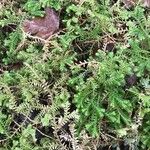
Selaginella kraussiana
Krauss's Clubmoss · Krauss' spikemoss · Krauss's spike-moss · Krauss's-club-moss · Garden selaginella
Description
Source: leafsnapSelaginella kraussiana, commonly known as Krauss's spikemoss, is a fern-like plant belonging to the family Selaginellaceae. Native to southern Africa, it has spread and naturalized in many parts of the world. This plant exhibits a creeping growth habit, forming dense mats on the ground or rocks. Its small, scale-like leaves are arranged in a spiral pattern along its stems, starting green and turning brown with age. Selaginella kraussiana thrives in moist environments and can tolerate both sun and shade. It can grow up to 10 cm tall and spreads quickly through spores or vegetative propagation. Popular as an ornamental ground cover in gardens, the plant is appreciated for its attractive appearance, ease of cultivation, and adaptability to various growing conditions. However, it can become invasive if not properly managed. In traditional African medicine, Selaginella kraussiana has been used to treat ailments such as stomach disorders and respiratory problems, thanks to its anti-inflammatory properties. In summary, Selaginella kraussiana is a fascinating fern-like plant valued both for its ornamental appeal in gardens and its medicinal properties in traditional African practices.
Care Guide
💧 Water Every 7 days
Krauss's clubmoss flourishes in moist, shaded tropical environments, where it requires consistent humidity and evenly moist soil. To replicate its natural conditions, water it weekly. This evergreen plant is often grown indoors and benefits from stable temperatures and indirect light. To ensure it receives sufficient moisture, place the plant on a pebble tray filled with water.
How should I water my Krauss's clubmoss?
To properly water the Krauss's clubmoss, it is recommended to use filtered water at room temperature. Tap water may contain harmful particles that can negatively affect the plant's health. It is important to use water that is at room temperature or slightly warmer since this plant is accustomed to warm environments and cold water can be a shock to its system. Instead of overhead watering, it is best to directly apply filtered, room temperature water to the soil until it is completely soaked. This method helps moisten the roots, allowing them to continue spreading through the soil and gather the necessary nutrients.
What should I do if I give too much or too little water to my Krauss's clubmoss?
Overwatering is a major problem for Krauss's clubmoss, causing wilting and yellowing of stems and leaves. It can also lead to diseases like root rot, mold, and mildew that can kill the plant. Underwatering is less common but still possible, causing brittle and brown leaves. To prevent damage, it's important to recognize the signs of overwatering early and adjust the watering schedule. If the soil drains poorly, replace it with a well-draining potting mix. If underwatering is an issue, simply water more regularly until the signs improve.
How often should I give water to my Krauss's clubmoss?
If your Krauss's clubmoss is in a pot, the easiest way to check if it needs water is to stick your finger in the soil. If the top two to three inches of soil are dry, it's time to water it. If you have your Krauss's clubmoss planted in the ground outdoors, you can use a similar method to check the soil. Once the top few inches of soil have dried out, it's time to water it. In the spring and early fall, you'll usually need to water this plant about once a week using this method. In extremely hot weather, you may need to water it two or more times a week. However, mature and well-established Krauss's clubmoss can survive drought conditions quite well.
How much water does my Krauss's clubmoss require?
When watering your Krauss's clubmoss, don't be afraid to give it plenty of water. Make sure the top two to three inches of soil are dry before watering, and then give it a thorough watering until the soil is completely soaked. You should add enough water so that it drains out of the pot's drainage holes. If you don't see excess water draining, you might not have given it enough water. Be careful not to let water accumulate in the soil, as this can harm the plant. On the other hand, if water doesn't drain properly, it could mean the soil is not draining well, which is not good for the plant's health. If the plant is outside, it generally needs about 1 inch of rain per week.
How do I water my Krauss's clubmoss during different stages of growth?
The water needs of the Krauss's clubmoss can vary depending on its growth stages. In the first few years or after transplanting, it requires more water. This is because the clubmoss focuses on developing new roots during these stages, which need extra moisture. As the plant matures, it will require less water. Another stage that requires increased watering is the bloom period, as flower development relies on significant moisture.
☀️ Light Partial sun
Krauss's clubmoss needs a moderate amount of sun and typically does well in places with filtered sunlight. It tolerates deep shade, though such light conditions may lead to slower growth and less vibrant foliage. Excessive light exposure can harm the plant's health and vigor, potentially affecting its growth and lifespan.
What are the requirements for sunlight exposure for plants?
Plants require varying degrees of sunlight to thrive, with categorizations such as 'Partial sun' needing about 3-6 hours of sunlight, and 'Full shade' referring to locations that receive less than 3 hours of sunlight daily. It's important to observe how sunlight moves through your garden throughout the day, to ensure that you're placing your plants in spots that offer the right balance of light and shade, ensuring their growth and well-being.
What are the sunlight and artificial lighting essentials for Krauss's clubmoss?
Krauss's clubmoss flourishes under a moderate level of sun exposure, ideally in areas of filtered sunlight, and can withstand extreme shade, albeit with potential slower growth and less vibrant foliage. Inadequate light exposure risks harm to the plant's vitality. For indoor plants lacking natural light, especially in winter or darker spaces, artificial lighting is crucial. LED lights, recommended for their customizable wavelengths, should cater to specific plant needs: full sun plants (30-50W/sq ft), partial sun plants (20-30W/sq ft), and full shade plants (10-20W/sq ft). The artificial lights should be positioned 12-36 inches above the plant for 8-12 hours per day to mimic natural daylight conditions.
What are some crucial symptoms and solutions for light-related issues in Krauss's clubmoss?
Krauss's clubmoss may display various symptoms due to inadequate light conditions, such as smaller new leaves, leggy growth, premature leaf drop, cessation or delay in new growth, lighter-colored new foliage, chlorosis, sunscald, leaf curling, wilting, and leaf scorching. Solutions include gradually moving plants to sunnier spots to receive 3-6 hours of sunlight daily, using artificial light if necessary for at least 8 hours daily, and, for outdoor plants, ensuring they're gradually adapted to better lit conditions to avoid sunburn. If sunlight is blocked, consider reducing obstructions or transplanting to brighter locations. Note that while parts of the plant damaged by poor light may not recover, new growth should be healthy with improved lighting.
🌡️ Temperature 20–37.8°C
Krauss's clubmoss comes from habitats where temperatures range from 68 to 100.4 °F (20 to 38 ℃). It does well in these warm conditions. When temperatures drop below or climb above this preferred range, seasonal adjustments may be needed.
What is the native temperature range for Krauss's clubmoss?
Krauss's clubmoss, also known by its botanical name Selaginella kraussiana, thrives in warm conditions, preferring a temperature range from 68 to 100.4 °F (20 to 38 °C). Its heat-loving nature suggests that it fares well in environments within this temperature spectrum. During colder months or when outdoor temperatures exceed its comfort zone, seasonal adjustments, such as moving the plant indoors to a spot near a bright window but away from direct heat sources, are advised to maintain its health. It's important to ensure the temperature stays above 20°C, especially during winter, as the plant can be harmed by temperatures nearing 0°C.
How should I care for Krauss's clubmoss in low temperature conditions?
In low temperature conditions, Krauss's clubmoss requires particular attention since it prefers warm environments and struggles with cold. If temperatures drop below 20°C, especially to -5°C or lower, the leaves may begin to pale in color, eventually turning brown or black if frost damage occurs, accompanied by wilting and drooping. To combat this, you should trim off the damaged parts and move the plant indoors to a warmer space for protection. Placing it near a south-facing window will ensure it receives enough sunlight, but keep it away from direct heat sources like heaters or air conditioners to avoid air dryness.
What steps should be taken if Krauss's clubmoss experiences high temperatures?
During the hotter months, it's crucial to ensure that Krauss's clubmoss's exposure to temperatures doesn't exceed 38°C. Exceeding this, especially going beyond 43°C, can cause the leaves to lighten and increase the plant's risk of sunburn. To mitigate high temperature stress, you should trim away any sunburned or dry sections of the plant. Relocate the plant to a shaded area, particularly away from the harsh midday and afternoon sun. Additionally, maintaining soil moisture by watering in the morning and evening will help the plant stay hydrated and cooler.
💨 Humidity high (>60%)
This plant needs special care because it loves high humidity levels of 60-80% or more. The best way to achieve this is by placing a humidifier near the plant. Daily misting is also essential! Make sure the room has good ventilation.
🪴 Soil 6-7
🌱 Fertilizer
Krauss's clubmoss needs the most fertilizer during its active growth period, which takes place mainly in spring, summer, and early fall. Fertilizing is required to supply essential nutrients the soil may lack, supporting healthy root and stem growth and the attractive foliage that is a defining feature of this plant.
Why should I put fertilizer on my Krauss's clubmoss?
Plants, including the Krauss's clubmoss, rely on soil nutrients to grow. However, there is no guarantee that the soil will have all the necessary nutrients. Fertilization and soil amendments are important for ensuring that plants in the garden get the basic and specific nutrients they need. For the Krauss's clubmoss, fertilizer is needed to promote healthy root and stem development. Fertilization is also key for the plant to have attractive foliage, which is its main decorative feature.
When should I fertilize my Krauss's clubmoss for the best results?
A Krauss's clubmoss needs the most fertilizer when it is actively growing, which is usually during the spring, summer, and early fall months. After winter ends, you should feed the clubmoss every two to four weeks. Keep up this feeding schedule until fall, when you can gradually reduce the amount of fertilizer you give. Eventually, you should stop feeding the clubmoss entirely in preparation for winter, as its growth will slow down during that time.
When is the best time to not fertilize my Krauss's clubmoss?
To keep your Krauss's clubmoss healthy, it is important to feed it regularly throughout most of the year, including spring, summer, and the majority of fall. However, there are a few exceptions. If you notice that your clubmoss has already received too much fertilizer or if you made a mistake with fertilizing and caused fertilizer burn or other problems, you must address those issues before resuming a regular feeding schedule. It is crucial to note that you should not fertilize your Krauss's clubmoss during the winter. If you are growing it indoors in a cold winter climate, the plant will go into a dormant phase. During this time, feeding the plant is unnecessary, unhelpful, and likely to cause fertilizer burn.
What kind of fertilizer does my Krauss's clubmoss need?
The fertilizer for a Krauss's clubmoss should have a specific blend of nutrients, but each nutrient is present in small amounts. Ideally, the fertilizer should have an N-P-K ratio of 3-1-2. However, a general-purpose fertilizer with a balanced blend of nutrients can also work well. Regardless, the volume of each nutrient should be at 10 or lower. You can choose between using a granular or liquid-based fertilizer. If you use a liquid-based fertilizer, it's best to dilute it by half. While granular fertilizer has few downsides, it's generally better to use liquid fertilizer, especially if you water your Krauss's clubmoss while you feed it.
How should I fertilize my Krauss's clubmoss?
When purchasing fertilizer for your Krauss's clubmoss, you will usually receive application instructions that should be followed. In the case of a Krauss's clubmoss, it is important to fertilize just before or during watering to avoid harming the plant's roots. If using a slow-release granular fertilizer, sprinkle it on the soil and immediately water it. For liquid-based fertilizer, dilute it with water, apply it to the soil, and then water a little more. During spring and fall, when the growth of the plant is increasing or decreasing, respectively, it is especially important to dilute the fertilizer by at least half.
🪴 Pot & Repot 2-3 years
Repot Krauss's clubmoss every 2 to 3 years in the spring to encourage healthy growth. Choose a shallow, wide container to accommodate its spreading nature. To maintain the plant’s health and vitality, ensure high humidity and consistent moisture, while avoiding overwatering and waterlogging.
✂️ Pruning
Krauss's clubmoss, native to Southern Africa, is a low-growing, mat-forming plant. To maintain its health and ornamental appeal, prune it in early to late spring. Use sharp, clean tools to remove dead growth and prevent the plant from becoming invasive.
🌿 Propagating
🐛 Diseases & pets
☠️ Toxicity
Characteristics
- Plant Type
- Herb
- Life Cycle
- Perennial
- Genus
- Selaginella
- Family
- Selaginellaceae
- Hardiness Zone
- 9-11
- Mature Height
- 5 cm to 10 cm
- Mature Spread
- 30 cm to 46 cm
- Leaf Color
- Green
- Leaf Type
- Evergreen
- Planting Time
- Spring
- Native Area
- Malawi, Angola, South Africa, Sudan, Rwanda, Kenya, Uganda, Tanzania, Zimbabwe, Sierra Leone, Equatorial Guinea, Cameroon, Burundi, Mozambique, Eswatini, Ethiopia, Congo (DRC), Botswana, Congo