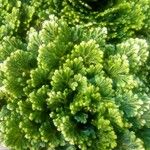
Selaginella tamariscina
Little club-moss · Little-club-moss
Description
Source: leafsnapSelaginella tamariscina, commonly known as Spikemoss, is a fern-like species belonging to the family Selaginellaceae. Native to China and other parts of Asia, it has been used in traditional Chinese medicine for centuries. This plant exhibits a creeping growth habit and can reach up to 30 cm in height. Its small, needle-like leaves are arranged spirally along the stem, presenting a dark green upper surface and a lighter green underside. Selaginella tamariscina thrives in moist soil but can tolerate some drought once established. It grows well in both partial and full shade. The plant contains various bioactive compounds, including alkaloids, flavonoids, terpenoids, and lignans, which have been found to possess anti-inflammatory properties and anti-tumor activity. In traditional Chinese medicine (TCM), Selaginella tamariscina is valued for its diuretic properties, which help reduce swelling caused by edema or water retention. It is also believed to enhance blood circulation and alleviate pain associated with arthritis and other inflammatory conditions. Overall, Selaginella tamariscina is an intriguing fern-like plant with potential medicinal benefits that continue to be explored by researchers worldwide.
Care Guide
💧 Water Every 7 days
Selaginella tamariscina thrives in humid environments, requiring consistent moisture and high humidity, though it can tolerate moderate drought. To maintain its water balance, it is essential to water it weekly and mist it regularly. This evergreen plant is often grown indoors, where it benefits from stable conditions.
How should I water my Selaginella tamariscina plant?
To properly water the Selaginella tamariscina, it's best to use filtered water at room temperature. This type of water is preferred because tap water may contain harmful particles. Additionally, using water at room temperature or slightly warmer is important because this plant is accustomed to warm environments and cold water can be a shock to its system. It's also recommended to avoid watering the plant from above, as this can lead to issues with the foliage. Instead, slowly pour the filtered room temperature water onto the soil until it is completely soaked. This method of watering is beneficial because it helps moisten the roots and allows them to spread and gather the necessary nutrients.
What should I do if I give my Selaginella tamariscina too much water or too little water?
It is important to take proper care of your Selaginella tamariscina by avoiding both overwatering and underwatering. Overwatering is a more common issue and can cause wilting, yellowing, and potential diseases like root rot, mold, and mildew that can be fatal to the plant. While underwatering is less common due to the plant's drought tolerance, it can still happen, resulting in brittle, brown leaves. It is crucial to be vigilant about signs of overwatering and take immediate action to reduce watering frequency. If the soil drains poorly, replacing it with a well-draining potting mix is recommended. On the other hand, if signs of underwatering are present, increasing the watering schedule until the signs go away is sufficient.
How frequently should I water my Selaginella tamariscina?
If your Selaginella tamariscina is in a pot, the best way to determine if it needs water is by checking the soil. Stick your finger into the soil and if the first two to three inches feel dry, it's time to water. If your Selaginella tamariscina is planted outdoors in the ground, you can use the same method to check the soil. Once the first few inches of soil have dried out, it's time to water. Typically, in the spring and early fall, you may need to water this plant about once a week. However, during extremely hot weather, you may need to increase watering to twice or more a week. It's worth noting that mature and well-established Selaginella tamariscina plants can handle drought conditions quite well.
How much water does my Selaginella tamariscina plant need?
When watering your Selaginella tamariscina, don't hesitate to give it a generous amount of water. Wait until the top 2-3 inches of soil are dry, then water the plant thoroughly until the soil is completely soaked. Make sure to add enough water so that excess water flows out of the drainage holes at the bottom of the pot. If you don't see any excess water draining, it means you haven't watered enough. On the other hand, be cautious not to let the water accumulate in the soil, as this can harm the plant. If you notice water not draining properly, it could indicate that the soil doesn't have good drainage, which is detrimental to the plant's health. If the plant is kept outdoors, 1 inch of rain per week should be enough.
How do I water my Selaginella tamariscina as it grows?
The water needs of the Selaginella tamariscina can vary depending on its growth stages. When your Selaginella tamariscina is in its early years or has just been transplanted to a new location, it will require more water than usual. During these stages, the plant will focus its energy on developing new roots to support future growth. To ensure optimal root performance, the plant will benefit from slightly higher moisture levels. As the plant matures over a few seasons, it will require less water. Another growth stage that may require increased watering is the bloom period. During this time, the development of flowers can use up a significant amount of moisture, prompting the need for additional water for your Selaginella tamariscina.
☀️ Light Partial sun
Selaginella tamariscina does best with moderate solar exposure. Too much solar radiation can be harmful and may damage selaginella tamariscina's foliage. Conversely, insufficient sunlight can negatively affect its growth and overall health. Coming from habitats where sunlight is diffused by other plants, selaginella tamariscina has adapted to those lighting conditions.
What are the sunlight requirements for Selaginella tamariscina?
Selaginella tamariscina thrives best when exposed to partial sun, which amounts to about 3-6 hours of sunlight per day, and can benefit from indirect sunlight throughout the day. It is important to monitor the movement of sunlight in your garden to ensure that the plants receive the ideal balance of light and shade, promoting a healthy growth environment. Excessive exposure to the sun can be harmful, causing damage to the plant's foliage, while insufficient sunlight may impede its growth and overall health. Originally from environments with diffused sunlight, Selaginella tamariscina is well-adapted to these lighting conditions.
How can artificial lighting be used for Selaginella tamariscina?
Artificial lighting can be pivotal for the growth of indoor Selaginella tamariscina, especially when natural sunlight is insufficient. LED lights are recommended for their ability to mimic the specific wavelengths of light needed by plants. The intensity of light required varies by plant type: full sun plants need 30-50W per square foot, partial sun plants require 20-30W per square foot, and full shade plants should have 10-20W per square foot. The light source should be placed 12-36 inches above the plant to simulate natural sunlight, and the lighting duration should align with the natural daylight hours required by the plant species, typically between 8-12 hours per day.
What are the common symptoms of improper lighting in Selaginella tamariscina?
Improper lighting can lead to several symptoms in Selaginella tamariscina, such as smaller new leaves, leggy or sparse growth, faster leaf drop, slower or no new growth, lighter-colored leaves, chlorosis, sunscald, leaf curling, wilting, and leaf scorching. These symptoms reflect either light deficiency or excessive sunlight exposure. Leaf curling, wilting, and scorching are particularly indicative of too much sunlight, while smaller leaves, sparse growth, early leaf drop, slow or stopped growth, and paler leaves suggest insufficient light.
What solutions exist for managing light exposure issues in Selaginella tamariscina?
To manage light exposure for Selaginella tamariscina, gradually acclimate the plant to new light conditions by moving it to sunnier spots each week until it obtains 3-6 hours of direct sunlight per day. For indoor plants, especially those that are large or difficult to move, supplementing with artificial lighting, such as keeping a desk or ceiling lamp on for at least 8 hours per day or using professional plant grow lights, can provide the necessary light. Outdoors, it is crucial to avoid sudden changes in sunlight intensity to prevent sunburn. Pruning obstructive branches and possibly transplanting smaller plants during their dormant period to areas with better sunlight and drainage can also help. It's important to note that parts of the plant that were previously affected by inadequate light might not recover, but new growth should be healthy following these adjustments.
🌡️ Temperature 0–32.2°C
Selaginella tamariscina is usually found in climates with temperatures ranging from 32 to 89.6 °F (0 to 32 ℃). It prefers these moderate temperature conditions. Adjusting its environmental factors to align with seasonal changes can be beneficial to its vital growth.
What are the ideal temperature conditions for Selaginella tamariscina?
Selaginella tamariscina thrives in climates with temperatures ranging from 32 to 89.6 °F (0 to 32 °C), preferring moderate conditions. This plant has strong cold resistance, making special frost protection measures usually unnecessary. However, when winter temperatures are expected to drop below -35°C, it's important to provide protection by covering the plant with soil or straw. Additionally, abundant watering before the first freeze helps keep the soil moist, preventing drought and water scarcity during winter and early spring.
How does low temperature affect Selaginella tamariscina and how can it be managed?
Selaginella tamariscina is cold-tolerant and performs best when temperatures remain above 0°C, ideally staying above -30°C during winter. If temperatures fall below -35°C, there might not be immediate visible changes, but you may notice a decrease in sprouting or even no sprouting in the following spring. To manage this, remove parts that failed to sprout in spring.
What should be done if Selaginella tamariscina is exposed to high temperatures?
During the summer, it's critical to ensure Selaginella tamariscina is kept under 32°C to avoid heat stress. Exposure to temperatures above 35°C can cause the leaves to lighten in color, curl, and become prone to sunburn, with severe cases leading to wilting and drying of the entire plant. To manage heat stress, trim sunburned and dried parts, relocate the plant to a shaded area, particularly away from midday and afternoon sun, or use a shade cloth. Watering the plant in the morning and evening can also help keep the soil moist and cool.
💨 Humidity high (>60%)
This plant needs special care because it loves high humidity levels of 60-80% or more. The best way to achieve this is by placing a humidifier near the plant. Daily misting is also essential! Make sure the room has good ventilation.
🪴 Soil 6-7
🌱 Fertilizer
Usually a single fertilizer application in spring is adequate for Selaginella tamariscina, though repeated feedings can optimize growth. If feeding regularly, apply every month to every month and a half. Fertilization improves the leaves' appearance and function, helping maintain even color and a healthy texture. It also encourages root development and nutrient uptake, supporting the plant's long-term health.
Why do I have to add fertilizer to my Selaginella tamariscina plant?
The main structure of Selaginella tamariscina is made up of its leaves. Fertilization is an impactful way to ensure that these leaves not only look great but also function properly. With proper fertilization, the leaves of your Selaginella tamariscina will have consistent color and a healthy texture. Fertilization also benefits the plant's root system by aiding in the growth of new roots and maintaining existing ones. This means that fertilization not only keeps your plant healthy in the present but also improves its ability to absorb soil nutrients in the future.
When should I fertilize my Selaginella tamariscina for the best results?
If you grow your Selaginella tamariscina outdoors, it will start growing new leaves in early spring. This is a sign that it's time to start fertilizing. Usually, one application of fertilizer in the spring is enough for the plant to do well. But if you want your Selaginella tamariscina to grow as much as possible, you can fertilize it multiple times in the spring and early summer. If you choose to do this, you can fertilize your plant every month to a month and a half.
When is it not a good idea to use fertilizer on my Selaginella tamariscina?
During the late fall and winter, your Selaginella tamariscina will go into a dormant phase and stop growing. Therefore, it is important to avoid fertilizing it during this time. In spring and summer, if you choose to fertilize, gradually decrease the amount of fertilizer as summer approaches because the growth rate of your Selaginella tamariscina will slow down. It is always best to avoid fertilizing when the weather is very hot or the soil is extremely dry as this can harm your Selaginella tamariscina and cause it to die prematurely.
What kind of fertilizer does my Selaginella tamariscina plant need?
Choosing the best fertilizer for a Selaginella tamariscina is simple. A general-purpose garden fertilizer with equal amounts of nitrogen, phosphorus, and potassium, such as a 10-10-10 ratio, is effective. Avoid high nitrogen fertilizers if unsure. Granular slow-release fertilizers are recommended, as they are easy to apply to the soil. Additionally, using organic soil amendments like compost can be beneficial for feeding the plant.
How should I feed my Selaginella tamariscina plant?
To give your Selaginella tamariscina the best care, wait for its first leaves to emerge in early spring. Once you spot them, apply a granular slow-release fertilizer with a balanced formula to the soil around the base of the plant. You can repeat this process later in the season if desired. Remember to always apply the fertilizer to the soil, not directly to the plant itself. Sometimes you may need to move some leaves aside to access the soil above the roots. Additionally, watering your Selaginella tamariscina before and after fertilizing is often a good choice.
🪴 Pot & Repot 2-3 years
Repot your Selaginella tamariscina every 2-3 years during the spring, using a slightly larger, shallow container. Ensure it receives bright, indirect light and keep the soil consistently moist, but be careful to avoid making it soggy. Handle the plant gently to promote optimal growth, which will result in a lush, green carpet.
✂️ Pruning
Selaginella tamariscina flourishes in humid environments, showcasing its lush foliage. To promote healthy growth and maintain a compact shape, prune any dead fronds in the spring. This practice also improves air circulation and helps prevent disease. For optimal growth and longevity, plant it in well-draining soil and provide moderate watering.
🌿 Propagating
🐛 Diseases & pets
☠️ Toxicity
Characteristics
- Plant Type
- Herb
- Life Cycle
- Perennial
- Genus
- Selaginella
- Family
- Selaginellaceae
- Hardiness Zone
- 3-8
- Mature Height
- 46 cm
- Mature Spread
- 25 cm to 30 cm
- Leaf Color
- Green
- Leaf Type
- Evergreen
- Planting Time
- Spring, Summer
- Harvest Time
- Late spring, Early summer, Mid summer
- Native Area
- Russia, Indonesia, Vietnam, Japan, Philippines, Koppen, South Korea, Thailand, China