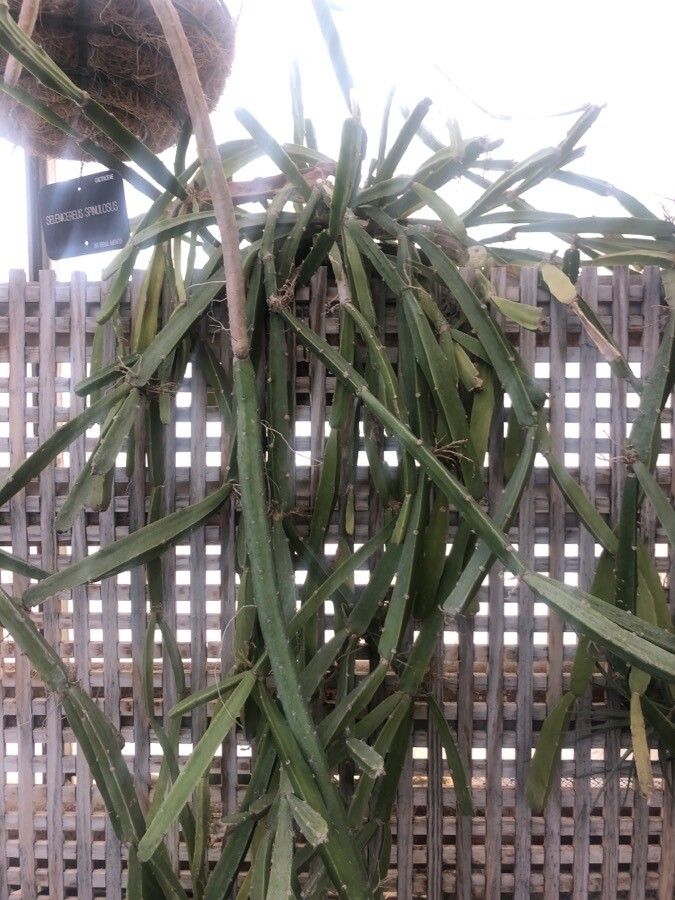
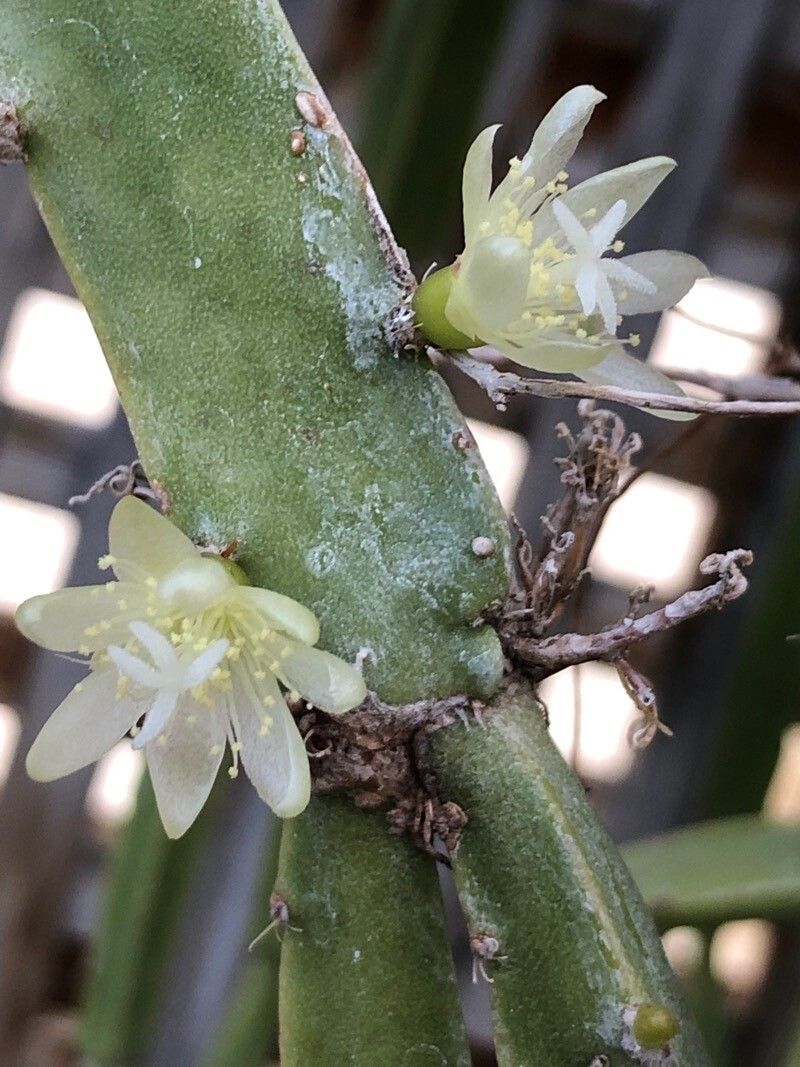
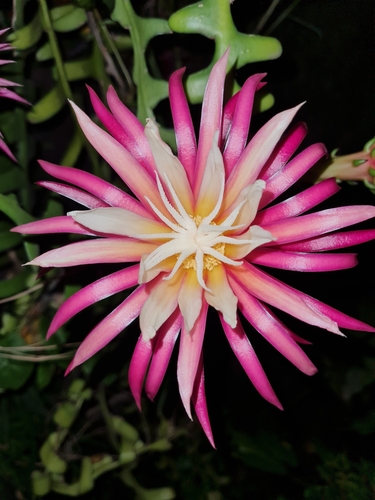
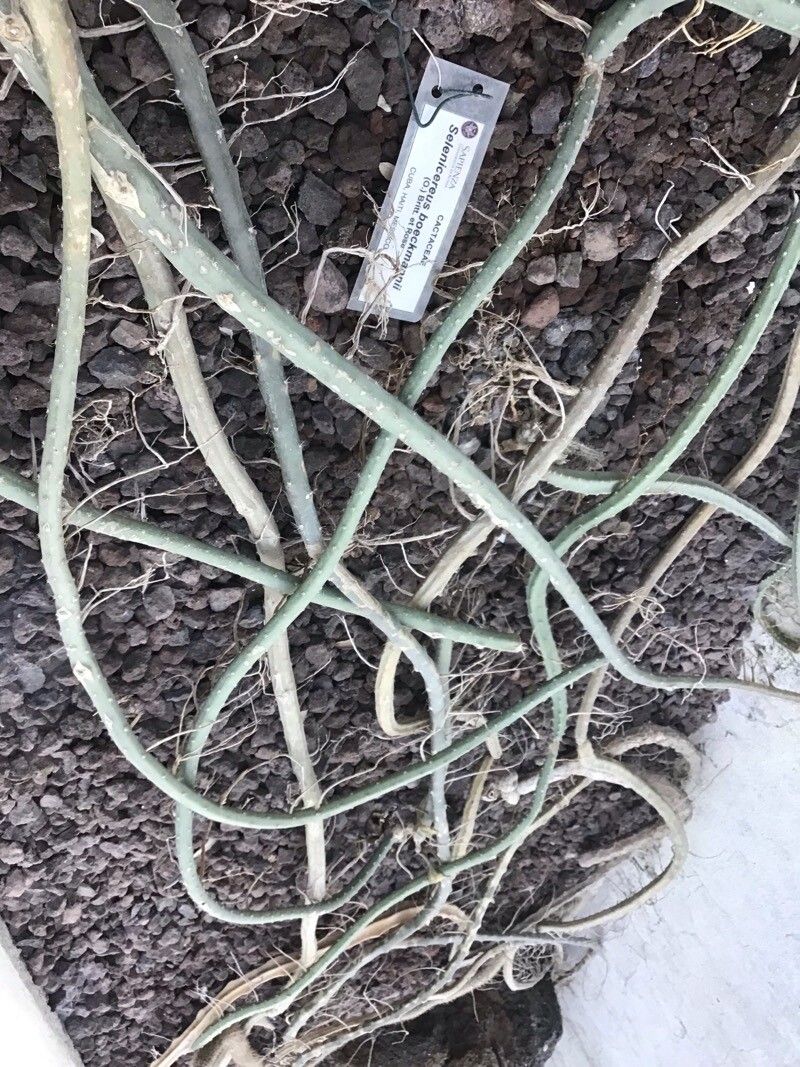
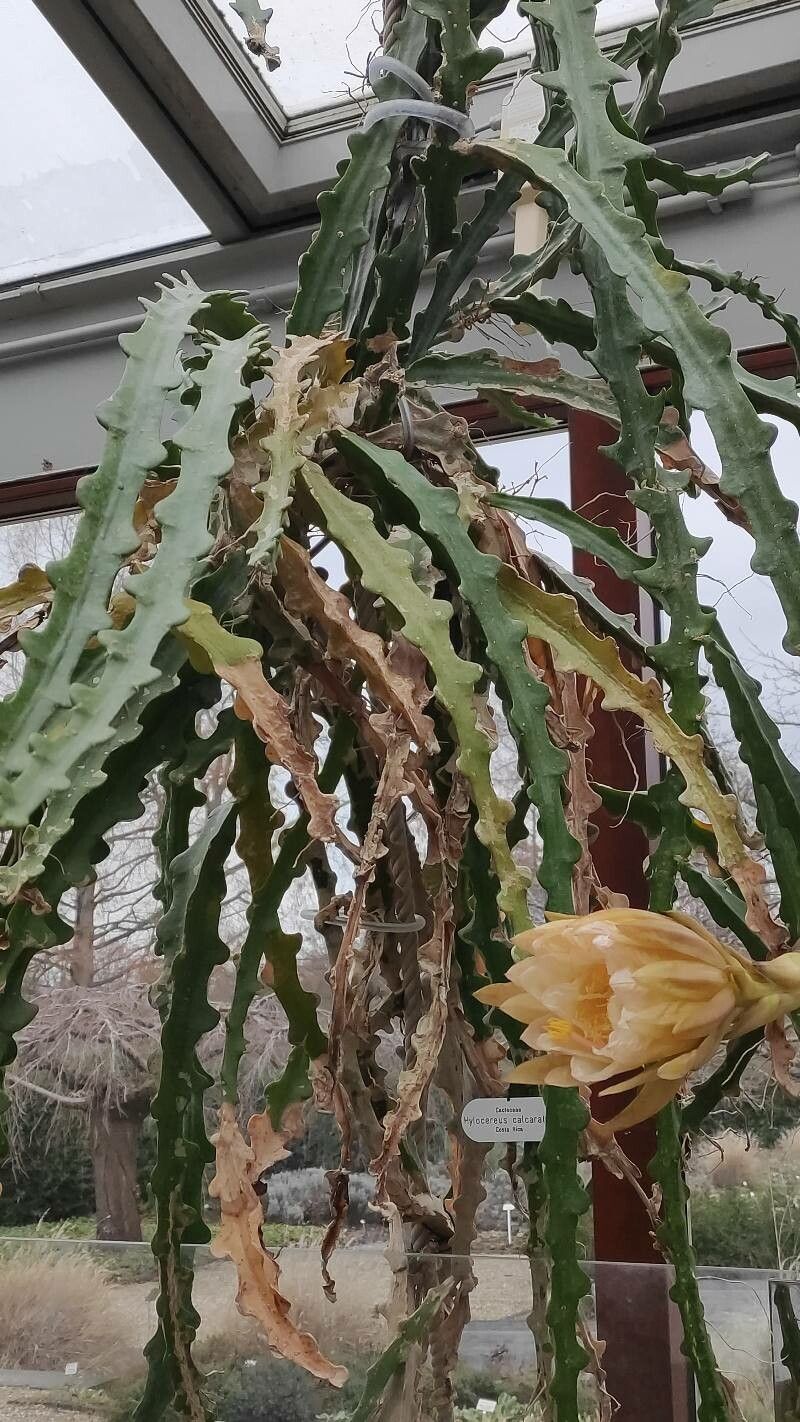
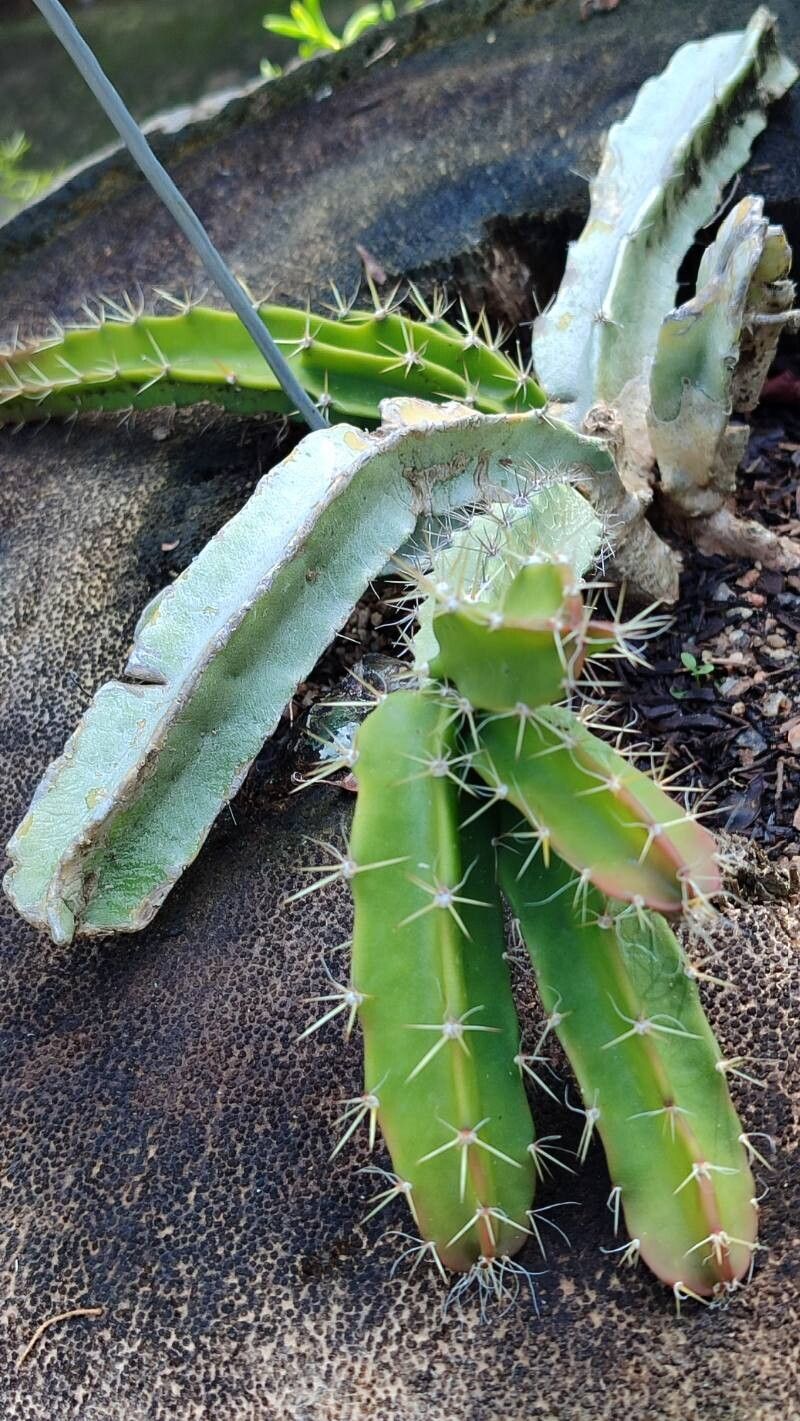
Selenicereus spinulosus is a cactus species native to eastern Mexico and, possibly, the lower Rio Grande Valley of Texas in the United States. Common names include vine-like moonlight cactus and spiny moon cereus. Its specific name, spinulosus, means "with small spines" in Latin.
Vine-like moonlight cactus has strong resistance to disease and generally remains healthy under normal care. It can be vulnerable to mealybugs; these pests may cause some harm but are usually not a major danger. Regarding care, Vine-like moonlight cactus is drought tolerant and does not require frequent watering. It can endure extended stretches without water and needs little fertilizer. However, if lighting is poor and the plant is overwatered, it is very prone to root rot. In general, Vine-like moonlight cactus is a good choice for people who prefer low-maintenance plants, though it is important to meet its basic needs. It is especially appropriate for those who are away for long periods and might forget to water regularly.
How to keep Selenicereus Spinulosus.
Light
The vine-like moonlight cactus needs abundant sunlight for optimal growth. This tendency is linked to its native habitat, which receives high levels of solar radiation. Several stages of its development require continuous sun exposure. Insufficient sunlight can lead to stunted growth, while too much exposure may cause leaf burn.
Water
The vine-like moonlight cactus thrives in high humidity and consistent moisture. To maintain proper soil hydration, it is best to water it twice a week. As an epiphytic cactus commonly grown indoors, it benefits from misting during the growing season to mimic its native tropical environment.
Temperature
The vine-like moonlight cactus originates from habitats where temperatures usually range from 68 to 100 °F (20 to 38 ℃). Being well-suited to warm conditions, it should not be exposed to cooler weather. During colder months, make sure the vine-like moonlight cactus stays within its preferred temperature range.
Fertilizer
Proper fertilization is vital for the Vine-like moonlight cactus's health and looks. Feed the Vine-like moonlight cactus in summer, repeating the feeding each month throughout the season. Nutrients drive growth and help maintain the plant's components. Fertilizing boosts the Vine-like moonlight cactus's flower display, ensuring the best blooms.
Pruning
The vine-like moonlight cactus flourishes when pruned strategically to control its growth and improve its health. To achieve the best results, prune the cactus in early spring or late winter by removing dead or overcrowded stems. This promotes better airflow and enhances the plant's overall vitality. Regular trimming encourages flowering and prevents the stems from becoming tangled, helping to maintain the cactus's unique characteristics.
Pot & Repot
Repot your vine-like moonlight cactus every 2-3 years in the spring. Choose a snug pot to help support its climbing growth. After repotting, place the cactus in a location with bright, indirect light. Water it carefully to prevent root rot, which will help it thrive during the transition.
Botanical profile.
- Plant Type
- Herb
- Life Cycle
- Perennial
- Genus
- Selenicereus
- Family
- Cactaceae
- Hardiness Zone
- 10-11
- Mature Height
- 0.91 m to 4.88 m
- Mature Spread
- 0.91 m to 2.13 m
- Leaf Color
- Green
- Leaf Type
- Evergreen
- Flower Color
- Pink
- Flower Size
- 6.35 cm to 8.89 cm
- Bloom Time
- Summer, Early fall
- Planting Time
- Spring, Summer
- Harvest Time
- Late summer, Fall
- Native Area
- Mexico
Other names.
Reader questions.
What are the sunlight requirements for Vine-like moonlight cactus?
The Vine-like moonlight cactus (Selenicereus spinulosus) thrives in conditions where it receives more than 6 hours of sunlight daily, which is indicative of its need for full sun exposure to ensure optimal growth. This requirement mimics its natural habitat, abundant in solar radiation, facilitating various stages of its life cycle. It's essential to observe the movement of sunlight through your garden to locate the ideal balance of light and shade, ensuring the plant's health and happiness. Inadequate sunlight can lead to stunted growth, while too much exposure may cause leaf burn.
What is the ideal temperature range for Vine-like moonlight cactus?
The Vine-like moonlight cactus, known botanically as Selenicereus spinulosus, thrives in temperatures between 68 to 100 °F (20 to 38 °C). It is well-suited to hot climates and must be kept away from cooler temperatures to ensure health and growth. During the colder seasons, it's important to maintain this preferred temperature range to avoid any damage to the plant. If you have your plant outdoors, you should bring it indoors in the autumn to a spot near a bright window, though not too close to heaters, to keep it within its ideal temperature spectrum.
How can artificial lighting be used for Vine-like moonlight cactus indoors?
Artificial lighting plays a crucial role, especially for indoor Vine-like moonlight cactus plants, when natural sunlight is insufficient, such as in winter or less sunny spaces. For optimal growth, it's advised to provide 30-50W/sq ft for full sun plants, 20-30W/sq ft for partial sun plants, and 10-20W/sq ft for full shade plants using LED lights, as they offer customization for specific light wavelengths required by plants. The light source should be placed 12-36 inches above the plant, simulating natural sunlight, and kept on for 8-12 hours daily, mimicking the natural daylight hours suited to the plant species.
How do you care for Vine-like moonlight cactus in low temperatures?
Vine-like moonlight cactus prefers warm environments and struggles in temperatures below 20°C. To protect it during winter, ensure it's kept above 5°C as exposure to temperatures below this can cause the plant to suffer, exhibiting symptoms such as lightening of the leaves which can eventually turn brown or black, along with wilting and drooping after frost damage. In case of frost damage, affected parts should be trimmed off. The plant should be moved indoors to a warmer spot, preferably near a south-facing window for ample sunlight, while avoiding placing it near heaters or air conditioning vents to prevent the air around it from becoming too dry.
What are the signs of inadequate lighting for Vine-like moonlight cactus?
Vine-like moonlight cactus shows multiple symptoms when exposed to poor light conditions, particularly when grown indoors. These include smaller new leaves, leggy or sparse growth indicating a stretched-out appearance due to longer spaces between leaves or stems, faster leaf drop as a resource conservation measure, slowed or halted growth as the plant enters survival mode, lighter-colored new leaves due to lack of chlorophyll, chlorosis which results in yellowing leaves from excessive light, sunscald causing pale, bleached areas on the plant, leaf curling as a defense against extreme sunlight, wilting from excessive water loss, and leaf scorching characterized by brown, dry leaf edges.
What should be done if Vine-like moonlight cactus experiences high temperatures?
In the summer, Vine-like moonlight cactus should be maintained below 38°C to prevent heat stress. Should temperatures exceed 43°C, the plant's leaves might lighten, increasing its susceptibility to sunburn. To manage this, remove the sunburned and dried-up parts of the plant. Relocating the cactus to a shaded area, particularly during the midday and afternoon sun, can protect it from further damage. Additionally, watering the plant during the cooler morning and evening hours helps in keeping the soil adequately moist, thus ensuring the plant remains hydrated and healthy.
What solutions are there for sunlight deficiencies in Vine-like moonlight cactus?
To combat sunlight deficiencies in Vine-like moonlight cactus, gradually move the plants to sunnier locations each week, aiming for at least 6 hours of direct sunlight, particularly through a south-facing window. For indoor large plants or those not easily movable, consider using desk or ceiling lamps for at least 8 hours daily or invest in professional grow lights for sufficient exposure. Outdoors, gradually acclimate plants to prevent sunburn. For ground-planted species, reduce obstructions like overhanging branches and consider transplanting to sunnier spots during dormant periods for ample sunlight absorption and healthy growth. However, it's important to note that parts of the plant already affected by insufficient light may not recover, but new growth should be healthy post-adjustment.