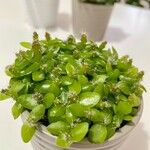
Selenicereus undatus
Dragon fruit · Nightblooming Cactus · Night-blooming cereus · Strawberry-pear · Pitaya
Description
Source: leafsnapSelenicereus undatus, the white-fleshed pitahaya, is a species of Cactaceae and is the most cultivated species in the genus. It is used both as an ornamental vine and as a fruit crop - the pitahaya or dragon fruit. The native origin of the species has never been resolved.
Care Guide
💧 Water
White-fleshed pitahaya thrives in tropical climates characterized by high humidity and occasional heavy rains. While it is drought-tolerant, it still prefers moist conditions. To prevent over-watering, it's best to water it every two weeks. Usually grown outdoors, the growth cycle of white-fleshed pitahaya is influenced by seasonal rainfall patterns.
☀️ Light Full sun
White-Fleshed Pitahaya, native to dry regions, performs best in full sun; its natural habitat features intense sunlight and very little shade. It can also tolerate partial sun, providing some flexibility in its growth.
🌡️ Temperature 20–37.8°C
White-Fleshed Pitahaya does well in its native habitat where temperatures range from 68 to 100 °F (20 to 38 ℃). If temperatures stay within that range, seasonal adjustments are usually unnecessary.
💨 Humidity dry (<40%)
This plant prefers dry conditions, so don't mist it. However, watering it less often can also thrive in higher humidity.
🪴 Soil 6-7
🌱 Fertilizer
For White-Fleshed Pitahaya, small amounts of fertilizer applied 1-2 times a year during the growing season are adequate. Do not fertilize in winter or summer when the plant is dormant. Use less fertilizer for plants that have been repotted and wait a couple of months after repotting before you fertilize. Fertilizing helps maintain healthy growth and promotes flowering.
🪴 Pot & Repot Every 12 months
✂️ Pruning
White-fleshed pitahaya requires minimal pruning. To ensure healthy growth, remove any withered flowers and branches. This allows the plant to allocate nutrients more efficiently.
🌿 Propagating
🐛 Diseases & pets
☠️ Toxicity
Characteristics
- Plant Type
- Succulent, Vine
- Life Cycle
- Perennial
- Genus
- Selenicereus
- Family
- Cactaceae
- Hardiness Zone
- 10-12
- Mature Height
- 3.05 m to 10.06 m
- Mature Spread
- 2.13 m to 3.96 m
- Leaf Color
- Green
- Leaf Type
- Evergreen
- Flower Color
- White
- Flower Size
- 25.40 cm to 30.48 cm
- Bloom Time
- Summer, Early fall
- Planting Time
- Spring, Summer, Autumn
- Harvest Time
- Late summer, Fall
- Native Area
- Honduras, Mexico