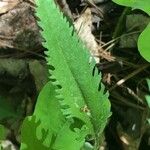
Senecio ampullaceus
Texas ragwort
Description
Source: leafsnapSenecio ampullaceus, commonly known as Bottlebrush Groundsel, is a perennial herbaceous plant in the Asteraceae family. It is native to the western United States and thrives in various habitats, including meadows, rocky slopes, and forests. The plant can grow up to 2 feet tall and features a woody base with multiple stems covered in small hairs. The leaves of Senecio ampullaceus are alternately arranged and deeply lobed with toothed edges. Its flowers, small yellow clusters resembling bottle brushes, bloom from June to August, attracting bees and butterflies for pollination. Native Americans have used Senecio ampullaceus for medicinal purposes to treat ailments such as coughs, colds, fever, and stomachaches. However, it's important to note that some species of Senecio contain toxic compounds that can cause liver damage if ingested in large quantities. In summary, Senecio ampullaceus is an attractive plant with bright yellow flowers that add color to any garden or natural landscape. It also holds medicinal value when used correctly under professional guidance.
🌳 Texas Ragwort signals the beginning of spring and provides an important food source for pollinators like bees and butterflies. Although it is not commonly used for commercial purposes, its presence signals a healthy, biodiverse ecosystem that is vital for environmental balance and for pollinating local crops.
🎭 Security
Care Guide
💧 Water Every 7 days
Texas Ragwort demonstrates moderate drought tolerance and thrives with weekly watering. It prefers conditions that mimic the sporadic rainfall of its native temperate region. When grown indoors, maintaining high ambient humidity helps replicate its natural habitat.
How should I water my Texas Ragwort plant?
To water Texas Ragwort, you have several options. You can use a garden hose with a spray nozzle, a watering can, or any other common watering tool. Texas Ragwort is not too fussy about how it receives water and can thrive with rainwater, tap water, or filtered water. However, it's best to avoid watering this plant from overhead as it can harm the leaves and flowers and may cause disease. If possible, a drip irrigation system is ideal for watering Texas Ragwort as it provides even and direct water to the soil. When watering a container-grown Texas Ragwort, you can still use a similar approach but change the tools. Use a cup, watering can, or tap to apply water directly to the soil.
What do I do if I give my Texas Ragwort too much or too little water?
To prevent underwatering, simply water the Texas Ragwort more regularly when you notice it lacks moisture. Overwatering, on the other hand, can be a serious issue that may lead to diseases and the plant's decline. To avoid overwatering, choose a sunny location with good drainage to dry out the soil and prevent waterlogging. If your Texas Ragwort is in a pot and has been overwatered, consider repotting it in a new pot with loose soil and efficient drainage.
How many times should I water my Texas Ragwort?
To ensure healthy growth, Texas Ragwort requires regular watering throughout the growing season. In spring, it is recommended to water the plant once a week. As the season progresses and temperatures rise, you may need to increase watering to two to three times per week. However, overwatering can harm the plant, so be cautious not to exceed this rate. Additionally, it is important to maintain the soil moisture at a relatively moist but not wet level, regardless of the watering frequency. Watering Texas Ragwort in a pot is slightly different. Due to the soil in pots heating up and drying faster compared to ground soil, it is advisable to water container-grown Texas Ragwort more frequently. In most cases, watering a potted plant should be done a few times per week, whereas an in-ground plant only requires watering once a week.
How much water does my Texas Ragwort plant require?
To determine how much water to give your Texas Ragwort, you have a few options. Some gardeners prefer to gauge the soil's moisture level by feeling it. This method suggests watering until the top six inches of soil feel moist. Another approach is to use a set measurement. On average, watering your Texas Ragwort with about two gallons per week is recommended, taking into account factors like temperature and soil dryness. However, following specific guidelines may cause overwatering if your plant requires less water. When growing the Texas Ragwort in a container, a different method is needed. It is best to water until all layers of dry soil are moistened. To check for moisture, stick your finger in the soil or water until you notice a slight overflow from the pot's drainage holes.
How do I know if I'm giving enough water to my Texas Ragwort plant?
Avoiding overwatering your Texas Ragwort can be tricky due to its unique characteristics. While these plants require weekly soil moisture due to their deep roots, they are also highly vulnerable to root rot and may exhibit browning if overwatered. While underwatering is less of a concern as these plants can survive without supplemental watering, if left without water for too long, they may wilt and show signs of dry leaves.
☀️ Light Full sun
Texas Ragwort flourishes under strong, sunny conditions, which helps encourage vigorous growth. It can also handle partial sunlight. Its adaptation has been shaped by originating environments with plentiful light. Excessive or insufficient light can harm its growth, possibly causing damage or keeping it from reaching its full potential.
What are the sunlight requirements for Texas Ragwort?
Texas Ragwort, known botanically as Senecio ampullaceus, requires full sun exposure of above 6 hours of sunlight to thrive optimally. It can also manage with partial sun, about 3-6 hours of sunlight. Observing how sunlight moves through your garden is essential to find spots that offer the right balance of light and shade for this plant, ensuring it remains healthy and vigorous.
How does the natural habitat influence the light needs of Texas Ragwort?
The natural habitat of Texas Ragwort, which is characterized by intense sunlight, plays a significant role in its adaptation and thriving capacity. This plant benefits from prolonged exposure to bright light, which promotes vigorous growth. However, both excessive and insufficient light can negatively impact its health, potentially causing damage or preventing the plant from reaching its full growth potential.
What are the benefits and guidance for using artificial lighting with Texas Ragwort?
For indoor Texas Ragwort plants, adequate lighting is crucial, especially when natural sunlight is insufficient. Artificial lighting can be a valuable solution, promoting faster and healthier growth. LED lights are recommended because they can be tuned to provide specific wavelengths needed by the plant. Full sun plants require 30-50W per square foot, partial sun plants need 20-30W per square foot, and full shade plants should have 10-20W per square foot. The light source should be placed 12-36 inches above the plant, mimicking natural sunlight, and be kept on for 8-12 hours per day to match natural daylight hours.
What are the common symptoms of improper lighting in Texas Ragwort?
When Texas Ragwort does not receive adequate light, it may show several symptoms: smaller new leaves, leggy or sparse growth due to long spaces between leaves or stems, faster leaf drop as a survival tactic, slower or halted growth, lighter-colored new leaves indicating insufficient chlorophyll, chlorosis where leaves turn yellow, sunscald resulting from intense light causing pale or damaged plant tissue, leaf curling as a defense against excessive sunlight, wilting due to high water loss, and leaf scorching characterized by brown, dry edges on leaves.
How can light exposure issues be corrected for Texas Ragwort?
Correcting light exposure for Texas Ragwort involves a few strategies. Indoors, gradually move your plant to a sunnier spot each week until it gets at least 6 hours of direct sunlight daily, using south-facing windows and keeping curtains open. If moving is not feasible, supplement with artificial light for at least 8 hours per day. Outdoors, also move plants progressively to sunnier locations to avoid shock. If parts of your garden have obstructions, consider pruning or removing these to improve light exposure. For plants not easily relocated, transplanting during dormant periods to more suitable locations can help.
🌡️ Temperature 15–35°C
Texas Ragwort is indigenous to areas where temperatures commonly range from 68 to 95 °F (20 to 35 ℃). It thrives in that temperature band and may need extra care when conditions fall outside it, especially during colder periods, to maintain healthy growth.
What is the native temperature range for Texas Ragwort, and how does it affect its care?
Texas Ragwort is native to regions with temperatures typically ranging between 68 to 95 °F (20 to 35 °C), thriving best within this temperate range. Special care may be necessary outside of this zone, especially in colder seasons, to ensure healthy growth. Despite its strong cold resistance, where special frost protection is usually not needed, protection is advised if winter temperatures are expected to drop below -15°C, by covering the plant with soil or straw and watering abundantly before the first freeze in autumn to keep the soil moist.
What are the important symptoms to look out for in Texas Ragwort due to low and high temperatures?
For Texas Ragwort, low temperatures below -15°C might not show immediate changes but can lead to decreased or no sprouting in spring. For cold-related issues, removing parts that fail to sprout in spring is recommended. During high temperatures, especially above 38°C, the plant's leaves may lighten, curl, suffer from sunburn, or the plant can even wilt and dry out. The solutions include trimming sunburned or dried parts, relocating the plant to shaded areas during peak sun or using a shade cloth, and watering the plant during cooler times like morning and evening to maintain soil moisture.
💨 Humidity
🪴 Soil 6-7
🌱 Fertilizer
When most of Texas Ragwort's blooms have opened to full size, resume fertilizing. At peak bloom, apply fertilizer every three to four weeks, weather permitting. Once the plant begins producing fewer new blooms, stop fertilizing; there's no need to feed it when it can no longer produce more blooms.
🪴 Pot & Repot
✂️ Pruning
Texas Ragwort is a perennial plant known for its clusters of bright yellow flowers. To encourage growth, remove dead stems, and shape the plant, it is best to prune it between early and late spring. Regular pruning not only enhances air circulation and reduces the risk of disease but also ensures vibrant blooms throughout the growing season.
🌿 Propagating
🐛 Diseases & pets
☠️ Toxicity
Characteristics
- Plant Type
- Herb
- Life Cycle
- Annual
- Genus
- Senecio
- Family
- Asteraceae
- Hardiness Zone
- 7-9
- Mature Height
- 30 cm to 61 cm
- Mature Spread
- 20 cm to 40 cm
- Leaf Color
- Green, Light Green
- Leaf Type
- Evergreen
- Flower Color
- Yellow
- Flower Size
- 2.54 cm to 3.30 cm
- Bloom Time
- Mid spring, Late spring, Early summer
- Planting Time
- Spring
- Harvest Time
- Early summer, Mid summer
- Native Area
- Mexico