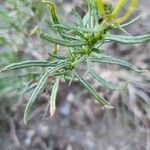
Senecio inaequidens
Narrow-leaved ragwort · South African ragwort · Narrow-leaf ragwort · Molteno disease weed · Slender sececio
Description
Source: leafsnapSenecio inaequidens, commonly known as narrow-leaved ragwort or South African ragwort, is a perennial herbaceous plant belonging to the Asteraceae family. Originally native to South Africa, it has been introduced and naturalized in various parts of the world, including Europe and North America. The plant features narrow leaves, up to 10 cm long and 1 cm wide, that are dark green on top and lighter underneath with slightly serrated edges. Its stem can grow up to 1 meter tall, and it produces yellow flowers that bloom from June until October. Senecio inaequidens thrives in sunny areas but also grows well in partial shade. It is tolerant of drought conditions but does not fare well in frost. Due to its prolific seed production, which is dispersed by wind or waterways, Senecio inaequidens has become an invasive species. It can outcompete native plants for resources such as water, nutrients, and light, thereby negatively impacting biodiversity. Despite its status as an invasive species, Senecio inaequidens has been used for medicinal purposes by indigenous people for centuries due to its anti-inflammatory properties. However, it is crucial to note that such medicinal use should be undertaken only under proper medical supervision, as incorrect consumption can lead to potential side effects. While Senecio inaequidens may have some benefits, its negative impact on biodiversity far outweighs these advantages. Therefore, this plant is best avoided, especially when considering new vegetation around natural habitats where it could cause harm due to its invasive nature.
🌳 Beyond its ecological functions, narrow-leaved ragwort has a distinctive use. It serves as a bioindicator of heavy-metal contamination in soil. Studies show that narrow-leaved ragwort can accumulate metals such as cadmium and zinc, making it a practical tool for monitoring environmental health and the effects of industrial pollution.
Care Guide
💧 Water Every 7 days
Narrow-leaved ragwort comes from arid regions and is highly drought-tolerant, needing water only every 2-3 weeks. It grows best outdoors in well-draining soil, which helps prevent root rot and mimics its natural environment.
What's the best way to water my Narrow-leaved ragwort plant?
Here are some tips to help you water your plants effectively: 1. Place a garden hose at the base of the plant to promote root development. Avoid spraying water directly onto the leaves. 2. If your plants are placed outdoors and receive direct sunlight, remember that the leaves will require more watering. 3. Consider using bubblers or soaker hoses to moisten the roots of each plant. Soaker hoses can be useful when adding or removing plants, as they cover the entire garden or bed. 4. After watering, make sure to drain any excess water and wait for the soil to dry before watering again. 5. To prevent diseases, water your plants at ground level rather than spraying water onto the leaves. 6. On sunny days, it can be beneficial to spray the entire bush with water. 7. Regardless of whether your plants are potted or planted in the ground, remember that Narrow-leaved ragwort prefers deep watering over light sprinkling.
What should I do if I give Narrow-leaved ragwort too much or too little water?
Overwatering can cause a Narrow-leaved ragwort to have yellow leaves that drop off and wilt. The plant may look unhealthy, with mushy stems. Adjusting your watering schedule is recommended when these signs appear. Conversely, wilting can also indicate under watering, with leaves becoming crispy and dry. To address this, check the soil moisture and water thoroughly when it is dry. While enough water will allow the Narrow-leaved ragwort to recover, it may still exhibit dryness and yellowing due to root damage. Once it returns to normal, the yellowing of leaves will cease. When growing a Narrow-leaved ragwort indoors, monitor the soil moisture levels and avoid overwatering to prevent black spots. If present, allow the soil in the pot to dry out for a few days. Overwatering can lead to root rot, which may necessitate transferring the plant to a different pot if discolored and slimy roots are observed. Always take precautions to prevent root rot and avoid overly soggy soil. For outdoor planting, ensure the soil is adequately moist by checking with your fingers. If it is too dry, underwatering may be the issue, and providing sufficient water will help the plant recover.
How much should I water my Narrow-leaved ragwort?
The Narrow-leaved ragwort prefers deep and infrequent watering. Especially when planted in pots, it is recommended to soak them in a gallon of water each time. Flower pots have limited water storage, causing the soil to dry out faster. In cold regions, watering is needed every 3 to 5 days. Watering should be done early in the morning when the soil is dry, both indoors and outdoors. Checking the soil's moisture level is another way to determine if watering is necessary. If the top 2-3 inches of soil are dry, it is time to water the plant thoroughly. During hot days, it is important to monitor the moisture daily as the heat can quickly dry out the soil in the pot. If you have a garden, irrigation is also required. In hot climates, it is typically sufficient to water once a week. Only water when about 2 to 3 inches of soil is too dry, indoors or outdoors. Take into account the amount of rainfall the plant is receiving and avoid overwatering to prevent root rot. If there is ample rainfall, additional watering may not be necessary. Narrow-leaved ragwort usually grows during spring and fall. When outdoors, adding mulch about 3 to 4 inches deep can help conserve water. Sandy soil drains faster, so plants in this type of soil may require more frequent watering. On the other hand, clay soil retains moisture better, so watering can be less frequent, with the plants allowed to dry for 2-3 days without developing root rot. To keep track of watering schedules, it can be helpful to mark the date on the calendar. If you notice the leaves drooping, it may indicate that you are a day late with watering.
How much water does my Narrow-leaved ragwort need?
The Narrow-leaved ragwort generally needs about a gallon of water on a regular basis. For potted plants, water them deeply until water starts to drip from the bottom of the pot. Allow the soil to dry before watering again. Use a water calculator or moisture meter to track how much water you give your plant each week. During the flowering period, provide plenty of water but let the moisture evaporate to avoid root rot. If the Narrow-leaved ragwort is planted outdoors with sufficient rainfall, it may not require additional watering. When the plant is young or newly planted, ensure it receives 1-2 inches of rain per week. As it grows, it can rely solely on rainfall. Only in hot weather or when there is no rain for 2-3 weeks, consider giving the plant a thorough watering during the cooler part of the day to prevent damage from heat. Additional watering is necessary during prolonged dry spells.
Should I change how often I water my Narrow-leaved ragwort depending on the time of year or the weather?
The Narrow-leaved ragwort prefers to be grown outdoors and relies on rainfall for watering, only needing additional watering during persistent dry weather. During the spring and fall, the soil should be kept moist but not soggy, and it is beneficial to have alternating dry and moist soil conditions. In the summer, hot weather and lack of rainfall can cause water to evaporate quickly, so extra watering may be necessary to keep the plant moist. During winter, the Narrow-leaved ragwort requires less water, as it becomes dormant and drops its leaves. Well-draining soil and terracotta pots can help with moisture evaporation. Once the plant begins to leaf out in the spring, watering can be skipped, and it can rely on fall and winter rains for survival during its dormant period. Good drainage is important throughout the year, especially during winter to prevent ponding. When the plant is in pots, regular watering is necessary, especially in the summer, but adequate drainage is crucial to avoid cold and wet roots. Deep soaking watering once or twice a week is recommended, avoiding shallow sprinkles that reach the leaves. The plant should not be allowed to dry out completely in the fall or winter, even during dormancy. Overwatering can lead to problems, so the plant should not be sitting in water for extended periods. Applying mulch is encouraged as it reduces stress, conserves water, and promotes healthy blooms.
☀️ Light Full sun
In general, narrow‑leaved ragwort does best in the plentiful light typical of its natural terrestrial habitats and can tolerate lower light levels, though that may limit its optimal growth. Too much or too little light can cause health problems or stunt its development.
What are the sunlight requirements for Narrow-leaved Ragwort?
Narrow-leaved Ragwort requires full sun exposure to thrive, meaning it should receive above 6 hours of sunlight daily. It can also tolerate partial sun, which amounts to about 3-6 hours of sunlight. It's crucial to observe how sunlight moves through your garden and select spots that offer a good balance of light and shade, ensuring the plants' well-being and optimal growth.
How does light affect the growth and health of Narrow-leaved Ragwort?
Narrow-leaved Ragwort thrives under conditions with abundant light exposure typical of its native terrestrial habitats. It can withstand lower light levels, but this may impede its ideal growth. Both excessive and insufficient light exposure can lead to health issues or stunted development in the plant. For indoor plants requiring more light, especially in winter or less sunny spaces, artificial lighting such as LED lights can be a vital solution. They should be adjusted according to the plant's needs in terms of type (30-50W/sq ft for full sun plants, 20-30W/sq ft for partial sun, and 10-20W/sq ft for full shade), distance (12-36 inches above the plant), and duration (8-12 hours per day) to mimic natural light conditions.
What are some symptoms of light deficiency or overexposure in Narrow-leaved Ragwort?
Symptoms of light deficiency in Narrow-leaved Ragwort include small new leaves, leggy or sparse growth, faster leaf drop, halted growth, and lighter-colored or pale new leaves, indicating insufficient sunlight. Conditions of overexposure, on the other hand, lead to chlorosis (leaves turning yellow), sunscald (damage from intense light), leaf curling (to reduce surface area exposed to sunlight), wilting (from loss of water through increased transpiration), and leaf scorching (brown, dry edges on leaves). These symptoms show the plant's struggle with too much or too little sunlight.
What are some solutions for managing light exposure for Narrow-leaved Ragwort?
To manage light exposure for Narrow-leaved Ragwort, gradually move plants to sunnier locations to ensure at least 6 hours of direct sunlight daily. For indoor plants, consider using artificial light if the plant is large or not easily movable, keeping lights on for at least 8 hours daily. When outdoors, avoid sudden changes in light intensity to prevent sunburn. If natural sunlight is obstructed, reduce the obstructions or transplant smaller plants to sunnier locations during their dormant period. Note that parts of the plant affected by insufficient sunlight may not recover, but proper light management will promote healthy new growth.
🌡️ Temperature 15–37.8°C
Narrow-leaved ragwort is naturally adapted to temperate to warm climates, with temperatures ranging from 59 to 100.4 °F (15 to 38 °C). It is advisable to make modest adjustments to these conditions to account for seasonal climate changes.
What is the ideal temperature range for growing Narrow-leaved ragwort?
Narrow-leaved ragwort thrives in moderate to warm climates, with ideal temperatures ranging from 59°F to 100.4°F (15°C to 38°C). Considering seasonal changes, it's important to moderately adjust these temperatures. This plant loves heat, and exposure to cold can harm it. During autumn, if grown outdoors, it is advised to bring it indoors, placing it near a bright window but away from direct heat sources to ensure it maintains a temperature above 15°C. Temperatures dropping to -5°C or below can negatively affect the plant.
How do low temperatures affect Narrow-leaved ragwort, and what steps should be taken?
Narrow-leaved ragwort prefers warm environments and does not tolerate low temperatures well. It thrives when the temperature is maintained above 15°C. In winter, temperatures should not fall below -5°C. Exposure to temperatures below -10°C can cause the leaves to lighten in color. Following frost damage, leaves may turn brown or black, and the plant may exhibit wilting and drooping. If this occurs, you should trim away the frost-damaged parts and move the plant to a warm location indoors, preferably near a south-facing window for adequate sunlight, while ensuring it's not placed near heaters or air conditioning vents to avoid dry air.
What should be done if Narrow-leaved ragwort is exposed to high temperatures?
During summer, it's crucial to ensure that Narrow-leaved ragwort's temperature does not exceed 38°C. If temperatures rise above 43°C, the leaves may lighten, and the plant becomes more prone to sunburn. To mitigate this, trim away the sunburned and dried parts of the plant. Relocate the plant to a shaded area, especially during the midday and afternoon sun. Watering the plant in the morning and evening can also help maintain soil moisture, protecting the plant from heat stress.
💨 Humidity
🪴 Soil 6-7
🌱 Fertilizer
Fertilization is essential for the care of Narrow-leaved ragwort. Regular feeding during the growing season maintains energy for its showy leaves and supports overall growth. Skipping fertilization can lead to unhealthy leaves, reduced ornamental value, and stunted or weak growth that is prone to breaking.
🪴 Pot & Repot
✂️ Pruning
🌿 Propagating
🐛 Diseases & pets
☠️ Toxicity
Characteristics
- Plant Type
- Shrub
- Life Cycle
- Perennial
- Genus
- Senecio
- Family
- Asteraceae
- Hardiness Zone
- 8-12
- Mature Height
- 91 cm
- Mature Spread
- 49 cm
- Leaf Color
- Green, Dark Green
- Leaf Type
- Semi-evergreen
- Flower Color
- Yellow
- Flower Size
- 2.54 cm
- Bloom Time
- Early summer, Mid summer
- Planting Time
- Spring, Summer, Autumn
- Harvest Time
- Mid summer, Late summer
- Native Area
- Lesotho, Mozambique, South Africa, Namibia, Eswatini, Botswana