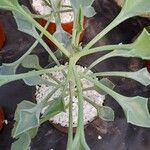
Senecio kleiniiformis
Spearhead
Description
Source: leafsnapSenecio kleiniiformis, commonly known as the Spear Head plant, is a succulent belonging to the Asteraceae family. Native to South Africa, it typically thrives in rocky areas and on cliffs. The plant stands out with its thick, fleshy leaves shaped like spears or arrows. This succulent can grow up to 6 inches tall and 12 inches wide. Though it has a slow growth rate, it can eventually form dense clusters of rosettes. The leaves are green with white edges and feature tiny hairs. In late winter to early spring, Senecio kleiniiformis produces small yellow flowers in clusters at the tips of long stems. These daisy-like flowers attract pollinators such as bees. The Spear Head plant requires well-draining soil, bright light, and infrequent watering for optimal growth. While it is drought-tolerant, it cannot withstand frost or extreme heat. Senecio kleiniiformis is popular as an ornamental houseplant due to its unique shape and low maintenance needs. However, it should be kept away from pets and children, as it contains toxic compounds that can be harmful if ingested in large quantities.
Care Guide
💧 Water Every 7 days
The spear head plant thrives in arid environments, showing a high tolerance for drought. It benefits from deep, infrequent watering once a week and retains its foliage year-round as an evergreen plant. This makes it highly suitable for indoor cultivation, especially when consistent humidity is maintained.
☀️ Light Full sun
The spear head primarily thrives with ample sunshine throughout the day, though it can tolerate limited sunshine as well. In its native habitat, it prospers where abundant sun exposure is common. Too little or too much sun exposure can impede its growth.
What are the sunlight requirements for a Spear head plant?
The Spear head, or Senecio kleiniiformis, thrives best in environments with ample sunlight throughout the day. It requires full sun, defined as more than 6 hours of sunlight daily, but can also grow under partial sun conditions, which means about 3-6 hours of sunlight. To ensure your plants are happy, it's important to observe how sunlight moves through your garden and choose locations that offer a perfect balance of light and shade. In its native environment, the Spear head flourishes in abundant sun exposure. However, it's crucial to note that too little or excessive sun exposure can negatively affect its growth.
How can artificial lighting be used for indoor Spear head plants?
Indoor Spear head plants require adequate lighting for optimal growth, especially when natural sunlight is insufficient, such as in winter or less sunny spaces. Artificial lighting serves as a crucial solution for promoting faster, healthier growth. LED lights are recommended since they can be customized to provide the specific light wavelengths needed by plants. Full sun plants need 30-50W/sq ft of artificial light, partial sun plants need 20-30W/sq ft, and full shade plants require 10-20W/sq ft. The light source should be placed 12-36 inches above the plant, simulating natural sunlight, and the duration should mimic the natural daylight hours, with most plants needing 8-12 hours of light per day.
What are the signs of insufficient light in Spear head plants?
Spear head plants show several symptoms when they don't receive enough light, especially when cultivated indoors during winter. Some noticeable signs include small new leaves, leggy or sparse growth, faster leaf drop, slower or halted new growth, lighter-colored new leaves, and symptoms of overexposure such as chlorosis, sunscald, leaf curling, wilting, and leaf scorching. These symptoms indicate either insufficient sunlight or excessive sunlight exposure, affecting the plant's ability to photosynthesize and maintain overall health.
What are the solutions for Spear head plants with insufficient sunlight?
For optimal growth indoors, Spear head plants should gradually be moved to a sunnier location each week until they receive at least 6 hours of direct sunlight daily. Utilize south-facing windows and keep curtains open during the day. If the plant is large or not easily movable, consider using artificial light, keeping a desk or ceiling lamp on for at least 8 hours daily or investing in professional plant grow lights. Outdoors, plants should be moved gradually to avoid sunburn. Pruning trees that block sunlight or transplanting smaller plants during their dormant period can also help in reducing obstructions and ensuring ample sunlight. It's important to note that parts of the plant affected by insufficient light may not recover, but new growth will be healthy with increased light exposure.
🌡️ Temperature 20–37.8°C
Spear head is native to temperate regions, preferring temperatures between 68 and 100 °F (20 to 38 ℃). In winter it can tolerate somewhat lower temperatures, but sudden shifts should be avoided to prevent stressing the plant.
What is the ideal temperature range for growing Spear head?
The Spear head, botanically known as Senecio kleiniiformis, thrives in temperate climates with ideal growth temperatures ranging from 68 to 100 °F (20 to 38 °C). During winter, it can tolerate slightly lower temperatures, but it is crucial to avoid sharp temperature changes to prevent plant stress. The plant loves heat, and exposure to cold can harm it. To protect it in autumn, it's recommended to bring outdoor-grown Spear heads indoors, placing them near a bright window yet away from direct heat sources. Keeping the temperature above 20°C during the winter promotes healthy growth, while temperatures nearing 0°C can be detrimental.
What should I do if my Spear head is exposed to low temperatures?
If your Spear head experiences low temperatures, particularly below 20°C, it's at risk since it's not tolerant of cold. In case of exposure to temperatures below -5°C, leaves may lighten in color and, following frost damage, may turn brown or black, exhibiting symptoms such as wilting and drooping. To manage frost damage, trim off the affected parts and move the plant to a warmer indoor environment immediately for protection. Placing the plant near a south-facing window will ensure it gets enough sunlight, but keep it away from heaters or air conditioning vents to avoid air that's too dry.
How should I care for my Spear head during hot temperatures?
During the summer, it's essential to ensure the Spear head is kept below 38°C to prevent heat stress. Should the temperature rise above 43°C, the plant's leaves may lighten, increasing the risk of sunburn. In such cases, remove any sunburned or dried parts of the plant. Relocate the Spear head to a spot where it can be shielded from the midday and afternoon sun, crucial for preventing further damage. Watering the plant in the morning and evening will help keep the soil adequately moist, offering additional support during high temperatures.
💨 Humidity dry (<40%)
This plant prefers dry conditions, so don't mist it. However, watering it less often can also thrive in higher humidity.
🪴 Soil 6-7
🌱 Fertilizer
For the Spear head plant, small quantities of fertilizer administered once or twice annually during the growth period are adequate. Refrain from fertilizing during winter and summer seasons when the plant is in a dormant state. Minimize the use of fertilizer for plants that have been recently repotted, and allow a few months to pass after repotting before applying fertilizer again. Fertilization aids in robust growth and stimulates flowering.
🪴 Pot & Repot
Flower pots play a crucial role in the growth of spearhead plants by offering proper drainage and aeration. When selecting pots, consider the size and material to ensure they meet the specific needs of the spearhead. Ideal choices include clay, plastic, or ceramic pots. For optimal plant health, consider repotting every few years.
✂️ Pruning
The spearhead plant has distinctive foliage and flourishes with strategic pruning during the early to late spring. To encourage healthy growth, remove dead leaves and trim any overgrown stems to maintain a compact shape. This also enhances air circulation, which helps prevent pests. Be sure to use sterilized tools and avoid excessive pruning to ensure optimal regrowth.
🌿 Propagating
🐛 Diseases & pets
☠️ Toxicity
Characteristics
- Plant Type
- Herb
- Life Cycle
- Perennial
- Genus
- Senecio
- Family
- Compositae
- Hardiness Zone
- 9-11
- Mature Height
- 46 cm
- Mature Spread
- 34 cm
- Leaf Color
- Green, Blue
- Leaf Type
- Evergreen
- Flower Color
- Yellow
- Flower Size
- 1.02 cm to 2.03 cm
- Bloom Time
- Mid summer, Late summer, Early fall, Mid fall
- Planting Time
- Summer
- Harvest Time
- Fall, Early winter
- Native Area
- South Africa