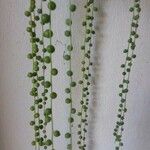
Senecio rowleyanus
غوره ای · String of pearls · String of beads · String-of-beads · Green necklace
Description
Source: leafsnapSenecio rowleyanus, commonly known as String of Pearls, is a unique and fascinating succulent plant native to South Africa. Belonging to the Asteraceae family, it has become a popular houseplant due to its attractive appearance and low maintenance requirements. This plant features long, thin stems that can grow up to 3 feet in length. These stems are adorned with small, spherical leaves that resemble pearls or beads. The leaves are green with a slight bluish tint and have a smooth texture. String of Pearls thrives in bright but indirect sunlight. It prefers well-draining soil with good airflow around the roots. To prevent root rot, it is crucial to water only when the soil has completely dried out, as overwatering can be harmful. The plant's unique appearance makes it an excellent choice for hanging baskets or for trailing over shelves or walls indoors. String of Pearls also pairs well with other succulents, providing a contrasting texture that enhances any arrangement. In conclusion, Senecio rowleyanus (String of Pearls) is an attractive succulent houseplant with low maintenance requirements, making it ideal for beginners seeking a unique yet easy-to-care-for plant.
🌳 String of pearls is more than just ornamental; it contains lesser-known practical uses. Like other succulents, this plant is notable for retaining water. When its pearls are squeezed, they release a liquid that some plant enthusiasts believe can help moisturize the skin, although scientific evidence is still lacking. Birds in dry regions also make use of the pearls, drinking from them to gain moisture. Additionally, the spherical leaves of the string of pearls bring an inventive element to green art pieces and botanical jewelry, offering a distinctive avenue for artistic creativity.
🎭 Uncomplicated, untainted, graceful and innocent
Care Guide
💧 Water Every 7 days
String-of-pearls is a plant that thrives in dry environments due to its ability to store water in its round leaves, making it highly drought-tolerant. When watering, do so every 2-3 weeks, and allow the soil to dry out completely between waterings. If growing this plant indoors, use well-draining soil to prevent root rot and to mimic its natural sandy habitat.
What should I do if I give too much or too little water to my String-of-pearls plant?
String-of-pearls is a succulent that can withstand long periods without water. However, if you forget to water it for a month or more, you will likely see signs of thirstiness or damage. Identifying an underwatered String-of-pearls is easy - the plant will look lacklustre and wrinkled, some leaves may have dried up and turned brown or crispy, and the soil will be completely dried out. To remedy this, give the plant plenty of water by submerging the pot in water for 5-10 minutes until the soil feels moist on the surface. On the other hand, overwatering can be dangerous and even fatal to the String-of-pearls. Too much moisture leads to root rot, where fungi and bacteria thrive and prevent the roots from absorbing nutrients and water. Signs of overwatering include yellow, swollen, and translucent leaves that may burst open from being waterlogged. If left untreated, the plant may turn brown or black and the leaves will easily fall off. To address overwatering, adjust the growing conditions to improve air ventilation and reduce water frequency. Saving an overwatered plant is possible if caught early. Start by removing the plant from its pot and examining the roots and soil. If the roots are affected by root rot, which will be dark brown or black, soft, mushy, or slimy, it may be difficult to save the plant. In this case, remove any healthy stems and attempt to propagate a new plant. However, if only a portion of the roots are affected, there is a chance of saving it. Use a sterilized cutting tool to remove unhealthy roots and dip the remaining healthy roots in fungicide. Repot the plant in fresh, well-draining soil. While not guaranteed, the succulent should recover and produce new growth in the next growing season.
How frequently do I need to water my String-of-pearls?
There is no exact rule for how often to water String-of-pearls. The easiest way to determine this is by checking the soil and only watering when it is completely dry. You can use your finger or a moisture meter to check the soil beneath the surface. If you have planted it in a deep pot, you can use a stick or chopstick for this. If the soil feels even slightly moist, wait a few days and check again. Generally, most people will need to water String-of-pearls every two weeks in the summer and once a month in the winter. However, there are several factors that can affect the watering frequency. This section will provide some considerations to help you determine how often to water.
What things should I think about when watering my String-of-pearls?
To properly water your String-of-pearls, there are several environmental factors to consider, such as the size of the container, type of soil, temperature, and humidity. First, the container and soil you choose will determine the frequency and amount of water needed. Make sure the container has drainage holes for excess water to escape. A smaller container holds less moisture, so it will need more frequent watering. In contrast, a larger pot retains moisture for longer periods, requiring less frequent watering. Avoid using an oversized pot as this can lead to overwatering. When repotting, move to a container that is just one size larger, and opt for a shallow container as String-of-pearls has shallow roots. The watering schedule also varies by season. In winter, when growth slows down and energy consumption is low, the plant requires less water. The cooler air in winter reduces water evaporation, meaning the soil stays moist for longer compared to summer. The local climate is another consideration. If you live in a humid and rainy area, watering frequency will be less compared to a dry, arid climate. Remember that weather conditions can vary within the same geographic location due to the season and indoor heating or air conditioning. For outdoor planting, once the String-of-pearls establishes a root system, it usually doesn't need additional watering except during extended dry periods. However, if the plant is in a container, it can be moved outside during the appropriate temperature range in spring and summer and brought inside when temperatures drop. Keep in mind that outdoor plants generally require more water due to increased sun exposure, even when placed in shaded areas.
How do I water a String-of-pearls plant?
To properly water your String-of-pearls plant, it's best to thoroughly soak it and then let it dry out before watering again. This plant can tolerate drought, so it's okay to let it become quite dry before watering. It's important to evenly distribute the water throughout the soil by soaking the whole pot rather than pouring water into just one spot. The amount of water needed depends on the container size and soil absorption. Ensure that the water drains out of the pot's drainage holes and let it sit in the saucer for 20-30 minutes to absorb into dry parts of the soil. Remove any excess water in the saucer afterwards to prevent waterlogging. Bottom-watering is also effective, as it ensures thorough moisture penetration by placing the pot in a saucer of water and allowing the soil to absorb moisture through the drainage holes. You'll know the soil has absorbed enough water when the top layer is moist. Although this method takes more time, it ensures even water distribution. Mimic the plant's natural habitat by bottom-watering when the soil is completely dry. It's better to provide a deep soil bathing than frequent light watering for String-of-pearls.
☀️ Light Full sun
The string of pearls prefers plenty of light because its native environment is very bright. It also tolerates moderate sun exposure. However, excessively strong rays can damage the plant and cause sunburn. Conversely, insufficient light may result in poor growth and development.
What are the sunlight requirements for String-of-pearls (Senecio rowleyanus)?
String-of-pearls requires significant levels of sunlight to thrive, akin to the conditions of a sunlit sky. It benefits from being placed in locations where it can receive portions of direct sunlight throughout the day. Originating from sunny habitats, this plant's health might suffer from either too much or too little sun exposure. Insufficient sunlight can cause weak stems, while too much direct sunlight may lead to leaf scorch. Observing how sunlight moves through your garden allows for choosing spots that offer a perfect balance of light and shade, ensuring the plant's well-being.
How can artificial lighting be used for indoor plants like String-of-pearls?
Indoor plants, including String-of-pearls, require adequate lighting for optimal growth, especially when natural sunlight is insufficient. This can be particularly true in winter or less sunny spaces. Artificial lights, such as LED lights, are vital for promoting faster, healthier growth. These lights can be adjusted to provide the specific wavelengths of light needed by plants. Full sun plants need 30-50W/sq ft of artificial light, partial sun plants 20-30W/sq ft, and full shade plants 10-20W/sq ft. The artificial light source should be placed 12-36 inches above the plant and turned on for 8-12 hours per day to mimic natural daylight hours.
What are the symptoms of inadequate lighting for a String-of-pearls plant?
When a String-of-pearls plant is subjected to suboptimal lighting conditions, several symptoms might occur. These include lighter-colored or pale new leaves suggesting a lack of chlorophyll and essential nutrients, leggy or sparse growth indicating longer spaces between leaves or stems, smaller leaves than those previously grown, and a halt in new growth. Conditions like chlorosis, where leaves lose their green color, sunscald characterized by damaged leaves from intense sun exposure, leaf curling as a defense mechanism against extreme sunlight, wilting due to increased water loss, and leaf scorching marked by brown or crispy edges on leaves, are also common symptoms of improper lighting.
How can lighting conditions be improved for String-of-pearls plants?
Improving lighting conditions for String-of-pearls involves several strategies. Indoors, plants should be gradually moved to sunnier locations, aiming for at least 6 hours of direct sunlight daily. Utilizing a south-facing window and keeping curtains open maximizes sunlight exposure. If necessary, supplement with artificial light, keeping a lamp on for at least 8 hours daily, or using professional grow lights. Outdoors, adjust plant placement to sunnier spots gradually to avoid sunburn. Pruning nearby trees or bushes that block sunlight can also help. For small plants, consider transplanting during the dormant period to a sunnier location with good drainage. It's important to note that while parts of the plant already affected by inadequate light may not recover, new growth will be healthy with improved lighting conditions.
🌡️ Temperature 20–37.8°C
The string of pearls generally grows in warm, dry climates and prefers average temperatures of 68℉ to 100℉ (20℃ to 38℃). In colder months, keep the plant out of drafty spots and ensure the temperature remains above 50℉ (10℃) to avoid damage.
What is the native climate for String-of-pearls?
The String-of-pearls, known botanically as Senecio rowleyanus, is native to Southwestern Africa. In its native habitat, the temperature usually ranges between 20°C to 30°C (68°F to 86°F). However, the plant is adaptable and can survive temperatures ranging from 10°C to 38°C (50°F to 100°F) across different seasons.
How should I care for my String-of-pearls during summer and winter?
During the summer months, to prevent heat stress in the String-of-pearls plant, it's advised to place it in a shaded area with good ventilation. This heat-loving plant enters a dormant state in winter; thus, when outdoor temperatures drop below 0°C, it's recommended to move the plant indoors. Positioning it near a south-facing window will ensure it receives plenty of sunlight. If your home lacks natural light, consider using supplemental lighting. In colder climates where the temperature falls below 20°C, reduce or altogether stop watering to prevent root rot. For plants grown outdoors in low temperatures, cease watering entirely and consider insulating them or wrapping them with plastic film or fabric for protection.
What should I do if my String-of-pearls plant is affected by low temperatures?
If exposed to low temperatures, particularly below 20°C, and definitely if it drops below 0°C, the String-of-pearls plant exhibits reduced growth, may become weak, and is at risk of root rot. In case of mild frost damage without immediate symptoms, the plant may begin to wither after a week. To respond, trim off the frostbitten parts of the plant, check for and remove rotten roots, and then move the plant indoors to a warm location. It’s best placed near a south-facing window for sufficient sunlight, or under supplemental lighting if natural light is inadequate.
How do I manage high temperatures for my String-of-pearls plant?
During spells of high temperature, especially above 38°C, the String-of-pearls needs to be protected from overheating and sunburn. If the temperatures soar past 43°C, the plant may halt its growth, lose water, wilt, and become more vulnerable to sunburn. To care for a plant under these conditions, remove the affected sunburned and rotten areas. Also, shielding the plant from the harsh afternoon sunlight until it recovers and begins to grow again can be beneficial. For additional care, especially if the plant suffers from root rot, cease watering entirely until you observe new root growth.
💨 Humidity dry (<40%)
This plant prefers dry conditions, so don't mist it. However, watering it less often can also thrive in higher humidity.
🪴 Soil 6-7
🌱 Fertilizer
String of Pearls requires only light fertilizer applications 1-2 times a year during the growing season. Do not fertilize in winter or summer when the plant is dormant. Use reduced fertilizer on recently repotted plants and wait a couple of months after repotting before applying fertilizer. Fertilizing helps maintain healthy growth and encourages blooms.
Why should I put fertilizer on my String-of-pearls?
Fertilizing String-of-pearls provides nutrients to the growing medium, which supports healthy growth. Although it already stores water and nutrients, applying plant food during the growing season further enhances its growth and can even encourage blooms in mature specimens.
When should I fertilize my String-of-pearls plant?
String-of-pearls plants need minimal fertilizer, with a recommended frequency of 1-2 times per year during the growing season. It is best to fertilize them in spring and autumn and avoid fertilizing in winter and summer when they are dormant. When repotting, be cautious and reduce the amount of fertilizer used. It is also advisable to wait a couple of months after repotting before applying fertilizer.
When is it not a good idea to give fertilizer to my String-of-pearls plant?
String-of-pearls, like many other plants, goes through a dormant period where fertilizer applications should be stopped. This happens during the summer and winter when the plant stops growing. It's also advisable to refrain from fertilizing for a few months after repotting in the spring.
What kind of fertilizer do I need for my String-of-pearls plant?
When fertilizing String-of-pearls, it's recommended to use a liquid plant food specifically made for succulents and cacti. Remember to dilute the fertilizer with water, making it half-strength. Avoid letting the fertilizer accumulate in the soil. Apply the diluted fertilizer to the base of the plant, making sure to water it thoroughly. Be sure that any excess water drains from the container or seeps into the ground.
How should I give nutrients to my String-of-pearls plant?
When fertilizing String-of-pearls, you have the option to use liquid plant food or granules. If using liquid fertilizer, remember to dilute it to half-strength as directed on the packaging. Regardless of the type of plant food you choose, make sure to apply it to the soil. For granules, cover them with a thin layer of soil and water the plant.
🪴 Pot & Repot Every 2 years
When repotting String of pearls, choose a pot slightly bigger than the current one that has good drainage. Fill it with a gritty, well-draining succulent or cactus mix. Gently remove the plant from its old container, brush off excess soil, and place it at the same depth in the new pot. Wait a few days before watering to let any root damage heal. Repot in spring or fall and keep the plant in a brightly lit spot.
✂️ Pruning
Using sterile scissors or pruners, trim any dead stems and pearls, as well as any stems that have lost a lot of leaves. If your plant has legs or is very tall, you can cut those branches and propagate new cut plants. Pruning will develop full, strong plants.
🌿 Propagating
🐛 Diseases & pets
☠️ Toxicity
Characteristics
- Plant Type
- Succulent, Vine, Herb
- Life Cycle
- Perennial
- Genus
- Senecio
- Family
- Compositae
- Hardiness Zone
- 9-12
- Mature Height
- 61 cm to 91 cm
- Mature Spread
- 46 cm
- Leaf Color
- Green
- Leaf Type
- Evergreen
- Flower Color
- White
- Flower Size
- 2.54 cm
- Bloom Time
- Early spring, Mid spring, Winter
- Planting Time
- Spring, Autumn, Winter
- Harvest Time
- Fall, Early winter
- Native Area
- South Africa