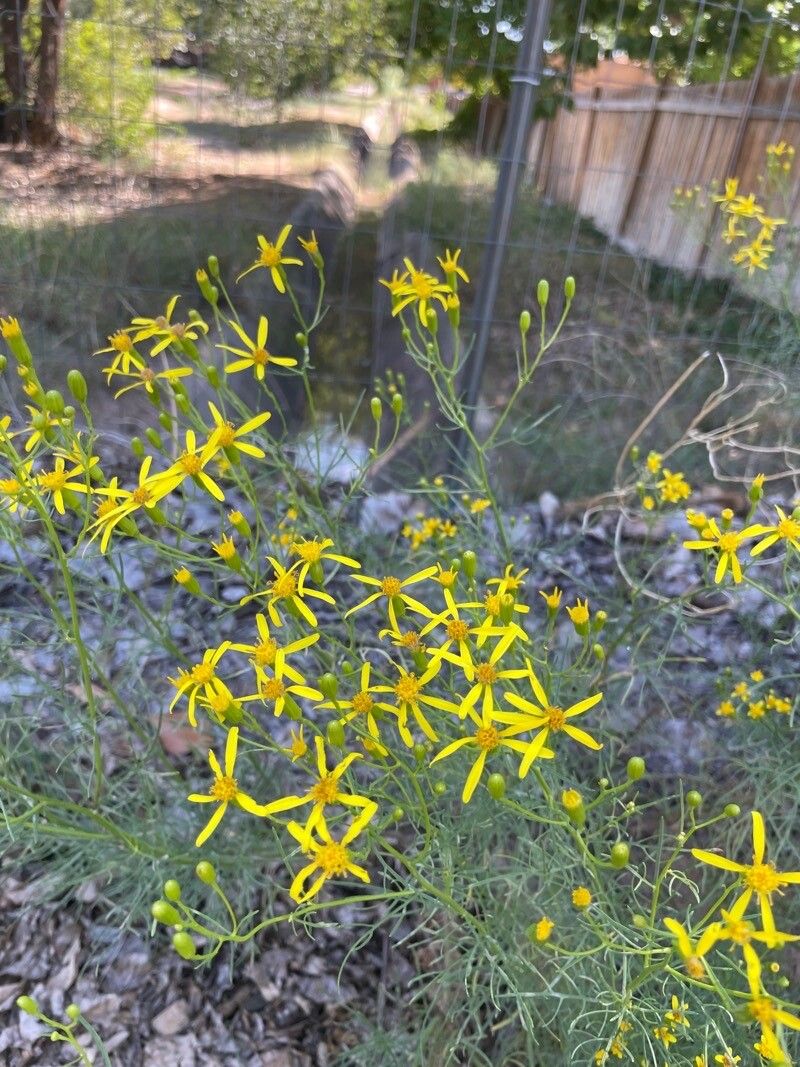
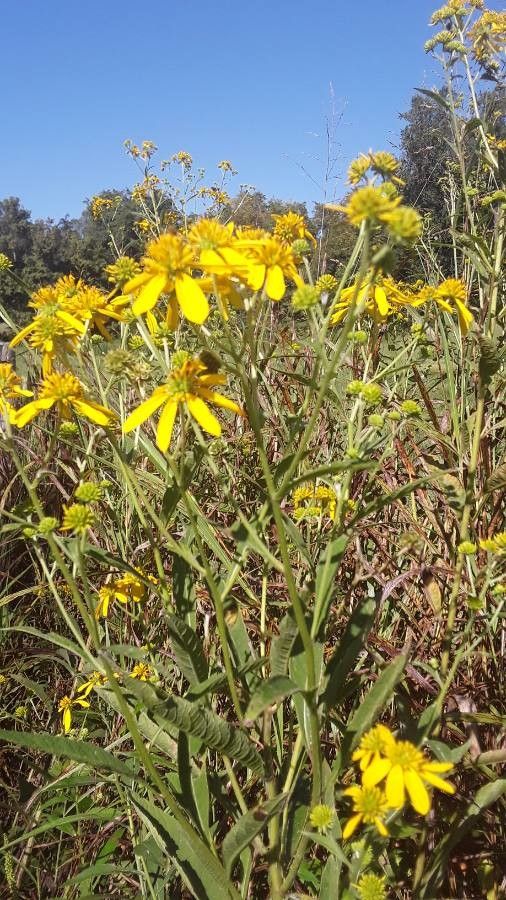
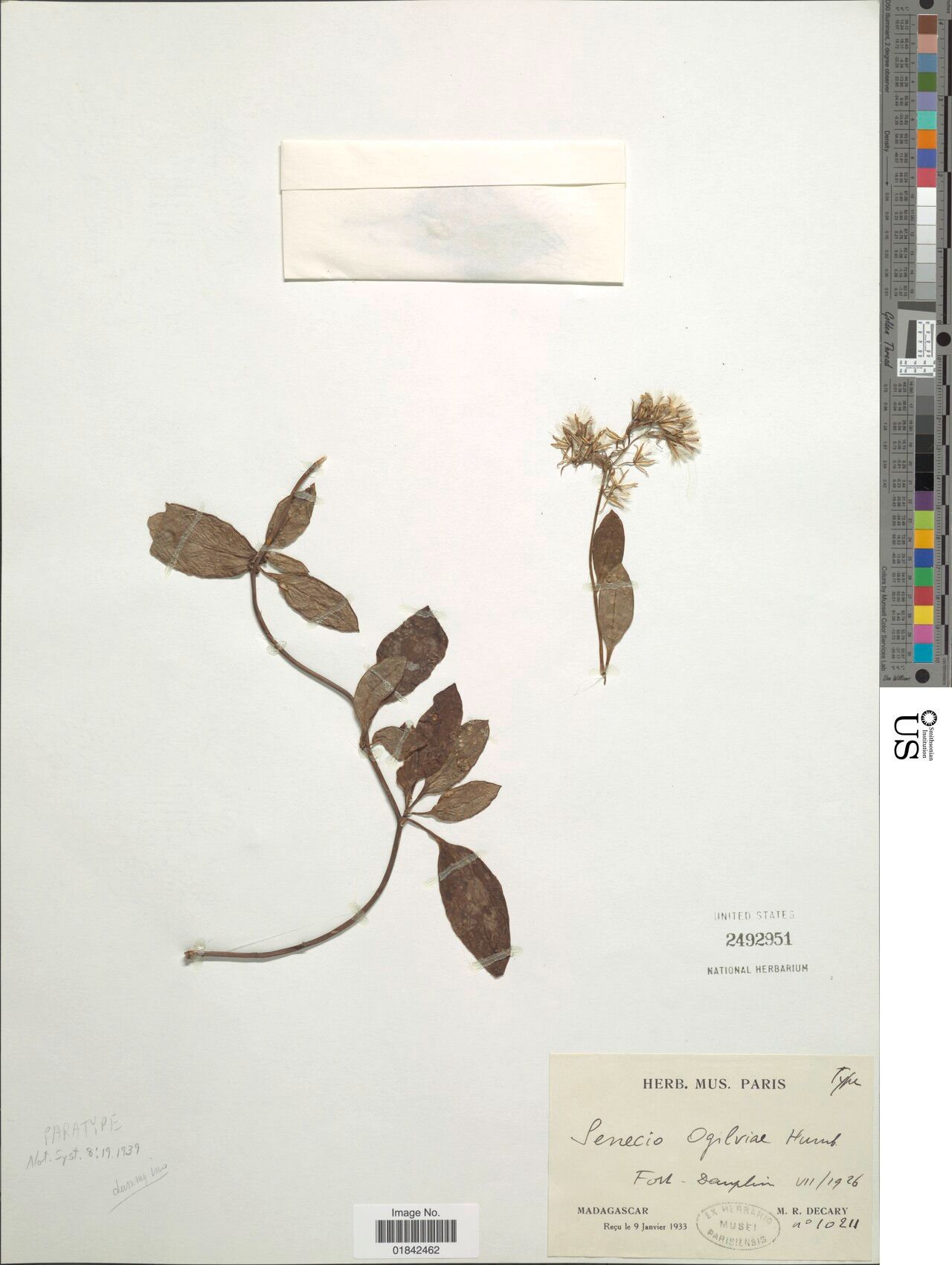
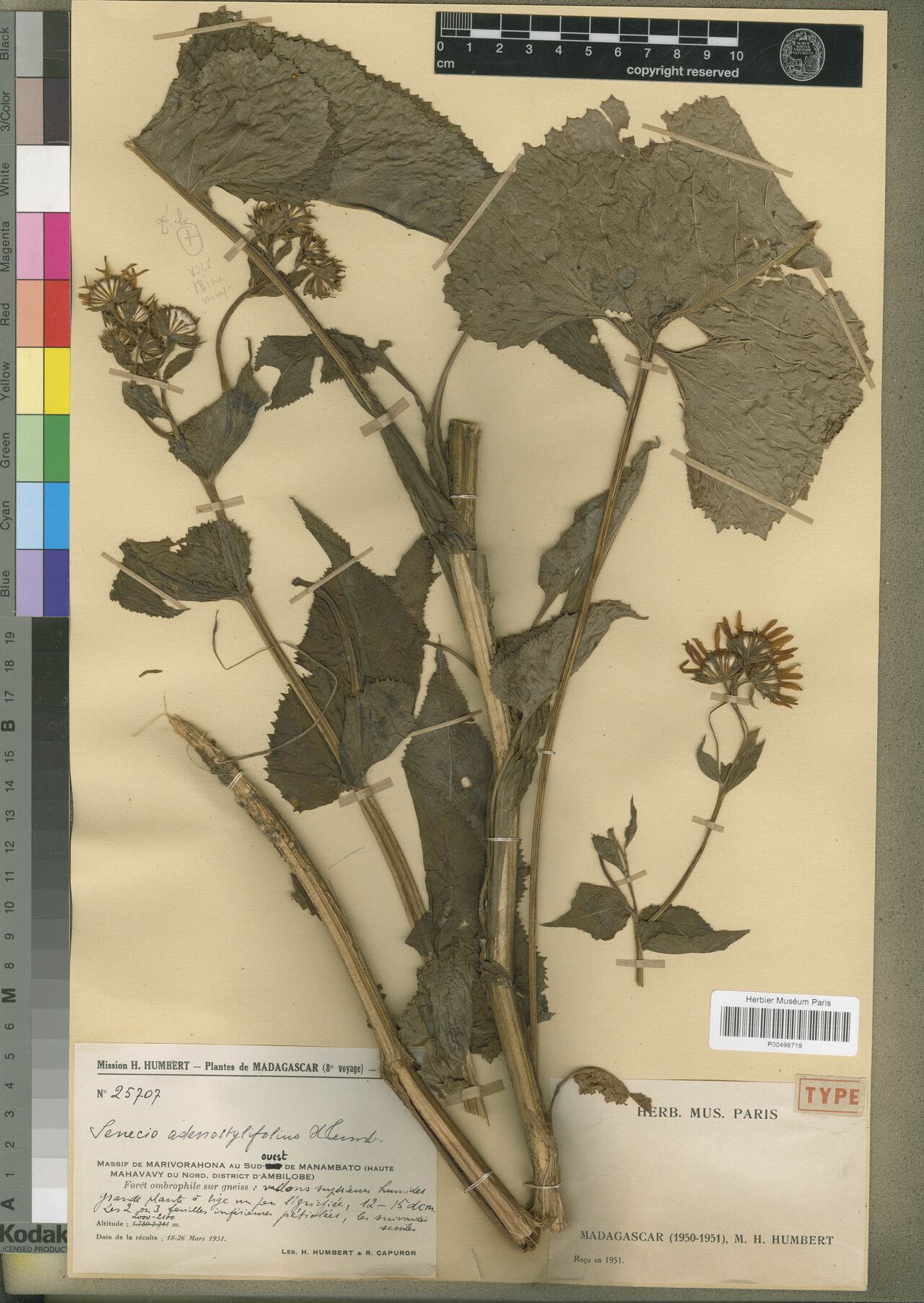
Senecio spartioides is a species of flowering plant in the aster family known by the common name broom-like ragwort. It is native to the western United States as far east as the Dakotas and Texas, and northern Mexico. It can be found in dry, rocky, often disturbed areas in a number of habitat types. It is a subshrub which can exceed a meter in height, its arching stems growing from a woody-topped taproot. The leaves are linear in shape and up to 10 centimeters long. The leaves usually have smooth, unlobed edges, but slightly lobed leaves are seen at times. The leaves are evenly distributed along the stems, the ones low on the stems withering away early, giving the plant a naked appearance on the lower half while the top is still lush green and blooming. The inflorescences are spreading, flat-topped arrays of many cylindrical flower heads. The heads contain yellow disc florets and generally either 5 or 8 ray florets each about a centimeter long. Senecio spartioides' silvery white pappus hairs, that carry the tiny, brown seeds aloft, attract as much attention as the golden yellow flowers. The hairs are common on many members of the Sunflower Family, most famously on Dandelions, Taraxacum officinale. "Oides" is a form of the Greek "oid", which means "similar to" and thus "spartioides" means "similar to spart(ium)", a genus of Fabaceae (Pea Family). Senecio spartioides was first collected by John C. Fremont along the Sweetwater River in Wyoming, in 1842 and was named and described by Torrey and Gray in their Flora of North America in 1843. This species has been noted to hybridize with other Senecio.
Broom-like ragwort is fairly disease-resistant and usually not prone to illness. Still, it can be affected by pests and diseases present in its surroundings. Such infections are generally mild. For care, this plant requires moderate maintenance. Regular pruning is needed to maintain a tidy appearance and encourage healthy growth. Fertilizing can also help stimulate flowering. Broom-like ragwort is suitable for anyone with outdoor space, such as a garden or patio, and does not demand much gardening experience. It may need more attention when grown indoors.
How to keep Senecio Spartioides.
Light
Broom-like ragwort is a perennial herbaceous plant that favors sunny locations and comes from open habitats, frequently occurring in meadows and grasslands. It prefers full sun but can also tolerate partial sun.
Temperature
Broom-like ragwort can adapt to a broad range of temperature conditions, but its distribution may still be limited by different combinations of water and heat conditions. It grows best in warm summers with adequate rainfall or watering. Prolonged periods of cloudy, rainy weather, as well as sustained high temperatures, can increase the likelihood of Broom-like ragwort dying. In winter, proper protection against cold can improve the plant's survival rate.
Fertilizer
The best time to fertilize a Broom-like ragwort is in early spring, when it is coming out of dormancy and entering active growth. Fertilization supplies essential nutrients needed for healthy growth. Although Broom-like ragwort has relatively low fertilizer requirements, an annual application can improve its survival and encourage better, longer-lasting flowers.
Pruning
The broom-like ragwort is characterized by its tall stems and bright yellow flowers. To encourage healthy growth, it is best to prune it in early spring. This will help remove spent flowers and improve air circulation. Always use clean tools to prevent infection, and take local conditions into consideration for optimal results.
Botanical profile.
- Plant Type
- Herb
- Life Cycle
- Perennial
- Genus
- Senecio
- Family
- Asteraceae
- Hardiness Zone
- 4-9
- Mature Height
- 30 cm to 91 cm
- Mature Spread
- 30 cm to 61 cm
- Leaf Color
- Green
- Leaf Type
- Deciduous
- Flower Color
- Yellow
- Flower Size
- 1.52 cm to 2.54 cm
- Bloom Time
- Late summer, Early fall, Mid fall
- Planting Time
- Spring, Summer, Autumn
- Harvest Time
- Fall
- Native Area
- Mexico
Other names.
Reader questions.
What are the sunlight requirements for Broom-like Ragwort (Senecio spartioides)?
Broom-like Ragwort (Senecio spartioides) thrives in conditions where it can receive full sun, which means the plant should get above 6 hours of sunlight daily. There is also the option for it to grow under partial sun, requiring about 3-6 hours of sunlight each day. It's important to observe the way sunlight moves through your garden throughout the day. By doing so, you can choose locations that offer an ideal mix of light and shade, ensuring your plants remain healthy and happy.