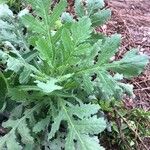
Senecio sylvaticus
Heath groundsel · Wood groundsel · Woodland Ragwort · Heather groundsel · Woodland groundsel
Description
Source: leafsnapSenecio sylvaticus is a species of flowering plant in the aster family. It is variously known as the woodland ragwort, heath groundsel, or mountain common groundsel. It is native to Eurasia, and it can be found in other places, including western and eastern sections of North America, as an introduced species and an occasional roadside weed. It grows best in cool, wet areas. It is an annual herb producing a single erect stem up to 80 centimeters tall from a taproot. It is coated in short, curly hairs. The toothed, deeply lobed leaves are up to 12 centimeters long and borne on petioles. They are evenly distributed along the stem. The inflorescence is a wide, spreading array of many flower heads, each lined with green- or black-tipped phyllaries. The heads contain yellow disc florets and most have very tiny yellow ray florets as well.
Care Guide
💧 Water
Mountain groundsel flourishes in temperate regions and needs moderate moisture, with weekly watering to remain healthy. Although it can withstand brief dry spells, overwatering can lead to root rot. Usually cultivated outdoors, mountain groundsel adapts well to seasonal rainfall and shows resilience during periods of varying precipitation throughout the growing season.
How should I water my Mountain groundsel?
Watering Mountain groundsel is a flexible task that can be done using various tools like a garden hose, watering can, or any other common watering tool. This plant is not particular about the type of water it receives and can thrive with rainwater, tap water, or filtered water. It is advisable to avoid watering from overhead as it can harm the leaves, flowers, and potentially cause disease. Setting up a drip irrigation system is often the most effective way to water Mountain groundsel, as it provides even and direct water to the soil. For container-grown Mountain groundsel, you can use a cup, watering can, or the tap to directly water the soil.
What should I do if I give my Mountain groundsel too much water or too little water?
To remedy underwatering Mountain groundsel, simply water it more regularly when you notice it lacks moisture. Overwatering, on the other hand, is a more serious issue as it can lead to diseases and the plant's decline or death. To prevent this, choose a sunny location with good soil drainage to dry the soil and prevent pooling. If you overwater a potted Mountain groundsel, consider changing to a pot with better drainage and adding loose soil during repotting.
How often do I need to water my Mountain groundsel?
Mountain groundsel needs regular watering throughout the growing season. In spring, water it once per week. As the season gets warmer, you may need to increase watering to two to three times per week. However, be careful not to exceed this rate, as it can harm the plant. Regardless of watering frequency, make sure the soil stays moist but not wet. For potted Mountain groundsel, watering needs may be higher. Potted soil tends to heat up and dry out faster than ground soil. Generally, water container-grown Mountain groundsel a few times per week, compared to just once for plants in the ground.
How much water does my Mountain groundsel plant need?
Determining how much water to give your Mountain groundsel can be done in a few different ways. Some gardeners prefer to assess the soil's moisture by feeling it, suggesting that watering should occur until the first six inches of soil feel moist. Another approach is to use a specific measurement, such as giving about two gallons of water per week, adjusting based on temperature and soil dryness. However, strictly following these guidelines may result in overwatering if your plant needs less water. When growing Mountain groundsel in a container, you'll need to determine water amounts differently. Moistening all layers of dry soil is typically recommended, which can be tested by feeling the soil with your finger or watering until a slight trickle of excess water drains from the pot's holes.
How do I know if I am giving enough water to my Mountain groundsel?
Avoiding overwatering your Mountain groundsel can be somewhat difficult due to its specific watering requirements. While these plants have deep roots that need to be moistened weekly, they are also highly prone to root rot and browning if overwatered. Underwatering is less likely to be an issue as these plants can survive for some time without supplemental watering. However, if you neglect to water them for too long, they may start to wilt and develop dry leaves.
☀️ Light Full sun
Mountain groundsel does best in places with abundant sunlight. That light supports healthy development at every stage, from germination to full maturity. Its typical habitat is mainly bright, sunlit areas. Excessive sun rarely harms it, while too little light can impede its growth and flowering.
What are the sunlight requirements for Mountain groundsel?
Mountain groundsel (Senecio sylvaticus) thrives in environments that are abundant in sunlight, which is essential for its healthy development from germination to maturity. The plant generally requires full sun, meaning it needs above 6 hours of sunlight a day, but can also grow in partial sun, which is about 3-6 hours of sunlight. It's important to watch how sunlight moves through your garden to choose spots that offer a balance of light and shade, ensuring the plants' happiness. While Mountain groundsel does well in sun-soaked spaces and is rarely negatively affected by excessive sun, a lack of sunlight can impede its growth and flowering.
How can artificial lighting be used for Mountain groundsel grown indoors?
For Mountain groundsel plants grown indoors where natural sunlight is insufficient, particularly during winter or in less sunny spaces, artificial lighting provides a crucial solution to promote faster, healthier growth. LED lights are a popular choice as they can be customized to provide specific wavelengths needed by the plants. Regarding intensity, full sun plants require 30-50W/sq ft of artificial light, partial sun plants require 20-30W/sq ft, and full shade plants need 10-20W/sq ft. The light source should be placed 12-36 inches above the plant to mimic natural sunlight, and the duration of exposure should match the natural daylight hours for the plant species, typically 8-12 hours per day.
What are symptoms of inadequate light in Mountain groundsel, and how can they be addressed?
Mountain groundsel displays several symptoms when grown under inadequate light conditions, including smaller new leaves, leggy or sparse growth, faster leaf drop, slower or no new growth, lighter-colored new leaves, chlorosis, sunscald, leaf curling, wilting, and leaf scorching. Solutions for indoor plants include gradually moving them to sunnier locations to receive at least 6 hours of direct sunlight daily, using a south-facing window for maximum exposure, or employing artificial light for at least 8 hours daily. For outdoor plants, gradually moving them to optimal sunlight spots and avoiding sudden changes in light intensity help prevent sunburn. Additionally, identifying and reducing obstructions like tree branches can improve sunlight access. Transplanting smaller plants during their dormant period to a location with better sunlight and good drainage can also be beneficial.
🌡️ Temperature 5–35°C
Mountain groundsel originates from habitats where temperatures range from 68 to 95°F (20 to 35℃). It favors warm climates, and keeping the temperature stable is essential for its growth. Regular adjustments to temperature can improve its adaptability through different seasons.
What is Mountain groundsel?
Mountain groundsel, scientifically known as Senecio sylvaticus, thrives in warm climates, preferring temperatures between 68 to 95°F (20 to 35°C). This plant is known for its strong cold resistance, making it a versatile choice for various environments. Its ability to withstand temperatures without special frost protection measures, except in extreme cold below -25°C, highlights its robustness. Proper care, including temperature adjustments, abundant watering before the first freeze, and protective covering in severe cold, can enhance its growth and adaptability across seasons.
How does low temperature affect Mountain groundsel?
While Mountain groundsel can tolerate cold temperatures, it performs best when the temperature remains above 20°C. During the winter, it's important to keep the temperature above 0°C. If temperatures fall below -25°C, the plant may not show immediate damage but can experience reduced sprouting or fail to sprout in spring. To manage this, remove any parts that haven't sprouted when spring arrives to encourage new growth.
How does high temperature affect Mountain groundsel?
During the summer, it's crucial to ensure that the temperature around Mountain groundsel doesn't exceed 35°C. Exposure to temperatures above 38°C can cause the plant's leaves to lighten in color, curl, and become susceptible to sunburn. In severe cases, the plant may wilt and dry out. To mitigate these effects, trim any sunburned or dried parts of the plant. Relocating the plant to a shaded area or using a shade cloth can protect it from the harsh midday and afternoon sun. Additionally, watering the plant in the morning and evening can help keep the soil moist and support the plant's health.
💨 Humidity
🪴 Soil 6-7
🌱 Fertilizer
Mountain groundsel responds well to regular, light applications of fertilizer to encourage healthy leaf development. Fertilize Mountain groundsel roughly once a month during the summer. Nitrogen is important for foliage, and adding nitrogen-rich sources helps Mountain groundsel flourish.
🪴 Pot & Repot
✂️ Pruning
Mountain groundsel is a robust plant that features vibrant yellow flowers. To maintain its health and appearance, prune it from early to late spring to remove dead stems and stimulate new growth. Regularly pinch off spent flowers to encourage continuous blooming and prevent the plant from self-seeding. Making clean cuts will further enhance the plant's vitality and overall appearance.
🌿 Propagating
🐛 Diseases & pets
☠️ Toxicity
Characteristics
- Plant Type
- Herb
- Life Cycle
- Annual
- Genus
- Senecio
- Family
- Asteraceae
- Hardiness Zone
- 5-9
- Mature Height
- 20 cm to 49 cm
- Mature Spread
- 49 cm
- Leaf Color
- Green, Dark Green
- Leaf Type
- Semi-evergreen
- Flower Color
- Yellow
- Flower Size
- 0.51 cm
- Bloom Time
- Summer
- Planting Time
- Spring
- Harvest Time
- Late summer, Early fall, Mid fall
- Native Area
- Sweden, Austria, Slovakia, Montenegro, Croatia, Slovenia, Belarus, Russia, Germany, Estonia, Romania, Latvia, Belgium, Moldova, Portugal, Netherlands, France, Czech Republic, Bulgaria, Poland, Greece, Ukraine, Serbia, Lithuania, Norway, Italy, Spain, Switzerland, Denmark, Finland, Ireland, United Kingdom, Hungary