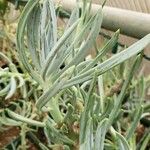
Senecio vitalis
Finger Tips · Narrow leaf chalksticks
Description
Source: leafsnapSenecio vitalis, commonly known as Narrow-leaf Chalksticks, is a succulent belonging to the Asteraceae family. Native to South Africa, it typically thrives in rocky areas and on cliffs. This plant features long, narrow, blue-green leaves that can reach up to 2 feet in length. The leaves are fleshy, cylindrical, and end in pointed tips. In late summer or early fall, Senecio vitalis produces small yellow flowers that bloom on tall stems extending above the plant's foliage. For optimal growth, this succulent requires well-draining soil and moderate watering during its growing season, which spans from spring to fall. It prefers full sun exposure but can also tolerate partial shade. Senecio vitalis is a popular choice for rock gardens or container gardens due to its distinctive appearance and low maintenance needs. Additionally, it serves as an excellent ground cover because of its spreading growth habit. Although easy to care for, it is important to note that Senecio vitalis contains toxic compounds that can cause skin irritation or digestive problems if ingested by humans or pets. Therefore, caution should be taken when handling this plant, especially in areas where children might come into contact with it unknowingly.
Care Guide
💧 Water Every 7 days
☀️ Light Full sun
Narrow-Leaf Chalk Sticks, a species native to dry areas, flourishes in full sunlight, reflective of its origins which include intense light and scarcely any shade. It can also tolerate a bit of shade, demonstrating some versatility in its development.
🌡️ Temperature 20–37.8°C
Although Narrow-Leaf Chalk Sticks can withstand some heat, it mainly flourishes and expands in the cooler seasons, becoming inactive in summer. It is crucial to shield it from scorching sun rays during the high summer temperatures. Moreover, watering must be reduced or even stopped in the peak heat periods to avoid root decay. The plant enjoys a robust growth phase during winter and spring seasons. As long as the temperatures remain above freezing, its growth momentum will continue undeterred.
💨 Humidity normal (40-60%)
This plant will thrive in moderate humidity, which is probably the level in your home. However, misting it a few times a week can be very beneficial. Make sure the room has good ventilation.
🪴 Soil 6-7
🌱 Fertilizer
For the Narrow-Leaf Chalk Sticks, applying light amounts of fertilizer 1-2 occasions annually throughout the growth period is adequate. It is advisable to skip fertilizing during winter and summer when the plant is in a dormant state. Lower the amount of fertilizer for the plants that have been repotted and wait for a few months post repotting before you proceed with fertilizer application. The use of fertilizers contributes to robust growth and promotes flowering.
🪴 Pot & Repot
✂️ Pruning
To manage the size, I prune my. The ends of the lengthy stems are where all of the attractive, healthy growth occurs, making the stems quite heavy. The growth will remain denser if cut a few times a year (since numerous heads will develop at the ends), and fresh growth will develop at the base. To revitalize mine, I intend to completely prune it late this winter. Those stems on some of them are getting really lengthy!
🌿 Propagating
🐛 Diseases & pets
☠️ Toxicity
Take caution when transplanting because Senecios' sap is a mild irritant. Put on gloves for protection and do a thorough cleaning. Additionally, because it is hazardous, it should not be used in yards where there may be pets or young children. The blue chalk stick succulent is thought to be poisonous to both people and animals.
Characteristics
- Plant Type
- Succulent
- Life Cycle
- Perennial
- Genus
- Senecio
- Family
- Compositae
- Hardiness Zone
- 9-12
- Mature Height
- 61 cm
- Mature Spread
- 91 cm
- Leaf Color
- Medium Sea Green, Dark Sea Green
- Leaf Type
- Evergreen
- Flower Color
- White
- Flower Size
- 1.02 cm to 1.52 cm
- Bloom Time
- Mid summer, Late summer, Early fall, Mid fall
- Planting Time
- Spring, Autumn
- Harvest Time
- Fall, Early winter
- Native Area
- South Africa