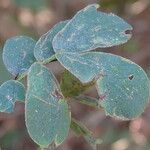
Senna obtusifolia
American sicklepod · Java-bean · Sicklepod · Coffee-weed · Sicklepod senna
Description
Source: leafsnapSenna obtusifolia, known by the common names Chinese senna, American sicklepod, sicklepod, etc., is a plant in the genus Senna, sometimes separated in the monotypic genus Diallobus. It grows wild in North, Central, and South America, Asia, Africa, and Oceania, and is considered a particularly serious weed in many places. It has a long-standing history of confusion with Senna tora and that taxon in many sources actually refers to the present species. In the traditional medicine of Eastern Asia, the seeds are called jué míng zǐ in Chinese (simplified: 决明子; traditional: 決明子), gyeolmyeongja in Korean, and ketsumeishi in Japanese. The green leaves of the plant are fermented to produce a high-protein food product called "kawal" which is eaten by many people in Sudan as a meat substitute. Its leaves, seeds, and root are also used in folk medicine, primarily in Asia. It is believed to possess a laxative effect, as well as to be beneficial for the eyes. As a folk remedy, the seeds are often roasted, then boiled in water to produce a tea. The plant's seeds are a commercial source of cassia gum, a food additive usually used as a thickener and named for the Chinese Senna's former placement in the genus Cassia. Roasted and ground, the seeds have also been used as a substitute for coffee. In vitro cultures of S. obtusifolia such as hairy roots may be a source of valuable secondary metabolites with medical applications.
Care Guide
💧 Water
Sicklepod, which originates from tropical climates, thrives with consistent moisture and shows moderate resistance to drought. To support its growth, it is beneficial to water it weekly. Additionally, using mulch can help retain moisture during hotter periods, ensuring the plant has a steady supply of water.
How should I water my Sicklepod plant?
To water Sicklepod, there are various tools you can use such as a garden hose with a spray nozzle or a watering can. Sicklepod is not too particular about the type of water it receives - it can thrive with rainwater, tap water, or even filtered water. However, it is important to avoid watering this plant from above as it can harm the leaves, flowers, and increase the risk of disease. Instead, a drip irrigation system is often the best method for watering Sicklepod as it distributes water evenly and directly to the soil. If you have a Sicklepod in a container, you can use a similar approach but switch to a cup, watering can, or tap to water the soil directly.
What should I do if I give my Sicklepod plant too much or too little water?
The solution for underwatering Sicklepod is simple - just water it more regularly when you see that it lacks moisture. However, overwatering can be a more serious problem if left unnoticed. When Sicklepod is overwatered, it becomes prone to diseases that can cause its decline and death. To prevent this, it is important to choose a suitable growing location with plenty of sunlight to dry the soil and good drainage to prevent water from pooling and saturating the soil. If you have overwatered your potted Sicklepod, you may need to transfer it to a new pot. The previous container may not have had proper drainage or sufficient drainage holes. When repotting, be sure to use loose soil and a pot that drains effectively.
How frequently should I give water to my Sicklepod plant?
Sicklepod needs regular watering throughout the growing season. In spring, water once per week. As it gets warmer, increase to two or three times per week, but be careful not to overwater. The soil should be moist but not wet. If growing in a pot, water more frequently as the soil can dry out faster. Generally, water a container-grown Sicklepod a few times per week, compared to once per week for an in-ground plant.
How much water does my Sicklepod plant need?
When determining how much water to give your Sicklepod, there are a few different approaches you can take. One option is to feel the soil to gauge its moisture level. In this case, you should water until the top six inches of soil feel moist. Another method is to use a specific measurement, such as two gallons per week, depending on factors like temperature and soil dryness. However, be cautious about following strict guidelines, as overwatering can occur if your plant requires less water. When growing Sicklepod in a container, a different approach is needed. You should water enough to moisten all the dry soil layers. To check for moisture, simply stick your finger in the soil, or water until you notice slight excess water draining from the pot's holes.
How do I know if I'm giving enough water to my Sicklepod plant?
Avoiding overwatering your Sicklepod can be quite tricky. On one hand, these plants need to have their soil moistened on a weekly basis due to their deep roots. However, Sicklepod plants are highly prone to root rot, which can cause browning. Unlike underwatering, which is unlikely to happen as these plants can survive without additional watering for a while, overwatering can lead to wilting and dry leaves if left for too long.
☀️ Light Full sun
Sicklepod requires plentiful sunlight to achieve optimal growth. Its native habitat is generally found in areas with full sun. It can tolerate places with some shade. At every stage of development it needs adequate light. Too little or too much light may impair its health and growth.
What are the sunlight requirements for Sicklepod?
Sicklepod, also known as Senna obtusifolia, thrives in environments that mimic its natural habitat with abundant solar exposure. It requires full sun, which is above 6 hours of direct sunlight, for optimal growth but can also adapt to partial sun conditions, receiving about 3-6 hours of sunlight. It's important to observe how sunlight moves through your garden to find spots that offer the right balance of light and shade, ensuring the plant's health and happiness.
What are some key considerations regarding artificial lighting for Sicklepod?
For Sicklepod plants grown indoors where natural sunlight may be insufficient, especially during winter or in less sunny spaces, artificial lighting becomes crucial for promoting healthy growth. LED lights are recommended due to their ability to provide specific wavelengths needed by plants. Full sun plants require 30-50W/sq ft, partial sun plants 20-30W/sq ft, and full shade plants 10-20W/sq ft of artificial light. The light source should be placed 12-36 inches above the plant to mimic natural sunlight, ensuring the plant receives 8-12 hours of light per day.
What are common symptoms of inadequate light in Sicklepod?
When Sicklepod does not receive enough light, it may display several symptoms, including smaller new leaves, leggy or sparse growth, faster leaf drop, slower or no new growth, and lighter-colored new leaves. These signs indicate a struggle in the plant's ability to perform photosynthesis efficiently. Additionally, symptoms of excessive sunlight exposure like chlorosis, sunscald, leaf curling, wilting, and leaf scorching can also occur, highlighting the importance of providing the right amount of sunlight.
How can I address insufficient sunlight exposure for my outdoor and indoor Sicklepod plants?
For Sicklepod plants with insufficient sunlight, it's beneficial to gradually move them to sunnier locations, ensuring they receive at least 6 hours of direct sunlight daily. For indoor plants, consider keeping them near a south-facing window or using a desk or ceiling lamp for at least 8 hours daily. For outdoor plants, it’s crucial to avoid sudden changes in light intensity to prevent sunburn. If sunlight is blocked by obstructions like trees, consider pruning to let sunlight through. For smaller plants, transplanting them during their dormant period to a location with better sunlight and drainage might be necessary. Note that parts of the plant affected by previous low light may not recover, but new growth should be healthy.
🌡️ Temperature 5–35°C
Sicklepod originates from a temperate climate and does best in temperatures between 68 and 95 °F (20 and 35 ℃). During very cold or very hot seasons, adjustments may be necessary for proper cultivation.
What is the ideal temperature range for Sicklepod cultivation?
Sicklepod, originally from a temperate climate, thrives in temperature ranges of 68 to 95 °F (20 to 35 ℃). Proper cultivation adjustments may need to be made during extremely cold or hot seasons to maintain this ideal temperature range.
Does Sicklepod require special frost protection measures during winter?
Despite its strong cold resistance, Sicklepod should be protected if winter temperatures are expected to drop below its growth limit temperature. Cold protection can be achieved by covering the plant with materials such as soil or straw. Additionally, it's recommended to water the plant abundantly before the first freeze in autumn to ensure the soil remains moist and enters a frozen state, preventing drought and water scarcity during winter and early spring.
How does low temperature affect Sicklepod, and what are the solutions?
Sicklepod is cold-tolerant and thrives best when the temperature is above its minimum suitable growth temperature. During winter, it should be kept above its tolerable growing temperature minimum. When the temperature falls below its growth limit temperature, there may not be any noticeable changes during winter, but there can be a decrease in sprouting or even no sprouting during springtime. The solution for this issue is to remove any parts that have failed to sprout in spring.
What happens to Sicklepod in high temperatures, and how can it be managed?
During summer, Sicklepod should be kept below its maximum suitable growth temperature. When the temperature exceeds its tolerable growing temperature maximum, the leaves may become lighter in color, prone to curling, susceptible to sunburn, and in severe cases, the entire plant may wilt and become dry. To manage this, trim away the sunburned and dried-up parts of the plant, move it to a location that provides shade during the midday and afternoon sun, or use a shade cloth. It is also beneficial to water the plant in the morning and evening to keep the soil moist.
💨 Humidity
🪴 Soil 5-7
🌱 Fertilizer
Sicklepod benefits from regular, low-strength fertilizer applications to encourage healthy leaf growth. You should fertilize Sicklepod about once a month during the summer months. Nitrogen is essential for foliage, and providing nitrogen-rich sources helps Sicklepod thrive.
🪴 Pot & Repot Every 12 months
When repotting Sicklepod, choose a pot that’s 1-2 inches (2.5–5.1 cm) larger in diameter, ensuring it has good drainage. Use a well-draining potting mix and consider adding perlite for extra drainage. Repot in spring or early summer, water thoroughly afterward, and initially place it in a shady location.
✂️ Pruning
🌿 Propagating
🐛 Diseases & pets
☠️ Toxicity
Characteristics
- Plant Type
- Herb
- Life Cycle
- Annual, Perennial
- Genus
- Senna
- Family
- Fabaceae
- Hardiness Zone
- 5-10
- Mature Height
- 0.61 m to 1.52 m
- Mature Spread
- 91 cm
- Leaf Color
- Green
- Leaf Type
- Deciduous
- Flower Color
- Yellow
- Flower Size
- 2.54 cm
- Bloom Time
- Early summer, Mid summer
- Planting Time
- Spring, Summer
- Harvest Time
- Mid summer, Late summer
- Native Area
- Saudi Arabia, Belize, Honduras, Mexico, Peru, Yemen, Panama, Jamaica, Colombia, Bahamas, Iraq, Argentina, Bolivia, Venezuela, Brazil, Guyana, Oman, Nicaragua, Ecuador, Costa Rica