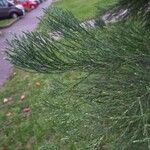
Sequoiadendron giganteum
Giant Sequoia · Giant redwood · Sierra redwood · Wellingtonia · Big-tree
Description
Source: leafsnapSequoiadendron giganteum, commonly known as the giant sequoia or Sierra redwood, is an enormous coniferous tree species native to California's Sierra Nevada mountain range. It is one of the largest trees in the world, capable of reaching heights of up to 311 feet and diameters of 56 feet. The tree's thick, fibrous bark provides excellent protection against forest fires. The giant sequoia has a unique reproductive system that depends on fire for seed dispersal. Its large cones can take up to 20 years to mature and release their seeds during a forest fire. The wood of Sequoiadendron giganteum is highly valued for its durability and resistance to decay, making it an ideal material for construction purposes such as railroad ties, fence posts, and shingles. Due to its impressive size and beauty, the giant sequoia has become a popular ornamental plant in parks worldwide. However, it remains an endangered species, primarily due to habitat loss from logging activities. Conservationists are making efforts to preserve this magnificent species through reforestation programs aimed at ensuring its survival for future generations.
🌳 The wood of giant sequoias may be too coarse and pliable for building, but its remarkable resistance to decay and pests makes it suitable for long-lasting outdoor items like lawn furniture, roof shingles, and fences. Interestingly, traditional Mono tribe practices used giant sequoia bark to make objects ranging from utensils to playthings, showing sustainable use that did not harm the tree.
🎭 Sight; Viewpoint; Well-being; Safeguarding; Development; Sturdiness; Lifespan
Care Guide
💧 Water Every 7 days
Giant sequoias grow best in moist, well-drained soils and can tolerate moderate drought. They prefer consistent moisture but should not be waterlogged. Water them every 1-2 weeks, allowing the soil to dry out slightly between waterings. Usually planted outdoors, giant sequoias benefit from natural rainfall and need less irrigation during the rainy season.
How should I water my Giant sequoia?
Watering your Giant sequoia is a simple task. To water, just turn on your garden hose and slowly soak the soil around the tree. For mature trees, a garden hose is ideal because they may need a lot of water. However, for smaller trees, you can use a watering can or another small watering tool. Avoid overhead watering as it can cause disease, especially for young trees.
What should I do if I give my Giant sequoia too much water or not enough water?
Overwatering can happen when the soil is not draining properly, which can cause your Giant sequoia to decline. To fix this, you can improve soil drainage or move the plant to a better location. If you're growing your sequoia in a container, you may need to repot it with looser soil and better drainage. Overwatered plants can also get diseases, so treat them as soon as possible. For underwatered sequoias, simply water them more often and they'll regain their health. To determine if your sequoia is overwatered, check the new growth for discoloration or easy breakage. If there is standing water or slow drainage in the plant's area, the soil is too moist. Underwatered sequoias will have sparse, brown leaves. Consider recent excessive rain or high temperatures as possible causes for these symptoms.
How much water should I give my Giant sequoia?
Giant sequoias are remarkably resilient, requiring minimal water. These trees can typically rely solely on rainfall for survival and become drought tolerant. During the hotter months, you may need to water the plant once a week, but in other seasons, watering may not be necessary. However, if the tree is newly planted, consistent watering is crucial to establish its roots. Avoid overwatering, as standing water is not tolerated by giant sequoias. It's better to err on the side of underwatering rather than risking excessive watering.
How much water does my big tree called a Giant sequoia need?
During the height of summer, you will need to water your Giant sequoia. Normally, you should give it about one inch of water per week. However, if it has rained one inch or more that week, you do not need to water it. For newly planted Giant sequoias, they will require more water during the establishment period. Usually, this means watering them once every one to two weeks for the first few growing seasons.
How should I give water to my Giant sequoia tree all year round?
During the summer, when it's the hottest, the Giant sequoia tree needs the most water. If there's no rainfall, you should water it once a week. However, during other times of the year, this plant can often survive without any water. In spring and fall, you might need to provide some water if it's unusually hot, but this doesn't happen very often. Unlike many other plants, the Giant sequoia doesn't become dormant in winter, so it continues to grow even in the cold months. However, because the soil doesn't dry out quickly in cool temperatures, its water needs during winter are low.
☀️ Light Full sun
The giant sequoia performs best in places with plenty of sunlight and can tolerate reduced light to a certain degree. In its natural setting it is usually exposed to long, unshaded periods of daylight. Both abundant and moderate light are appropriate for its different growth stages. Insufficient light can cause stunted growth, while excessive light can lead to scorching.
What are the sunlight requirements for a Giant Sequoia?
The Giant Sequoia, known botanically as Sequoiadendron giganteum, flourishes in locations with ample daylight. It requires full sun, defined as over 6 hours of sunlight daily, to thrive optimally, but it can also grow under partial sun conditions, which means about 3-6 hours of sunlight a day. Despite its adaptability to lesser light conditions, inadequate light can lead to stunted growth, while excessive exposure might cause scorching. Observing how sunlight moves through your garden and selecting spots that offer a harmonious balance of light and shade is crucial for the plant’s well-being.
How can artificial lighting support the growth of indoor Giant Sequoias?
Indoor Giant Sequoias require sufficient lighting to grow well, especially when natural sunlight is limited, such as during winter or in less sunny spaces. Artificial lighting, like LED lights, is a beneficial solution, providing essential wavelengths of light needed for their growth. The recommended artificial light intensity varies based on the plant's sunlight needs: 30-50W/sq ft for full sun plants, 20-30W/sq ft for partial sun plants, and 10-20W/sq ft for full shade plants. Positioning the light source 12-36 inches above the plant and ensuring it receives 8-12 hours of light per day mimics the natural sunlight conditions, promoting healthier growth.
What are the symptoms of inadequate or excessive light exposure in Giant Sequoias?
Giant Sequoias show various symptoms when subjected to suboptimal lighting. Insufficient light may result in smaller new leaves, leggy or sparse growth, faster leaf drop, halted growth, and paler new leaves, indicating a lack of chlorophyll and essential nutrients. Conversely, excessive sunlight exposure can lead to chlorosis (losing green leaf color), sunscald (damaged leaves or stems), leaf curling (to minimize water loss), wilting (from rapid water loss), and leaf scorching (brown, dry edges on leaves). These symptoms highlight the plant's struggle to maintain health under extreme light conditions.
What strategies can be employed to manage light conditions for Giant Sequoias?
To optimize light conditions for Giant Sequoias, both indoor and outdoor approaches can be useful. For indoor plants, gradually moving them to sunnier spots to achieve at least 6 hours of direct sunlight daily is recommended, utilizing south-facing windows for maximum exposure. Using artificial light, such as desk, ceiling lamps, or professional grow lights for at least 8 hours a day can also be beneficial. For outdoor plants, it's important to gradually adapt them to sunnier spots to avoid sunburn, keeping in mind that some parts of the plant affected by previous light conditions may not recover, but new growth will be healthy. Additionally, reducing obstructions like pruning trees, or transplanting smaller plants during their dormant period to sunnier locations with good drainage can significantly improve light access.
🌡️ Temperature 10–35°C
The giant sequoia is native to the Sierra Nevada in California, where it grows in a cool temperate climate with average summer temperatures of 68 to 77 ℉ (20 to 25 ℃) and average winter temperatures of 41 to 45 ℉ (5 to 7 ℃). It prefers temperatures between 50 and 95 ℉ (10 to 35 ℃) and can withstand up to 110 ℉ (43.3 ℃). In winter it can tolerate temperatures as low as -20 ℉ (-28.9 ℃).
Where is the giant sequoia native to, and what climate does it prefer?
The giant sequoia, known by its botanical name Sequoiadendron giganteum, is native to the Sierra Nevada in California. It thrives in a cool temperate climate. During the summer, it prefers average temperatures ranging from 68 to 77°F (20 to 25°C), and in winter, it tolerates cooler temperatures between 41 to 45°F (5 to 7°C). The giant sequoia can withstand a broad temperature range, from 50 to 95°F (10 to 35°C), and manage up to 110°F (43.3°C). It also has remarkable cold resistance, tolerating temperatures as low as -20°F (-28.9°C).
How do you protect a giant sequoia in extreme cold?
Despite its strong cold resistance, protection is recommended for a giant sequoia if winter temperatures are expected to plummet below -25°C (-13°F). One can safeguard the tree by wrapping its trunk and branches with insulating materials like non-woven fabric or cloth. Moreover, it's advised to water the giant sequoia abundantly before the first freeze of autumn. This ensures that the soil remains moist when it freezes, helping to prevent drought and water scarcity for the tree during winter and the early spring months.
What are the symptoms of a giant sequoia being exposed to low temperature, and how do you address them?
The giant sequoia is notably cold-tolerant and performs best in temperatures above 10°C (50°F). In winter, temperatures should ideally remain above -15°C (5°F) for the tree's well-being. Exposure to temperatures below -25°C (-13°F) does not show immediate noticeable changes, but as spring arrives, branches might become brittle, dry, and fail to sprout new shoots. The solution is to prune these dead branches in spring to encourage healthy new growth and maintain the tree's vitality.
What are the signs of a giant sequoia suffering from high temperature, and what should you do?
When temperatures soar above its comfort zone, particularly over 35°C (95°F), a giant sequoia may display signs of stress. Symptoms include leaves lightening in color, tips drying and withering, and an increased risk of sunburn. To mitigate this, trim away the affected parts, relocate the plant to a shaded area, or use a shade cloth to shield it from the harsh midday and afternoon sun. Adequate watering in the morning and evening is crucial to keep the soil moist and reduce heat stress.
💨 Humidity
🪴 Soil 6-6
🌱 Fertilizer
The giant sequoia has specific nutrient needs and does not require heavy fertilization. Spring is the best time to apply fertilizer for optimal growth. Providing nutrients enhances its health, increases its resistance to pests and diseases, and helps support its long lifespan.
Why is it important to add fertilizer to my Giant sequoia plant?
To promote healthy growth of Giant sequoia, it is beneficial to fertilize the plant in the spring. Due to its long lifespan, the plant requires support and adding nutrients to the soil can help improve its health. This not only enhances its resistance against pests and diseases that can hinder growth or reduce its lifespan.
When should I fertilize my Giant sequoia tree?
The growing medium may not provide enough nutrients for healthy growth, but for Giant sequoia, it's a bit different. These trees don't need a lot of extra nutrients and the best time to fertilize them is in the spring before new growth starts.
When is it best to not put fertilizer on my Giant sequoia tree?
While some plants benefit from monthly or weekly fertilization, the Giant sequoia has different needs. This tree does not require excessive nutrients and can actually suffer if too much fertilizer is applied. To ensure its health, only use fertilizer in the spring and avoid applying it during the summer, fall, and winter seasons. Additionally, refrain from adding any organic matter to the soil during these periods.
What kind of plant food does my Giant sequoia tree need?
The age of your plant is important when considering the fertilizer. However, keep in mind that Giant sequoias don't need excessive nutrients. Look for a balanced plant food that supports root development and growth, but avoid fertilizers with high nitrogen levels.
How should I fertilize my Giant sequoia?
Applying fertilizer to Giant sequoias is crucial, both in terms of timing and method. In the spring, make sure to apply the fertilizer at the base of the plant while avoiding any contact with the trunk. If you're using granulated fertilizer, cover the pellets with a thin layer of soil to ensure proper absorption into the soil.
🪴 Pot & Repot 2-3 years
When repotting a Giant sequoia, select a pot 1-2 inches (2.5–5.1 cm) larger that has ample drainage. Use a well-draining potting mix. Repot in spring or fall, making sure the root ball sits slightly lower than the rim of the flower pot. Water thoroughly after repotting and place the pot in a warm spot with indirect sunlight.
✂️ Pruning
To care for a giant sequoia, perform light pruning to remove any dead or diseased branches. This should ideally be done from early to late winter, as it minimizes sap loss and reduces the risk of pests. Focus on maintaining the tree's natural shape and ensuring proper air circulation. Avoid heavy pruning, as this can cause stress and structural damage. Following these guidelines will help promote the tree's overall health and longevity.
🌿 Propagating
🐛 Diseases & pets
☠️ Toxicity
Characteristics
- Plant Type
- Tree
- Life Cycle
- Perennial
- Genus
- Sequoiadendron
- Family
- Cupressaceae
- Hardiness Zone
- 6-9
- Mature Height
- 49.99 m to 85.04 m
- Mature Spread
- 7.92 m to 17.98 m
- Leaf Color
- Green, Blue
- Leaf Type
- Evergreen
- Flower Color
- Yellow, Green
- Flower Size
- 0.51 cm to 0.76 cm
- Bloom Time
- Spring
- Planting Time
- Spring, Autumn
- Harvest Time
- Mid summer, Late summer, Early fall