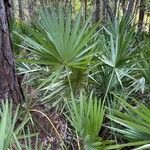
Serenoa repens
Saw Palmetto · Scrub-palmetto
Description
Source: leafsnapSerenoa repens, commonly known as saw palmetto, is a small palm tree native to the southeastern United States. This plant can grow up to 10 feet tall and features fan-shaped leaves that can extend up to 3 feet in length. It produces small berries that are valued for their medicinal properties. Traditionally, Native Americans have utilized saw palmetto for its health benefits. Today, it is widely recognized as a natural remedy for a variety of conditions. The berries contain compounds believed to have anti-inflammatory and anti-androgenic effects, making them useful in the treatment of benign prostatic hyperplasia (BPH), urinary tract infections (UTIs), hair loss, and acne. Beyond its medicinal applications, saw palmetto is also popular in landscaping due to its attractive foliage and resilience in hot climates with minimal water. It is frequently planted along highways and near beaches to help prevent erosion. In summary, Serenoa repens, or saw palmetto, is a versatile plant with significant health benefits and aesthetic value for landscaping projects.
🎭 Bravery and strength
Care Guide
💧 Water Every 7 days
Saw palmetto flourishes in moist, well-drained soils commonly found in its coastal habitats. It requires moderate moisture, so watering every 1-2 weeks is ideal, taking care to avoid over-saturation. Although resilient and large, saw palmetto is typically grown outdoors, where it benefits from natural rainfall to fulfill its hydration needs.
How should I water my Saw palmetto plant?
If you are keeping your Saw palmetto plant indoors, the best way to water it is by applying water directly to the top layer of soil in the container. It is recommended to use rainwater or distilled water that is at or around room temperature. To determine if your Saw palmetto needs water, simply poke your finger into the soil. If the top few inches of soil feel dry, add enough water to moisten those layers, allowing excess water to drain through the bottom of the container. It is safer to underwater your Saw palmetto than to overwater it, as overwatering can lead to fatal complications like root rot. For outdoor Saw palmetto plants, rainfall alone may be enough to meet their water needs. However, if you experience less than weekly rainfall during the growing season, it is likely that you will need to provide some supplemental water to the soil. Once again, rainwater or distilled water are recommended for both indoor and outdoor growth.
What should I do if I give too much or too little water to the Saw palmetto plant?
Here are some signs that indicate plants are not getting enough water: brown tips on the plant, wilted and drooping leaves that appear lifeless, and the potential for leaves to turn brown, crispy, and dry out severely. If you notice these signs, water the plant as soon as possible. Alternatively, overwatering can lead to root rot. If this occurs, remove any damaged roots from the soil, especially if they are mushy, fragile, and black. It is important to remove a larger part of the root to address the issue. Overwatering can also cause leaves to turn brown and fall off early. To help the plant recover, drain excess water and wait for the soil to dry before watering again. If you notice signs of root rot, discard the soil in the pot. Clean everything thoroughly and place pebbles in the pot to improve drainage. If you observe tan rings or reddish-brown spots on the leaves, discard any excess water at the base of the pot. Additionally, ensure the plant is in a well-ventilated location to promote faster soil drying and prevent future rotting.
What should I do if I give my Saw palmetto plant too much water or not enough water?
When watering the Saw palmetto, the main issue to watch out for is overwatering. There are clear signs that indicate this problem. Too much water causes the leaves to turn brown and droop. The stems may become mushy and emit a bad smell. Overwatering can also lead to root rot, which can be fatal if not addressed. If you catch overwatering early, you can resolve it by watering less or adding sand to improve drainage. In more severe cases, you may need to remove the plant from its container, get rid of rotten roots, and replant it. The same approach applies if the plant is outdoors and consistently receiving excess water. In these cases, poor soil drainage may be the cause, and you should consider transplanting the Saw palmetto to a location with looser soil. On the other hand, if the Saw palmetto is underwatered, the leaves will droop, but they are more likely to turn yellow instead of brown. Additionally, the plant's growth will be slower. If you see these signs, you need to water the Saw palmetto more frequently.
How often do I need to water my Saw palmetto plant?
To properly care for your Saw palmetto, you typically need to water it once a week during the growing season, which spans spring, summer, and early fall. However, specific environmental conditions may affect how quickly the soil in the plant's container dries out. To determine the appropriate watering frequency, it's important to monitor the soil's moisture rather than strictly relying on the once-a-week guideline. This means that there may be times when you need to water more than once a week or water every 10 days. If you're growing the Saw palmetto outdoors, the same principles apply, but rainfall becomes a factor in your watering routine. For instance, if you receive about an inch of rain in a week, you shouldn't add extra water to avoid overwatering. During the winter, when the plant isn't actively growing, you should reduce the frequency of watering. In this season, it's best to let the soil dry out a bit more between waterings. This usually translates to watering the Saw palmetto every other week or every three to four weeks.
If I grow my Saw palmetto inside, how should I water it differently?
Most gardeners grow Saw palmetto indoors, but they need to make some adjustments to their indoor environment to meet the plant's needs. The main issue is that indoor locations are usually not humid enough for Saw palmetto. The quickest solution is to use a humidifier in the room where the plant is growing. Another option is to place the plant in the bathroom, which tends to be more humid, as long as there is enough light. It's important to keep an eye on the impact of air conditioners and heating units in the indoor growing area, as they can dry out the soil more quickly. This means you may need to water the plant more frequently than usual. If you want to grow Saw palmetto outdoors, make sure your region provides the necessary warmth and humidity. Also, consider the natural rainfall, as weekly rain might be sufficient for the plant's survival.
☀️ Light Full sun
Saw palmetto thrives in locations with ample sunlight throughout the day. It can also tolerate sites that receive sunlight for only part of the day. Areas that replicate the light conditions of its native habitat support healthy growth. Insufficient or excessive sunlight can result in poor growth and may harm the plant.
What are the sunlight requirements for Saw Palmetto?
Saw palmetto thrives with abundant sunlight exposure, requiring above 6 hours of sunlight classified as 'Full Sun' and can also grow well with about 3-6 hours of sunlight, known as 'Partial Sun'. It's important to observe the movement of sunlight through your garden to select spots with a suitable balance of light and shade. This ensures the plants receive the ideal conditions that replicate their native habitats, promoting healthy growth and preventing the adverse effects of inadequate or excessive sun exposure.
How does artificial lighting support Saw Palmetto growth indoors?
Artificial lighting becomes essential, especially when natural sunlight is insufficient, such as during winter or in less sunny spaces. It's crucial for the optimal growth of indoor plants, including Saw Palmetto, to provide adequate lighting. LED lights are recommended due to their ability to offer specific light wavelengths needed by plants. Full sun plants require 30-50W per square foot, partial sun plants need 20-30W, and full shade plants benefit from 10-20W. The artificial light source should be placed 12-36 inches from the plant to mimic natural sunlight and should be kept on for 8-12 hours per day to simulate the natural daylight hours, enhancing the plant's growth and health.
What are the common symptoms of Saw Palmetto when exposed to suboptimal lighting?
Under suboptimal lighting, Saw Palmetto may show several symptoms indicating light deficiency or excessive exposure. Symptoms of light deficiency include smaller new leaves, leggy or sparse growth, faster leaf drop, slower or no new growth, lighter-colored new leaves, indicating a lack of chlorophyll. Excessive sunlight exposure can cause chlorosis, sunscold, leaf curling, wilting, and leaf scorching. Chlorosis leads to the loss of green coloring in leaves, while sunscald appears as pale or necrotic areas on the plant. Leaf curling acts as a defense mechanism against sunlight, wilting happens due to water loss, and leaf scorching presents as crispy leaf edges.
What solutions can mitigate the effects of suboptimal lighting on Saw Palmetto?
To counteract suboptimal lighting conditions, a gradual approach to increasing sunlight exposure is recommended. For indoor Saw Palmettos, progressively move the plant to sunnier locations, ideally making use of south-facing windows and ensuring curtains are open during the day to get at least 6 hours of sunlight, or employ artificial lights like desk or ceiling lamps for at least 8 hours daily. For outdoor plants, similarly, move them to areas with more sunlight gradually each week to prevent sunburn. If sunlight is blocked by obstructions like trees, consider pruning to allow more light through. For smaller plants, you might need to transplant them during their dormant period to a brighter location with good drainage to enhance growth. Note that while affected parts of the plant may not recover, new growth should be healthy with proper light exposure.
🌡️ Temperature 20–37.8°C
Saw palmetto is a temperate woody plant that prefers temperatures of 68 to 100 ℉ (20 to 38 ℃). It is native to the warm, humid regions of the southeastern United States, where temperatures typically range from 50 to 100 ℉ (10 to 38 ℃). In colder seasons, extra protection such as mulching or covering may be necessary to ensure optimal growth.
What are the essential care instructions for Saw palmetto?
Saw palmetto, a temperate woody plant, thrives in warm and humid regions, particularly in the southeastern United States. It loves temperatures between 68 to 100°F (20 to 38°C) and struggles in cold weather. To ensure the plant's optimal growth, especially in regions where temperatures dip below its preferred range, protective measures like mulching or covering are advised. During colder seasons, it's beneficial to move Saw palmetto indoors, positioning it near a bright window but away from heaters to maintain temperatures above 20°C. Care should be taken to avoid exposure to temperatures nearing 5°C, as these can be detrimental to the plant.
How should Saw palmetto be cared for in low temperatures?
Saw palmetto prefers warm climates and does not fare well in low temperatures, thriving best when the temperature remains above 20°C. In winter, it's crucial to keep the plant above 5°C to prevent damage. Exposure to temperatures below 1°C can cause the leaves to lighten in color, and following a frost, leaves may turn brown or black, exhibiting symptoms like wilting or drooping. To combat frost damage, trim off the affected parts and promptly move the plant to a warmer setting indoors. Placing it near a south-facing window ensures enough sunlight, but avoid directly placing it near heaters or air conditioning vents to prevent air dryness.
What steps should be taken if Saw palmetto experiences high temperatures?
During the summer, it's important to keep Saw palmetto's environment below 38°C. Temperatures exceeding 43°C can lighten the leaves' color and make the plant more prone to sunburn. To manage sunburn, trim away the affected parts and relocate the plant to a shadier area to protect it from the harsh midday and afternoon sun. Moreover, watering the plant in the morning and evening helps maintain soil moisture and supports the plant during high-temperature periods.
💨 Humidity
🪴 Soil 6-7
🌱 Fertilizer
Fertilize your Saw palmetto in early spring to encourage healthy growth. Regular feeding improves overall plant health, producing vigorous growth, increased tolerance to harsh conditions, and enhanced resistance to diseases and pests. Keep a consistent fertilization schedule for your Saw palmetto to achieve foliage that is vibrant, richly colored, and lush.
Why should I put fertilizer on my Saw palmetto plant?
To ensure the optimal health and growth of your Saw palmetto, it is important to regularly fertilize it, regardless of its type. By providing the proper nutrients, you can promote stronger growth and enhance its ability to withstand challenging conditions and fend off diseases and pests. Preserving the foliage of your Saw palmetto is essential as it contributes to its visual appeal. Therefore, establishing and following a fertilization schedule tailored to your Saw palmetto will encourage the development of vibrant leaves and an overall lush appearance.
When should I fertilize my Saw palmetto?
To keep your Saw palmetto healthy, fertilize it during the late winter or early spring. This will provide the necessary nutrients for the plant to grow well once the weather warms up. In warm climate regions, it's a good idea to give an additional fertilizer feeding during early fall. This helps with the next growing season and makes the Saw palmetto more resilient to survive the winter without foliage damage. Fertilizing earlier will allow the new branches to grow strong enough to withstand the cold winter.
When is it best not to put fertilizer on my Saw palmetto plant?
To ensure proper care for your Saw palmetto, avoid fertilizing it at certain times of the year. One such time is during the early and mid-winter months when the plant is dormant and doesn't require any nutrients. Additionally, it is not recommended to fertilize during the late spring and summer due to the hotter and drier weather. These conditions can have a detrimental effect on the plant's response to fertilization. Instead, establish a fertilization schedule that focuses on feeding in early spring and early fall.
What kind of fertilizer does my Saw palmetto plant need?
Saw palmetto plants require various nutrients, with nitrogen being the most important. However, this does not diminish the significance of phosphorus and potassium. In fact, a balanced fertilizer like 10-10-10 can be effective since Saw palmettos typically need a decent amount of all three nutrients. Nonetheless, achieving optimal growth often requires a more nuanced nutrient ratio, leaning towards higher nitrogen levels. For instance, a ratio like 10-6-4 often produces good results. When it comes to fertilizing, you can choose between granular or liquid-based options.
How can I give my Saw palmetto plant the nutrients it needs to grow well?
To fertilize your Saw palmetto, you have two options: using a granular fertilizer or a liquid fertilizer. If you choose to use a granular fertilizer, simply sprinkle it on the soil at the correct time. The granules will release nutrients slowly over time, providing a steady supply to your plant. It's usually a good idea to water your Saw palmetto lightly before applying the fertilizer. If you prefer to use a liquid fertilizer, this method is less common but still effective. Mix your fertilizer with water and pour the mixture onto the soil around the base of your Saw palmetto. Before fertilizing, it may be helpful to perform a soil test to determine if any pH adjustments are needed. This will ensure that your Saw palmetto receives the nutrients it needs to thrive.
🪴 Pot & Repot 1-2 years
When repotting Saw palmetto, choose a pot that is only slightly larger and provides good drainage. Use a well-draining potting mix. Do the repotting in spring, taking care not to injure the roots while you work. Place the palm at the same level it occupied in the previous pot. Water thoroughly after repotting, and set it in a warm area with bright, indirect sunlight. Avoid overwatering to prevent root rot.
✂️ Pruning
Saw palmetto, with its distinctive fan-shaped leaves, benefits greatly from pruning in early spring to remove dead fronds and inflorescences. When pruning, it is important to wear protective gear because of the plant’s sharp leaf edges. Additionally, make sure to sanitize your tools to prevent the spread of diseases. Proper pruning not only enhances the plant's growth and appearance but also reduces pest issues, ensuring that the saw palmetto remains healthy.
🌿 Propagating
🐛 Diseases & pets
☠️ Toxicity
Characteristics
- Plant Type
- Palm
- Life Cycle
- Perennial
- Genus
- Serenoa
- Family
- Arecaceae
- Hardiness Zone
- 10-12
- Mature Height
- 2.13 m to 3.05 m
- Mature Spread
- 1.22 m to 6.1 m
- Leaf Color
- Green
- Leaf Type
- Evergreen
- Flower Color
- White, Yellow, Gold
- Flower Size
- 0.51 cm to 0.51 cm
- Bloom Time
- Late spring, Early summer, Mid summer
- Planting Time
- Spring, Autumn
- Harvest Time
- Mid summer, Late summer, Early fall