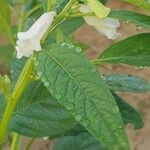
Sesamum indicum
کنجد، · Sesame · Beniseed · Benneseed · Benniseed
Description
Source: leafsnapSesame ( or ; Sesamum indicum) is a flowering plant in the genus Sesamum, also called benne. Numerous wild relatives occur in Africa and a smaller number in India. It is widely naturalized in tropical regions around the world and is cultivated for its edible seeds, which grow in pods. World production in 2018 was 6 million metric tons (5,900,000 long tons; 6,600,000 short tons), with Sudan, Myanmar, and India as the largest producers.Sesame seed is one of the oldest oilseed crops known, domesticated well over 3,000 years ago. Sesamum has many other species, most being wild and native to sub-Saharan Africa. S. indicum, the cultivated type, originated in India. It tolerates drought conditions well, growing where other crops fail. Sesame has one of the highest oil contents of any seed. With a rich, nutty flavor, it is a common ingredient in cuisines around the world. Like other foods, it can trigger allergic reactions in some people.
🎭 Wealth, Desire
Care Guide
💧 Water 1-2 times a week
Sim sim, found in tropical regions, thrives in a consistently humid environment but has a low tolerance for drought. It needs to be watered weekly and is an annual herb, with its growth cycle influenced by natural rainfall patterns.
How should I water my Sim sim?
To water Sim sim, you have several options: a garden hose with a spray nozzle, a watering can, or any other typical watering tool. Sim sim is not too particular about the type of water it receives; it can survive on rainwater, tap water, or filtered water. However, it is recommended to avoid watering this plant from above as it can harm the leaves and flowers and potentially cause disease. Setting up a drip irrigation system is often the best method for watering Sim sim. These systems distribute water evenly and directly to the soil. When watering a Sim sim plant in a container, you can follow a similar approach but using different tools. Simply use a cup, watering can, or tap to supply water directly to the soil.
What should I do if I give my Sim sims too much water or too little water?
The solution to underwatering Sim sim is fairly straightforward. If you notice that your plant is lacking moisture, simply water it more regularly. Overwatering, on the other hand, can have more serious consequences if not caught early. When Sim sim is overwatered, it becomes susceptible to diseases that can lead to its decline and death. To prevent this, it's important to choose a growing location with plenty of sunlight to help dry the soil and good drainage to allow excess water to drain away. If you accidentally overwater a potted Sim sim, it may be necessary to transfer it to a new pot. The previous container may have had poor drainage or not enough drainage holes. When repotting the overwatered Sim sim, be sure to use loose soil and a pot that drains efficiently.
How often should I water my Sim sim?
To ensure the healthy growth of Sim sim throughout the season, it is important to water it regularly. In the spring, watering once a week should be sufficient. However, as the season progresses and it gets warmer, you may need to increase the watering to two to three times a week. Be cautious not to exceed this frequency as it can harm the plant. It is crucial to keep the soil moist but not soaked, regardless of how often you water. Watering Sim sim in a pot requires more attention. Pot soil tends to dry out faster than ground soil, so it's advised to water container-grown Sim sim a few times per week, compared to just once per week for an in-ground plant.
How much water does my Sim sim require?
There are a few different ways to determine how much water to give your Sim sim. Some gardeners prefer to feel the soil for moisture and water until the first six inches are moist. Alternatively, you can use a set measurement of about two gallons per week, depending on temperature and soil dryness. However, be cautious of overwatering if your plant needs less than two gallons. For Sim sim in a container, you should water enough to moisten all dry soil layers. You can check moisture by sticking your finger in the soil or until you see excess water flowing out of the pot's drainage holes.
How can I know if I'm giving enough water to my Sim?
Avoiding overwatering your Sim sim can be challenging. While their deep roots require weekly soil moistening, Sim sim plants are highly prone to root rot and browning when overwatered. Underwatering is less likely to occur as Sim sim plants can survive without additional watering for a while. However, extended periods without water can lead to wilting and dry leaves.
☀️ Light Full sun
Sim sim flourishes in places with plentiful sunlight, which boosts its vigor and development. Its native ecosystem reflects these conditions. The plant’s sunlight needs change with its growth stage, and greater light intensity generally helps maturation. Insufficient sunlight can cause stunted growth, while excessive exposure can potentially harm it.
What are the sunlight requirements for Sim sim?
Sim sim, scientifically known as Sesamum indicum, thrives in full sunlight which means it should receive above 6 hours of sunlight daily. However, it can also tolerate partial sun conditions, where it gets about 3-6 hours of sunlight each day. Ensuring the plant receives the right amount of sunlight is crucial for its health and growth. Watch how sunlight moves through your garden to find spots that provide the perfect balance of light and shade, aiding in the happiness and vitality of your Sim sim plants.
What are the essentials for growing Sim sim successfully?
For successful growth, Sim sim requires environments with abundant sunlight, which enhances its vitality and overall development. The plant's natural ecology reflects a preference for such bright conditions. The intensity and duration of sun exposure its needs can vary depending on the plant's growth stage, with a general rule that more light aids in maturation. Insufficient sunlight may lead to stunted growth, whereas too much sunlight could cause harm. When natural light is inadequate, particularly during winter or in areas with less sun, artificial lighting becomes essential for optimal growth. Adequate lighting using LED lights, which provide specific wavelengths needed by the plant, is crucial. For full sun plants, 30-50W/sq ft of artificial light is recommended, partial sun plants need 20-30W/sq ft, and full shade plants require 10-20W/sq ft. The artificial light source should be placed 12-36 inches above the plant, with a duration that mimics natural daylight hours, typically between 8-12 hours per day.
What symptoms indicate insufficient or excessive sunlight in Sim sim?
Symptoms of insufficient sunlight in Sim sim include smaller new leaves, leggy or sparse growth, faster leaf drop, slower or no new growth, and lighter-colored new leaves. These symptoms are indicative of a light deficiency, where the plant struggles to perform photosynthesis adequately. Conversely, excessive sunlight can lead to chlorosis (leaves turning yellow), sunscald (damaged leaves and stems), leaf curling, wilting, and leaf scorching. These issues signify that the plant is receiving more sunlight than it can handle, negatively affecting its health and ability to photosynthesize.
How can I address sunlight-related issues in Sim sim?
To ensure optimal growth for Sim sim dealing with insufficient sunlight, gradually move the plant to a sunnier location each week until it receives at least 6 hours of direct sunlight daily, if indoor, use a south-facing window and keep curtains open during the day. Consider artificial lighting, such as a desk or ceiling lamp for at least 8 hours daily, or professional plant grow lights for plants that are larger or not easily movable. For outdoor plants, it's crucial to gradually adapt them to sunnier spots to avoid sunburn, making slight adjustments each week. If parts of the plant have been negatively affected by changes in sunlight, it's essential to note that while they may not recover, new growth should be healthy once appropriate light levels are established. Reducing obstructions can also aid in improving sunlight exposure. For trees blocking sunlight, consider pruning branches and leaves. If necessary, transplant smaller plants during their dormant period, usually in late winter or early spring, to a location with ample sunlight and good drainage.
🌡️ Temperature 20–37.8°C
Sim sim originates from regions with temperatures between 68 and 100 °F (20 to 38 ℃). It performs best within this heat range, and care must be taken to keep these temperatures steady throughout its growth stages.
What is the preferred temperature range for Sim sim?
Sim sim, also known as Sesamum indicum, thrives in temperatures between 68 to 100 °F (20 to 38 °C). It is a heat-loving plant that does well within this temperature range. To ensure the plant's health, it is essential to maintain these temperatures throughout its various growth phases. During the colder months, particularly in autumn, if you're growing Sim sim outdoors, it's advisable to bring it indoors and place it near a bright window, while avoiding direct contact with heaters to keep the temperature above 20°C. This is crucial as the plant can be adversely affected by cold temperatures, with harm likely to occur if temperatures approach 5°C or lower.
How does low temperature affect Sim sim and what can be done?
Sim sim is not tolerant of low temperatures, showing an optimal growth response only when temperatures are above 20°C. In winter, keeping the plant above 5°C is essential for its survival. Exposure to temperatures below 1°C may result in leaf color lightening. Following frost damage, symptoms such as the gradual browning or blackening of leaves along with wilting and drooping may be observed. To address frost damage, affected parts should be trimmed off, and the plant should be brought indoors to a warm environment immediately for cold protection. Placing the plant near a south-facing window for ample sunlight while ensuring it's not too close to heating or air conditioning vents will help minimize the risk of air dryness.
How does high temperature affect Sim sim and what can be done?
In the summer, it's important to keep Sim sim's exposure to temperatures below 38°C to prevent stress and damage. When temperatures exceed 43°C, the plant may show signs of distress such as lighter leaf colors and increased susceptibility to sunburn. To mitigate damage from high temperatures, remove sunburned and dried parts of the plant and relocate it to a spot where it can be shaded from the intense midday and afternoon sun. Additionally, maintaining soil moisture by watering the plant in the morning and evening will help manage the heat stress and keep the plant healthy.
💨 Humidity normal (40-60%)
This plant will thrive in moderate humidity, which is probably the level in your home. However, misting it a few times a week can be very beneficial. Make sure the room has good ventilation.
🪴 Soil 5-6
🌱 Fertilizer
For optimal growth, Sim sim needs three fertilizer applications: one before planting, a second about one month after seedling emergence, and a final application 1 to 1.5 months after the second. Some Sim sim types also benefit from extra fertilizer applied at planting to support rapid growth.
🪴 Pot & Repot
✂️ Pruning
Pruning is not required for sesame plants. If the leaves seem to be too lengthy or have acquired a disease as a result of excessive dampness, prune them as required. Allow enough foliage for plants to photosynthesize. Simply snip off leaves as required, leaving the bell-shaped blooms alone.
🌿 Propagating
🐛 Diseases & pets
☠️ Toxicity
Characteristics
- Plant Type
- Herb
- Life Cycle
- Annual
- Genus
- Sesamum
- Family
- Pedaliaceae
- Hardiness Zone
- 10-12
- Mature Height
- 30 cm to 91 cm
- Mature Spread
- 49 cm
- Leaf Color
- Green, Dark Green
- Leaf Type
- Deciduous
- Flower Color
- White
- Flower Size
- 2.54 cm to 5.08 cm
- Bloom Time
- Summer, Early fall, Mid fall
- Planting Time
- Spring
- Harvest Time
- Late summer, Fall, Early winter
- Native Area
- Sub-Saharan and North Africa, India