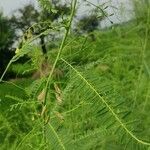
Sesbania cannabina
Sesbania · Sesbania Pea · Canicha · Prickly Sesban · Dhunchee fibre tree
Care Guide
💧 Water
The Sesbania Pea thrives in moist environments and prefers consistent hydration, needing to be watered weekly. While it has moderate drought tolerance, it benefits from cycles of wet and dry soil. Providing extra water during the growing season encourages strong growth and helps the plant withstand temperature fluctuations more effectively.
☀️ Light Full sun
Sesbania Pea comes from sunny, open habitats and does best in full sun. It will tolerate some partial sun but favors direct sunlight for optimal growth. This plant, which can be annual or biennial, is recognized for its sun-loving nature.
What are the sunlight requirements for Sesbania Pea?
Sesbania Pea thrives in bright, open environments and requires full sun, defined as above 6 hours of sunlight per day, for optimal growth. It can tolerate partial sun, which means about 3-6 hours of sunlight, but it prefers direct sunlight to flourish. The plant's well-being depends on the balance of light and shade provided in the garden, so it's important to choose planting spots carefully, observing how sunlight moves through the area throughout the day.
Can Sesbania Pea grow under artificial lighting?
Yes, Sesbania Pea can grow under artificial lighting, especially when natural sunlight is insufficient. This is often necessary in winter or in less sunny spaces indoors. LED lights are recommended for indoor plant lighting as they can be customized to provide specific wavelengths needed by the plants. Full sun plants like Sesbania Pea require 30-50W/sq ft of artificial light. The light source should be placed 12-36 inches above the plant and turned on for 8-12 hours per day to mimic natural daylight hours and promote healthier growth.
What are the symptoms of inadequate lighting for Sesbania Pea?
When Sesbania Pea is grown indoors or under inadequate light conditions, it may display several symptoms indicating light deficiency. These include smaller new leaves, leggy or sparse growth, faster leaf drop, slower or no new growth, lighter-colored new leaves, chlorosis (leaves turning yellow), sunscald, leaf curling, wilting, and leaf scorching. These symptoms suggest the plant is not receiving enough sunlight, which is crucial for its health and development.
How can I improve Sesbania Pea's light exposure for better growth?
To improve Sesbania Pea's light exposure, gradually move it to a location with at least 6 hours of direct sunlight daily, if possible. Use a south-facing window for indoor plants and trim any obstructions like tree branches outdoors to increase sunlight exposure. For larger or immovable plants, consider using artificial light sources, keeping them on for at least 8 hours a day. Outdoor plants should also be moved gradually to sunnier spots to prevent shock. Remember, parts of the plant damaged by insufficient light might not recover, but new growth should be healthy once the light conditions are improved.
🌡️ Temperature 20–35°C
Sesbania Pea is native to temperate environments where average temperatures range from 68 to 95 °F (20 to 35 °C). It does best within this range, and temperature adjustments may be necessary during colder seasons.
What is the ideal temperature range for growing Sesbania Pea?
Sesbania Pea, also known as Sesbania cannabina, thrives best in temperate climates where the average temperature ranges from 68 to 95°F (20 to 35°C). This plant prefers this temperature range and may require adjustments during colder seasons to continue flourishing.
Does Sesbania Pea have any cold tolerance?
Yes, Sesbania Pea has a moderate tolerance to cold temperatures. It does not typically require additional cold protection measures when temperatures are above 0°C. However, if temperatures are expected to drop below freezing, it's necessary to protect the plant temporarily with plastic film, fabric, or other materials until warmer temperatures resume.
How should Sesbania Pea be cared for during low temperatures?
When temperatures fall below -5°C, Sesbania Pea may exhibit drooping leaves as a sign of stress. In mild cases, the plant can recover on its own, but severe cold may lead to wilting and leaf loss. To protect it, trim off the frost-damaged parts and wrap the plant with non-woven fabric or cloth. Additionally, constructing a wind barrier can offer further protection from cold winds during winter.
What steps should be taken if Sesbania Pea experiences high temperatures?
During hot summers when temperatures exceed 35°C, preventive care is crucial to avoid damage to Sesbania Pea. If the temperature climbs above 38°C, you may notice lighter leaf colors, dry leaf tips, curling leaves, and increased susceptibility to sunburn. To mitigate these effects, remove sunburned or dried portions of the plant, relocate it to a shaded area, or use a shade cloth. Ensuring the soil remains moist with morning and evening watering can also help the plant cope with high temperatures.
💨 Humidity
🪴 Soil 6-7
🌱 Fertilizer
Begin fertilizing again after most of the Sesbania Pea’s blooms have fully opened. When the flowers are at peak production, apply fertilizer every three to four weeks, as the weather allows. Once the plant begins producing fewer new blooms, stop fertilizing; it isn’t necessary when the plant can no longer produce additional flowers.
🪴 Pot & Repot
✂️ Pruning
The Sesbania pea is a fast-growing deciduous shrub that plays an important role in nitrogen fixation. To ensure strong growth, improve air circulation, and enhance flowering, it is important to prune this shrub from early to late spring. Focus on removing weak branches to promote the development of healthier, stronger ones. Regular pruning also encourages the production of seed pods. For the best results, be sure to follow recommended horticultural practices.
🌿 Propagating
🐛 Diseases & pets
☠️ Toxicity
Characteristics
- Plant Type
- Herb
- Life Cycle
- Annual
- Genus
- Sesbania
- Family
- Leguminosae
- Hardiness Zone
- 9
- Mature Height
- 3.05 m to 3.35 m
- Mature Spread
- 0.91 m to 2.13 m
- Leaf Color
- Green
- Leaf Type
- Deciduous
- Flower Color
- Yellow
- Flower Size
- 3.05 cm to 10.16 cm
- Bloom Time
- Summer, Early fall
- Planting Time
- Spring
- Harvest Time
- Late summer, Fall
- Native Area
- Nepal, India, Malaysia, Indonesia, Cambodia, Vietnam, Myanmar, Philippines, Bangladesh, Thailand, China