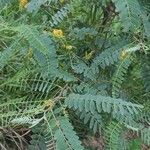
Sesbania drummondii
Poison-bean · Rattlebox · Rattlebush · Drummond's Sesbania · Drummond rattlebox
Description
Source: leafsnapSesbania drummondii, known as poisonbean, rattlebox and rattlebush, is a medium-sized perennial shrub in the legume family Fabaceae. It is native to the southeastern United States, from Texas east to Florida. These woody-based shrubs grow from 1–3 metres (3.3–9.8 ft) tall. It is usually much branched in the upper portion. Branches are thin and widely spreading. The medium green leaves are alternate, deciduous, and pinnately compound. There are typically 12-24 leaflets, and occasionally as many as 60 are found. Each leaflet is oblong shaped and 2–3 centimetres (0.79–1.18 in) long. The orange-yellow, pea-like flowers occur in a drooping raceme on a long stem. They are often found with red lining. The seed pods are four-sided, four-winged, and about 10 centimetres (3.9 in) long. The peas rattle inside, giving this plant its common name of Rattlebush. Inside the pods, the seeds are separated by transverse partitions. These plants flower from May to October, usually retaining many of the seed pods, which remain attached until the plant dies back to ground level for the winter. This plant prefers moist soils of ditches and frequently-inundated meadows, as well as depressions and the open edges of lakes, ponds and streams. The seeds are poisonous, containing the toxin sesbanimide. Animals raised with the plant learn to avoid it because of the foul taste of the green and flowering plants. However, naive cattle, goats or sheep placed on pastures containing dried plants in late fall and winter are frequently poisoned. Sick animals often die within 24 hours. This species is named in honor of the Scottish-born naturalist Thomas Drummond (1793-1835). Other common names include sennabean and Drummond sesbania.
Care Guide
💧 Water
Poisonbean thrives in moist soil and does best with consistent moisture, as long as it is not waterlogged. Once established, the plant is drought-tolerant, though it benefits from regular watering, ideally every three weeks. Its growth cycle aligns with seasonal rains, which affects its watering needs.
How should I water my Poisonbean?
To better promote root development, consider using a garden hose at the base of the plant instead of directly spraying the leaves. If the plant is outdoors and exposed to direct sunlight, keep in mind that the leaves may require more water. To keep the roots moist, you can use bubblers for each plant. Soaker hoses are also useful for watering the entire garden or bed, particularly when adding or removing plants. Make sure to remove any excess water and wait for the soil to dry before watering again. Watering at ground level is important in preventing diseases. On sunny days, it may be beneficial to spray the entire bush with water. Whether the plant is potted or in the ground, keep in mind that Poisonbean prefers deeper watering rather than light sprinkling.
What should I do if I give Poisonbean plant too much or too little water?
If a Poisonbean is overwatered, its leaves may turn yellow, drop off, and wilt. The plant may look dull and unhealthy, with mushy stems. When these signs appear, it's best to adjust your watering schedule when possible. Wilting can also indicate under watering, as leaves may become crispy and dry. In such cases, check the soil for dryness and provide thorough watering as needed. This will help the Poisonbean recover, but the plant may still have dry, yellow leaves due to root damage. Once the plant returns to normal, the yellowing leaves will stop. When growing a Poisonbean indoors, check the moisture levels of the pot and avoid overwatering. Look for signs of black spots, and if present, allow the soil to dry out by taking a break from watering for a few days. Overwatering can lead to root rot, so consider transferring the plant to a different pot if discolored and slimy roots are observed. Prevent root rot by avoiding excessively soggy soil. When planting a Poisonbean outdoors, check the soil moisture by digging a little deeper. If the soil feels too dry, it may indicate underwatering, and adequate watering is needed to facilitate recovery.
How frequently should I water my Poisonbean plant?
The Poisonbean plant prefers deep and infrequent watering. It is best to soak them in a gallon of water, especially when they are in pots, as the soil in pots tends to dry out quickly. In colder regions, watering is needed every 3 to 5 days. Watering should be done early in the morning when the soil is dry, both indoors and outdoors. You can check if watering is needed by examining the soil. If the top 2-3 inches of soil are dry, it is time to water the plant thoroughly. On hot days, it is important to monitor the moisture levels daily as the heat can cause the soil in pots to dry out rapidly. If you have a garden, you also need to irrigate the soil. In hot climates, watering once a week is sufficient. Monitor the soil and water when you notice that about 2 to 3 inches of soil have become too dry, indoors or outdoors. Be mindful of rainwater already received by the plant and avoid overwatering to prevent root rot. Depending on your location, Poisonbean generally grows during spring and fall. When planted outdoors, applying a 3 to 4-inch layer of mulch helps to conserve water. Sandy soil requires more frequent watering, while clay soil can be watered less often to avoid root rot. To keep track of watering, mark the dates on a calendar. Pay attention to the plant's leaves; if they start to droop, it may indicate that you need to water the plant sooner.
How much water should I give my Poisonbean?
The Poisonbean plant generally needs about a gallon of water on a regular basis. For potted plants, water them deeply until you see water dripping from the bottom of the pot. Then, wait for the soil to dry before watering again. Use a water calculator or moisture meter to track the amount of water given to your plant in a week. During the flowering period, provide plenty of water but let the moisture evaporate to avoid root rot. If the Poisonbean is planted outdoors with sufficient rainfall, additional watering may not be necessary. However, when the plant is young or newly planted, make sure it receives 1-2 inches of rain per week. As the Poisonbean grows, it can survive solely on rainfall. Only when the weather is very hot or there is no rainfall for 2-3 weeks should you consider giving the plant a full watering during cooler parts of the day to prevent heat damage. Additional watering will be needed during extended dry periods.
Do I need to change how often I water my Poisonbean depending on the time of year or the weather?
The Poisonbean plant thrives in outdoor conditions and relies on rainwater. In dry weather, watering is necessary. During the spring and fall, the soil should be kept moist but not overly wet, and alternating between dry and moist conditions is beneficial for growth. In the summer, hot weather causes water to evaporate quickly, so extra watering may be needed if there is a lack of rainfall. Generally, the Poisonbean requires less water during the winter when it goes dormant. In this period, using well-draining soil like terracotta can help evaporate excess water. Once the plant starts to leaf out in the spring, watering can be skipped as it can rely on natural rainfall. The Poisonbean does not tolerate excessive water or drought when flowering, so good drainage is essential, especially in winter. When planted in pots, the plant has limited root growth and requires regular watering, especially in summer. Deep soakings once or twice a week, depending on the weather, are recommended to ensure the entire root system receives water. Shallow sprinkles should be avoided as they promote fungal growth and do not reach the roots. Even during dormancy in the fall and winter, the Poisonbean should not be allowed to dry out completely. Adequate drainage is crucial in preventing the plants from sitting in water for too long, which can be detrimental in winter. Applying mulch can help reduce stress, conserve water, and promote healthy blooms.
☀️ Light Full sun
The poisonbean prospers in places with full sun but can also do well without it. Its growth and health depend on ample sunlight. Its native habitat received abundant sun. Neither excessive nor insufficient sunlight affects this plant’s growth or health.
What are the sunlight requirements for Poisonbean (Sesbania drummondii)?
Poisonbean requires full sun, which means it needs to be exposed to more than 6 hours of sunlight daily to thrive optimally. It's essential to watch how sunlight moves through your garden, picking spots that offer a perfect balance of light and shade, ensuring the plant's happiness. Despite its need for abundant sunlight, the Poisonbean's health and growth remain unaffected by either excessive or deficient solar exposure. Its original habitat was exposed to plenty of sun, underlining its adaptability to various light conditions.
How does artificial lighting affect Poisonbean's growth?
In scenarios where natural sunlight is insufficient, especially during winter or in less sunny spaces, artificial lighting becomes essential for Poisonbean's growth. Adequate lighting, particularly through the use of LED lights which can be customized to provide specific light wavelengths, is crucial. For optimal growth, full sun plants like Poisonbean require 30-50W/sq ft of artificial light. It's important to mimic natural sunlight as much as possible by determining the correct distance (12-36 inches above the plant) and duration (8-12 hours per day) for the artificial lights.
What are the key symptoms of light deficiency or excessive light in Poisonbean?
Poisonbean shows several symptoms when exposed to less than ideal light conditions. These include smaller new leaves, leggy or sparse growth, faster leaf drop, slower or no new growth, and lighter-colored new leaves indicating light deficiency. Excessive sunlight exposure can cause chlorosis, sunscald, leaf curling, wilting, and leaf scorching. These symptoms reflect the plant's struggle with inadequate or excessive light, manifesting in physical alterations and reduced health.
What strategies can be employed to ensure optimal light exposure for Poisonbean?
To ensure optimal light exposure for Poisonbean, gradual adaptation to sunlight is recommended. For indoor plants, gradually moving them to sunnier locations each week until they receive at least 6 hours of direct sunlight daily is advised, along with using south-facing windows and keeping curtains open. Artificial lights such as desk or ceiling lamps, or professional plant grow lights, can supplement natural light. For outdoor plants, avoid sudden changes in light intensity to prevent sunburn. Trimming obstructions like tree branches can improve sunlight access, and transplanting smaller plants during their dormant period can also enhance light exposure. Note that parts of the plant that have suffered from insufficient light may not recover, but new growth should be healthy with improved light conditions.
🌡️ Temperature 15–32.2°C
Poisonbean originates from habitats with average temperatures of 59 to 90 °F (15 to 32 ℃), indicating a preference for moderate warmth. Seasonal adjustments may be required when cultivating this plant in areas outside its native range.
What is the native environment temperature range for Poisonbean?
Poisonbean, known botanically as Sesbania drummondii, thrives in environments where the average temperature ranges between 59 to 90°F (15 to 32°C). This suggests a preference for moderate warmth, indicating that seasonal adjustments may be required for growing this plant in regions outside its native temperature range.
Does Poisonbean need special frost protection in winter?
Poisonbean has strong cold resistance and usually does not require special frost protection during winter. However, in conditions where winter temperatures are expected to drop below -10°C, it becomes important to provide cold protection. Wrapping the trunk and branches with non-woven fabric or cloth can achieve this. Additionally, it is recommended to water the plant abundantly before the first freeze of autumn to ensure the soil remains moist and enters a frozen state, helping to prevent drought and water scarcity for the plant during winter and early spring.
How does Poisonbean react to low temperatures?
Poisonbean is cold-tolerant and performs best when temperatures are above 15°C. During winter, it should be kept above -5°C to maintain its health. If temperatures fall below -10°C, there may not be any noticeable changes during the winter, but by springtime, the branches could become brittle and dry, and no new shoots will emerge. The solution to this problem is to prune away any dead branches in the spring that have failed to produce new leaves.
How does Poisonbean react to high temperatures?
During the summer, it's important to keep Poisonbean below 32°C. If temperatures exceed 35°C, the plant's leaves may lighten in color, the tips may become dry and withered, and the plant may become more susceptible to sunburn. To mitigate these effects, trim away the sunburned and dried-up parts. Moving the plant to a location that provides shade during the midday and afternoon sun or using a shade cloth can help. Additionally, watering the plant in the morning and evening will help keep the soil moist, providing further support during high temperatures.
💨 Humidity
🪴 Soil 5-7
🌱 Fertilizer
Fertilize your Poisonbean in early spring to encourage healthy growth. Regular feeding improves overall health, producing vigorous growth, greater resilience in challenging conditions, and enhanced resistance to pests and diseases. Keep a consistent fertilization schedule for your Poisonbean to maintain vibrant foliage with rich color and a lush appearance.
🪴 Pot & Repot
✂️ Pruning
Poisonbean, a plant recognized for its distinctive flowers and pods, benefits greatly from pruning in early spring. This process involves removing dead branches and managing the plant's size. Making clean cuts is crucial, as it helps prevent disease and encourages healthy regrowth, which in turn enhances the plant's overall health and improves its flowering performance.
🌿 Propagating
🐛 Diseases & pets
☠️ Toxicity
Characteristics
- Plant Type
- Shrub
- Life Cycle
- Perennial
- Genus
- Sesbania
- Family
- Fabaceae
- Hardiness Zone
- 8
- Mature Height
- 4.57 m to 6.1 m
- Mature Spread
- 0.61 m to 1.52 m
- Leaf Color
- Green, Dark Green
- Leaf Type
- Deciduous
- Flower Color
- Yellow, Orange
- Flower Size
- 1.52 cm to 2.03 cm
- Bloom Time
- Summer
- Planting Time
- Spring, Autumn
- Harvest Time
- Late summer, Early fall, Mid fall
- Native Area
- Mexico