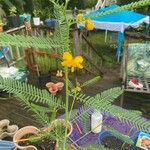
Sesbania herbacea
Bigpod sesbania · Colorado riverhemp · Peatree · Colorado River-hemp · Coffeebean
Description
Source: leafsnapSesbania herbacea (syn. Sesbania exaltata) is a species of flowering plant in the legume family known by the common names bigpod sesbania, Colorado River-hemp, and coffeeweed. It is native to the United States, particularly the southeastern states, where it grows in moist environments. It can be found elsewhere as an introduced species. It is a woody herb growing to 3 meters or more in height. The leaves are made up of many pairs of oblong leaflets. The inflorescence is a small raceme of pealike flowers with yellow or purple-spotted petals.
🌳 Bigpod sesbania is often overlooked for its agricultural potential, even though it can serve as a high-protein animal feed, particularly valuable during dry seasons. Its unexpected versatility includes roles in remediation, removing important nutrients from polluted water and acting as an ally in environmental cleanup efforts. It is also a largely underexplored source of fiber for textiles, suggesting a future in which plants like bigpod sesbania contribute to sustainable fashion.
Care Guide
💧 Water
Bigpod sesbania flourishes in moist, waterlogged soils and needs weekly watering to keep the soil consistently wet. It prefers full sunlight, which, along with its natural habitat, affects its water needs. During the growing season, these needs are particularly high.
How should I water my Bigpod sesbania plant?
There are various ways to water Bigpod sesbania, such as using a garden hose with a spray nozzle, a watering can, or any other common watering tool. This plant is not too picky about the type of water it receives and can thrive on rainwater, tap water, or filtered water. One should avoid watering from overhead, as it can harm the leaves, flowers, and potentially lead to disease. Setting up a drip irrigation system is often the best approach for watering this plant as it applies water evenly and directly to the soil. When watering a container-grown Bigpod sesbania, you can use a cup, watering can, or tap to directly water the soil.
What should I do if I give too much or too little water to my Bigpod sesbania plant?
To prevent underwatering your Bigpod sesbania, simply water it more regularly when you notice it lacks moisture. On the other hand, overwatering can be a serious problem. It can cause diseases and eventually lead to the plant's decline and death. To avoid this, choose a suitable location with ample sunlight and good drainage to prevent water from pooling. If you overwater a Bigpod sesbania in a pot, consider moving it to a new pot with proper drainage. When repotting, use loose soil and ensure efficient drainage in the new pot.
How frequently should I water my Bigpod sesbania?
Bigpod sesbania requires regular watering throughout the growing season. In spring, water the plant once a week. As the season progresses and the weather gets warmer, you may need to water it two to three times a week. However, be careful not to exceed this rate as it can harm the plant. It's important to maintain moist soil, but avoid making it too wet regardless of how often you water. If you are growing Bigpod sesbania in a pot, you will need to water it more frequently. The soil in a pot can dry out faster due to increased heat. In most cases, plan to water a Bigpod sesbania in a container a few times per week, compared to once per week for a plant in the ground.
How much water does my Bigpod sesbania plant need?
There are a few different ways to determine how much water your Bigpod sesbania needs. One method is to feel the soil for moisture and water until the first six inches feel moist. Another approach is to use a set measurement, like two gallons per week, depending on the temperature and how quickly the soil dries out. However, be cautious not to overwater if your plant needs less. When growing in a container, you can check the soil moisture by sticking your finger in or water until there's a slight trickle out of the drainage holes.
How can I know if I'm giving enough water to my Bigpod sesbania?
Avoiding overwatering your Bigpod sesbania can be a bit tricky because these plants have deep roots that need to be moistened weekly. However, Bigpod sesbania are highly vulnerable to root rot, which can cause browning. Underwatering is less of a concern since these plants can survive without extra watering for a while. But if you wait too long to water them, they will start to wilt and their leaves may become dry.
☀️ Light Full sun
Bigpod sesbania does best when exposed to abundant, steady light throughout the day, which supports vigorous growth. Coming from habitats with high light exposure, the plant can tolerate reduced light if needed, although this may affect its growth and germination. Both excessive and insufficient light can negatively impact the plant's health.
What are the sunlight requirements for Bigpod Sesbania?
Bigpod Sesbania thrives in environments with abundant, consistent light throughout the day, aiding in robust growth. It requires more than 6 hours of sunlight daily for full sun conditions but can also grow in partial sun, which is about 3-6 hours of sunlight. However, the plant can accept lesser light conditions if necessary, although this may impact its growth and germination negatively. It's crucial to understand how sunlight moves through your garden to choose spots that offer the right balance of light and shade, ensuring the plant's health. Whether grown indoors or outdoors, inadequate or excessive light can adversely affect the plant's well-being.
How can artificial lighting help grow Bigpod Sesbania indoors?
Indoor plants, including Bigpod Sesbania, require adequate lighting for optimal growth, especially when natural sunlight is insufficient, such as during winter or in less sunny spaces. Artificial lights serve as a vital solution, promoting healthier growth by providing the necessary wavelengths of light. LED lights are a popular choice for indoor plant lighting due to their customizable spectrum. For optimal growth under artificial light, full sun plants need 30-50W/sq ft, partial sun plants need 20-30W/sq ft, and full shade plants need 10-20W/sq ft. The light source should be placed 12-36 inches above the plant to mimic natural sunlight and be kept on for 8-12 hours per day to simulate natural daylight hours.
What are the symptoms of poor lighting conditions in Bigpod Sesbania?
Bigpod Sesbania, when grown in less than ideal light conditions, might display several symptoms indicating light deficiency. These include smaller new leaves, leggy or sparse growth, faster leaf drop, slower or no new growth, and lighter-colored or chlorotic leaves. Excessive sunlight can lead to sunscald, leaf curling, wilting, and leaf scorching, damaging the plant. Observing these symptoms can help diagnose and address light-related issues, ensuring the plant receives the appropriate amount of sunlight or artificial light to maintain its health.
What solutions can improve the growth of Bigpod Sesbania in inadequate light conditions?
To enhance the growth of Bigpod Sesbania in inadequate lighting, gradually increasing sunlight exposure is key. For indoor plants, moving them to a sunnier location each week until they receive at least 6 hours of sunlight daily is beneficial. Utilizing a south-facing window and keeping curtains open during daylight hours maximizes sunlight exposure. Artificial lighting, such as desk lamps or plant grow lights, can also supplement light for larger plants or those not easily moved, keeping them on for at least 8 hours a day. Outdoors, it's crucial to transition plants gradually to sunnier spots to prevent sunburn. Pruning obstructive trees or transplanting the plant during its dormant period to a location with more sunlight and good drainage can also help mitigate the effects of insufficient natural light.
🌡️ Temperature 20–35°C
Bigpod sesbania naturally grows in areas where temperatures range from 68 to 95 °F (20 to 35 ℃). While adaptable, its environment should be kept within this range for optimal growth.
What is the ideal temperature range for Bigpod sesbania?
Bigpod sesbania thrives best in a temperature range of 68 to 95 °F (20 to 35 °C). It's important to maintain the environment within this temperature range for the plant's optimal growth. While the plant has some cold tolerance, it is crucial to keep the temperature above 0°C to avoid the need for cold protection measures.
What should I do if the temperature drops below 0°C?
If temperatures are expected to drop below 0°C, it's necessary to protect Bigpod sesbania. Temporary measures such as wrapping the plant with plastic film, fabric, or other suitable materials should be taken. Once the temperature rises again, these protections should be promptly removed to avoid any potential negative effects on the plant.
How does Bigpod sesbania react to low temperatures?
Bigpod sesbania has moderate tolerance to low temperatures, thriving best above 20°C. During winters, it should be kept above 0°C. If temperatures fall below -5°C, the plant's leaves may droop and, in severe cases, wilt and fall off. To help the plant recover from frost damage, trim off the frost-damaged parts. Additionally, to prepare for low temperatures, wrap the plant with protective materials like non-woven fabric or cloth, and create a wind barrier to shield it from cold winds.
What are the effects of high temperatures on Bigpod sesbania?
During summer, it's important to ensure that Bigpod sesbania is kept below 35°C. Exposing the plant to temperatures above 38°C may cause the leaves to lighten in color, dry out at the tips, curl, and become more vulnerable to sunburn. To mitigate these effects, trim away any sunburned or dried-up parts, move the plant to a shaded location or use a shade cloth to protect it from direct sun, especially during midday and afternoon. Also, make sure to water the plant in the morning and evening to keep the soil moist.
💨 Humidity
🪴 Soil 6-7
🌱 Fertilizer
Bigpod sesbania responds well to regular, dilute fertilizer applications to encourage healthy leaf growth. Fertilize it roughly once a month during the summer. Nitrogen is vital for foliage, and supplementing with nitrogen-rich sources helps Bigpod sesbania thrive.
🪴 Pot & Repot
✂️ Pruning
🌿 Propagating
🐛 Diseases & pets
☠️ Toxicity
Characteristics
- Plant Type
- Herb
- Life Cycle
- Annual, Perennial
- Genus
- Sesbania
- Family
- Fabaceae
- Hardiness Zone
- 9
- Mature Height
- 1.22 m to 3.66 m
- Mature Spread
- 49 cm to 91 cm
- Leaf Color
- Green
- Leaf Type
- Deciduous
- Flower Color
- Yellow
- Flower Size
- 2.54 cm to 5.08 cm
- Bloom Time
- Summer
- Planting Time
- Spring, Summer, Autumn, Winter
- Harvest Time
- Mid summer, Late summer, Early fall
- Native Area
- Cuba, Honduras, Mexico, Guatemala, Nicaragua, Ecuador, Costa Rica