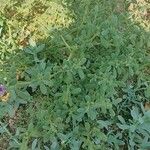
Sesuvium verrucosum
Western-purslane · Verrucose Sea-Purslane · Verrucose seapurslane · Sea purslane · Western seapurslane
Description
Source: leafsnapSesuvium verrucosum, commonly known as the Warty Sea Purslane, is a succulent plant species belonging to the Aizoaceae family. This plant is typically found in coastal areas of Africa, Madagascar, and the Arabian Peninsula. It features fleshy leaves that range in color from green to reddish-purple and can grow up to 10 cm long. The plant produces small flowers, either pink or white, which bloom during the summer months. Sesuvium verrucosum is well-adapted to saline soils with high salt concentrations and can withstand flooding by seawater during high tides. It plays a crucial role in stabilizing coastal sand dunes, helping to prevent erosion caused by wind and water currents. Furthermore, it serves as a valuable food source for grazing animals such as camels and goats, which are commonly found along Africa's coastlines where this plant thrives. Traditionally, Sesuvium verrucosum has been used for medicinal purposes, particularly in treating skin infections. Recent scientific studies have investigated the antibacterial properties of its leaf extract, finding potential uses against antibiotic-resistant bacterial strains like MRSA (Methicillin-resistant Staphylococcus aureus).
Care Guide
💧 Water Every 7 days
Verrucose seapurslane is exceptionally drought-tolerant, making it perfect for arid areas. While it thrives with weekly watering for optimal health, it stores water in its succulent leaves. This characteristic makes it an excellent choice for gardens in warmer climates.
☀️ Light Full sun
Verrucose seapurslane favors locations with plentiful sunlight, which encourages robust growth and good health. It can, however, withstand areas that receive only limited light. Because it comes from habitats with abundant sun, uneven light conditions may negatively affect verrucose seapurslane's wellbeing.
What are the sun requirements for Verrucose seapurslane?
Verrucose seapurslane thrives in areas with generous sun exposure, requiring more than 6 hours of sunlight for optimal growth, which is considered full sun. It can also tolerate partial sun, meaning about 3-6 hours of sunlight. Observing how sunlight moves through your garden will help choose the perfect spots that provide a balance of light and shade, ensuring the plant's happiness.
How do artificial lights support indoor verrucose seapurslane plants?
Indoor plants like verrucose seapurslane require adequate lighting for optimal growth. When natural sunlight is insufficient, artificial lights offer a vital solution, promoting faster, healthier growth. LED lights are particularly beneficial as they can be customized to provide specific wavelengths necessary for plant health. Full sun plants should have 30-50W/sq ft of artificial light, partial sun plants need 20-30W/sq ft, and full shade plants should get 10-20W/sq ft. The light source should be placed 12-36 inches above the plant, and most plants need 8-12 hours of light per day to mimic natural daylight hours.
What are the signs of insufficient light for Verrucose seapurslane?
When Verrucose seapurslane is experiencing insufficient light, it may show signs such as smaller new leaves, leggy or sparse growth, faster leaf drop, slower or no new growth, lighter-colored new leaves or chlorosis, sunscald, leaf curling, wilting, and leaf scorching. These symptoms indicate that the plant is not receiving adequate sunlight, which is vital for its growth and overall health.
How can I address the lighting needs of Verrucose seapurslane?
To meet the lighting needs of Verrucose seapurslane, gradually move plants to sunnier locations, ensuring they receive at least 6 hours of sunlight daily. For indoor plants, use a south-facing window or provide artificial light for at least 8 hours daily. Outdoors, avoid sudden changes in light intensity to prevent sunburn. Minimize obstructions to sunlight by pruning or relocating plants to sunnier spots. Note that parts of the plant that suffered from insufficient light may not recover, but new growth will be healthy with improved light exposure.
🌡️ Temperature 15–37.8°C
Verrucose seapurslane is naturally suited to a temperature range of 68 to 100.4 °F (20 to 38 ℃). In particular, seasonal changes may require adjusting temperatures to prevent damage to the plant.
What is the ideal temperature range for Verrucose seapurslane?
Verrucose seapurslane is best adapted to temperatures between 68 to 100.4°F (20 to 38°C). This range supports its natural growth cycle, but it’s important to consider seasonal changes that might require temperature adjustments to prevent harm to the plant. Despite some degree of cold tolerance, measures for cold protection are necessary if temperatures are expected to drop below 0°C. This may include wrapping the plant with protective materials like plastic film or fabric, which should be removed once temperatures rise again.
How does Verrucose seapurslane react to low temperatures, and what are the recommended solutions?
Verrucose seapurslane has a moderate tolerance to low temperatures and thrives when temperatures are above 20°C, though it should always be kept above 0°C during winter. Exposure to temperatures below -10°C may cause the leaves to droop, and in severe cases, they may wilt and fall off. To address frost damage, trim the frost-damaged parts and wrap the plant with non-woven fabric or cloth before cold spells. A wind barrier can also protect it from chilly winds.
What should be done if Verrucose seapurslane experiences high temperatures?
During the summer, it's crucial to keep Verrucose seapurslane below 38°C as temperatures above 43°C can cause the leaves to lighten in color, dry, and curl, increasing the risk of sunburn. In such cases, trim away any sunburned or dried parts of the plant. Moving it to a shaded area or using shade cloth can protect it from the harsh midday and afternoon sun, and it’s beneficial to water the plant in the morning and evening to maintain moist soil conditions.
💨 Humidity
🪴 Soil 6-8
🌱 Fertilizer
The best time to fertilize a Verrucose seapurslane is in early spring, as it comes out of dormancy and begins active growth. Fertilization supplies essential nutrients needed for healthy growth. While Verrucose seapurslane has relatively low fertilizer requirements, applying fertilizer annually can improve its survival and encourage better, longer-lasting flowers.
🪴 Pot & Repot
✂️ Pruning
Verrucose seapurslane is a resilient, mat-forming perennial with succulent leaves that thrives in salty environments. To enhance its appearance and encourage healthy growth, prune it in early spring or late winter. This will help remove dead stems and control its spread, making it an excellent choice for coastal gardens.
🌿 Propagating
🐛 Diseases & pets
☠️ Toxicity
Characteristics
- Plant Type
- Herb
- Life Cycle
- Perennial, Annual
- Genus
- Sesuvium
- Family
- Aizoaceae
- Hardiness Zone
- 8-11
- Mature Height
- 30 cm to 61 cm
- Mature Spread
- 30 cm to 61 cm
- Leaf Color
- Green, Dark Green
- Leaf Type
- Evergreen
- Flower Color
- Pink, Purple
- Flower Size
- 2.54 cm
- Bloom Time
- Late spring, Summer, Early fall, Mid fall
- Planting Time
- Spring, Summer, Autumn
- Harvest Time
- Mid summer, Late summer, Fall, Early winter
- Native Area
- Mexico