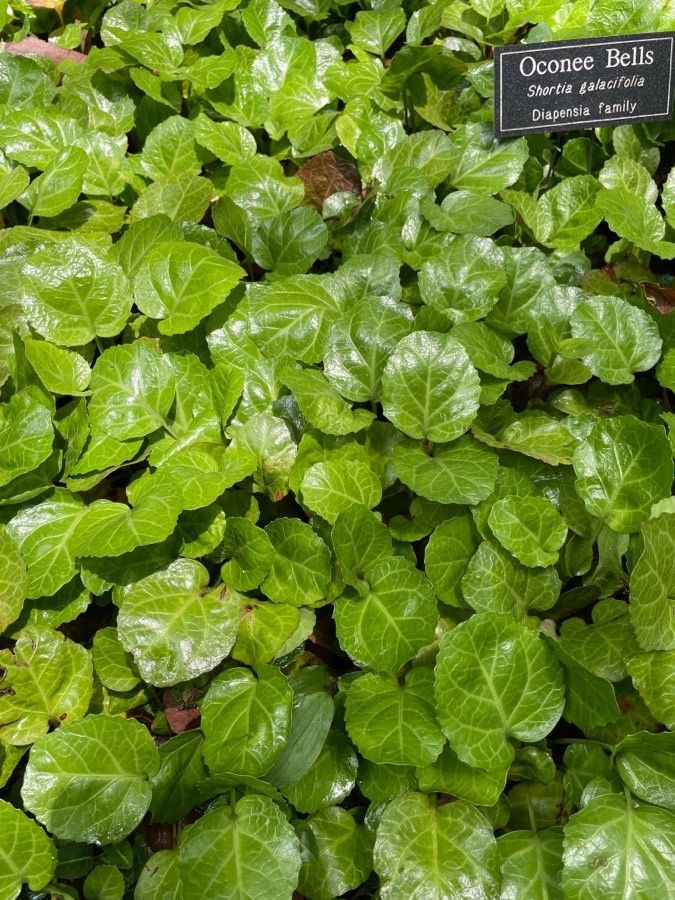
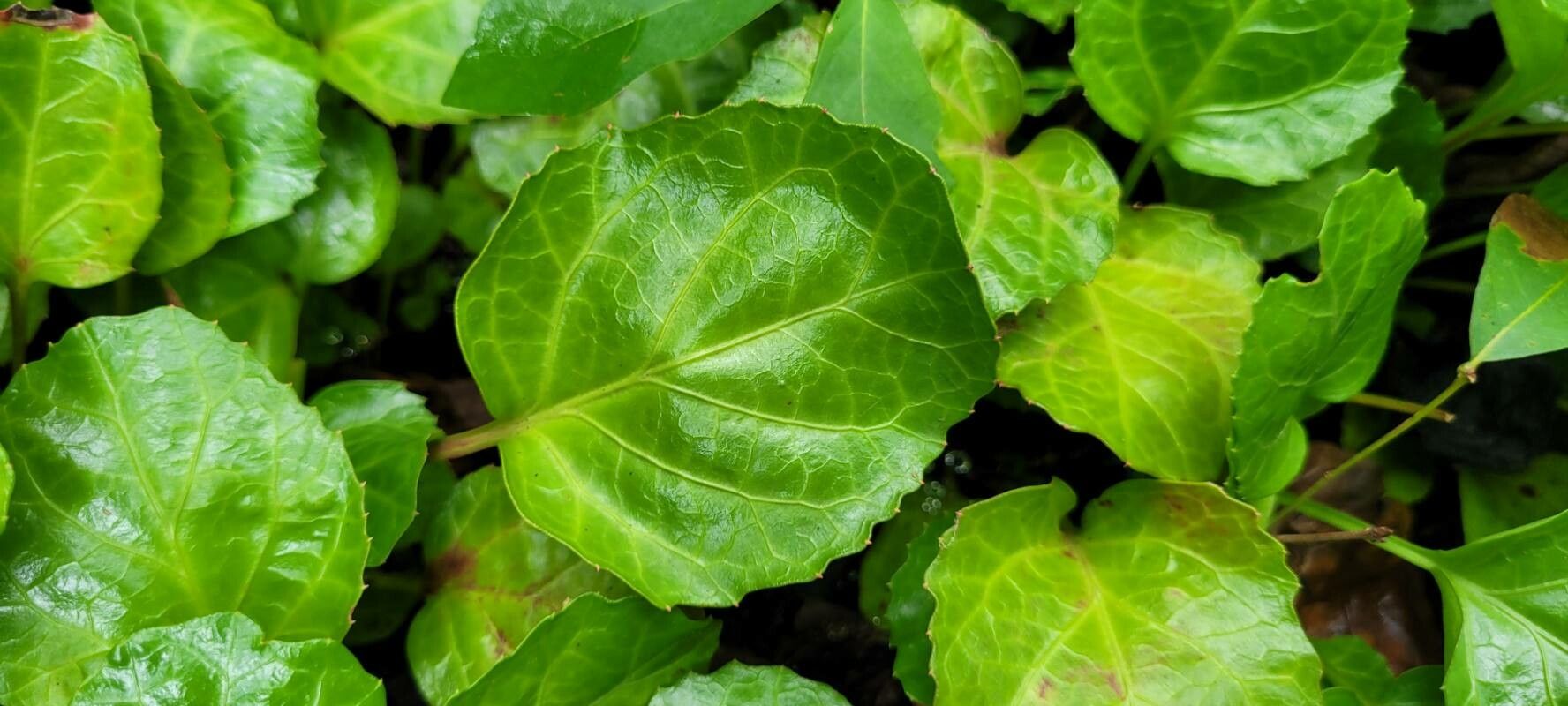
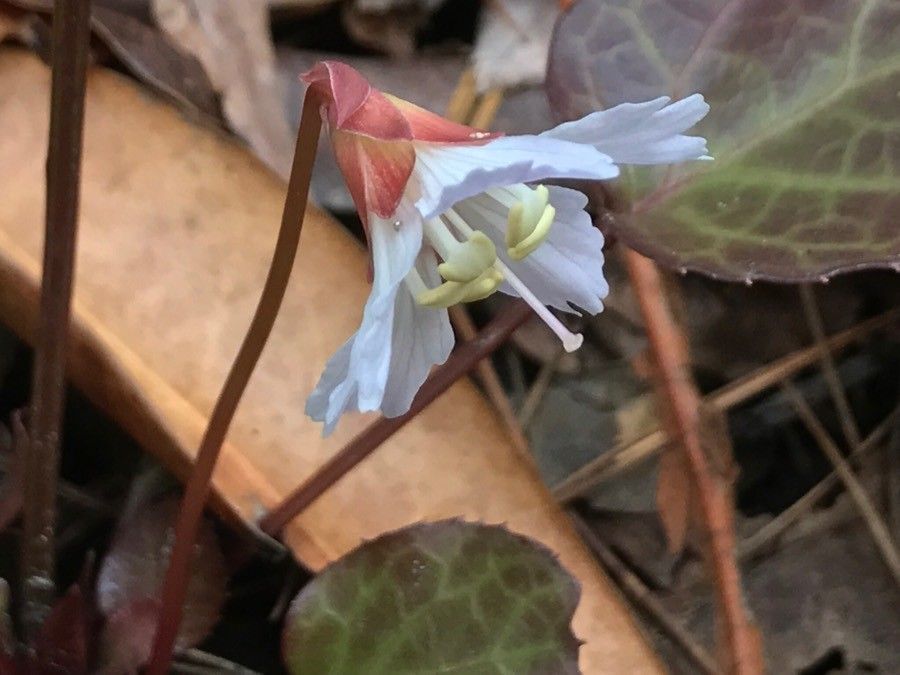
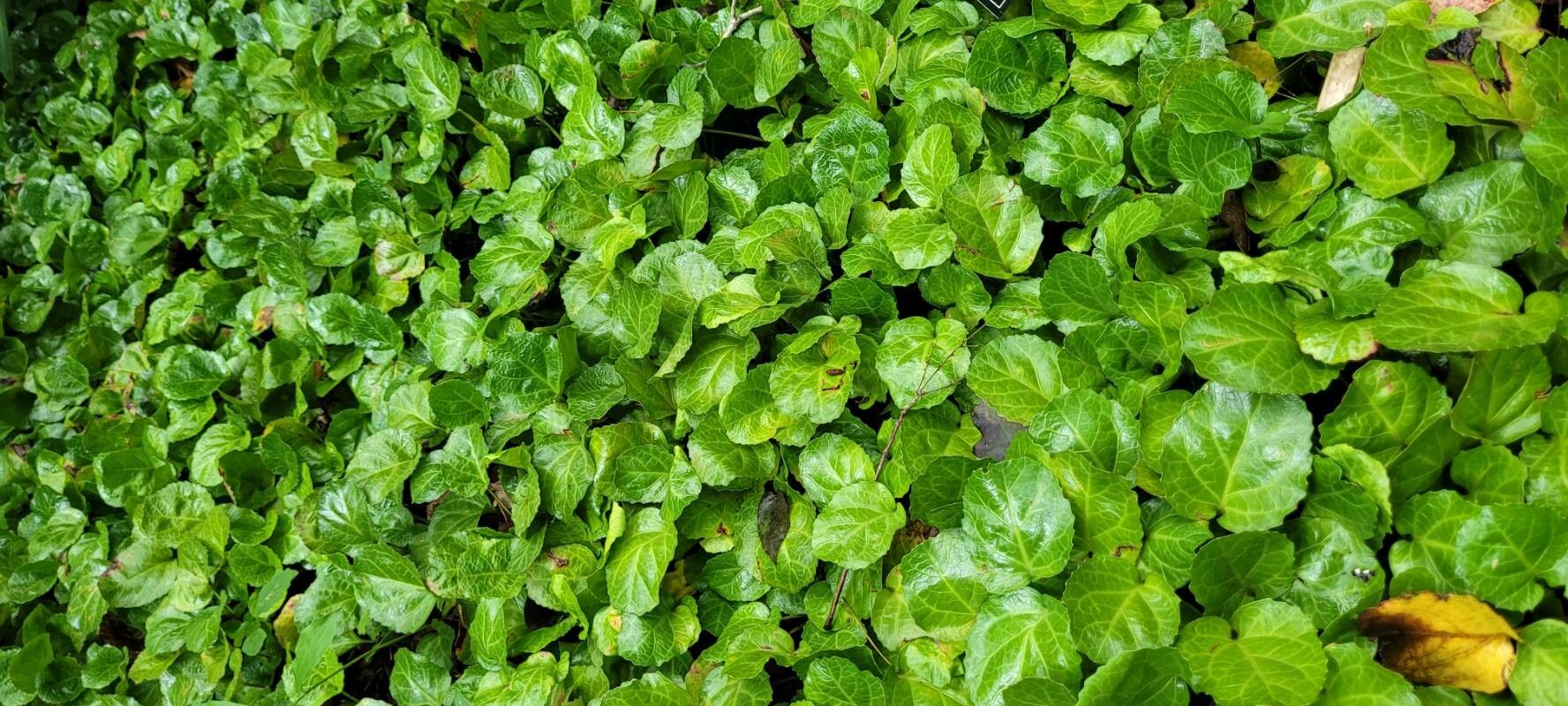
Shortia galacifolia, commonly known as Oconee Bells or Appalachian Shortia, is a rare and captivating plant species native to the southeastern United States. It belongs to the family Diapensiaceae and typically thrives in moist, shaded environments such as rocky slopes, ravines, and stream banks within the Appalachian Mountains.
The plant has a modest size and features evergreen leaves that are glossy green on the upper side and pale green underneath. The leaves are arranged in a rosette pattern at the base of each stem. In early spring, Shortia galacifolia produces delicate, bell-shaped flowers that are either white or pinkish and grow on short stalks above its foliage.
Oconee Bells holds notable cultural significance, having been named after botanist Charles Wilkins Short, who discovered it during an expedition with John Fraser in 1808. Additionally, it was designated as North Carolina's state flower by Governor Beverly Perdue in 2004.
Due to its rarity and the loss of its habitat caused by human activities such as logging, mining, and road construction, Shortia galacifolia has been listed as an endangered species since 1982 by both the federal government (U.S. Fish & Wildlife Service) and the state government (North Carolina). Conservation efforts have been implemented to protect this remarkable species from extinction, including habitat restoration programs and public awareness campaigns that highlight its importance for biodiversity conservation.
In conclusion, Shortia galacifolia is a significant native American wildflower with cultural and ecological importance. Its survival hinges on conservation efforts aimed at safeguarding its natural habitats from human activities and the impacts of climate change, such as droughts, which have made its habitats more vulnerable than ever before.
Oconee bells has strong resistance to disease and is generally unlikely to suffer from illnesses. However, it can be vulnerable to pests and diseases present in its surroundings. These outbreaks are typically mild. In terms of care, the plant needs moderate maintenance. It should be pruned regularly to keep a neat appearance and support healthy growth. Fertilizing can also encourage more flowering. Oconee bells is suitable for anyone with an outdoor area, such as a garden or patio, and does not require extensive care experience. It may demand more attention if grown indoors.
How to keep Shortia Galacifolia.
Light
Oconee bells favors conditions with moderate sunlight, though it can tolerate lower light levels. This need for a specific light level arises from its ancestral habit, where plentiful but not intense light encourages healthy growth. Excessive sun can damage the plant, while insufficient light may impede its development.
Water
Oconee bells thrive in moist, shaded woodland environments and need weekly watering to maintain the dampness typical of forest floors. As an understory plant, it grows best outdoors and benefits from a layer of organic mulch, which helps retain moisture and replicates its natural habitat.
Temperature
Oconee bells is native to habitats with temperatures ranging from 41 to 95 °F (5 to 35 °C) and prefers those warm conditions. Seasonal temperature adjustment is generally not necessary for this plant.
Fertilizer
The ideal time to fertilize Oconee bells is in early spring, as it comes out of dormancy and begins active growth. Fertilizing supplies essential nutrients for healthy growth. Although Oconee bells requires relatively little fertilizer, yearly fertilization can improve its survival and encourage better, longer-lasting flowers.
Pruning
The Oconee bell is an attractive evergreen perennial known for its bell-shaped white flowers and glossy leaves. To keep the plant healthy, it's best to prune it from early to late spring. Remove any dead or diseased branches to improve health and airflow. Regular pruning not only encourages flowering but also reduces pest problems, ensuring a vigorous and appealing plant.
Botanical profile.
- Plant Type
- Herb, Shrub
- Life Cycle
- Perennial
- Genus
- Shortia
- Family
- Diapensiaceae
- Hardiness Zone
- 4-9
- Mature Height
- 10 cm to 20 cm
- Mature Spread
- 15 cm to 20 cm
- Leaf Color
- Green, Blue
- Leaf Type
- Evergreen
- Flower Color
- White, Pink
- Flower Size
- 2.54 cm to 5.08 cm
- Bloom Time
- Early spring, Mid spring
- Planting Time
- Spring
- Harvest Time
- Late spring, Early summer
Other names.
Reader questions.
What are the sunlight requirements for Oconee bells?
Oconee bells thrive in environments that offer moderate sun exposure, tolerating around 3-6 hours of sunlight per day, categorized as partial sun. It can also survive under full shade conditions, receiving less than 3 hours of direct sunlight. It's important to monitor the movement of sunlight through your garden to ensure the plants receive the optimal balance of light and shade for their growth. Excessive sun exposure can harm the plant, while too little sunlight may impede its growth. Introducing artificial lighting can be beneficial in indoor settings or during seasons when natural sunlight is insufficient, with specifics on the type and amount of artificial light necessary for the plant.
What are the ideal temperature conditions for Oconee bells?
Oconee bells thrive in environments where temperatures range between 41 to 95 °F (5 to 35 °C), favoring such warmth conditions. It has strong cold resistance, making seasonal temperature adjustments typically unnecessary. Even in winter, special frost protection measures are usually not needed, thanks to its cold resilience. However, if winter temperatures are expected to drop below -30°C, it's important to provide cold protection by covering the plant with materials such as soil or straw. Additionally, watering the plant abundantly before the first freeze in autumn helps ensure the soil remains moist and enters a frozen state, which aids in preventing drought and water scarcity during winter and early spring.
What are the signs of light deficiency in Oconee bells and how can it affect the plant?
Oconee bells show various symptoms under insufficient light, including the emergence of smaller new leaves, leggy or sparse growth, premature leaf dropping, halted growth, lighter-colored or yellowing leaves (chlorosis), damage from excessive sun like sunscald, leaf curling, wilting, and leaf scorching. These symptoms indicate the plant's struggle with inadequate light exposure, which can lead to a lack of chlorophyll, necessary for photosynthesis, and overall reduced plant health. Properly addressing the light conditions can prevent these symptoms and promote healthy growth.
What should be done if Oconee bells experience low temperatures below -25°C?
Oconee bells is cold-tolerant, thriving best above 5°C and should ideally be kept above -25°C during winter. If the temperature falls below -30°C, the plant may not show any noticeable changes during winter, but there could be a decrease in sprouting or even no sprouting at all during spring. In such cases, it is recommended to remove any parts that have failed to sprout in the spring.
How can I address and improve the light conditions for indoor and outdoor Oconee bells plants?
To optimize growth for indoor Oconee bells plants, gradually move them to locations with more sunlight each week until they achieve 3-6 hours of sunlight daily. Use artificial lighting if the plant is large or immovable, keeping lights on for at least 8 hours a day. For outdoor plants, similarly adjust their position to increase sunlight exposure gradually each week to prevent sunburn. If the plant is not receiving sufficient sunlight due to obstructions, consider pruning or transplanting to a better-lit location. While parts of the plant that suffered from inadequate light may not recover, new growth will be healthy with improved light conditions.
How to care for Oconee bells if the temperature exceeds optimal limits in summer?
During the summer, Oconee bells should ideally be kept below 35°C. If temperatures exceed 38°C, the leaves may become lighter in color, curl, and become susceptible to sunburn; in severe cases, the plant may wilt and dry out. The best care in these conditions includes trimming away sunburned and dried-up parts of the plant. Moving the plant to a location that offers shade during the midday and afternoon sun, or using a shade cloth, can help. Additionally, watering the plant in the morning and evening to maintain soil moisture is crucial.