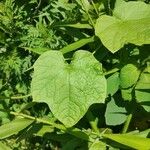
Sicyos angulatus
Burcucumber · Spiny cucumber · One-Seed Burr-Cucumber · Oneseed bur cucumber · Nimble-kate
Description
Source: leafsnapSicyos angulatus, commonly known as the one-seeded bur cucumber, is a fast-growing annual vine that belongs to the Cucurbitaceae family. Native to North America, this plant thrives in various habitats such as fields, roadsides, and disturbed areas. The vine features a slender stem that can extend up to 3 meters in length, equipped with tendrils that help it climb. The leaves are alternately arranged and palmately lobed with toothed edges. Small flowers with greenish-white petals bloom from July to September. The fruit of Sicyos angulatus is a bur-like capsule covered in spines, each containing a single seed. These burs easily attach themselves to clothing or animal fur, aiding in seed dispersal. Traditionally, Native Americans have utilized Sicyos angulatus for medicinal purposes, including treatments for skin irritations and digestive issues. Overall, Sicyos angulatus is a fascinating plant with unique features that distinguish it in its natural habitat.
🌳 Although typically regarded as a weed, bur cucumber holds unexploited potential as a biomass source for bioenergy because it grows rapidly and contains a high level of cellulose. Additionally, it acts as an alternative host plant in integrated pest management by offering habitat to beneficial predatory insects that can help control agricultural pests, illustrating the plant's dual role in ecosystems and agricultural practices.
Care Guide
💧 Water Every 7 days
Bur cucumber, which originates from moist environments, thrives with consistent moisture. It prefers to be watered weekly and benefits from rainwater during its growing season. As an annual vine typically grown outdoors, this consistent moisture helps promote its vigorous growth and development.
How should I water my Bur cucumber plant?
To properly water the Bur cucumber, it is advised to use filtered water at room temperature. Tap water may have harmful particles, so filtered water is preferred. The Bur cucumber originates from warm environments, so using cold water can be disruptive. It is recommended to avoid overhead watering to prevent issues with the foliage. Instead, directly apply filtered room temperature water to the soil until it is fully soaked. This method benefits the plant by moistening the roots and aiding in their spread through the soil, helping them gather essential nutrients.
What do I do if I give my Bur cucumber too much water or too little water?
Both overwatering and underwatering can harm the health of your Bur cucumber, but overwatering is more common. When the plant gets too much water, its stems and leaves may wilt and turn yellow. Overwatering for a long time can cause diseases like root rot, mold, and mildew, which can be fatal. Bur cucumbers are less likely to be underwatered as they can tolerate drought fairly well. However, underwatering is still possible, and in such cases, the leaves will become brittle and brown. It's important to spot signs of overwatering early when taking care of your Bur cucumber. Some diseases caused by overwatering, like root rot, can't be fixed if you wait too long. If you notice early signs, reduce your watering right away and check the soil. If the soil drains poorly, replace it with a loose, well-draining potting mix. If you find signs of underwatering, simply water more regularly until the signs go away.
How often do I need to water my Bur cucumber?
To determine if your potted Bur cucumber needs water, check the soil by sticking your finger in it. If the top two to three inches feel dry, it's time to water. The same method can be used for Bur cucumbers grown outside in the ground. If the top few inches of soil are dry, it's time to water. Typically, watering once a week during spring and early fall is sufficient, but in hot weather, you may need to water twice a week or more. However, it's worth noting that mature and well-established Bur cucumbers can endure dry periods well.
How much water does my Bur cucumber require?
When watering your Bur cucumber, don't hold back on the amount of water you give. Wait until the first two to three inches of soil are dry, then give it a good, thorough watering. Make sure the soil is soaked completely, and add enough water so that it drains out of the bottom of the pot. If you don't see excess water draining, you've likely not given enough water. However, be careful not to let water accumulate in the soil, as this can harm the plant. If you notice water not draining properly, it may be due to poorly draining soils, which can be harmful to the plant's health. Finally, if the plant is outside, one inch of rain per week should be enough.
How should I give my Bur cucumber water as it grows?
The water needs of the Bur cucumber can vary depending on its growth stages. In the first few years of its life or when you transplant it to a new location, you should give it more water than usual. During these stages, the Bur cucumber focuses on developing new roots to support future growth, so they require extra moisture. As the plant matures, it will require less water. Another stage that may require increased watering is during the bloom period when the flowers need more moisture for development.
☀️ Light Full sun
To grow healthily, the bur cucumber needs as much sun as possible, flourishing beneath an open sky. In its native habitat the plant also does well in places with some shade. However, extended periods of reduced sunlight can harm its development.
What are the sunlight requirements for Bur Cucumber?
Bur Cucumber thrives best under full sun conditions, requiring more than 6 hours of sunlight daily. It can also grow in partial sun, receiving about 3-6 hours of sunlight. It's essential to observe the movement of sunlight through your garden to identify the optimal spots that offer a balance of light and shade, ensuring the plants' well-being.
How does sunlight affect the growth of Bur Cucumber?
For healthy growth, Bur Cucumber benefits from maximum exposure to sunlight, thriving particularly well in open areas under full sun. While it can adapt to some shade, insufficient sunlight might negatively impact its growth. Artificial lighting can be a viable solution for indoor plants, especially in less sunny spaces or during winter, to promote healthier growth. LEDs are recommended for their ability to be customized to specific plant needs, with recommended wattages varying based on the plant's sunlight needs.
What are common symptoms of inadequate sunlight for Bur Cucumber?
When Bur Cucumber is exposed to inadequate light, it may exhibit symptoms such as smaller new leaves, leggy or sparse growth, faster leaf drop, slower or halted growth, and lighter-colored new leaves. Conditions such as chlorosis, sunscald, leaf curling, wilting, and leaf scorching can also occur due to inappropriate light exposure, impacting the plant's health and growth negatively.
How can I address light deficiency issues in Bur Cucumber?
Addressing light deficiency in Bur Cucumber involves gradually moving the plants to locations with more sunlight, ensuring at least 6 hours of direct exposure daily. For indoor plants, use south-facing windows or artificial lighting, such as desk lamps or grow lights, for at least 8 hours daily. Outdoors, avoid sudden changes to prevent sunburn, and consider transplanting smaller plants to sunnier locations. Pruning obstructing vegetation can also improve light access. Note that parts of the plant affected by previous light deficiencies may not recover, but new growth will be healthy with improved light conditions.
🌡️ Temperature 15–37.8°C
Bur cucumber is native to regions with temperate climates and performs best at temperatures between 68 and 100 °F (20 and 38 °C). In colder seasons, supplemental heating may be needed to maintain optimal growing conditions.
What is the optimal temperature range for growing Bur cucumber?
Bur cucumber, or Sicyos angulatus, is native to temperate climates and thrives best in a temperature range between 68 to 100 °F (20 to 38 °C). This makes it suitable for growth in environments that fall within this optimal temperature range. Therefore, maintaining these conditions is crucial for the health and growth of the plant.
How should I protect Bur cucumber from cold weather?
Bur cucumber has strong cold resistance, making it relatively resilient in winter without special frost protection in milder climates. However, in regions where winter temperatures are expected to drop below -15°C, it is important to take measures to protect the plant. Before the first freeze in autumn, water the plant abundantly to ensure the soil remains moist. Additionally, wrapping the trunk and branches with materials like non-woven fabric or cloth can provide extra protection against cold, helping to prevent the plant from becoming dry and brittle during the winter and early spring.
What are the symptoms of low temperature stress in Bur cucumber and how can it be managed?
Bur cucumber is noted for its cold tolerance and prefers temperatures above 20°C. Yet, during winter, it's important to keep it above 0°C to avoid damage. If temperatures fall below -15°C, the plant may not show immediate distress, but come spring, its branches might become brittle and dry, with no new shoots emerging. To manage this situation, prune away any dead branches that haven't produced new leaves in spring. This proactive measure helps in rejuvenating the plant and encouraging new growth.
What are the symptoms of high temperature stress in Bur cucumber and how can it be managed?
In summer, it's critical to keep the Bur cucumber below 38°C, as exceeding 43°C can lead to visible signs of stress. These include leaves becoming lighter in color, tips becoming dry and withered, and an increased susceptibility to sunburn. To manage high temperature stress, trim away the sunburned and dried-up parts of the plant. Additionally, moving the plant to provide shade during the midday and afternoon sun or using a shade cloth can be beneficial. Ensuring the plant is watered in the morning and evening will also help in keeping the soil moist, aiding in its recovery and wellbeing.
💨 Humidity
🪴 Soil 6-7
🌱 Fertilizer
Bur cucumber does well with regular, dilute applications of fertilizer to encourage healthy leaf development. Apply fertilizer to Bur cucumber roughly once a month during the summer. Nitrogen is vital for foliage, and providing nitrogen-rich sources helps Bur cucumber flourish.
🪴 Pot & Repot Every 12 months
✂️ Pruning
🌿 Propagating
🐛 Diseases & pets
☠️ Toxicity
Characteristics
- Plant Type
- Vine, Herb
- Life Cycle
- Annual
- Genus
- Sicyos
- Family
- Cucurbitaceae
- Hardiness Zone
- 7-11
- Mature Height
- 3.66 m to 10.67 m
- Mature Spread
- 91 cm
- Leaf Color
- Green
- Leaf Type
- Deciduous
- Flower Color
- White
- Flower Size
- 0.76 cm
- Bloom Time
- Mid summer
- Planting Time
- Spring
- Harvest Time
- Mid summer, Late summer
- Native Area
- Mexico