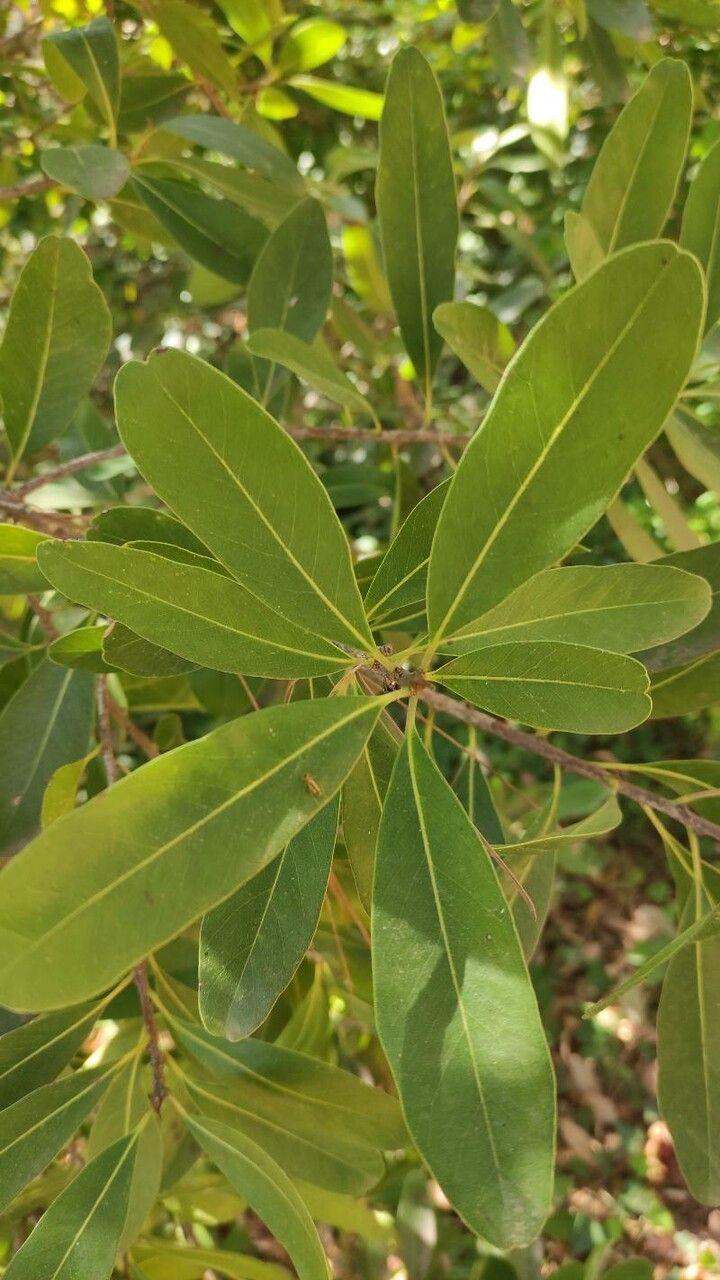
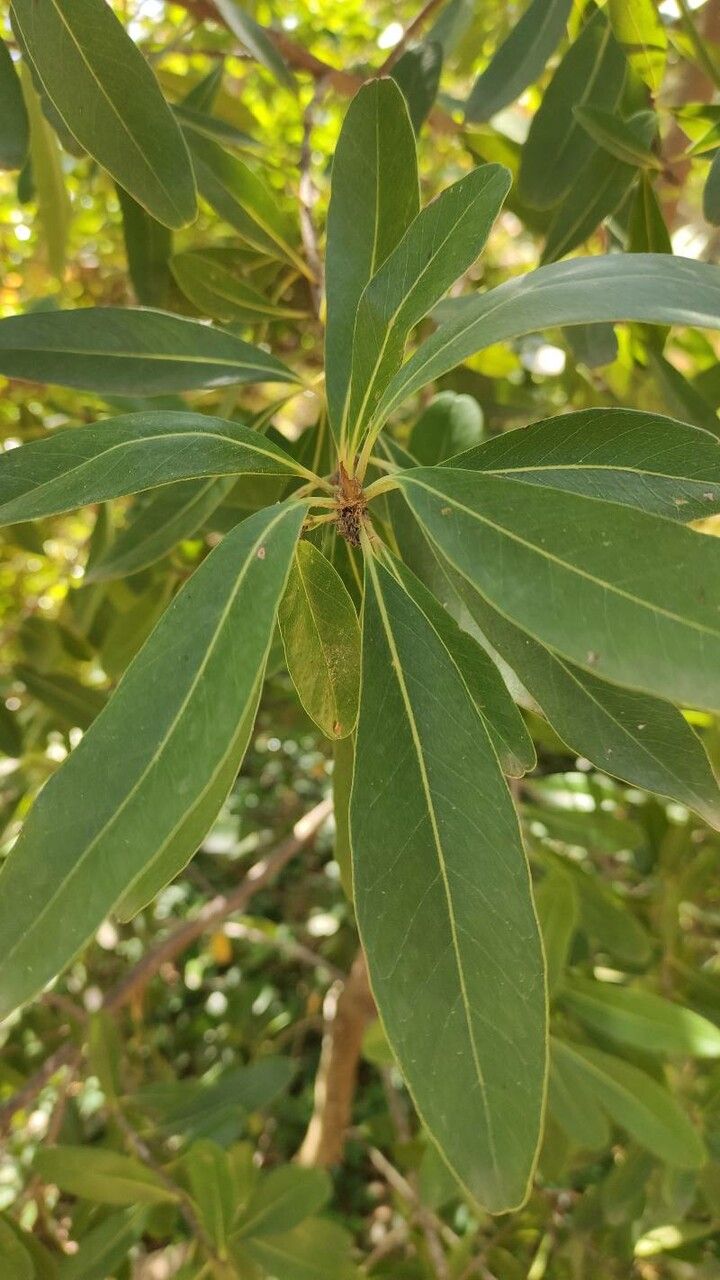
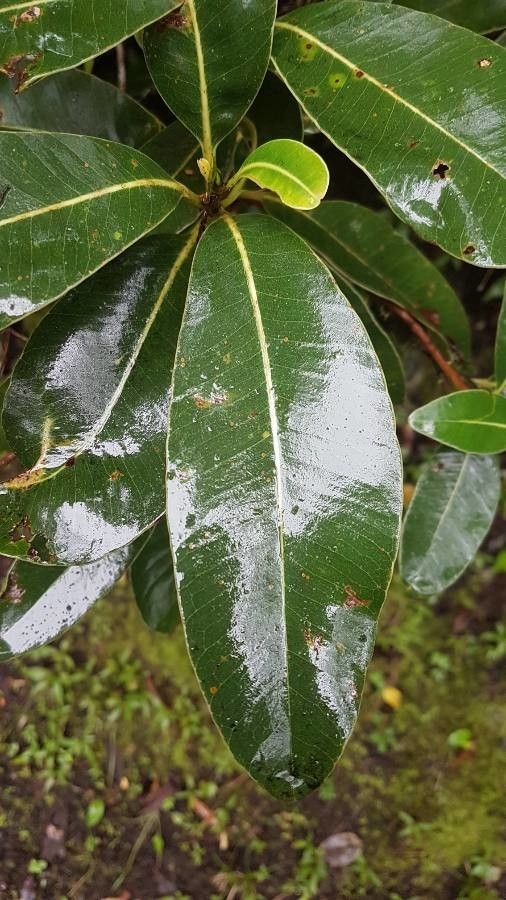
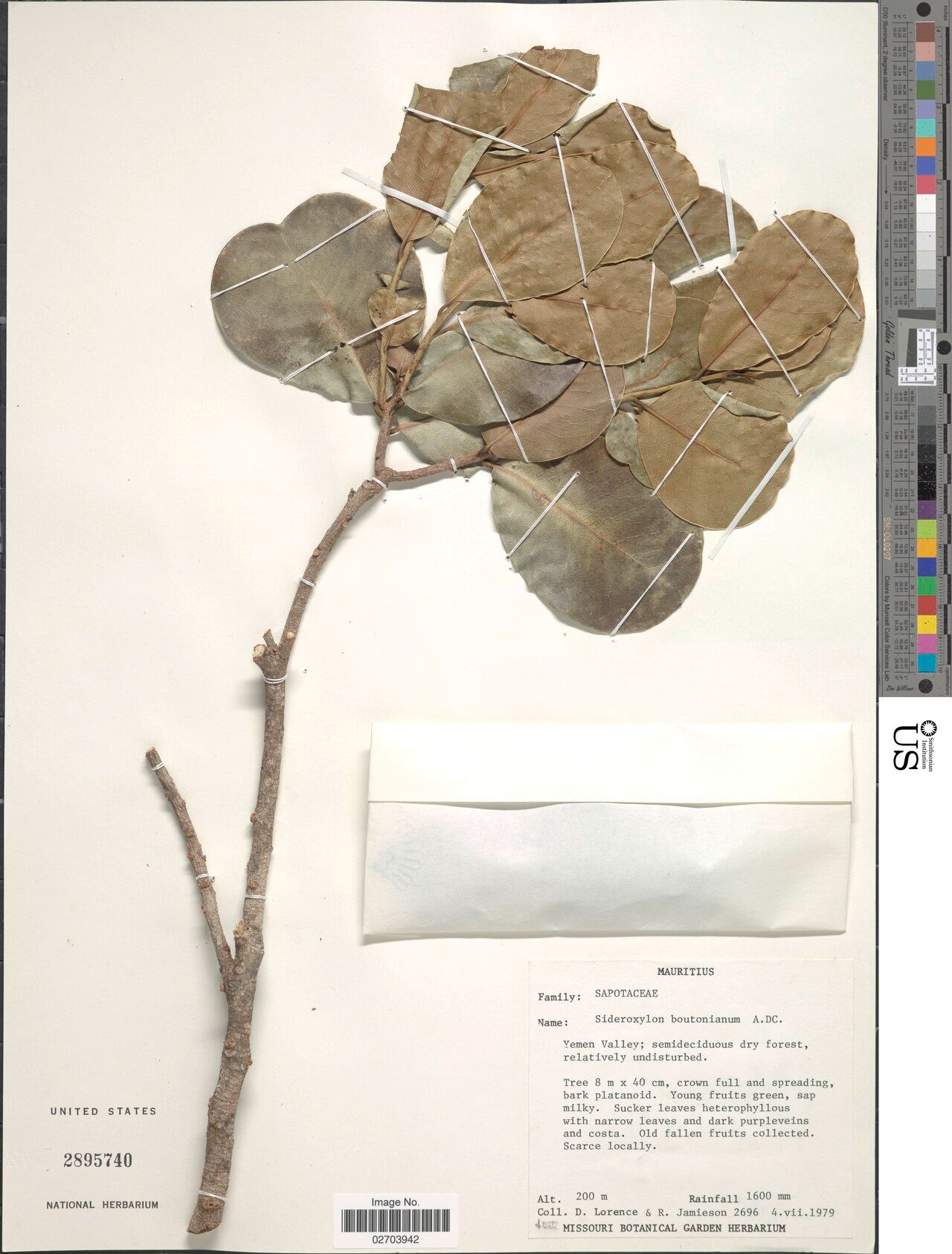
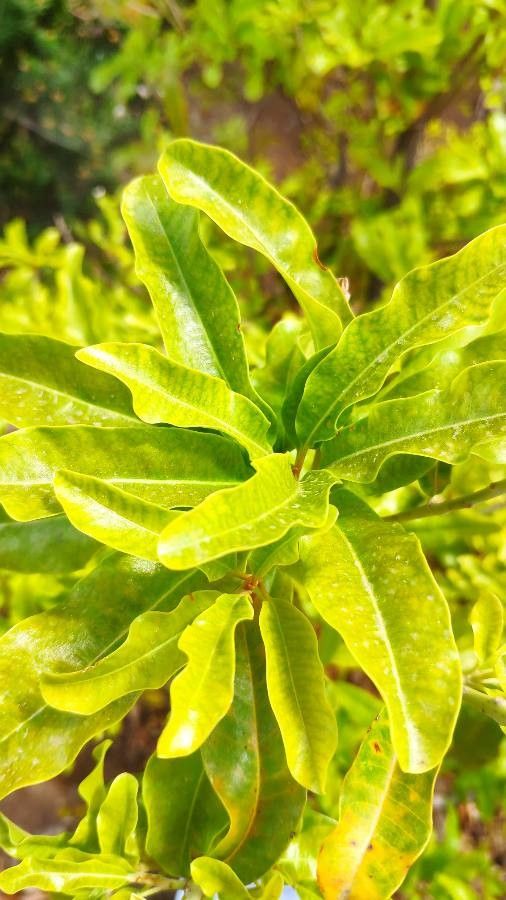
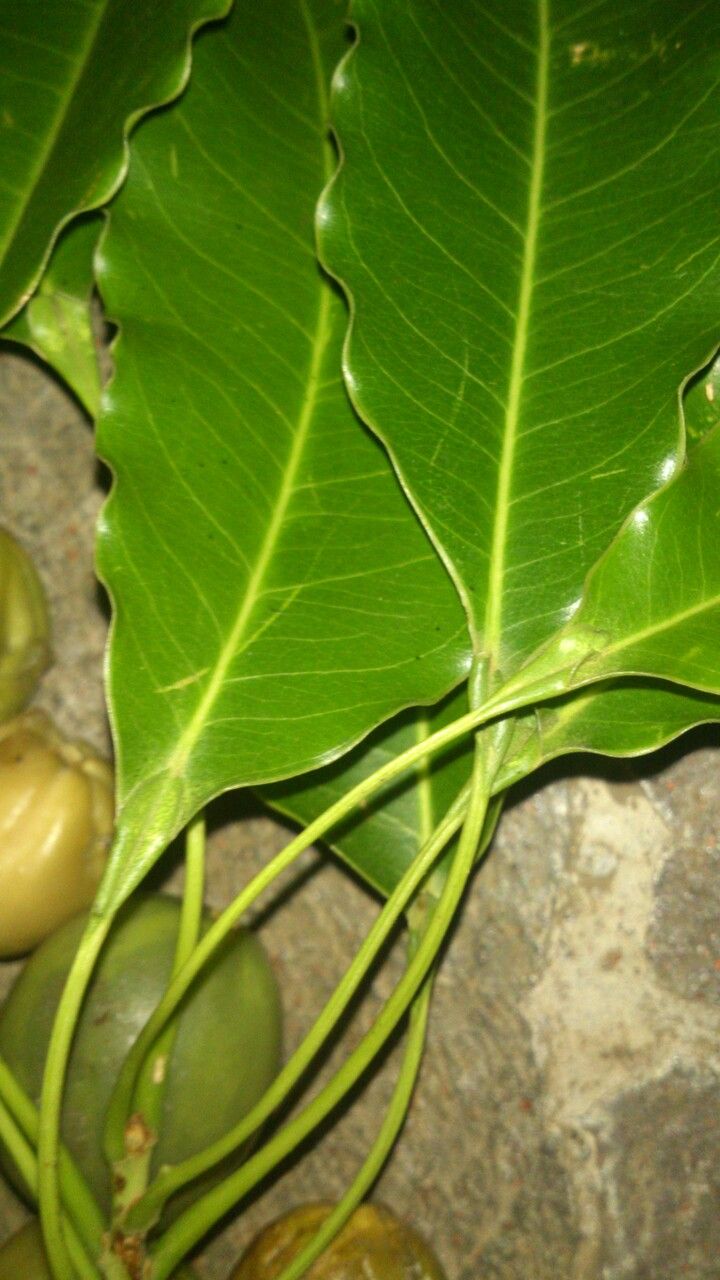
Sideroxylon inerme, commonly known as the white bully or wild olive, is a small to medium-sized evergreen tree belonging to the family Sapotaceae. It is native to coastal areas in eastern and northern Australia, as well as some Pacific islands. The tree can grow up to 15 meters tall and features a dense crown of glossy, oval-shaped, leathery green leaves.
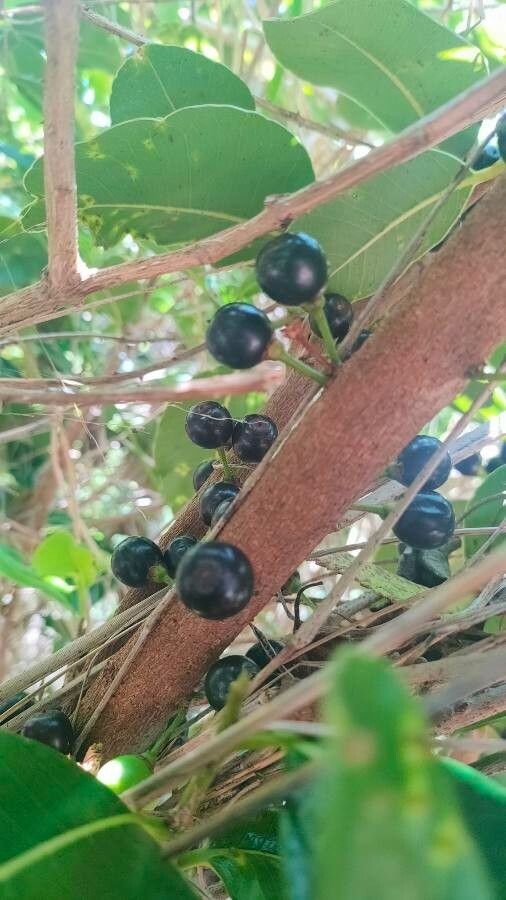
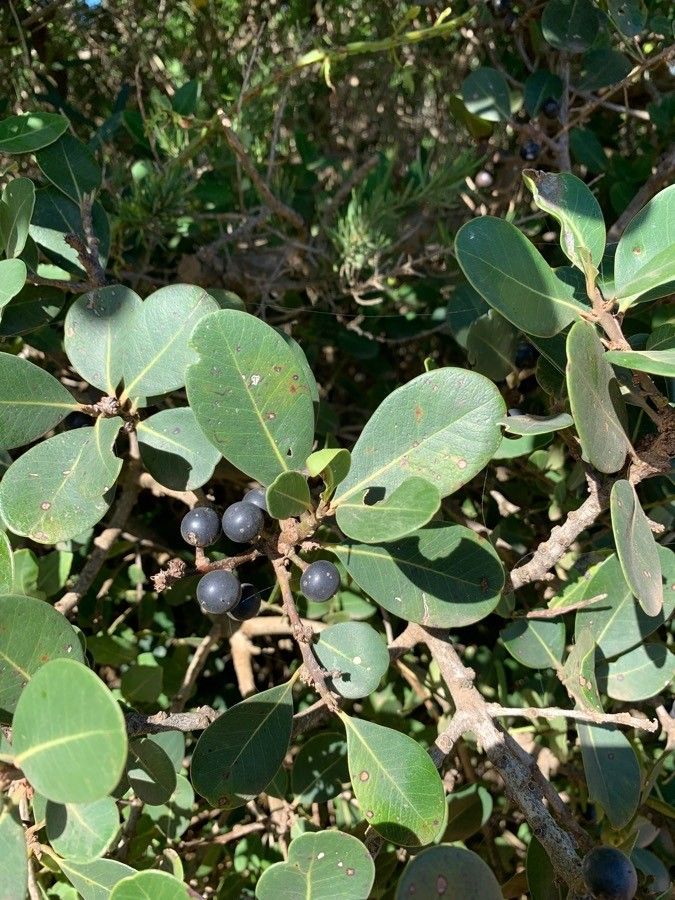
Initially, the bark of Sideroxylon inerme is smooth and greyish-white, but it becomes rough as the tree ages. The tree produces small white flowers, which are followed by fleshy green fruits that ripen into a blackish-purple color. These fruits contain one or two seeds, which are dispersed by birds.
Sideroxylon inerme has various uses, including timber, firewood, charcoal production, and medicinal purposes (the bark contains compounds with anti-inflammatory properties). Additionally, it is valued for ornamental purposes due to its attractive foliage.
The plant prefers well-drained soils but can withstand some salt spray from coastal areas. It thrives best in full sun but can also tolerate partial shade. Sideroxylon inerme is relatively easy to propagate from seeds or cuttings but requires regular pruning when young for optimal growth.
Overall, Sideroxylon inerme is an attractive evergreen tree with multiple uses, making it an important plant species both ecologically and economically within its native range.
White milkwood has strong disease resistance and is usually not prone to diseases. Regarding care, this plant is fairly low-maintenance. When planted outside, it needs minimal watering, and larger specimens generally do not require pruning. However, smaller plants should be pruned after they have finished blooming. White milkwood is suitable for anyone with an outdoor area, such as a garden or deck, and does not require extensive care experience.
How to keep Sideroxylon Inerme.
Light
White milkwood is found in open habitats, for example sunlit meadows and forest margins, which offer abundant light. It performs best in Full Sun but can also tolerate Partial Sun, adjusting well to different light conditions.
Water
White milkwood flourishes in both coastal and forest habitats, where it prefers a mix of sun and shade paired with moderate humidity. To maintain consistent moisture, it is best to water it weekly. As an evergreen tree, its watering requirements remain stable year-round, without the need for seasonal adjustments.
Temperature
White milkwood naturally thrives at temperatures between 59 and 100 °F (15 to 38 ℃). Preferably, slight seasonal temperature adjustments can improve the plant's growth.
Fertilizer
Fertilize your White milkwood in early spring to encourage healthy growth. Regular feeding boosts overall health, producing vigorous growth, increased tolerance of harsh conditions, and enhanced resistance to pests and diseases. Keep a consistent fertilization routine for your White milkwood to maintain foliage that is richly colored and lush in appearance.
Pruning
The white milkwood is known for its dense, evergreen foliage and striking white flowers. To maintain its health and appearance, it is best to prune the tree from early to late winter. During this time, remove dead or diseased branches and thin out crowded areas to improve air circulation. This process helps prevent fungal diseases and encourages healthier, more attractive growth, making the tree more resilient against wind.
Botanical profile.
- Plant Type
- Tree
- Life Cycle
- Perennial
- Genus
- Sideroxylon
- Family
- Sapotaceae
- Hardiness Zone
- 8-11
- Mature Height
- 14.94 m
- Mature Spread
- 20.12 m
- Leaf Color
- Green
- Leaf Type
- Evergreen
- Flower Color
- White
- Flower Size
- 0.51 cm
- Bloom Time
- Summer
- Planting Time
- Autumn, Winter
- Harvest Time
- Late summer, Early fall, Mid fall
Other names.
Reader questions.
What are the sunlight requirements for White milkwood (Sideroxylon inerme)?
White milkwood (Sideroxylon inerme) requires a specific amount of sunlight to thrive. For full sun exposure, it needs more than 6 hours of sunlight daily. In conditions of partial sun, about 3-6 hours of sunlight are sufficient. It's important to observe the movement of sunlight through your garden to identify spots that offer an ideal balance of light and shade. This ensures the plants remain happy and healthy.
What is the botanical name of White milkwood?
The botanical name of White milkwood is Sideroxylon inerme.
What temperature range is suitable for the growth of White milkwood?
White milkwood thrives in temperature ranges from 59 to 100°F (15 to 38°C). Adjusting temperatures slightly with the seasons can further enhance the plant's growth.