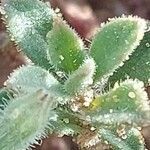
Silene succulenta
Catchfly
Care Guide
💧 Water
☀️ Light Full sun
Originating from arid regions, Catchfly does best in full sun, its native habitat marked by intense sunlight and little shade. It will also tolerate partial sun, giving it some flexibility in how it grows.
🌡️ Temperature 15–35°C
Although Catchfly can tolerate some heat, it mainly does best and grows during cooler seasons and goes dormant in summer. In very hot summer conditions, give it shade to prevent scorching from intense sunlight. Watering should be cut back or stopped during the hottest part of the year to avoid root rot. Winter and spring are when Catchfly shows vigorous growth. Provided the temperature does not fall too low, it will continue to grow steadily.
💨 Humidity
🪴 Soil 0-0
🌱 Fertilizer
For Catchfly, light applications of fertilizer 1-2 times a year during the growing season are enough. Avoid fertilizing in winter and in summer when the plant is dormant. Use less fertilizer on repotted plants and wait a couple of months after repotting before applying fertilizer. Fertilizing supports healthy growth and encourages blooms.
🪴 Pot & Repot
✂️ Pruning
Pruning catchfly helps improve its growth and shape by focusing on removing dead parts and thinning out overcrowded areas. The best time to prune is from early to late spring. This technique promotes new growth, enhances air circulation, and encourages flowering. Additionally, regularly deadheading the plant after it blooms can extend the blooming season.
🌿 Propagating
🐛 Diseases & pets
☠️ Toxicity
Characteristics
- Plant Type
- Succulent, Herb
- Life Cycle
- Annual
- Genus
- Silene
- Family
- Caryophyllaceae
- Hardiness Zone
- 7-10
- Mature Height
- 10 cm to 20 cm
- Mature Spread
- 20 cm to 30 cm
- Leaf Color
- Light Green, Gray
- Leaf Type
- Deciduous
- Flower Color
- White
- Flower Size
- 1.02 cm to 2.03 cm
- Bloom Time
- Mid spring, Late spring, Early summer
- Planting Time
- Spring
- Harvest Time
- Summer