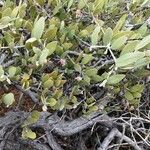
Simmondsia chinensis
Goatnut · Jojoba · Pignut
Description
Source: leafsnapSimmondsia chinensis, commonly known as jojoba, is a shrub-like plant native to the arid regions of the southwestern United States and northern Mexico. It belongs to the family Simmondsiaceae and is a perennial evergreen that can reach up to 3 meters in height. One of the unique features of the jojoba plant is its production of an oil that closely resembles human sebum. Native Americans have utilized this oil for centuries for its medicinal properties and as a natural skin moisturizer. Today, jojoba oil is prevalent in cosmetics, hair care products, and pharmaceuticals. The leaves of the jojoba plant are small and oval-shaped, covered with a waxy coating that helps reduce water loss through transpiration. The flowers are small, with greenish-yellow petals arranged in clusters at the tips of branches. Jojoba plants are highly adaptable to various soil types but prefer well-drained sandy soils with low fertility levels. They can tolerate extreme temperatures ranging from -10°C to 50°C and require full sunlight exposure for optimal growth. Due to their high yield potential, jojoba plants have been extensively cultivated for oil production. The seeds contain up to 50% liquid wax, which can be extracted through cold-pressing or solvent extraction methods. This yield potential surpasses that of other vegetable oils, such as soybean or sunflower oils. Additionally, jojoba plants play a role in land reclamation projects because of their ability to stabilize soil erosion in arid regions. They also provide habitat for wildlife, including birds and insects. Overall, Simmondsia chinensis (jojoba) is an important economic crop with numerous applications, ranging from cosmetics production to land reclamation projects aimed at restoring degraded ecosystems worldwide.
Care Guide
💧 Water Every 7 days
The goat nut plant, native to arid regions, is highly drought-tolerant and thrives with minimal moisture. To mimic its natural wet and dry cycles, it should be watered deeply every two weeks. When grown in outdoor containers, the soil must provide proper drainage to prevent root rot.
☀️ Light Full sun
Goat nut does best when it gets sunlight all day. It can handle some shade, but that may compromise its peak growth. Coming from a region with abundant sun, too little light can impede proper growth and overall health. Excessive light, however, generally does not harm the plant.
What are the sunlight requirements for Goat Nut (Simmondsia chinensis)?
Goat Nut (Simmondsia chinensis) thrives best when it's consistently exposed to full sunlight throughout the day, requiring above 6 hours of sunlight to ensure optimal growth. It can tolerate partial sun, about 3-6 hours of sunlight, but this might impact its growth negatively. It's essential to observe how sunlight moves through your garden to choose spots that provide a balance of light and shade, ensuring the plant's happiness. In conditions of insufficient light, such as indoors during winter or in less sunny spaces, artificial lighting can be a vital solution. Indoor plants require adequate lighting to promote faster, healthier growth, with LED lights being a popular choice due to their customizability. The required intensity of artificial light varies based on the plant's natural sunlight needs, with full sun plants needing 30-50W/sq ft, partial sun plants 20-30W/sq ft, and full shade plants 10-20W/sq ft. Placement and duration of artificial lighting are also crucial for mimicking natural sunlight conditions.
What are common symptoms of insufficient light in Goat Nut plants, and how can they be addressed?
Common symptoms of insufficient light in Goat Nut plants include smaller new leaves, leggy or sparse growth, faster leaf drop, slower or no new growth, lighter-colored new leaves, chlorosis, sunscald, leaf curling, wilting, and leaf scorching. These issues signify that the plant is not receiving enough sunlight, affecting its health and growth. To address light deficiency, gradually move the plant to a sunnier location, ensuring it receives at least 6 hours of direct sunlight daily. Utilize a south-facing window or consider artificial lighting options if the plant is large or not easily movable. For outdoor plants, avoid sudden changes in light intensity to prevent sunburn. If sunlight is obstructed, consider pruning or transplanting to a location with better light access. It's essential to remember that parts of the plant affected by insufficient sunlight may not recover, but new growth should be healthy with adequate light exposure.
🌡️ Temperature 20–37.8°C
Goat nut is native to hot environments, thriving particularly well at temperatures between 68 and 100 °F (20 to 38 ℃). To ensure healthy growth, adjust goat nut's temperature settings as the seasons change.
What is the ideal temperature range for growing Goat Nut?
Goat nut, also known by its botanical name Simmondsia chinensis, flourishes in environments that have significant heat. It thrives exceptionally well in a temperature range of 68 to 100 °F (20 to 38 °C). To ensure healthy growth, it's important to adjust the temperature settings with the seasonal changes accordingly. Especially during winter, maintaining temperatures above 20°C is beneficial for the plant's growth, while any temperatures approaching 0°C or lower are detrimental.
How do I care for Goat Nut during the cold months?
During the colder months, particularly in autumn and winter, it is recommended to bring outdoor-grown Goat Nut indoors to protect it from the cold. Placing it near a bright window while keeping it at a certain distance from heaters can help. Goat Nut is extremely sensitive to cold temperatures, so ensuring the environment remains above 20°C is crucial. In instances where the plant has been affected by low temperatures, showing signs like lightening of the leaves after frost damage or symptoms like wilting, you should trim off the frost-damaged parts and immediately move the plant to a warm environment indoors. Choosing a spot near a south-facing window ensures ample sunlight without the risk of excessive dryness caused by heaters or air conditioning vents.
What should I do if the Goat Nut experiences high temperatures?
During summer, it's important to keep the Goat Nut below 38°C to prevent stress from high temperatures. When the temperature exceeds 43°C, the plant may show signs of stress such as a lightening of the leaves' color and increased susceptibility to sunburn. To care for a Goat Nut that's experienced high temperature stress, trim away any sunburned or dried-up parts of the plant. Then, move the plant to a location that provides shade during the peak midday and afternoon sun. It's also beneficial to water the plant in the morning and evening to keep the soil moist and help the plant stay hydrated.
💨 Humidity
🪴 Soil 6-8
🌱 Fertilizer
Fertilizing is essential for the care of Goat nut. Regular applications during the growing season maintain the energy needed for its showy leaves and support overall development. If fertilization is neglected, the leaves can become unhealthy, the plant’s ornamental value may decline, and growth can be stunted or weak and prone to breaking.
🪴 Pot & Repot Every 12 months
✂️ Pruning
The goat nut is a hardy evergreen shrub with leathery leaves, well-known for its ability to withstand drought. To manage its height and encourage dense growth, it is best to prune the shrub from early to late winter. When pruning, concentrate on removing dead branches and thinning the plant to improve airflow. Be careful not to over-prune, as minimal shaping is usually sufficient.
🌿 Propagating
🐛 Diseases & pets
☠️ Toxicity
Characteristics
- Plant Type
- Shrub
- Life Cycle
- Perennial
- Genus
- Simmondsia
- Family
- Simmondsiaceae
- Hardiness Zone
- 9-12
- Mature Height
- 1.83 m to 3.05 m
- Mature Spread
- 0.91 m to 1.83 m
- Leaf Color
- Green
- Leaf Type
- Evergreen
- Flower Color
- Green
- Flower Size
- 2.54 cm
- Bloom Time
- Early spring, Mid spring
- Planting Time
- Winter
- Harvest Time
- Mid summer, Late summer, Early fall
- Native Area
- Mexico