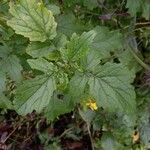
Sinapis arvensis
خردل وحشی · Field mustard · Charlock · Wild mustard · California-rape
Description
Source: leafsnapSinapis arvensis, commonly known as wild mustard or charlock, is an annual or biennial plant belonging to the Brassicaceae family. Native to Europe and Asia, it has now spread globally. This plant can grow up to 1 meter tall and features bright yellow flowers that bloom from May to September. Wild mustard thrives in disturbed areas such as fields, roadsides, and waste places. While it can adapt to a wide range of soil types, it prefers well-drained soils with a pH of 6-7. For centuries, wild mustard has been used for medicinal purposes, including treating respiratory problems and skin conditions. The seeds are also used in cooking as a spice or condiment. However, wild mustard can be considered an invasive weed due to its rapid spread and ability to compete with native plants for resources. It produces large amounts of seeds that can remain viable in the soil for several years. Overall, Sinapis arvensis is a versatile plant with both beneficial uses and potential negative impacts on ecosystems where it grows unchecked.
🌳 Apart from being used as a culinary spice, wild mustard fulfills a surprisingly wide range of roles. It is used to produce essential oils and can be employed in bioremediation, where it signals the presence of certain heavy metals in soil. Additionally, wild mustard provides nectar for pollinators and helps maintain ecological balance by hosting insects. Its proteins are useful in animal diets, further expanding its list of unexpected uses.
🎭 I feel hurt.
Care Guide
💧 Water Every 3 days
Wild mustard originates from temperate regions, where it prefers moderate soil moisture and benefits from weekly watering. It is resilient to changes in seasonal rainfall and can be typically grown outdoors. In its native habitat, wild mustard adapts well without the risk of waterlogging.
How should I water my Wild mustard plant?
To water Wild mustard, you have many options. You can use a garden hose, watering can, or any other watering tool you have. Wild mustard is not picky about how it gets water, as it can survive with rainwater, tap water, or even filtered water. However, it's generally recommended not to water this plant from above, as it can harm the leaves and flowers and potentially cause disease. Instead, a drip irrigation system is often best as it delivers water evenly and directly to the soil. If you're growing Wild mustard in a container, you can follow a similar approach but use a cup, watering can, or tap to water the soil.
What should I do if I give my Wild mustard plant too much water or too little water?
The solution for underwatering Wild mustard is simple: when you see that the plant is lacking moisture, start watering it regularly. On the other hand, overwatering can be a more serious problem, especially if you don't catch it early. Overwatered Wild mustard can get sick and ultimately die. To avoid this, choose a suitable location with good sunlight to dry out the soil, and ensure that the soil has proper drainage to prevent water from pooling and saturating it. If you have overwatered Wild mustard in a pot, you might need to switch it to a new pot. The previous container may not have had good drainage or enough drainage holes. When repotting the overwatered plant, use loose soil and a pot that drains well.
How often do I need to water my Wild mustard?
Wild mustard requires regular watering throughout the growing season. In the spring, it is recommended to water it once a week. As the season progresses and temperatures rise, watering will need to increase to about two to three times a week. However, exceeding this watering rate can harm the plant. It is important to keep the soil damp but not overly wet, regardless of the frequency of watering. When growing wild mustard in a pot, watering needs to be more frequent since the soil in pots can dry out faster compared to ground soil. In most cases, container-grown wild mustard should be watered a few times per week, while in-ground plants can be watered just once a week.
How much water does my Wild mustard plant need?
When determining how much water to give your Wild mustard, there are a few different approaches you can take. One option is to feel the soil to gauge its moisture level, and water until the top six inches are moist. Another method is to use a set measurement, such as about two gallons per week, adjusted based on temperature and soil dryness. However, be cautious of overwatering if the plant requires less. Container-grown Wild mustard requires a different approach, where you should water until all layers of soil are moist or until you see excess water draining from the pot's holes.
How can I know if I am giving my Wild mustard enough water?
Avoiding overwatering your Wild mustard can be challenging. While these plants have deep roots that need to be moistened weekly, they are highly prone to root rot and browning if overwatered. Underwatering is less of a concern as Wild mustard can survive without additional watering for a period of time. However, if you neglect to water it for too long, the plant will wilt and the leaves will become dry.
☀️ Light Full sun
Wild mustard does best in places that receive abundant light throughout the day, though it can also do well in spots where sunlight is reduced but still present. This leads to strong, healthy growth. However, very weak light can somewhat limit its development, while excessive sun exposure may be damaging.
What type of sunlight is required for wild mustard to grow effectively?
Wild mustard, or Sinapis arvensis, thrives best in areas that are well-lit throughout the day, greatly benefitting from full sun exposure of more than 6 hours of sunlight daily. However, it can also grow in partial sun, receiving about 3-6 hours of sunlight. While it can manage in less optimal light conditions, its growth is notably reduced under weak light, and excessive sun can also be detrimental. It is vital to observe the movement of sunlight in your garden to position your plants in spots that offer a harmonious balance of light and shade, ensuring the plants' overall well-being.
How can artificial lighting be used for indoor wild mustard plants?
Indoor wild mustard plants require sufficient lighting to grow optimally. In cases where natural sunlight is not enough, especially during winter or in less sunny locations, artificial lighting becomes crucial. LED lights are favored for indoor plant lighting as they provide specific wavelengths needed by the plants. For full sun plants, 30-50W per square foot is recommended; partial sun plants need 20-30W per square foot, and full shade plants require 10-20W per square foot. The light source should be situated 12-36 inches above the plant to simulate natural sunlight effectively, ensuring the plants receive 8-12 hours of light per day.
What are common symptoms of light deficiency in wild mustard?
When wild mustard does not receive adequate light, it may show several symptoms indicating light deficiency. These include smaller new leaves compared to mature ones, leggy or sparse growth making the plant appear stretched and weak, faster leaf drop as the plant tries to save resources for new leaf growth, slowed or halted new growth as the plant enters survival mode, and lighter-colored new leaves due to insufficient chlorophyll and nutrients. Chlorosis, which manifests as the yellowing of leaves because of chlorophyll breakdown, sunscald causing damage to leaves or stems, leaf curling as a defense against too much sunlight, wilting from excessive transpiration, and leaf scorching with brown or crispy leaf edges, are also critical symptoms to watch for.
What solutions exist for addressing insufficient sunlight for wild mustard?
To combat insufficient sunlight for wild mustard, indoors, gradually move the plants to sunnier locations, ensuring at least 6 hours of direct sunlight through a south-facing window or use artificial lighting for at least 8 hours daily. For outdoor plants, it's crucial to adapt them gradually to sunnier spots to prevent sunburn. Removing obstructions such as branches or transplanting to more sunlit areas might be necessary. Bear in mind that parts of the plant already affected by low light may not recover, but new growth will be healthy following these adjustments.
🌡️ Temperature 5–35°C
Wild mustard is native to temperate regions and prefers steady temperatures of 68 to 95 °F (20 to 35 ℃). The plant grows best within this range, so seasonal temperature adjustments may be needed to maintain these ideal conditions.
What are the ideal temperature conditions for growing wild mustard?
Wild mustard, also known by its botanical name Sinapis arvensis, thrives in temperate zones with stable temperatures ranging between 68 to 95°F (20 to 35°C). This temperature range is optimal for its growth, and maintaining these conditions may require seasonal adjustments. Wild mustard has a strong cold resistance, meaning special frost protection usually isn't necessary. However, in extremely cold conditions where winter temperatures are expected to fall below -25°C, it is important to take steps to protect the plant from the cold by covering it with soil or straw and watering it abundantly before the first freeze of autumn to ensure the soil remains moist, which helps prevent drought and water scarcity during winter and early spring.
How does wild mustard respond to low temperatures, and what should be done in spring for plants affected by cold?
Wild mustard can tolerate cold conditions and ideally, should be kept above 0°C during winter. However, when temperatures drop below -25°C, although there might not be immediate noticeable changes, the plant may experience decreased sprouting or fail to sprout during spring. In such cases, it is recommended to remove any parts of the plant that have failed to sprout as a solution to encourage new growth.
How does high temperature affect wild mustard and what solutions are advised?
In summer, it is crucial to keep wild mustard under 35°C. Temperatures exceeding 38°C can cause the leaves to lighten in color, curl, become susceptible to sunburn, and in severe cases, lead the entire plant to wilt and dry out. To mitigate these effects, it is advised to trim away the sunburned and dried-up parts of the plant. Moving the plant to a shady location during the midday and afternoon sun, or using a shade cloth, can also help. Additionally, watering the plant in the morning and evening to maintain soil moisture is recommended to safeguard it against high temperatures.
💨 Humidity
🪴 Soil 6-7
🌱 Fertilizer
Wild mustard does well with regular, light applications of fertilizer to encourage healthy leaf development. Apply fertilizer to wild mustard about once a month during the summer. Nitrogen is important for foliage, and providing nitrogen-rich sources helps wild mustard thrive.
Why should I add fertilizer to my Wild mustard plant?
All plants require nutrients to grow. While some plants can obtain all the necessary nutrients without any additional help, others, like wild mustard, need extra supplementation with fertilizers. Similarly to other plants, wild mustard also relies on nutrients to support its growth and internal processes. The main nutrients that plants need, such as nitrogen, phosphorus, and potassium, contribute to various essential functions. In the case of foliage growth, nitrogen is the most crucial nutrient. However, wild mustard often struggles to obtain enough nitrogen from the soil alone. Many gardeners choose to supplement wild mustard with additional nitrogen sources to ensure it receives adequate nutrition.
When should I fertilize my Wild mustard?
Wild mustard generally grows well, but to give it a boost during active growth, apply a fertilizer about once a month. It's important to fertilize Wild mustard only in the spring and summer months and not in the less active fall and winter period. Look for signs of new growth to determine when to start fertilizing. Whether grown outdoors or in a container indoors, the fertilization schedule remains the same. However, if your Wild mustard is in a container, you can delay fertilizing for the first one to two months. Container plants are usually already provided with enough nutrients in the potting soil, so it's best to start fertilizing after the plant has been in the same soil for a while.
When should I not use fertilizer for my Wild mustard?
To ensure healthy growth, avoid fertilizing Wild mustard that is already struggling, such as when it has a disease or insect infestation. Similarly, refrain from fertilizing dehydrated plants as this can exacerbate the issue. Only apply fertilizer to healthy plants. When watering, avoid splashing fertilizer onto the leaves or stem, as this can cause burns. It is important to prevent direct contact with the plant unless you are using a specialized foliage fertilizer.
What kind of fertilizer does my Wild mustard plant need?
Wild mustard requires certain elements, including nitrogen, potassium, phosphorus, iron, manganese, and zinc, to support its growth. A balanced fertilizer with a 10-10-10 NPK number, along with natural options like blood meal or worm castings, is suitable for this purpose. Those specifically interested in boosting leaf growth may consider a fertilizer with higher nitrogen levels, like fish fertilizer. Supplementing heavily for flowers or seeds is unnecessary if these are not the desired outcomes when cultivating Wild mustard.
How do I add nutrients to my wild mustard plant?
To properly fertilize your Wild mustard, follow the instructions on the fertilizer package. To avoid over-fertilizing, start with half-strength fertilizer. Keep in mind that over-fertilizing is common for this plant, so it's better to add fertilizer gradually instead of trying to rescue an over-fertilized plant later on. Also, don't apply fertilizer to dry soil; make sure the soil is somewhat moist before fertilizing. This helps the fertilizer absorb better and prevents fertilizer burn. After applying dry fertilizers, water your soil. There are different ways to apply fertilizers: some need to be mixed into the soil during planting, while others can be applied on top of the soil and then watered in. For most Wild mustard variants, water-soluble fertilizer is a suitable choice. Simply mix the fertilizer solution in your watering can according to the recommended dosage for Wild mustard, and water the plant normally. If you prefer not to fertilize monthly, slow-release granules or fertilizer spikes can be effective alternatives.
🪴 Pot & Repot
✂️ Pruning
🌿 Propagating
🐛 Diseases & pets
☠️ Toxicity
The poisonous constituents are volatile oil of mustard, the alkaloid sinapin, and the alkaloidal glucoside sinalbin. Seeds of Sinapis arvensis may cause serious illness in livestock if ingested in large quantities. Sinapis arvensis seed poisoning has the symptoms of severe gastroenteritis due to toxic compounds
Characteristics
- Plant Type
- Herb
- Life Cycle
- Annual, Biennial
- Genus
- Sinapis
- Family
- Brassicaceae
- Hardiness Zone
- 5-9
- Mature Height
- 20 cm to 91 cm
- Mature Spread
- 5 cm
- Leaf Color
- Green
- Leaf Type
- Deciduous
- Flower Color
- Yellow
- Flower Size
- 1.78 cm to 2.29 cm
- Bloom Time
- Mid spring, Late spring, Early summer
- Planting Time
- Spring, Summer, Autumn
- Harvest Time
- Early summer, Mid summer
- Native Area
- Greece, Italy