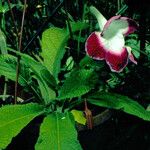
Sinningia speciosa
Gloxinia · Florist's gloxinia · Brazilian gloxinia · Violet slipper gloxinia · ရေခဲနှင်းဆီ (in Burmese)
Description
Source: leafsnapSinningia speciosa, sometimes known in the horticultural trade as gloxinia, is a tuberous member of the flowering plant native to Brazil within the family Gesneriaceae. Originally included in the genus Gloxinia in 1817, it was reclassified to Sinningia. Showy S. speciosa hybrids are still sometimes referred to simply as "gloxinia", although this name is now technically incorrect.The name florist's gloxinia is now sometimes used to distinguish it from the rhizomatous species now included in the genus Gloxinia. Another common name is Brazilian gloxinia. The plants produce large, velvety, brightly colored flowers and are popular houseplants. Cultural requirements are similar to those of African violets except that S. speciosa generally requires more light and often has a dormant period, when the tuber should be kept cool and dry until it resprouts.
💡 To successfully grow this ornamental plant, make sure to dig up its tubers from the soil as soon as the leaves begin to turn yellow. Store these tubers in a cool, dry place until spring arrives. At that time, you can plant your beautiful gloxinia once more.
Care Guide
💧 Water
Gloxinia plants flourish in tropical settings, where they enjoy consistently moist soil and high humidity. To maintain the right conditions, water them twice a week to keep the soil damp but not soaked. Higher humidity levels encourage vibrant blooms, replicating their naturally moisture-rich habitat.
How should I water my Gloxinia plant?
To properly water the Gloxinia, it's best to use filtered water at room temperature. Tap water can contain harmful particles for this plant, so filtered water is preferable. The Gloxinia is accustomed to warm environments, so using cold water could be too much of a sudden change for it. Additionally, it's recommended not to water the plant from above as it can cause problems with the foliage. Instead, apply filtered room temperature water directly to the soil until it's completely soaked. This helps to nourish the roots and allow them to spread and absorb nutrients effectively.
What should I do if I give my Gloxinia plant too much water or too little water?
Overwatering is a more common issue that can harm your Gloxinia by causing wilting and yellowing of the stems and leaves. It can also lead to diseases like root rot, mold, and mildew, which can be fatal for your plant. Underwatering is less common, but still a possibility. In this case, the leaves may become brittle and brown. It's important to notice the signs of overwatering early on, as some diseases may be irreversible if not addressed promptly. If you see these signs, reduce your watering and check the soil's draining capability. Replace poorly draining soil with a loose and well-draining mix. If your Gloxinia shows signs of underwatering, water it regularly until the signs diminish.
How often should I water my Gloxinia plant?
If your Gloxinia plant is in a pot, the best way to determine if it needs water is to check the soil by putting your finger in it. If the top two to three inches of soil are dry, it's time to water it. The same method can be used if you have a Gloxinia growing outdoors in the ground. When the top few inches of soil have dried out, it's time to water it. Typically, during spring and early fall, you'll need to water once a week using this method. However, during very hot weather, you may need to water twice a week or even more. Nevertheless, mature and well-established Gloxinias have the ability to tolerate drought well.
How much water should I give my Gloxinia plant?
To properly water your Gloxinia, don't be afraid to give it a generous amount of water. Make sure the top two to three inches of soil are completely dry before watering. When you do water, give enough water to saturate the entire soil. The water should flow through the drainage holes at the bottom of the pot. If you don't see excess water draining, you may not have watered enough. However, be cautious of overwatering, as it can be harmful to the plant. If water accumulates in the soil, it can be dangerous. Additionally, if water doesn't drain properly, it may indicate poorly draining soil, which is not good for the plant's health. If the plant is located outside, 1 inch of rain per week should be sufficient.
How do I water my Gloxinia at different stages of growth?
The water needs of Gloxinia can vary based on its growth stages. In the first few years of its life or after being transplanted to a new location, it requires more water than usual. During these stages, it focuses on developing new roots that will support future growth, so they need additional moisture. As the plant matures, it will require less water. Another stage that requires increased watering is the bloom period, as flower development utilizes a significant amount of moisture.
☀️ Light Partial sun
Gloxinia needs a considerable amount of sunlight to grow well, but should be protected from the strongest midday rays. In its natural environment it does best where it receives a combination of sun and shade throughout the day. Too much or too little light can hinder the plant's growth and overall health.
What are the sunlight requirements for Gloxinia?
Gloxinia thrives in conditions where it can receive a substantial amount of sunlight, ideally a mix of sun and shade throughout the day for healthy growth. It is important to protect it from the most intense midday rays. Partial sun, defined as about 3-6 hours of sunlight per day, and full sun, which is above 6 hours of sunlight per day, are both suitable for Gloxinia, depending on the weather and the plant's specific needs. The plant's natural habitat offers clues to its sunlight requirements, favoring environments where light is well-balanced. Always observe how sunlight moves through your garden to choose the best spots that offer this balance. Artificial lighting can also support Gloxinia's growth indoors when natural sunlight is insufficient, with recommendations for light types and settings tailored to plant needs.
How can you tell if Gloxinia is getting too much or too little sunlight?
Symptoms of too much or too little sunlight in Gloxinia can vary. Inadequate light can lead to smaller new leaves, leggy or sparse growth, faster leaf dropping, slower or no new growth, and the development of lighter-colored new leaves. On the flip side, too much sunlight can cause chlorosis (leaves turning yellow), sunscald, leaf curling, wilting, and leaf scorching. These symptoms indicate a need to adjust the plant's exposure to light, whether by moving the plant to a more suitable location or by using artificial lighting to correct light deficiency. Monitoring these symptoms closely helps in maintaining the optimal health and growth of Gloxinia.
What are some solutions for managing Gloxinia's sunlight exposure?
To manage Gloxinia's sunlight exposure effectively, consider gradually shifting your plant to sunnier spots each week until it receives the optimal amount of direct sunlight—3-6 hours daily is a good target for partial sun exposure. For indoor plants that are large or not easily movable, providing additional light through artificial means can be beneficial. Keeping a desk or ceiling lamp on for at least 8 hours daily or investing in professional plant grow lights can ensure your Gloxinia receives ample light. For outdoor plants, a gradual transition to sunnier locations helps avoid sunburn from sudden changes in light intensity. If sunlight is obstructed, such as by trees, consider pruning to allow more light through. For smaller plants, transplanting them during their dormant period to a location with better sunlight and drainage can also be a good strategy. Remember, parts of the plant already affected by incorrect lighting may not recover, but new growth should be healthy with the right adjustments.
🌡️ Temperature 20–37.8°C
Gloxinia is native to temperate climates and prefers temperatures between 68 and 100 °F (20 to 38 ℃). Seasonal adjustments can be made to allow a cooler winter period, mimicking its natural climatic transitions.
What is the ideal temperature range for Gloxinia?
Gloxinia thrives in temperate environments and prefers a temperature range of 68 to 100 °F (20 to 38 °C). To mimic its natural climatic transitions, seasonal adjustments can be made, such as welcoming a cooler winter charge. Gloxinia loves heat, and exposure to cold temperatures can harm it. During winter, it's beneficial to maintain temperatures above 20°C, and temperatures nearing 10°C can be detrimental to the plant.
How should Gloxinia be cared for in autumn and winter?
In autumn, it is advisable to bring Gloxinia plants grown outdoors indoors and place them near a bright window to protect them from cold temperatures. However, they should be kept at a distance from heaters to avoid damage. During the winter, ensuring that the temperature remains above 20°C is crucial for the plant’s growth, as Gloxinia is extremely sensitive to cold.
What are the symptoms of Gloxinia being exposed to low temperatures?
When exposed to temperatures below its comfort zone, Gloxinia's leaves may lighten in color if the temperature falls below 5°C. After frost damage, the leaves can turn brown or black, leading to wilting and drooping as part of the symptoms of low-temperature exposure.
How can Gloxinia be protected from frost damage?
To protect Gloxinia from frost damage, trim off the frost-damaged parts and move the plant indoors to a warm environment immediately. Placing the plant near a south-facing window ensures ample sunlight. It is also important to avoid placing the plant near heaters or air conditioning vents as this can cause excessively dry air around the plant.
What are the effects of high temperatures on Gloxinia?
During the summer, Gloxinia should be kept below 38°C to avoid heat stress. Temperatures exceeding 43°C can cause the leaves to lighten in color and make the plant more susceptible to sunburn.
💨 Humidity high (>60%)
This plant needs special care because it loves high humidity levels of 60-80% or more. The best way to achieve this is by placing a humidifier near the plant. Daily misting is also essential! Make sure the room has good ventilation.
🪴 Soil 6-7
🌱 Fertilizer
Correct fertilization is essential for Gloxinia's health and appearance. Fertilize Gloxinia during the summer, doing so once a month throughout the season. Nutrients drive growth and support the plant's tissues. Fertilizing improves Gloxinia's floral display, ensuring the best blooms.
Why should I add fertilizer to my Gloxinia plant?
Fertilizer and soil nutrients are like fuel for your Gloxinia plant. They help the plant grow and keep its existing parts healthy. Specifically for the Gloxinia, fertilization is important to help its flowers look their best. Since the flowers are the main attraction, most gardeners want to make sure they are in their top form. Using fertilizer is a reliable way to help your Gloxinia produce the best blooms possible.
When should I fertilize my Gloxinia plant?
The Gloxinia plant has two main phases each year. The first phase is the dormant phase, during winter, where minimal new growth occurs. The second phase is the active growth phase, which happens during spring and fall. During this time, fertilization is crucial for the Gloxinia. To optimize growth, it is recommended to start fertilizing in spring and continue once a month throughout the rest of spring and most of summer. As fall approaches, you can gradually reduce the frequency of fertilization.
When is it better to not fertilize my Gloxinia plant?
If you are looking to encourage the growth of Gloxinia but avoid root burn, it is important to provide extra nutrients while the plant is actively growing in the spring and summer. However, during the fall and winter when the plant enters its dormant stage, it is best to stop fertilizing.
What kind of fertilizer should I use for my Gloxinia?
To properly fertilize your Gloxinia, you have a few different options. One approach is to use a fertilizer that provides a balanced mix of the three main plant nutrients, with slightly more phosphorus. Another option is to enhance the soil by incorporating organic materials like compost, worm castings, or manure. Fertilizers come in various forms, but liquid or powdered fertilizers tend to be particularly effective for Gloxinia. Regardless of the form you choose, it's important to dilute the fertilizer and apply it while watering your plant.
How can I feed my Gloxinia plant?
First, find a suitable fertilizer and learn the ideal fertilization schedule for your Gloxinia. Once you have that information, it's time to learn how to apply the fertilizer. The most reliable method is to mix the liquid fertilizer with water before applying it to the soil. Each fertilizer may have different feeding instructions, so it's best to follow the guidelines provided by the manufacturer. These instructions will also explain how to properly dilute the fertilizer to avoid overfertilization. Mixing the fertilizer with water is an easy process. Afterward, simply pour the mixture into the soil where your Gloxinia is planted.
🪴 Pot & Repot Every 12 months
Repot Gloxinia in early spring. Choose a pot that is wider than it is deep with good drainage. Use a well-draining loamy potting mix enriched with compost. Gently remove old soil from the bulb and plant it at a depth equal to the bulb’s height. Water well after repotting and place in a sunny spot. Avoid overwatering to prevent bulb rot.
✂️ Pruning
Gloxinia plants have large, velvety flowers that benefit from pruning between early and late spring. To encourage bushier growth, trim back any leggy stems and remove spent flowers. Be sure to use clean tools to prevent disease, improve air circulation, and promote vibrant blooms. These practices ensure the plant's optimal health and colorful displays throughout the growing season.
🌿 Propagating
🐛 Diseases & pets
☠️ Toxicity
As part of the Gesneriaceae family, alongside African violets, gloxinia plants are non-harmful. It is safe to plant in households with children and pets.
Characteristics
- Plant Type
- Herb
- Life Cycle
- Perennial, Annual
- Genus
- Sinningia
- Family
- Gesneriaceae
- Hardiness Zone
- 11-12
- Mature Height
- 15 cm to 40 cm
- Mature Spread
- 15 cm to 30 cm
- Leaf Color
- Green
- Leaf Type
- Deciduous
- Flower Color
- Red, Pink, Purple, White
- Flower Size
- 5.08 cm to 7.62 cm
- Bloom Time
- Late spring, Early summer, Mid summer
- Planting Time
- Spring
- Harvest Time
- Summer
- Native Area
- Brazil