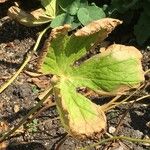
Sinopodophyllum hexandrum
Himalayan May-apple
Description
Source: leafsnapSinopodophyllum is an herbaceous perennial plant in the family Berberidaceae, described as a genus in 1979. It includes only one known species, Sinopodophyllum hexandrum, native to Afghanistan, Bhutan, northern India, Kashmir, Nepal, Pakistan, and western China (Gansu, Qinghai, Shaanxi, Sichuan, Tibet, Yunnan). Common names include Himalayan may apple and Indian may apple.
Care Guide
💧 Water
☀️ Light Partial sun
Himalayan mayapple tends to favor areas that receive moderate sunlight. It can also do well in locations with limited sun exposure. Its native habitat demonstrates it is able to thrive under these light conditions. Excessive sunlight can be damaging, while an overall lack of light may keep it from reaching optimal growth.
🌡️ Temperature 5–35°C
The Himalayan mayapple is a plant native to cool, mountainous regions, thriving ideally between 41 to 95 °F (5 to 35 ℃). To mimic its natural habitat, gradually adjust temperatures with the seasons, placing it in a cooler area during winters and a warmer area during summers.
💨 Humidity
🪴 Soil 5-6
🌱 Fertilizer
For Himalayan mayapple, the primary time to fertilize is in early spring when the flowers are starting to form. The appropriate fertilizer promotes improved blooms and helps Himalayan mayapple produce attractive flowers. Fertilizing in early spring ensures strong flowering through the season and supplies energy for dormant growth phases.
🪴 Pot & Repot
✂️ Pruning
🌿 Propagating
🐛 Diseases & pets
☠️ Toxicity
Characteristics
- Plant Type
- Herb
- Life Cycle
- Perennial
- Genus
- Sinopodophyllum
- Family
- Berberidaceae
- Hardiness Zone
- 5-9
- Mature Height
- 30 cm
- Mature Spread
- 30 cm
- Leaf Color
- Green, Purple, Brown
- Leaf Type
- Deciduous
- Flower Color
- White, Pink
- Flower Size
- 2.03 cm to 4.06 cm
- Bloom Time
- Early spring, Mid spring
- Planting Time
- Spring, Summer
- Harvest Time
- Mid summer, Late summer