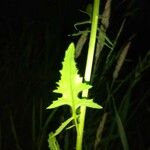
Sisymbrium loeselii
خاکشیر بی کرک، · False london-rocket · London false rocket · Small tumbleweed mustard · Loesel's Tumble Mustard
Description
Source: leafsnapSisymbrium loeselii is a species of flowering plant in the family Brassicaceae known by several common names, including small tumbleweed mustard, false London-rocket, throughe(ver:kashmiri) and tall hedge mustard. It is native to Eurasia, and it is known on other continents as an introduced species and in some areas a common roadside weed. It is an annual herb producing a hairy, erect stem which can exceed a meter in height. The leaf blades are divided into triangular, lance-shaped, and toothed linear lobes, and are borne on petioles. The top of the stem is occupied by a raceme of flowers with bright yellow petals each measuring just under a centimeter long. The fruit is a silique up to 3.5 centimeters in length containing tiny seeds. This plant is allelopathic against other species growing around it. It produces chemicals that inhibit the germination of seeds of other species, including bluebunch wheatgrass (Pseudoroegneria spicata) and Idaho fescue (Festuca idahoensis). It also inhibits arbuscular mycorrhizal fungus species, such as Glomus intraradices.
Care Guide
💧 Water Every 7 days
Tall hedge mustard, native to moderate climates, thrives in conditions with consistent moisture and no extreme weather variations. It requires watering once a week and is usually grown outdoors, where it benefits from mild, temperate rainfall. This herbaceous plant is ideal for gardens that receive additional irrigation from seasonal rains.
How should I water my Tall hedge mustard?
When watering Tall hedge mustard, you have several options such as using a garden hose with a spray nozzle, a watering can, or any other common watering tool. This plant is not too specific about the type of water it receives, as it can thrive on rainwater, tap water, or filtered water. It is generally best to avoid watering this plant from above, as it can harm the leaves and flowers and potentially cause disease. Instead, a drip irrigation system is often the most effective method for watering Tall hedge mustard. These systems ensure that water is applied evenly and directly to the soil. For Tall hedge mustard grown in a container, a similar approach can be used, but with different tools. To water a container-grown Tall hedge mustard, you can use a cup, watering can, or tap to directly apply water to the soil.
What do I do if I give my Tall hedge mustard too much or too little water?
To prevent underwatering Tall hedge mustard, simply water it regularly when you notice it lacks moisture. Overwatering, on the other hand, can be more problematic. It can lead to diseases and the decline of the plant. To avoid this, choose a suitable growing location with ample sunlight to dry the soil and good drainage to prevent waterlogging. If your potted Tall hedge mustard is overwatered, consider changing it to a new pot with better soil drainage and more efficient drainage holes.
How often should I give water to my Tall hedge mustard?
To keep your tall hedge mustard healthy, make sure to water it regularly throughout the growing season. In spring, water once a week. As the weather gets warmer, you may need to water two to three times a week, but be careful not to exceed this rate. It's crucial to keep the soil moist but not wet, regardless of how often you water. If you have tall hedge mustard in a pot, you'll need to water it more frequently. The soil in pots tends to heat up and dry out faster than ground soil. In most cases, water container-grown tall hedge mustard a few times per week compared to just once a week for plants in the ground.
How much water does my Tall hedge mustard plant need?
Determining the appropriate amount of water for your Tall hedge mustard can be approached in a few ways. Some gardeners prefer to assess soil moisture by feeling it, watering until the top six inches are moist. Another option is to use a specific measurement, such as two gallons per week, adjusted based on heat and soil dryness. However, sticking strictly to these guidelines may result in overwatering if your plant actually requires less. When growing in a container, you'll need a different method. Water the soil until all dry layers are moist, checking with your finger. You can also stop watering when you see a slight trickle of excess water from the pot's drainage holes.
How can I know if I am giving enough water to my Tall hedge mustard?
Avoiding overwatering for Tall hedge mustard can be somewhat challenging. They have deep roots, necessitating weekly soil moistening. However, they are highly prone to root rot and may also exhibit browning due to excessive watering. Underwatering is less of a concern as Tall hedge mustard can endure periods without additional watering. Nevertheless, prolonged lack of water can cause wilting and dry leaves.
☀️ Light Full sun
Tall hedge mustard comes from bright, open habitats where it grows best in full sun. It can tolerate partial sun but prefers direct sunlight for optimal growth. This plant, which may be annual or biennial, is known for its sun-loving nature.
What are the sunlight requirements for Tall Hedge Mustard?
Tall Hedge Mustard thrives in environments with abundant sunlight, requiring more than 6 hours of sunlight daily (full sun) for optimal growth, though it can tolerate about 3-6 hours of sunlight (partial sun). It's important to observe how sunlight moves through your garden, selecting spots that offer a perfect balance for the plants, ensuring they stay healthy and happy.
How does artificial lighting support Tall Hedge Mustard's growth indoors?
When natural sunlight is insufficient, especially in winter or in less sunny indoor spaces, artificial lighting becomes crucial for the growth of Tall Hedge Mustard. LED lights are recommended because they can be customized to provide the specific wavelengths of light needed. Full sun plants require 30-50W/sq ft of artificial light, partial sun plants need 20-30W/sq ft, and the light source should be placed 12-36 inches above the plant for 8-12 hours per day to mimic natural daylight hours, promoting faster, healthier growth.
What are the symptoms of insufficient light for Tall Hedge Mustard when grown indoors?
Indoor Tall Hedge Mustard with inadequate light may exhibit symptoms such as smaller new leaves, leggy or sparse growth, faster leaf drop, slower or no new growth, lighter-colored new leaves, chlorosis (leaves turning yellow due to loss of chlorophyll), sunscald (damage from intense light exposure), leaf curling (to minimize water loss), wilting (loss of turgor pressure), and leaf scorching (brown, dry, or crispy leaf edges from excessive sunlight). These symptoms indicate a need for better light conditions.
How can you improve light conditions for Tall Hedge Mustard?
To enhance light conditions for Tall Hedge Mustard, gradually move plants to sunnier locations to receive at least 6 hours of direct sunlight daily, using a south-facing window and keeping curtains open during the day. For larger or non-moveable plants, consider using artificial light for at least 8 hours daily. Outdoors, adapt plants to sunnier spots gradually to avoid sunburn. If trees block sunlight, prune branches to allow more light through. For smaller plants, consider transplanting during their dormant period to a location with ample sunlight and good drainage.
🌡️ Temperature 5–25°C
Tall hedge mustard comes from temperate areas and prefers temperatures of 68 to 95 °F (20 to 35 ℃). Seasonal care adjustments include moving it to a cooler spot in summer if temperatures rise above its preferred range.
What is the ideal temperature range for growing tall hedge mustard?
Tall hedge mustard, botanically known as Sisymbrium loeselii, thrives best in temperate climate regions. It prefers a temperature range between 68 to 95 °F (20 to 35 °C). To maintain the health and growth of the plant, it's important to make seasonal adjustments such as moving it to a cooler spot during the summer if temperatures exceed its preferred range.
How does tall hedge mustard react to cold weather, and what are the recommended winter care measures?
Tall hedge mustard exhibits high tolerance to cold temperatures and does not require additional frost protection during the colder months. However, to prepare it for winter, it is advisable to water the plant generously before the first freeze in autumn. This ensures that the soil remains moist and enters a frozen state, helping to prevent drought and water scarcity for the plant during winter and early spring.
What should I do if the temperature falls below -30°C?
Although tall hedge mustard is extremely cold-tolerant, it's vital to ensure that winter temperatures remain above -30°C. If temperatures dip below this threshold, you might not notice any changes during the winter, but there could be a decrease in sprouting or even no sprouting come springtime. To mitigate this, remove any parts of the plant that have failed to sprout in the spring.
How does tall hedge mustard cope with high temperatures, and what are the remedies for heat stress?
Tall hedge mustard does not fare well in high temperatures. When the mercury rises above 35°C, the plant's growth can come to a halt, and it may become more susceptible to rot. To help the plant cope with high temperatures, trim away sunburned and dried-up parts. Moving the plant to a shadier location or employing a shade cloth can protect it from the midday and afternoon sun. Additionally, watering the plant in the morning and evening will help keep the soil moist and reduce heat stress.
💨 Humidity
🪴 Soil 6-7
🌱 Fertilizer
Tall hedge mustard does well with regular, light fertilizer applications to encourage healthy leaf development. Fertilize Tall hedge mustard roughly once a month during the summer. Nitrogen is essential for foliage, and adding nitrogen-rich sources supports Tall hedge mustard’s growth.
🪴 Pot & Repot
✂️ Pruning
🌿 Propagating
🐛 Diseases & pets
☠️ Toxicity
Characteristics
- Plant Type
- Herb
- Life Cycle
- Annual, Biennial
- Genus
- Sisymbrium
- Family
- Brassicaceae
- Hardiness Zone
- 4
- Mature Height
- 1.07 m
- Mature Spread
- 25 cm
- Leaf Color
- Green
- Leaf Type
- Deciduous
- Flower Color
- Yellow
- Flower Size
- 0.76 cm
- Bloom Time
- Late spring, Early summer, Mid summer
- Planting Time
- Spring, Autumn
- Harvest Time
- Early summer, Mid summer
- Native Area
- Saudi Arabia, Tajikistan, Turkey, India, Austria, Slovakia, Montenegro, Bulgaria, Pakistan, Armenia, Poland, Slovenia, Croatia, Greece, Belarus, Ukraine, Serbia, Uzbekistan, Russia, China, Afghanistan, Iraq, Hungary, Kyrgyzstan, Kazakhstan, Italy, Mongolia, Iran, Azerbaijan, Romania, Turkmenistan