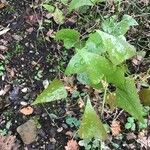
Smilax bona-nox
Catbrier · Greenbrier · Bullbrier · Saw greenbrier · Cat Briar
Description
Source: leafsnapSmilax bona-nox, commonly known as saw greenbrier or catbrier, is a species of flowering plant in the Smilacaceae family. This woody vine can grow up to 10 meters in length and is characterized by its thorny stems. The glossy, dark green leaves feature prominent veins, and the plant produces small, greenish-yellow flowers. It also bears small black berries that are edible, although they are not commonly consumed. Native to North America, saw greenbrier thrives in various habitats, including forests, swamps, fields, and disturbed areas. Historically, Native Americans utilized this plant for medicinal purposes, particularly for alleviating arthritis pain. The thorny stems of Smilax bona-nox make it an effective barrier plant, suitable for creating natural fences or hedges. Additionally, it provides habitat for wildlife, with birds often using it as nesting sites. Overall, Smilax bona-nox is an intriguing plant with practical applications, such as natural fencing, and historical significance as a medicinal herb.
🌳 Saw greenbrier is a thorny climbing vine that blooms in the spring. It is sometimes planted in gardens because of its attractive, showy fruit. When planted in a garden, it should be placed along a structure like a lattice to allow it to spread and grow upward.
🎭 Loveliness & Constancy
Care Guide
💧 Water
☀️ Light Partial sun
🌡️ Temperature 5–37.8°C
💨 Humidity
🪴 Soil 6-7
🌱 Fertilizer
🪴 Pot & Repot
✂️ Pruning
🌿 Propagating
🐛 Diseases & pets
☠️ Toxicity
Characteristics
- Plant Type
- Vine
- Life Cycle
- Perennial
- Genus
- Smilax
- Family
- Smilacaceae
- Hardiness Zone
- 5-11
- Mature Height
- 7.92 m
- Mature Spread
- 1.83 m
- Leaf Color
- Green, White, Variegated
- Leaf Type
- Deciduous
- Flower Color
- Green, White, Yellow
- Flower Size
- 2.54 cm
- Bloom Time
- Late spring, Early summer, Mid summer
- Planting Time
- Spring
- Harvest Time
- Mid summer, Late summer
- Native Area
- Mexico